Award-Winning AP Calculus AB Tutors
serving Concord, CA
AP Calculus AB
Tutors in Concord
Private 1-on-1 tutoring, weekly live classes for academic support, test prep & enrichment, practice tests and diagnostics, and more to elevate grades and test scores.
Based on 3.4M Learner Ratings
UniversitiesSchools & Universities
DeliveredHours Delivered
ProficiencyGrowth in Proficiency
Who needs tutoring?
No obligation. Takes ~1 minute.
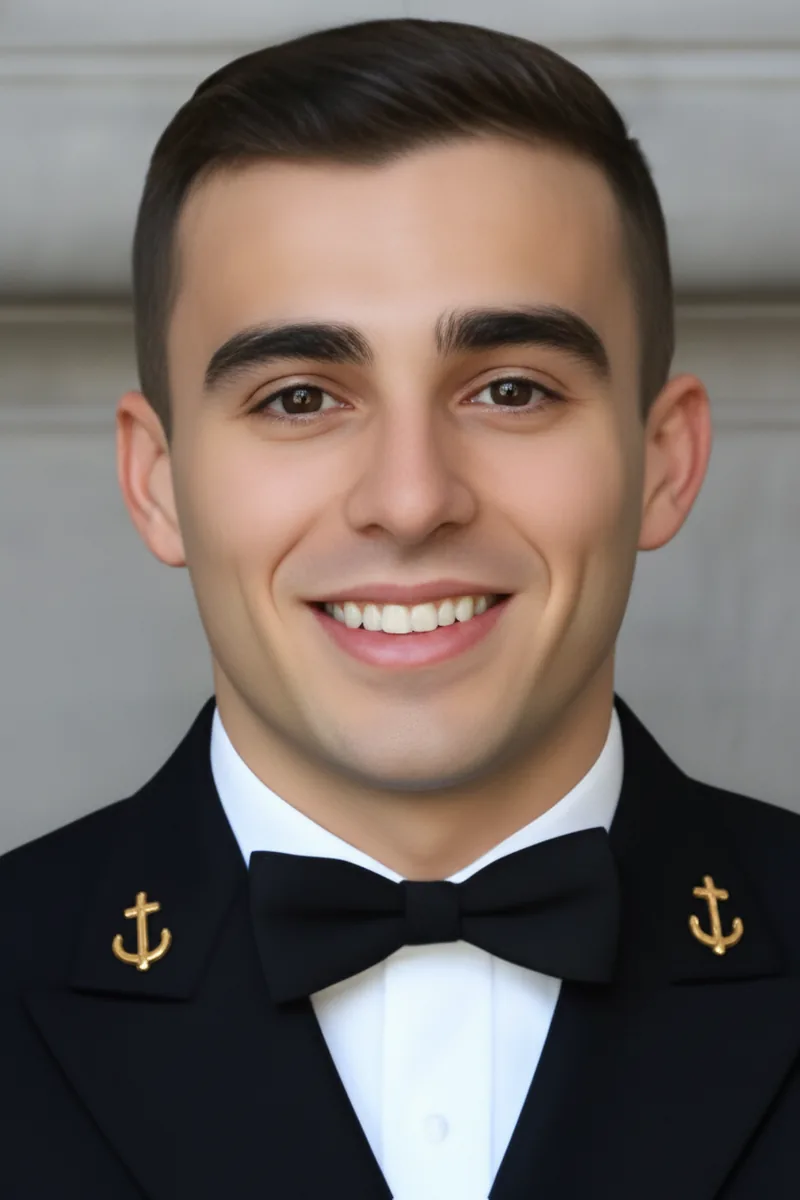
Mechanical engineering at Yale means Charles builds things using calculus every week — computing moments of inertia, modeling fluid pressures, sizing structural loads — so when an AB student asks 'when will I ever use this,' he has actual answers. He's especially strong on optimization and related rates because those are engineering bread-and-butter problems where setting up the equation from a physical scenario is the whole challenge. His 34 ACT and varsity-athlete discipline keep his teaching sharp and structured.

Mechanical engineering at Harvard means Christopher builds with calculus daily — every force balance is a derivative, every energy calculation an integral — so the AB curriculum maps directly onto problems he's already solving in his coursework. He's especially sharp at teaching students how to navigate optimization and area-between-curves setups, where translating the scenario into the right expression is the real challenge. His 35 ACT and 4.8 rating back up an approach grounded in engineering intuition rather than formula memorization.
The jump from "find the derivative" to "explain what the derivative means on this graph" is where most AP Calculus AB students lose points on free-response questions. Justin bridges that gap by teaching limits, Riemann sums, and the Fundamental Theorem as connected ideas rather than isolated procedures — an approach shaped by his dual background in physics and mathematics at Washington University in St. Louis.
Having tutored college students through calculus at Harvard while majoring in chemistry, James knows exactly where AB students hit friction — limits that seem pointless, the conceptual jump to integration, and free-response problems that demand more than mechanical differentiation. His approach leans on building the reasoning behind each technique, so when the exam asks students to justify a answer using the Mean Value Theorem or interpret a definite integral in context, the logic is already there. A 1570 SAT and 4.9 rating back up the precision he brings to every session.
A PhD in statistics built on a biomedical engineering foundation means Sam has spent years where calculus isn't a course — it's the machinery underneath everything, from deriving probability distributions to modeling biological systems. That depth shows when teaching limits and the Fundamental Theorem, where he can trace each concept forward into the math students will actually use in college. Rated 4.9 by students.
Limits, derivatives, and integrals each build on the last, so a shaky understanding of one concept compounds quickly in AP Calc AB. Ben unpacks each topic by tying it to its geometric meaning — the slope of a tangent line, the area under a curve — so that formulas feel intuitive rather than arbitrary. His 5.0 client rating speaks to how well that approach lands with students.
Kate breaks AB Calculus into two core skills: understanding what derivatives and integrals actually represent, and learning the mechanical techniques to compute them quickly. Her environmental engineering training required heavy use of related rates, optimization, and area-under-the-curve problems, so she can show students exactly how these concepts connect to real applications.
Mechanical and aerospace engineering at Princeton means Matthew builds on calculus daily — computing trajectories, analyzing forces, optimizing structural loads — so the AB curriculum's core techniques are second nature to him. He teaches each new concept by working through a few problems step by step, then hands students progressively harder variations, asking targeted questions that expose gaps before they become exam-day surprises. His 34 ACT underscores the quantitative precision behind that approach.
The jump from pre-calculus to AP Calculus AB is often the biggest conceptual shift in a student's math career — suddenly everything revolves around rates of change and accumulation. Julie's philosophy background at Princeton sharpened her ability to explain abstract ideas with clarity, and she applies that skill to unpacking limits, derivatives, and the Fundamental Theorem. She earned a 1570 SAT and teaches math at every level, so she knows how to bridge gaps in algebra or trig that can hold AB students back.
Being a TA for two math classes at Stanford sharpened Helen's ability to spot exactly where students lose the thread — whether it's the conceptual jump from average to instantaneous rate of change or the mechanics of setting up a definite integral from a word problem. Her 1580 SAT and 34 ACT reflect the kind of precise, fast reasoning that the AB exam's time-pressured free-response section demands. Rated 5.0 by students.
Having taught introductory calculus as a course assistant at Harvard, Richard has seen firsthand which AP Calculus AB concepts — limits, the chain rule, related rates, accumulation functions — trip students up most often. He builds intuition around why derivatives and integrals work the way they do, which makes the problem-solving on exam day feel less like guesswork.
Limits, derivatives, and integrals become far more intuitive when a student sees why they matter, not just how to compute them. Dennis's physics background means he can ground every AB Calculus concept — from the chain rule to Riemann sums — in tangible problems involving motion, area, and rates of change.
Scoring a 1570 SAT and 35 ACT takes the kind of disciplined problem-solving that translates directly into teaching limits, derivatives, and integration techniques at the AB level. Amber zeroes in on the moment students go from mechanically applying the power rule to actually understanding why the Fundamental Theorem ties differentiation and integration together — a shift that unlocks the entire second half of the course. Rated 5.0 by students.
The jump from Pre-Calculus to AP Calculus AB is where many students first encounter limits, derivatives, and the chain rule as genuinely new ideas rather than extensions of old ones. Viktor's UChicago math degree means he can explain the reasoning behind each rule so that related rates and accumulation problems start to feel logical rather than formulaic. His 1600 SAT speaks to the precision he brings to every concept.
The moment AB shifts from derivatives as formulas to derivatives as ideas — related rates, the Mean Value Theorem, accumulation functions — is where most students either click or stall. Rhea breaks those conceptual hurdles into concrete, visual steps and ties each one to the specific free-response styles the AP exam actually uses.
IB Diploma graduates know what it's like to hit calculus from multiple directions at once — Dalton's experience completing that program means he learned early how to manage the conceptual load of limits, derivatives, and integrals alongside heavy coursework in other subjects. He's especially good at teaching students how to pace themselves through the AB curriculum and build the kind of problem-setup instincts that free-response graders reward. His 35 ACT and 4.9 rating back up an approach built on disciplined preparation rather than shortcuts.
The jump from memorizing derivative rules to actually understanding limits, the chain rule, and the Fundamental Theorem is where most AB students struggle. Anthony approaches calculus the way he learned it as a Yale physics and math major: every rule has a reason, and once students see that reason, problem-solving becomes intuitive rather than mechanical. He holds a 5.0 client rating.
Limits, derivatives, and integrals each build on the last, so a shaky understanding of one topic creates problems that compound through the entire AP Calculus AB curriculum. Alex's applied math background at Stanford keeps him immersed in calculus daily, and he teaches the chain rule, related rates, and accumulation functions by tying abstract procedures to the reasoning behind them. Rated 4.8 by students.
Limits, derivatives, and integrals click faster when a student sees how each concept builds on the last — and Tim's computational science training at MIT means he can show exactly how those connections work, from the epsilon-delta definition through the Fundamental Theorem. He's tutored every level of high school math up through AP Calculus BC, so he knows precisely where AB students tend to stumble on topics like related rates and accumulation functions.
Caleb's statistics degree at Duke means he doesn't just teach AP Calculus AB procedures — he understands where concepts like limits, derivatives, and the Fundamental Theorem of Calculus lead in higher math. That perspective lets him explain *why* the chain rule or related rates problems work the way they do, giving students a conceptual grip that pays off on the AP exam.
Studying Applied and Computational Mathematics at Caltech, Samuel lives in the world of calculus daily — limits, derivatives, integrals, and the Fundamental Theorem aren't abstract ideas to him but tools he actively uses. He breaks down AP Calculus AB concepts like related rates and Riemann sums by connecting them to the intuition behind why each technique works, not just the mechanical steps.
Princeton's aerospace engineering program throws you into differential equations and multivariable calculus early, which means Fred had to master the AB fundamentals — limits, derivatives, integration techniques — so thoroughly that they became second nature before the harder material piled on. That depth shows when he teaches topics like the chain rule or area between curves, where he can explain not just the procedure but the reasoning that makes it transferable to unfamiliar exam questions. His 1550 SAT speaks to the same precision he brings to breaking down free-response setups.
Teaching calculus at Harvard as a Course Assistant gives Sanjana a front-row seat to the mistakes students make most often — and the explanations that actually click. She breaks down AB topics like related rates, the Fundamental Theorem, and integration techniques by connecting each one back to the graphical intuition behind it.
Pre-med biology and chemistry at Northwestern means Kade is constantly using calculus to make sense of other disciplines — enzyme kinetics, population growth models, dose-response curves — which keeps the AB material grounded in something tangible. He's especially good at walking through limit definitions and continuity arguments, the early-course concepts that quietly determine whether the rest of the year clicks or collapses. His 1550 SAT reflects the kind of precise, methodical thinking that pays off on AP free-response questions.
Limits, derivatives, and integrals each build on the last, so one shaky concept can snowball through the entire AP Calculus AB curriculum. Annie breaks down each idea with concrete visual intuition — what a derivative actually means on a graph, why the chain rule works the way it does — drawing on the rigorous calculus sequence she completed as a biomedical engineering major at Cornell. Rated 4.9 by students.
Materials science engineers live in calculus — Jennifer's coursework meant using derivatives to characterize how material properties change under stress and integrals to calculate energy absorption across deformation curves, so she teaches AB concepts with that built-in sense of what the math physically describes. Her 1550 SAT and 33 ACT back up the quantitative precision she brings to tricky topics like implicit differentiation and area-between-curves problems. Rated 5.0 by students.
Cognitive science at Penn might not scream calculus, but Samantha's coursework required enough mathematical modeling — derivatives for rate-of-change problems, integrals for cumulative distributions — that she teaches AP Calculus AB with real fluency. She's especially effective at walking through optimization and curve-sketching problems, where translating a word problem into the right function is half the battle. Her 1460 SAT reflects the quantitative precision she brings to exam prep.
The jump from Pre-Calc to AP Calculus AB trips up students who never fully grasped limits or the logic behind the chain rule. Daniel's approach is to rebuild each concept from scratch when needed — he's an applied math major who got where he is by sitting with hard material until it clicked, not by breezing through it. That means he knows exactly where the confusion usually lives in topics like related rates, Riemann sums, and the Fundamental Theorem.
The jump from pre-calc to AP Calculus AB trips up students who memorized trig identities and function rules without understanding why they work. Kerr rebuilds that foundation by unpacking derivatives and integrals as ideas — rates of change and accumulated quantities — before drilling the mechanics of chain rules and Riemann sums. Rated 4.9 by students, he brings a concept-first approach shaped by his quantitative coursework at Vanderbilt.
A graphical, intuitive understanding of limits, derivatives, and integrals makes the entire AP Calculus AB curriculum click faster than memorizing rules ever could. Dylan approaches each concept by showing what it actually looks like on a graph — why a derivative is a slope, why an integral is accumulated area — before touching any formulas. His physics background at Vanderbilt keeps the math grounded in real meaning.
Three engineering degrees mean Andrea has spent years where calculus isn't a course but a daily language — computing derivatives to analyze mechanical stress, integrating to find volumes and energy transfers across systems. That fluency shows up most when she teaches limits and continuity, building the conceptual scaffolding that keeps students from hitting a wall once the AB curriculum reaches the Fundamental Theorem. Her 32 ACT and 4.8 rating back up an approach grounded in genuine mechanical intuition.
Limits, derivatives, and the Fundamental Theorem of Calculus all require a shift in mathematical thinking that trips up even strong algebra students. Jake's quantitative training at Northwestern gives him a clear framework for walking through each concept step by step, connecting the graphical intuition to the formal rules. His 5.0 rating speaks to how well that approach lands.
Limits, derivatives, and the fundamental theorem of calculus click faster when a student sees how they connect — not just how to compute them in isolation. Nicholas approaches AP Calculus AB by building intuition around rates of change and accumulation, drawing on the applied math side of his Johns Hopkins engineering program. His 4.8 rating speaks to how well that conceptual clarity translates for students prepping for the AP exam.
Chemical engineering at the undergraduate level and then medical school means Siva has been setting up and solving calculus problems in high-stakes contexts for years — from modeling heat transfer and reaction kinetics to quantifying physiological rates of change. That depth shows when he teaches limits, continuity, and the mechanics of integration, because he can explain not just the procedure but the reasoning that makes free-response setups feel logical instead of mysterious. Rated 5.0 by students, with a 1560 SAT backing up the quantitative precision behind his approach.
Limits, derivatives, and integrals each represent a fundamentally new way of thinking about functions, and rushing past any one of them creates problems later. Rahi breaks down each concept visually and algebraically, drawing on his applied mathematics training to show students why the rules work — not just when to apply them. His 34 ACT composite reflects the same precision he brings to AP exam preparation.
Rachel treats AP Calculus AB as a course built on a handful of core ideas — limits, the derivative as a rate of change, and accumulation through integrals — and teaches students to see every problem as a variation on those themes. Her economics and strategy studies at Washington University mean she's applying derivatives and optimization regularly outside the classroom. That real-world fluency makes related rates and curve sketching click faster for students.
Most AB students can differentiate a polynomial just fine — it's the moment a free-response question asks them to interpret the meaning of a derivative or set up an integral from a word problem that things fall apart. Zac tackles those conceptual gaps head-on, breaking application problems into smaller reasoning steps before any computation starts. His 34 ACT and 4.9 rating point to the kind of structured, clear thinking that makes tough calculus concepts land.
Having tutored AP Calculus students through New York State Regents and AP exams since her time at Phillips Exeter, Violet knows exactly where the AB curriculum trips people up — particularly the shift from computing derivatives mechanically to interpreting them on free-response questions about rates and accumulation. Her math degree from Brown means she can trace a concept like the Fundamental Theorem back to its foundations when a student's intuition stalls, then rebuild it with concrete examples that stick. She holds a 4.5 rating and a 1550 SAT that speaks to her precision under timed, high-stakes conditions.
The jump from memorizing derivative rules to actually applying them — related rates, optimization, accumulation functions — is where most AP Calc AB students get stuck. Nima breaks each problem type into a decision-making process so students learn to read a question and know which tool to reach for, rather than guessing formulas.
Brett spent his senior year at Syracuse tutoring student athletes through AP-level calculus, breaking down limits, derivatives, and integration techniques for students who needed concepts explained more than once and in more than one way. His engineering background at Penn means he can show exactly how the chain rule or a Riemann sum connects to real problems in science and design.
Testimonials
Because the right AP Calculus AB tutor makes all the difference.
Average Session Rating – Based on 3.4M Learner Ratings
Practice AP Calculus AB
Free practice tests, flashcards, and AI tutoring for AP Calculus AB
Nearby AP Calculus AB Tutors
Other Concord Tutors
Related Math Tutors in Concord
Frequently Asked Questions
AP Calculus AB covers limits, continuity, derivatives, applications of derivatives, and integrals with their applications. The course focuses on understanding rates of change and accumulation—foundational concepts that build throughout the year. Most students spend the fall semester on limits and derivatives, then move into integration and applications in the spring, with review and practice tests leading up to the May exam.
Score improvement depends on your starting point and how consistently you engage with tutoring. Students who work with tutors to identify weak topics, practice problem-solving strategies, and take timed practice tests typically see meaningful gains—often 1-2 points on the 1-5 AP scale. The key is addressing specific gaps early (like understanding derivatives or setting up integrals) rather than waiting until test week.
Many students struggle with the conceptual leap from algebra to calculus—especially understanding what a derivative or integral actually represents beyond the mechanics. Pacing is another challenge; the course moves quickly, and falling behind on limits or derivatives makes later topics like applications and integration much harder. Time management on the exam is also critical, as students need to balance free-response problems with multiple-choice questions strategically.
Your first session focuses on understanding where you are in the course and what you need most. A tutor will review your recent assignments, quiz scores, or practice test results to identify which topics—whether limits, derivatives, integrals, or applications—need the most attention. You'll also discuss your AP exam timeline and goals, so the tutoring plan is personalized to your schedule and priorities.
Practice tests are essential for AP Calculus AB success. They help you get comfortable with the exam format, manage your time across 45 multiple-choice questions and 6 free-response problems, and identify which topics need more review. Working through full-length practice tests under timed conditions—ideally several weeks before the May exam—reveals pacing issues and weak areas that targeted tutoring can address.
Look for tutors with strong calculus backgrounds—ideally those who've taught AP Calculus AB or scored well on the exam themselves. They should understand both the mechanics (how to compute derivatives and integrals) and the conceptual reasoning the AP exam emphasizes. Experience helping students improve their AP scores and familiarity with the College Board's rubric for free-response questions are valuable assets.
The AP Calculus AB exam gives you 105 minutes total: 45 minutes for 45 multiple-choice questions and 60 minutes for 6 free-response problems. A smart strategy is to spend roughly 1 minute per multiple-choice question, which leaves time to return to harder ones. For free-response, budget about 10 minutes per problem, but prioritize the ones you can solve quickly to build confidence and points early. A tutor can help you practice this pacing on timed practice tests.
With an average student-teacher ratio of about 21:1 in Concord schools, many AP Calculus AB classes move quickly and leave little room for individual questions. Personalized 1-on-1 tutoring fills that gap by letting you slow down on confusing concepts, ask as many questions as you need, and get immediate feedback on your problem-solving approach. This targeted attention is especially valuable in a course where understanding each topic deeply matters for later chapters.
Let’s find your perfect tutor
Answer a few quick questions. We’ll recommend the right plan and match you with a top 5% tutor.