Award-Winning Calculus Tutors
serving Denver, CO
Calculus
Tutors in Denver
Private 1-on-1 tutoring, weekly live classes for academic support, test prep & enrichment, practice tests and diagnostics, and more to elevate grades and test scores.
Based on 3.4M Learner Ratings
UniversitiesSchools & Universities
DeliveredHours Delivered
ProficiencyGrowth in Proficiency
Who needs tutoring?
No obligation. Takes ~1 minute.
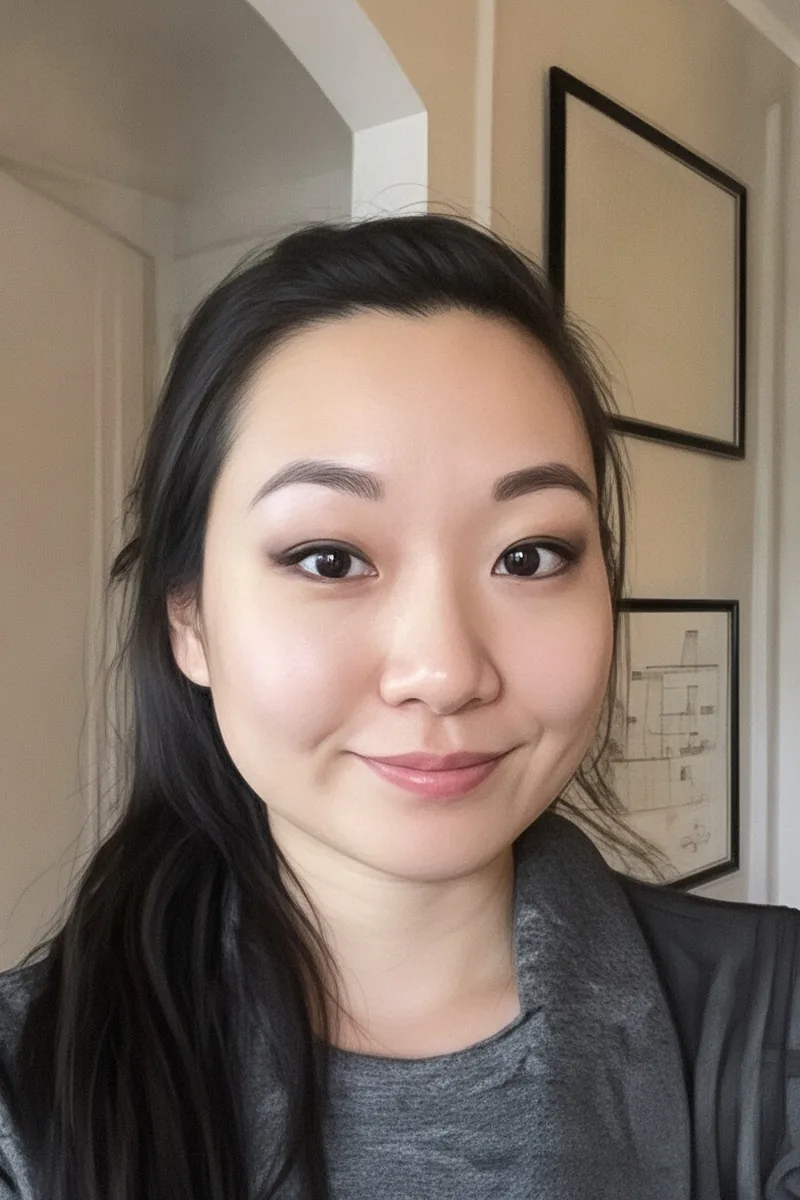
Philosophy trains you to follow an argument step by step and spot exactly where the logic breaks — which is precisely what Erinrose's Carleton College philosophy degree brings to early calculus, where students often lose the thread between a limit definition and what a derivative actually represents. Her teaching background spans high school through university, and she applies that same careful, sequential reasoning to unpacking notation and connecting each calculus concept to the one before it.
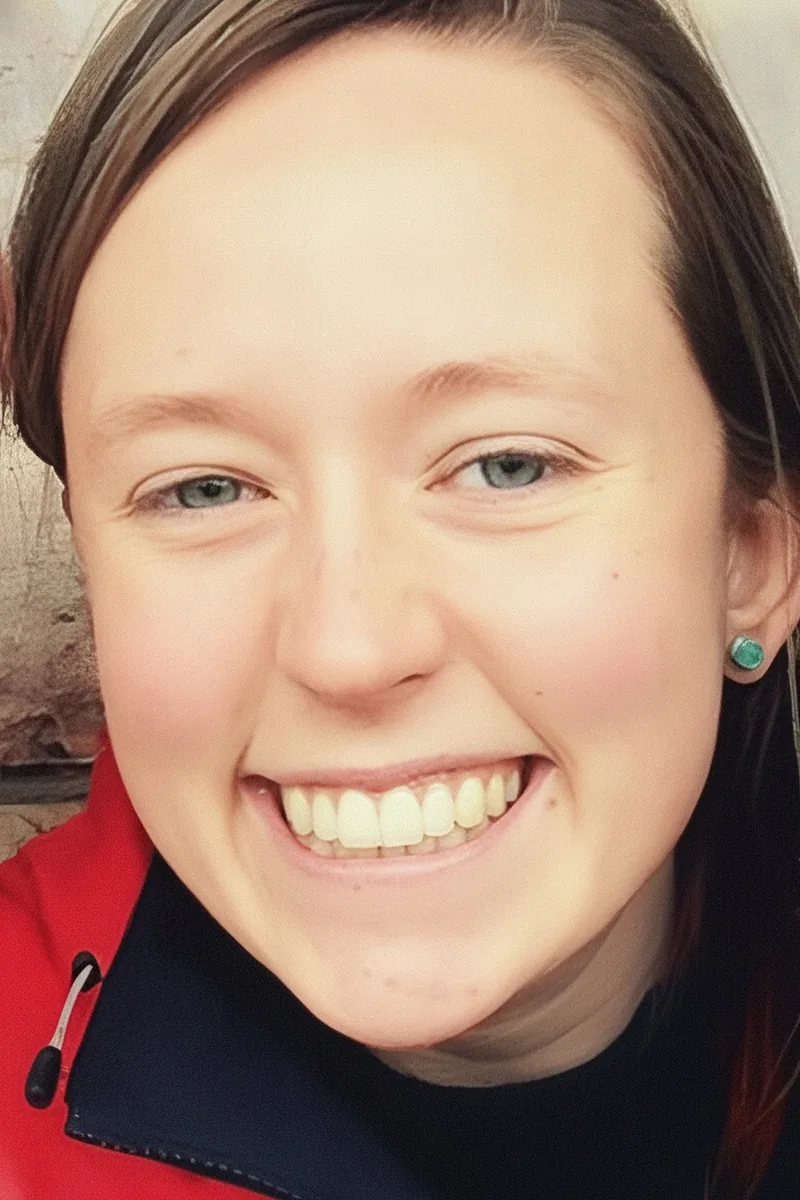
Brown's math program doesn't let you coast past calculus — Zofia's BS in Mathematics means she's worked through the full sequence from single-variable through multivariable and into the analysis courses that formalize why theorems like the Fundamental Theorem of Calculus actually hold. That depth lets her teach integration techniques and series convergence with the kind of precision that turns a shaky understanding into a reliable one, whether the student is in AP Calc or a college-level course.
History and philosophy of science training at the undergraduate level means Lacey has studied how calculus was actually invented — the debates between Newton and Leibniz, the conceptual leaps behind infinitesimals — which gives her a unusual angle for explaining why limits and derivatives work the way they do. Her Classics MA adds the kind of close, careful reasoning that makes unpacking dense notation feel more like translating a difficult passage than grinding through formulas. Rated 4.8 by students.
Tara's degrees are in anthropology and museum studies, so she's straightforward that calculus is far from her academic home turf. That said, her experience tutoring math across multiple levels — from elementary arithmetic through algebra — means she can support students navigating the early conceptual hurdles, particularly understanding what a limit represents or how slope evolves into a derivative, by connecting new ideas back to the algebraic reasoning students already have.
Teaching high school math and holding a Master's in Education means Alicia knows exactly where students tend to stumble when algebraic thinking gives way to calculus — the moment a slope becomes a rate of change, or a summation becomes an integral. She leans on that classroom instinct to slow down at the right moments, making sure the conceptual shift lands before moving on to computation.
Studying neuroscience means Melissa didn't just take calculus — she used it, working through the math behind action potential models, synaptic transmission rates, and the curves that describe how neurons fire and fatigue. That hands-on exposure to derivatives and integrals in biological contexts gives her a practical vocabulary for explaining what these tools actually do. Her 1430 SAT confirms the quantitative chops to back it up.
Sociology trains you to think in rates and trends — how populations shift, how inequality compounds over time — and that's surprisingly close to what calculus formalizes with derivatives and integrals. Lena uses that quantitative-social-science lens, along with the analytical chops behind her 1470 SAT, to make concepts like rates of change and area under a curve feel intuitive rather than purely mechanical. Rated 5.0 by students.
Emma's elementary education degree isn't a calculus credential, and she's honest about that — this is the outer edge of her math tutoring range. That said, her 31 ACT composite shows solid quantitative ability, and her teaching training means she knows how to slow down and rebuild a concept like limits or basic derivatives from the ground up when a student's intuition hasn't caught up to the notation yet.
Hotel administration at Cornell's business school isn't just hospitality — Cory's coursework included the quantitative side of revenue management, where derivatives drive pricing optimization and integrals model cumulative demand over time. That real-world grounding in how calculus powers business decisions gives him a practical hook for teaching concepts that otherwise feel purely abstract. Rated 4.8 by students.
Seth's academic training is in philosophy and theology, not mathematics, so he's upfront that calculus is outside his primary expertise. That said, philosophy sharpens the kind of rigorous logical thinking that makes limit definitions and epsilon-delta proofs click, and his experience tutoring math means he can support students working through foundational calculus concepts with patience and structured reasoning.
Environmental biology coursework puts calculus to work in real ecological contexts — modeling population dynamics with differential equations, calculating rates of nutrient cycling, and analyzing growth curves that don't behave linearly. Rosemary's biology degree means she learned derivatives and integrals as tools for describing how natural systems change, which gives her a practical vocabulary for explaining what these concepts actually do. Her 32 ACT composite confirms the quantitative chops to back it up.
Environmental studies with a biology concentration meant Katie's coursework included the calculus that underpins population modeling, nutrient cycling rates, and ecological growth curves — so she's worked with derivatives and integrals in contexts where they describe how natural systems actually change. She teaches early calculus concepts by connecting them back to those tangible rate-of-change problems, making the abstraction feel less arbitrary.
Testimonials
Because the right Calculus tutor makes all the difference.
Average Session Rating – Based on 3.4M Learner Ratings
Nearby Calculus Tutors
Other Denver Tutors
Related Math Tutors in Denver
Frequently Asked Questions
Many calculus students can follow steps mechanically but miss the deeper concepts—like why the derivative represents a rate of change or what the integral really measures. A tutor helps bridge this gap by building conceptual understanding alongside procedural fluency. This means exploring limits through graphs and tables, connecting the derivative to real-world slopes, and showing how antiderivatives "undo" differentiation. When students see these connections, calculus becomes less about memorizing rules and more about recognizing patterns.
Calculus word problems require students to translate real-world situations into mathematical language—identifying variables, setting up equations, and knowing when to use derivatives or integrals. A tutor breaks this down into manageable steps: reading carefully for what's changing, sketching diagrams, and connecting the problem to calculus concepts. Regular practice with different problem types builds pattern recognition, and talking through the reasoning aloud helps students develop their own problem-solving strategies rather than just copying approaches.
Absolutely. Denver's school districts use various calculus resources, and tutors work with whatever textbook or curriculum your student encounters—whether that's AP Calculus AB/BC, IB Higher Level Math, dual-enrollment college courses, or honors calculus. Tutors are familiar with different approaches to teaching limits, derivatives, and integrals, so they adapt their explanations to match what's happening in the classroom while helping your student develop deeper understanding.
Clear work in calculus is essential—both for earning partial credit and for catching mistakes early. A tutor teaches your student to organize multi-step problems logically, label each stage, and explain key decisions (like when to use substitution or integration by parts). By modeling this consistently and giving feedback on written work, students develop the habit of showing reasoning, not just answers. This translates directly to better performance on tests and exams where justification matters.
Math anxiety is real, but personalized 1-on-1 instruction addresses it directly. A tutor works at your student's pace in a low-pressure environment, breaking calculus into smaller, manageable pieces rather than overwhelming them with entire topics at once. Success breeds confidence—as your student masters one concept and sees how it connects to the next, they start viewing calculus as logical rather than impossible. Tutors also help students recognize their own problem-solving strengths and develop a growth mindset around challenge.
Graphical understanding is crucial in calculus—seeing how a function's derivative relates to slope, or how the integral represents area under a curve. A tutor uses graphs, sketches, and interactive visualization to make abstract concepts concrete. This might mean drawing tangent lines to explore derivatives, shading regions to understand integrals, or using technology to see how changing a parameter shifts a function. When your student can see and sketch these relationships, the algebra makes much more sense.
Varsity Tutors connects you with expert tutors in the Denver area who specialize in calculus at all levels—AP, IB, dual enrollment, and beyond. When you reach out, you can specify your student's particular challenges (limits, derivatives, integrals, word problems) and curriculum, and we'll match them with someone who knows the subject deeply and understands how to teach it effectively. The right tutor makes calculus accessible and even enjoyable.
Let’s find your perfect tutor
Answer a few quick questions. We’ll recommend the right plan and match you with a top 5% tutor.