Award-Winning ACT Reading Tutors
serving Washington, DC
ACT Reading
Tutors in Washington
Private 1-on-1 tutoring, weekly live classes for academic support, test prep & enrichment, practice tests and diagnostics, and more to elevate grades and test scores.
Based on 3.4M Learner Ratings
UniversitiesSchools & Universities
DeliveredHours Delivered
ProficiencyGrowth in Proficiency
Who needs tutoring?
No obligation. Takes ~1 minute.

Most students underestimate ACT Reading because it looks simple — four passages, ten questions each. Carl, who earned a 36 composite, treats it as a speed-and-evidence exercise: he walks students through active annotation techniques and shows them how to eliminate answer choices using line references instead of gut feelings. His 5.0 rating speaks to how well this approach clicks with students.
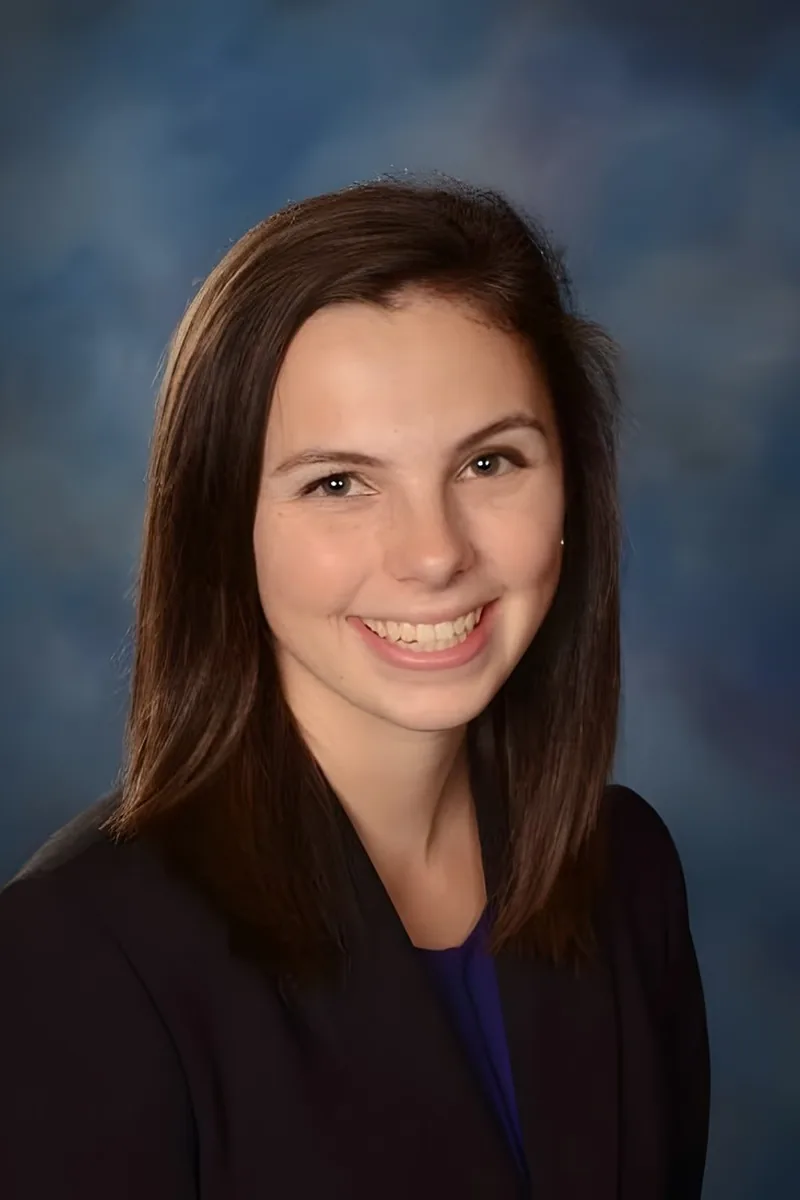
Between a math minor and a college English background, Emma has spent equal time with precise, logic-driven reasoning and close textual analysis — a combination that pays off on the ACT Reading section, where wrong answers often hinge on a single word that shifts scope or reverses a claim. She teaches students to annotate for argument structure on the first pass, so detail and inference questions become quick lookups instead of panicked re-reads. Her 34 ACT composite confirms she's put this approach to work under real testing conditions.
The ACT Reading section is really a speed game — four passages, 35 minutes, and a lot of tempting wrong answers designed to trap students who skim too quickly. Adam scored a 35 ACT composite and treats each passage type (prose fiction, social science, humanities, natural science) as its own puzzle with predictable question patterns. His 5.0 rating comes from teaching students to identify what the passage actually says versus what it merely implies, which is where most points are lost.
Quinn scored a 33 ACT composite and approaches the Reading section as a logic exercise: identify what the passage states, what it implies, and where the test writers try to blur that line. Each session digs into pacing strategy and question-type patterns across prose fiction, social science, humanities, and natural science passages so students know what to expect before test day.
Reading four dense passages in 35 minutes requires a method, not just speed. John breaks the ACT Reading section into a decision-making process: how to skim for structure, when to go back to the text versus trusting your first read, and how to eliminate answer choices that sound right but distort the passage. His 36 composite and background in literature make him especially sharp on the prose fiction and humanities passages.
Most students treat ACT Reading as a speed test, but Ilesh reframes it as a precision exercise: knowing what the question actually asks before hunting for evidence in the passage. His 36 composite came partly from a disciplined passage-mapping strategy that he now teaches students to replicate across all four prose genres the section throws at them.
Medical school at the University of Arizona means Alex reads hundreds of pages of dense, unfamiliar material every week — the same core skill the ACT Reading section tests under a 35-minute clock. With a perfect 36 ACT composite, he teaches students to attack the paired viewpoints and natural science passages by isolating each author's claim before looking at answer choices, which eliminates the subtle scope-shift traps that cost most test-takers points. Rated 4.8 by students.
After scoring a perfect 36 ACT composite, Anna developed a question-first approach to the Reading section — previewing what each question demands before touching the passage, so every line read serves a purpose. Her medical education background means she's used to processing dense, unfamiliar material quickly and extracting exactly what matters, a skill that translates directly to the natural science and social science passages. Rated 5.0 by students.
Reading four dense passages in 35 minutes forces a different kind of reading than most students are used to. Sugi's cognitive science training at Rice gives her a framework for teaching active reading strategies — how to map an argument's structure on a first pass so that inference and tone questions become straightforward rather than agonizing. She holds a perfect 36 ACT composite and a 5.0 tutoring rating.
I am currently a resident physician at Northwestern Hospital.
Most ACT Reading mistakes come from time pressure, not comprehension — students understand passages but can't consistently answer 40 questions in 35 minutes. Elliot teaches a triage strategy: how to identify question types, when to skim versus close-read, and how to eliminate answer choices that paraphrase the passage just enough to seem right. Rated 5.0 by students.
Most ACT Reading mistakes happen not because students can't comprehend the passage but because they spend too long on it and rush the questions. Jiatian teaches a triage method: skim for structure first, then go back to the text with specific question stems in mind. It's the same prioritize-and-filter approach she uses in medical training, applied to literary narratives and social science passages instead of clinical data.
I am a Yale graduate with over 8 years experience tutoring students from a variety of backgrounds. I recently graduated from the Yale School of Public Health with a MPH concentrating in Epidemiology and Global Health. I also received my B.S. from Yale with a double major in Molecular, Cellular, and Developmental Biology and French. I have experience both leading group classes and working with students one on one. I will respond to a student's strengths, weaknesses, and learning style in order to help them succeed and make the most of our time together. I earned a perfect score of 36 on the ACT, 2280 on the SAT, and qualified as a National Merit Scholar on the PSAT. I look forward to working with you!
Most ACT Reading mistakes come from spending too long on one passage or second-guessing answers that felt right the first time. Edward teaches a timing strategy that allocates minutes by passage type — prose fiction, social science, humanities, natural science — and shows students how to locate textual evidence quickly instead of re-reading entire paragraphs. His 36 composite reflects command of every section, not just the math side.
Reading dense, unfamiliar passages under time pressure is where most ACT Reading scores stall out. Austin's background in Classics and Philosophy means he spent years doing exactly that — pulling arguments from ancient texts and evaluating how authors build their claims. He teaches students to map passage structure before touching the questions, turning a 35-minute sprint into a manageable process.
I am available to tutor a range of middle school and high school subjects, but I am most excited about tutoring test prep. I remember how stressful preparing for college can be and I am eager to do my part in helping students fulfill their college goals. I believe that learning is a collaborative process and I am committed to being as actively involved in the student's learning as I can. In my spare time, I enjoy reading, going to the movies (I try to see each Oscar nominee before the ceremony every year.), and am a huge Michigan sports fan.
Mechanical engineering coursework at Harvard means Christopher reads the way the ACT Reading section rewards — extracting key claims from dense technical material fast and ignoring everything that doesn't answer the question in front of him. He applies that same efficiency to all four passage types, teaching students to map an author's argument structure in the first read so that inference and detail questions become quick lookups rather than guesswork. His 35 ACT composite and 4.8 student rating back up the approach.
The ACT Reading section isn't really about comprehension — it's about extracting specific evidence under a brutal time constraint. Benjamin scored a 36 composite and applies the close-reading skills from his Columbia English program to teach students how to identify what each question is actually asking, locate proof in the passage quickly, and eliminate trap answers with confidence.
Most ACT Reading mistakes come from spending too long on passages and rushing through questions — or the reverse. Logan, who earned a 36 composite, teaches a deliberate passage-mapping technique that lets students locate evidence for inference and detail questions without rereading entire paragraphs. His communication background also sharpens how students interpret tone and author's-purpose questions.
I am a Neuroscience and Behavior major at Columbia University. Although my major is centered in the STEM field, I am also passionate about human rights work, global engagement, and local outreach. While my future plans are subject to change, I see myself continuing in academia, going to medical school, and becoming a physician.
The ACT Reading section gives students just 35 minutes for four dense passages, which means raw reading speed matters less than knowing where to look. Alyssa teaches a passage-mapping strategy that pinpoints main claims and key details before touching the questions — an approach refined from her own 35 composite score. She's rated 5.0 by students.
Most ACT Reading struggles come down to time, not comprehension — four passages in 35 minutes leaves almost no room for re-reading. Danielle scored a 36 composite and teaches an active-reading method that captures main idea and tone on the first pass, so students spend their time answering rather than searching. She's especially effective at demystifying the paired-passage and natural science sections that tend to slow students down.
I am currently pursuing a Bachelors of Science in Aerospace Engineering at the Georgia Institute of Technology. I am also a graduate of the high school International Baccalaureate Program. I have informal experience tutoring high school physics, but am most passionate about tutoring students for the ACT standardized test, having had extensive experience preparing for standardized tests throughout high school. I am eager to aid students in boosting their scores before their upcoming college applications, an important milestone in many students' lives. In my free time, I also enjoy playing tennis.
I am most excited about helping other students achieve their dreams of going to medical school by helping them study for the MCAT. Besides MCAT tutoring, my favorite subjects are chemistry, biology, and math which are all subjects I have tutored in before. I believe that every student can learn the material they hope to with the right guidance and effort. I hope that I can help students realize their full potential and grow in confidence as a learner. Outside of teaching, I like to perform in musicals, most recently I have been in local productions of Mamma Mia and Footloose, as well spend time with friends.
I am currently a student at Duke University studying Biomedical Engineering and Economics. Just a little bit about me and some of my interests. Some of my favorite academic interests include memoirs and modern classics. I think Catcher in the Rye is still one of my all time favorite books but Percy Jackson, a modern classic, is up there too. Beyond academics, I take great guilty pleasure in watching TV shows such as Westworld, Sherlock, How I Met Your Mother, and even The Bachelorette when I'm at a low point.
Tracy's strategy for ACT Reading starts with the dual-passage comparison questions, which she considers the section's biggest point opportunities once students learn to read structurally. Instead of re-reading entire passages, she teaches a targeted annotation method — marking tone shifts, key claims, and concession language on the first pass so answers come faster on the second. Her 36 composite reflects how well this approach scales across all four passage types.
I am a recent graduate of Cornell University, where I received a B.S. in Chemical Engineering and graduated Magna Cum Laude. Over the past several years, I have worked with students from diverse backgrounds and experiences tutoring thermodynamics (my personal favorite), chemistry, and math. I have also tutored in the past for ACT/SAT and other subjects such as history, but I am deeply passionate about science and engineering. I tend to push my students to understand conceptual topics, as opposed to rote or algorithmic learning. In my free time, I love to bake sourdough, learn about history, garden, and recently started biking again.
I am an aspiring applied mathematician, with particular interest in image processing and climate science. I graduated in May 2017 from Washington University in St. Louis with a bachelor's in physics and mathematics, and am beginning a PhD program in September 2017 at the University of Chicago in Computational and Applied Mathematics. I've tutored introductory physics students for three years and enjoyed it thoroughly, as a chance to help other students while revisiting fundamental concepts to enhance my own knowledge. I'm eager to continue reaching out and helping students of math and physics to succeed and, furthermore, to appreciate the beauty and power of these subjects.
I'm a sophomore at Vanderbilt University, majoring in Physics and Classics and minoring in Mathematics and Computer Science. I'm qualified to teach a wide variety of subjects, but prefer to focus on the fields I'm studying in school listed above; I have a passion for those areas that I want to share with everyone, no matter the education level or confidence. I believe that no one is "bad at math," but many people haven't been taught math and science concepts in a way that matches how they best learn. As a result, I try to tailor my teaching style to be the best it can be for each individual student. With regard to math and physics, I myself prefer a physical, graphical understanding of different concepts, so I do best at explaining what seemingly abstract concepts actually mean in the real world and how they act on a graph.
The ACT Reading section isn't really about reading — it's about quickly locating evidence and matching it to answer choices under a brutal time constraint. Nicholas, who earned a perfect 36 composite, teaches a systematic passage-attack strategy that prioritizes where to look over how fast to read, cutting down the guesswork that costs students points in the final minutes.
I am a rising sophomore at Case Western Reserve University studying engineering. I have taken most high-school level standardized tests, and have scored consistently above the 95th percentile. I have tutored small groups of students throughout high school, and also have experience as a private tutor. Outside of the classroom, I enjoy playing Ultimate Frisbee with my college club team.
I am currently a fourth year medical student in Indianapolis. I completed my undergraduate education at Indiana University Bloomington, where I majored in Biology and Spanish. I also completed two minors in Mathematics and Chemistry. While at IU, I worked for the Department of Mathematics and Department of Spanish. I also worked as a Peer Tutor for the IU Athletics Department, tutoring in several subjects including statistics, chemistry, physics, and Spanish. I graduated from college with a 4.0, and I entered medical school shortly thereafter. Since coming to medical school, I have excelled in all of my pre-clinical coursework, and I currently rank in the Top 20% of my class. I feel very comfortable and confident tutoring other students in a variety of subjects from math and science to Spanish. I like to think that the same techniques I have used to excel in all phases of my education can be easily adapted to other students and help you achieve your academic goals, just as I have!
I'm not tutoring, I love walking through New York for design inspiration and taking carpentry, metalworking, and illustration classes.
The ACT Reading section isn't really testing how well you read — it's testing how quickly you can locate specific evidence in passages you've never seen before. Sreya scored a 36 composite and developed a systematic approach to dual passages and inference questions that cuts through the time pressure. She teaches students to identify what each question is actually asking before they go back to the text.
The ACT Reading section rewards students who can quickly identify an author's purpose, trace argument structure, and distinguish between what a passage states and what it implies. Liz scored a 34 ACT composite and draws on her history and humanities training at Washington University in St. Louis to teach the kind of close reading that makes 40-minute, four-passage sets manageable. Her background in special education also means she's skilled at adapting pacing and comprehension strategies to fit each student's processing style.
I am an undergraduate of the Johns Hopkins University, majoring in Biomedical Engineering and Computer Science. I have years of experience tutoring and teaching math and various sciences from an elementary to a college level. I primarily tutor college level courses such as physics and biochemistry, but also have extensive experience in social sciences, biology, and higher mathematics such as Calculus and Differential Equations. I believe that demonstrating the various real-world applications of a given concept is the best method to increase a student's understanding.
I am an undergraduate at Washington University in St. Louis majoring in Philosophy-Neuroscience-Psychology on the Premed track. I have two years worth of experience peer tutoring. I feel the most confident tutoring ACT preparation. During my time as a high school student, I worked from an ACT score of 25 to a 36 and developed many effective strategies that I will tailor to the students I tutor and understand the ins and outs of the test. In addition to working with high school peers, I have also enjoyed teaching private piano and violin lessons for elementary students. Helping people knock down their roadblocks is a passion of mine. Standardized tests and basic education may feel removed from our passions, but developing those foundations are essential for opening up opportunities and becoming capable of taking on our pursuits.
Most ACT Reading mistakes come not from misunderstanding the passage but from misreading the question — confusing "the author suggests" with "the passage states" or missing a keyword like "except." Dennis, who earned a perfect 36 composite, teaches a passage-mapping strategy that cuts re-reading time and makes evidence-based answer elimination systematic rather than instinctive.
I am available to tutor in a broad range of subjects, though I am most passionate about Economics, History, and Civics. Please feel free to contact me and I would be happy to arrange a session.
Having studied political science at the University of Chicago — where the Core Curriculum demands rapid synthesis of dense, argument-heavy readings across disciplines — Asta built the exact close-reading stamina the ACT Reading section punishes students for lacking. She teaches students to identify an author's central claim and track how supporting evidence is layered through each paragraph, which turns detail and inference questions into targeted lookups rather than full re-reads. Her 35 ACT composite and 5.0 student rating speak for themselves.
Testimonials
Because the right ACT Reading tutor makes all the difference.
Average Session Rating – Based on 3.4M Learner Ratings
Practice ACT Reading
Free practice tests, flashcards, and AI tutoring for ACT Reading
Other Washington Tutors
Related Test Prep Tutors in Washington
Frequently Asked Questions
Score improvement depends on your starting point and how consistently you engage with tutoring. Students typically see 2-4 point increases on the ACT composite (which includes Reading), though improvement varies based on your baseline score, how much time you dedicate to practice, and which reading skills need the most work. Some students improve faster by focusing on specific question types they struggle with—like inference questions or paired passage comparisons—rather than trying to improve across all areas at once.
The key is identifying your weak spots early through practice tests, then working with a tutor to develop targeted strategies for those areas. With consistent practice and personalized instruction, meaningful improvement is absolutely achievable.
The ACT Reading section gives you 35 minutes to read four passages and answer 40 questions—about 8-9 minutes per passage. Many students struggle with time management, trying to read too carefully and running out of time for the last passage. A more effective approach is to skim the passage first to understand its structure and main ideas, then refer back to the text for specific questions rather than memorizing details.
Another useful strategy is tackling questions strategically: answer the easier questions first, flag tough ones, and come back if time allows. Practicing with full timed tests helps you find your optimal pace. Tutors can help you experiment with different strategies and identify what works best for your reading style.
Paired passages appear in one of the four passages on test day, and they require comparing or contrasting two related texts. The biggest mistake students make is treating them like two separate passages instead of actively looking for connections. Try this approach: read the first passage and answer its questions, then read the second passage, answer its questions, and finally tackle the "both passages" questions that require comparison.
For comparison questions specifically, take notes on each author's main argument, tone, and key points. Ask yourself: Do they agree or disagree? What's the main difference in perspective? Practicing multiple paired passages helps you recognize common comparison patterns. A tutor can give you targeted feedback on which comparison question types trip you up most.
Literal comprehension questions ask what the text directly states—you can point to the answer in the passage. Inference questions ask what you can reasonably conclude based on textual evidence, even if those exact words aren't there. For example, if a passage says "The scientist spent hours in the lab despite her exhaustion," a literal question might ask what the scientist did, while an inference question might ask what this reveals about her dedication.
The trick with inference questions is that your answer must be supported by evidence in the text—it's not about your personal interpretation. Practice by asking yourself "What evidence supports this conclusion?" for every inference question you attempt. Many students struggle with inference because they either go too far beyond the text or stick too close to it. Working through practice passages with a tutor helps you calibrate your inference instincts.
Consistent, focused practice works better than cramming. Aim for at least 2-3 ACT Reading practice sessions per week, with each session including 1-2 full passages (or about 10-20 questions). This frequency allows you to practice different question types and build momentum without overwhelming yourself. Quality matters more than quantity—one carefully analyzed passage is more valuable than quickly rushing through four.
For students preparing over 2-3 months, consider taking a full practice test every 2-3 weeks to track overall progress, and use your off weeks for targeted practice on specific question types or passages that give you trouble. Your tutor can help you structure a practice schedule that fits your timeline and identifies which content areas need the most attention.
ACT Reading passages are generally more straightforward and chronologically organized, while SAT Reading passages often have more complex sentence structures and layered meanings. ACT asks more "what does the passage say" questions, while SAT leans heavily into inference and interpretation. Also, ACT Reading includes a Natural Science passage, Social Science passage, paired passages, and prose passages—each with slightly different reading demands.
If you've been studying for SAT Reading, the good news is you've built strong reading skills. However, you'll need to adjust your strategies: ACT rewards efficient skimming and line-by-line question answering, while SAT benefits from deeper initial reading. Tutors familiar with both tests can help you leverage what you've already learned while adapting to ACT's specific format and question patterns.
Test anxiety often stems from uncertainty—not knowing what to expect or whether you'll finish in time. Personalized tutoring builds confidence by helping you understand the test format deeply, practice under timed conditions repeatedly, and develop strategies that feel natural to you. When you know exactly what's coming and have a reliable approach, anxiety usually decreases naturally.
A tutor can also help you build a pre-test routine, teach breathing or focusing techniques, and ensure you're practicing full timed sections regularly so the actual test feels familiar rather than frightening. Many students find that taking practice tests in a structured tutoring environment helps them manage anxiety better than studying alone, since they get immediate feedback and reassurance from an expert.
Let’s find your perfect tutor
Answer a few quick questions. We’ll recommend the right plan and match you with a top 5% tutor.