Award-Winning Fractions Tutors
serving Washington, DC
Who needs tutoring?
FEATURED BY


TUTORS FROM
- YaleUniversity
- PrincetonUniversity
- StanfordUniversity
- CornellUniversity
Award-Winning Fractions Tutors serving Washington, DC
Certified Tutor
6+ years
Rhea
I am a current student at the University of Chicago. I am working towards a Bachelor of Science in Biological Sciences, and I am on the pre-medical track. I am extremely passionate about tutoring, and I have several years of experience tutoring students in my high school's learning center in various...
University of Chicago
Bachelor of Science, Biology, General

Certified Tutor
Max
I am in the process now of applying for PhD programs in Computational Biology. I have done research in the field of freshwater ecology and am anticipating the publication of a paper I co-authored in the next several months.
Ball State University
Bachelors, Biology, General
Certified Tutor
8+ years
Emily
I am currently a fourth year medical student in Indianapolis. I completed my undergraduate education at Indiana University Bloomington, where I majored in Biology and Spanish. I also completed two minors in Mathematics and Chemistry. While at IU, I worked for the Department of Mathematics and Depart...
Indiana University-Bloomington
Bachelor of Science, Biology, General
Indiana University-Purdue University-Indianapolis
Doctor of Medicine, Community Health and Preventive Medicine

Certified Tutor
5+ years
Ishan
I am a current sophomore at Rensselaer Polytechnic Institute, where I am majoring in Biology as part of the 7 Year Accelerated Medical Program. I am also minoring in Healthcare Economics and Policy. My favorite subjects in school are Chemistry, Biology, and Math, but I also enjoy the process of writ...
Rensselaer Polytechnic Institute
Bachelor of Science, Biology, General
Albany Medical College
Doctor of Medicine, Premedicine

Certified Tutor
6+ years
Ilesh
I am a recent grad from Georgia Tech, majoring in Industrial and Systems Engineering (an intersection of math, computer science, and business) and minoring in Business and Technology. I am originally from Columbus, OH, but chose to come down to Atlanta after getting a full-ride scholarship from Geor...
Georgia Institute of Technology-Main Campus
Bachelor of Science, Industrial Engineering
Certified Tutor
9+ years
Vansh
I am currently pursuing a Bachelors of Science in Aerospace Engineering at the Georgia Institute of Technology. I am also a graduate of the high school International Baccalaureate Program. I have informal experience tutoring high school physics, but am most passionate about tutoring students for the...
Georgia Institute of Technology-Main Campus
Bachelor of Science, Aerospace Engineering
Certified Tutor
5+ years
Benjamin
I am a 2023 graduate of the University of Notre Dame with a Finance/Economics major and a minor in Innovation and Entrepreneurship. I am a passionate student in the math and business realms, as I enjoy the intuitiveness of the former and the real-world potential of the latter. During classes in midd...
University of Notre Dame
Bachelor of Science in Finance and Economics (minor: Innovation and Entrepreneurship)
Certified Tutor
5+ years
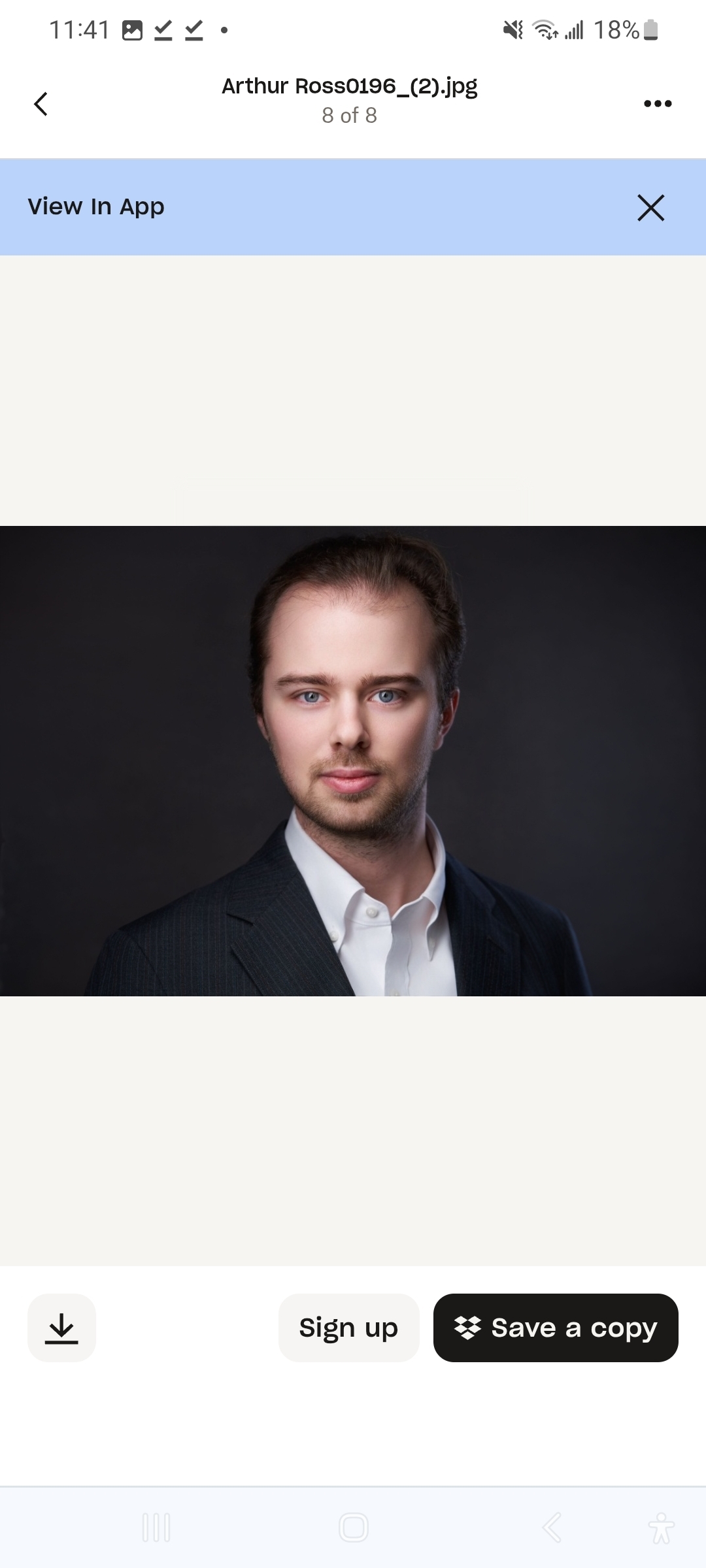
Arthur
I am available to tutor in a broad range of subjects, though I am most passionate about Economics, History, and Civics. Please feel free to contact me and I would be happy to arrange a session.
Middlebury College
Bachelor in Arts, Economics
Certified Tutor
6+ years
Rahul
I am a recent graduate of Cornell University, where I received a B.S. in Chemical Engineering and graduated Magna Cum Laude. Over the past several years, I have worked with students from diverse backgrounds and experiences tutoring thermodynamics (my personal favorite), chemistry, and math. I have a...
Cornell University
B.S. in Chemical Engineering
Certified Tutor
16+ years
John
I'm a huge Red Sox fan and love watching detective shows when I have free time.
University of St Thomas
Bachelor of Fine Arts, English/Drama
American Academy of Dramatic Arts
Associates, Acting
Other Washington Tutors
Related Math Tutors in Washington
Frequently Asked Questions
In Washington, DC schools, students typically begin learning fractions in 3rd grade with basic concepts like halves and quarters, then progress through comparing and ordering fractions, adding and subtracting fractions with like and unlike denominators (4th-5th grade), and multiplying and dividing fractions (6th grade). By middle school, students work with fractions in more complex contexts like ratios, proportions, and as they transition to decimals and percentages. The specific pacing can vary by school, so connecting with a tutor who understands your student's particular curriculum helps ensure instruction aligns with what's being taught in their classroom.
Fractions represent a significant conceptual shift for many students because they require understanding that a single number can be expressed in multiple equivalent ways—unlike whole numbers where 3 always means 3. Common challenges include visualizing what fractions represent, understanding why you can't always add numerators and denominators the way you add whole numbers, and struggling with the different contexts fractions appear in (parts of a whole, division, ratios). Personalized 1-on-1 instruction is particularly effective for fractions because a tutor can identify whether a student's struggle stems from conceptual misunderstanding, procedural gaps, or both, and address the root cause rather than just practicing procedures.
Improvement timelines vary based on where a student is starting and the frequency of tutoring. Students who receive consistent, focused instruction typically see noticeable progress within 4-6 weeks as foundational understanding solidifies. However, mastering fractions—including fluency with operations and applying them in different contexts—usually takes longer. The key is moving past memorized procedures to genuine understanding, which requires practice across different problem types and real-world applications. Tutors working with students in Washington, DC can create customized study plans that match your student's pace and build confidence alongside competence.
Visual models like fraction bars, number lines, area models, and circle diagrams help students see what fractions actually represent before they work with abstract symbols. For example, a fraction bar makes it clear that 2/4 and 1/2 cover the same length, helping students grasp equivalent fractions concretely. Number lines are particularly powerful for understanding that fractions are positions on a continuum, not just parts of a shape. Expert tutors use multiple visual representations because different models work better for different concepts—area models are great for multiplication, while number lines excel for understanding ordering and operations. This concrete-to-abstract progression is fundamental to building lasting fraction understanding.
Word problems with fractions require students to translate language into mathematical operations, which adds a layer of complexity on top of fraction skills themselves. Students must decide not just how to solve the problem, but what operation applies—and fraction operations don't always match intuition the way whole number problems do. For instance, "sharing 2 pizzas among 3 people" leads to division by a whole number, while "finding 1/3 of 24" uses multiplication. Many students can perform fraction operations in isolation but struggle to apply them in context. Personalized tutoring helps students develop problem-solving strategies—like drawing pictures, identifying what information matters, and checking if their answer makes sense—that make word problems less intimidating.
An effective fractions tutor should be able to diagnose where understanding breaks down—whether a student struggles with the concept itself, the procedure, or recognizing when to apply different operations. They should use multiple representations (visuals, manipulatives, number lines) rather than relying only on algorithms, and ask questions that help students think through problems rather than just showing them how to solve them. The tutor should also connect fractions to concepts students already understand and show how fractions build toward future topics like ratios and algebraic thinking. When you connect with tutors through Varsity Tutors for fractions instruction in Washington, DC, you can discuss your student's specific challenges and ensure the match is a good fit for their learning style.
Parents can reinforce fraction understanding by pointing out fractions in everyday contexts—cooking recipes, sharing food, telling time, measuring—which helps students see that fractions are practical tools, not abstract math. Ask open-ended questions like "What fraction of the pizza is left?" or "If we split this orange between 4 people, how much does each person get?" rather than just drilling procedures. Avoid saying things like "Fractions are hard" or comparing your student to siblings, as math confidence is as important as competence. If frustration builds, stepping back is better than pushing through, and connecting with a tutor can provide the patient, expert explanation that helps many students have their "aha" moments with fractions.
Connect with Fractions Tutors in Washington
Get matched with local expert tutors