Award-Winning AP Biology Tutors
serving Tampa, FL
AP Biology
Tutors in Tampa
Private 1-on-1 tutoring, weekly live classes for academic support, test prep & enrichment, practice tests and diagnostics, and more to elevate grades and test scores.
Based on 3.4M Learner Ratings
UniversitiesSchools & Universities
DeliveredHours Delivered
ProficiencyGrowth in Proficiency
Who needs tutoring?
No obligation. Takes ~1 minute.

Rice University's biochemistry program is notoriously rigorous, and Michelle came out of it with a deep understanding of how molecular processes — protein folding, enzyme kinetics, gene regulation — drive the larger biological systems AP Bio tests at every level. Now in her second year of medical school at Baylor, she's actively applying concepts like metabolic pathways and cellular communication in clinical settings, which means she can teach students not just what happens during something like signal transduction, but why it matters physiologically.
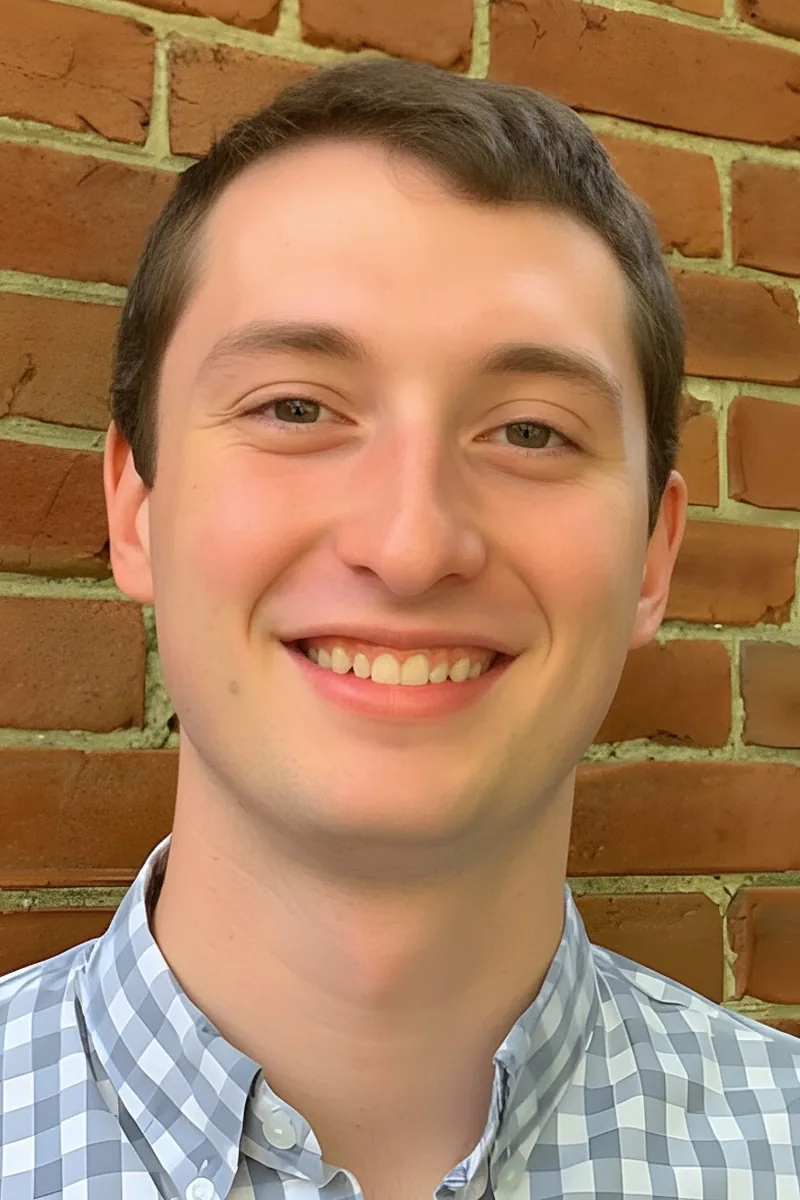
AP Bio covers an enormous range — from molecular genetics to ecology — and the exam rewards students who can apply concepts to unfamiliar experimental scenarios, not just recall definitions. Phillip studies biomedical engineering at Brown, so he regularly engages with cell signaling, gene expression, and physiological systems at a level well beyond the AP curriculum. He teaches students to interpret data figures and design experiments the way the free-response questions demand.
AP Bio covers a staggering range — from cellular respiration pathways to ecology population models to gene regulation — and the exam rewards students who can analyze data, not just recall facts. Kate's science background and engineering training make her especially sharp on the quantitative side of the course, including Chi-square analysis, Hardy-Weinberg calculations, and interpreting experimental results.
Ellie's biomedical engineering coursework at Yale — plus her autism research in the School of Medicine — means she's working with the molecular and cellular biology that AP Bio tests at a level where she can explain not just what happens during signal transduction or gene regulation, but why it matters in a living system. She also tutors a Differential Equations course weekly, so she's comfortable with the quantitative reasoning behind chi-square problems and data analysis that trips up students on the exam's free-response sections. Rated 5.0 by students.
A Yale biochemistry degree plus a year of wet lab research at the NIH means Matthew knows AP Biology's toughest units — molecular genetics, cellular energetics, signal transduction — from the inside out. He teaches the exam's data-analysis questions the way a working scientist reads them: by identifying variables, controls, and what the graph is actually telling you. His 4.9 rating speaks to how well that real-world perspective translates in sessions.
Three years running a cell biology lab section at Notre Dame gave Connor a front-row seat to exactly where students stumble on AP Bio material — signal transduction pathways, gene regulation, experimental design questions. His master's work in biomedical sciences deepened that knowledge, and he teaches the course with an eye toward the free-response questions that separate 4s from 5s.
Studying biomedical engineering at Duke means Eric thinks about biological systems at the molecular, cellular, and organismal levels every day. He tackles AP Biology's toughest units — signal transduction, gene regulation, and energy flow through ecosystems — by tying them back to the underlying logic that the AP exam rewards.
Dennis's physics research — simulating turbulent plasmas at Princeton and building optical filters at Norfolk State — might seem distant from AP Bio, but it trained him to think in systems and trace energy through complex processes, which is exactly what cellular energetics and ecosystem dynamics demand. His 36 ACT and strong science foundation mean he can teach students to reason through photosynthesis and respiration as energy transfer problems, not just memorization lists, which pays off on the exam's data-analysis and free-response questions.
Teaching 10th-grade Biochemistry at a competitive Philadelphia magnet school means Kathleen lives in the overlap between biology and chemistry that defines the AP Bio exam. She digs into the molecular details — enzyme kinetics, cellular respiration energetics, gene expression regulation — with the depth the College Board expects on free-response questions. Rated 5.0 by students.
AP Bio covers an enormous range — from molecular genetics to ecosystem dynamics — and the exam tests whether students can apply concepts to unfamiliar experimental scenarios. JF's mathematical and computational science training at Stanford sharpens the data-analysis and graph-interpretation skills that the redesigned AP Bio exam leans on heavily. That analytical lens turns intimidating free-response questions into structured problem-solving exercises.
Studying biological sciences at the University of Chicago while on the pre-med track, Rhea lives inside the material AP Bio tests — from cellular respiration pathways to gene regulation to ecological modeling. She knows which free-response topics the exam leans on hardest and teaches students to construct the kind of precise, evidence-based explanations that earn full credit.
The AP Biology exam tests whether you can apply concepts — designing experiments around cellular respiration, interpreting data on gene expression, reasoning through ecological models. As a biology major at Stanford, Helen digs into these application-style questions and teaches the kind of scientific thinking the exam actually rewards. She holds a 5.0 client rating.
Between her teaching assistant role for introductory biology at Cornell and her active cancer immunotherapy research on melanoma, Annie lives the material that AP Biology tests. She digs into the toughest units — cell signaling, gene expression and regulation, energy pathways — with the kind of mechanistic detail that earns 4s and 5s on the exam.
A human biology degree from Cornell plus current graduate work in human development means Jonathan has studied the organism-level physiology and developmental processes that AP Bio's later units build toward — growth, reproduction, and how organisms maintain homeostasis through feedback mechanisms. He's particularly good at teaching students to read experimental data and construct the kind of evidence-based arguments the free-response section demands, a skill sharpened by his own med school prep and 1550 SAT analytical training. Rated 4.9 by students.
Stanford's Human Biology program with a bioinformatics and stem cell science concentration meant Matthew spent his coursework at the intersection of computation and living systems — analyzing gene expression data, studying cell differentiation pathways, and thinking about biology as information processing. That lens is especially useful for AP Bio's molecular biology and genetics units, where students need to trace how information encoded in DNA gets read, regulated, and occasionally misread. Rated 4.9 by students.
Succeeding on the AP Biology exam means going beyond memorizing cell structures and metabolic pathways — it means interpreting experimental data, constructing explanations, and reasoning across biological scales from molecules to ecosystems. Jake studies Human Biology at Stanford, where his coursework in genetics, physiology, and ecology maps directly onto the AP curriculum's four big ideas.
Working in a Yale research lab that uses CRISPR-Cas9 gives Matthew a perspective on AP Biology that most tutors can't offer — he connects textbook topics like gene regulation, signal transduction, and evolution to experiments happening right now. He's especially sharp on the free-response questions, where students need to design experiments and interpret data rather than just recall facts.
Cell and molecular biology was Emily's concentration at Duke, where she graduated summa cum laude — so the AP Bio units on gene expression, cell communication, and the central dogma aren't review material she's recalling vaguely, they're concepts she studied at an advanced level and now revisits daily as a Columbia medical student. She's especially sharp at teaching students to diagram signal transduction pathways and trace how a single mutation can ripple through protein function, cell behavior, and organism-level phenotype — the kind of multi-scale reasoning that separates 4s from 5s on the exam. Rated 5.0 by students.
UCLA's Physiological Sciences program and subsequent research work gave Annie deep fluency with the organ-system and cellular-level biology that AP Bio tests — particularly the units on homeostasis, membrane dynamics, and metabolic regulation. Now a second-year medical student, she teaches students to think like the exam writers do: tracing a biological mechanism from molecule to organism, which is the connective reasoning that earns full marks on free-response questions. Rated 5.0 by students.
Studying biology and chemistry on the pre-med track at Northwestern means Kade is immersed daily in the exact material the AP Bio exam tests — from cellular respiration and signal transduction to gene regulation and evolutionary mechanisms. He also runs study groups at his university, so he's practiced at explaining dense concepts like feedback inhibition or Hardy-Weinberg equilibrium in ways that actually stick. That combination of current coursework and teaching experience makes a real difference on exam day.
Graduate research in Chemical and Physical Biology at Vanderbilt meant Dennis spent years at the intersection of chemistry and living systems — dissecting metabolic pathways, protein interactions, and cellular energetics at a level that makes AP Bio's toughest biochemistry content second nature. His biochemistry undergraduate degree adds even more depth to the molecular biology and genetics units, where he can unpack processes like enzyme kinetics or gene regulation by grounding them in the actual chemistry students rarely get to see in a high school course. Rated 5.0 by students.
Todd's undergraduate biology degree from UIUC gives him the content foundation for AP Bio, but it's his 33 ACT and analytical training through his University of Chicago graduate work that sharpen how he teaches the exam's trickiest skill: translating dense lab data into clear, structured free-response answers. He zeroes in on the units where students lose the most points — cellular energetics and heredity — and builds the kind of process-level reasoning that turns memorized pathways into usable knowledge on test day.
As a neuroscience major on the pre-med track at Vanderbilt, Eileen lives inside the material AP Biology tests: cell signaling, gene expression, metabolic pathways, and evolutionary mechanisms. She unpacks dense topics like the lac operon or oxidative phosphorylation by sketching out each step visually, turning overwhelming detail into a logical sequence students can actually reconstruct on exam day.
Srini is studying molecular biophysics at Brown, which means AP Bio topics like cell signaling cascades, gene expression, and membrane transport aren't just exam material — they're his daily coursework. He unpacks the why behind each biological process, connecting molecular details to the big-picture themes the AP exam rewards. Rated 4.8 by students.
Studying neurobiology and behavior at Penn means Emily lives in the territory where AP Bio gets hardest — signal transduction, nervous system function, and the molecular machinery behind how cells communicate and respond to their environment. She's especially good at unpacking the genetics-to-phenotype pipeline, showing students how a mutation in one gene can ripple through protein folding, cell signaling, and ultimately organism-level behavior. Rated 5.0 by students.
Cellular respiration, gene regulation, ecological energy flow — AP Biology demands that students think across scales, from molecules to ecosystems, often within a single free-response question. Sharan is deep in this material as a Human Biology major on the premed track at Cornell, and she unpacks complex processes like signal transduction by walking through each step with clear cause-and-effect reasoning.
A UCLA biology grad with cum laude honors now pursuing his MD at the Medical College of Wisconsin, Abrahim has studied AP Bio's content at every level — from undergrad genetics and cell biology through the clinical physiology he encounters in medical school daily. He's particularly sharp at teaching students how to design and interpret experiments, a skill he honed through years of science coursework and standardized exam prep where data analysis is make-or-break. Rated 5.0 by students.
Annabel is a molecular biology major heading to medical school, so the content on the AP Bio exam — from cellular respiration and signal transduction to gene regulation and evolutionary evidence — is material she uses daily in her coursework and lab work. She teaches students to think in the way the exam rewards: interpreting data sets, designing experiments, and connecting molecular details to big-picture biological themes.
Ethan's economics and public policy studies at the University of Chicago aren't a typical path into AP Bio, but they've made him sharp at interpreting data sets, constructing evidence-based arguments, and reasoning through cause-and-effect chains — all skills the exam's free-response questions heavily reward. He's especially useful for students who struggle with the experimental design and data analysis portions of the test, where reading graphs and evaluating hypotheses matters more than memorizing vocabulary.
Teaching has been a lifelong passion of mine. What drives me is sharing knowledge while genuinely connecting with others. I discovered my love for tutoring in high school and have been dedicated to it ever since. At Stanford University, I earned a BS in Human Biology and Chemistry while continuing to tutor throughout, advancing to Lead Tutor. After graduation, I spent a year as a Teaching Associate, designing and delivering course content which significantly broadening my pedagogical approach. What sets me apart is my versatility. Having served as both tutor and instructor, I can adapt my teaching style to each student's unique needs, whether that be building up foundational skills or pursuing advanced mastery. I'm now pursuing graduate studies at The Johns Hopkins School of Medicine, staying engaged with cutting-edge science while maintaining my commitment to education. I look forward to helping you achieve your academic goals!
A molecular biology degree means Andrew has worked through the central dogma, cell division, and metabolic pathways at the bench level — exactly the content AP Bio's exam leans on hardest. His PhD training in law and management might seem unrelated, but it sharpened the argumentative writing skills that translate directly to constructing the multi-part explanations free-response questions demand. Rated 4.8 by students.
As a Cornell biology student on a pre-med track, Karim is actively studying the same cellular processes, genetics, and ecological concepts that AP Bio tests — so his explanations come with the freshness of someone working through this material at the college level right now. He's especially strong at breaking down how organisms maintain homeostasis and how evolutionary pressures shape populations, the kinds of big-picture connections the exam's data-interpretation questions demand. Rated 5.0 by students.
AP Bio covers an enormous range — from cellular respiration and gene expression to ecology and evolution — and the exam rewards students who can apply concepts to unfamiliar experimental scenarios. Lauren's dual background in neuroscience and chemistry at Duke means she connects molecular-level detail to big-picture biological systems, which is exactly the kind of thinking the free-response questions demand.
Cellular respiration, genetics, and evolution each require a different kind of thinking — sometimes quantitative, sometimes conceptual, sometimes both at once. Nima breaks down processes like the electron transport chain or Hardy-Weinberg equilibrium into logical steps, drawing on the same analytical rigor that earned him a full merit scholarship to Duke.
Biophysics at Rice means Aadith studies biological systems through a quantitative lens — analyzing protein folding energetics, membrane dynamics, and molecular interactions — which gives him an unusual edge on AP Bio's units covering macromolecule structure, enzyme kinetics, and cellular energetics. He's also actively taking biochemistry coursework alongside his physics major, so he can explain concepts like the chemiosmotic mechanism or allosteric regulation with the kind of molecular-level precision that earns full credit on free-response questions.
Between his neuroscience research at the Jungers Center and molecular biology work at the Oregon Stem Cell Center, Daniel has lived the content that shows up on the AP Biology exam — from cellular signaling pathways to gene expression and evolution. He teaches the free-response section by connecting big biological ideas to the experimental design skills the College Board actually tests for.
The free-response questions on the AP Bio exam reward students who can explain *why* a process works, not just label its steps — and Rebecca's biology degree means she's spent years building that kind of mechanistic thinking around topics like gene regulation, cellular energetics, and ecological dynamics. She also brings strong writing chops from her English and composition background, which turns out to be a real advantage when students need to construct clear, logical explanations under time pressure. Rated 5.0 by students.
Nicolette's bioengineering degree from Rice meant she didn't just memorize biological systems — she had to model them, which is exactly the kind of mechanistic thinking AP Bio's free-response questions demand when students need to explain processes like signal transduction or feedback in gene regulation. Her engineering training makes her especially sharp at teaching students to reason through experimental design and data interpretation questions, where you have to connect variables to biological outcomes rather than just recall facts. Rated 5.0 by students.
Laura's economics background might seem like an odd fit for AP Bio, but it actually sharpens one of the exam's trickiest skills: interpreting data sets, reading graphs under pressure, and constructing logical arguments from evidence — exactly what the free-response section demands. She also tutors the SAT Bio Subject Test and college biology, so she's comfortable with content from ecology and population dynamics to cellular processes. Rated 5.0 by students.
Brown's Health and Human Biology concentration has Nova deep in the cellular and molecular content that AP Bio tests hardest — but her real edge is on the SAT Subject Test in Biology E/M, which means she's drilled the kind of rapid concept application the AP exam's multiple-choice section demands. She scored a 1530 SAT and holds a 5.0 rating, and she approaches the evolution and ecology units by tying them back to the human biology lens that makes abstract population dynamics feel concrete.
Testimonials
Because the right AP Biology tutor makes all the difference.
Average Session Rating – Based on 3.4M Learner Ratings
Practice AP Biology
Free practice tests, flashcards, and AI tutoring for AP Biology
Nearby AP Biology Tutors
Other Tampa Tutors
Related Science Tutors in Tampa
Frequently Asked Questions
Score improvement depends on your starting point and commitment level, but students who work with expert tutors typically see meaningful gains. Many students improve by 1-2 score points on the 1-5 AP scale, with some gaining even more through focused preparation on weak topic areas. The key is identifying which units you struggle with most—whether that's cellular respiration, photosynthesis, genetics, or evolution—and drilling those concepts alongside full-length practice exams to build test-taking stamina.
The AP Biology exam has two main sections: a multiple-choice section (60 questions in 90 minutes) and a free-response section (6 questions in 90 minutes). The multiple-choice section tests knowledge and data interpretation, while free-response questions require you to explain concepts, analyze data, and design experiments. Success requires different strategies for each: for multiple-choice, you need to understand not just the right answer but why distractors are wrong; for free-response, you need to practice organizing your thoughts quickly and writing concise, scientifically accurate explanations. Expert tutors can help you develop pacing strategies so you don't run out of time.
Students for students in Tampa frequently struggle with unit 5 (heredity), unit 6 (gene expression), and unit 7 (natural selection). These units involve abstract thinking about molecular processes and require you to connect concepts across multiple levels—from DNA sequences to organism behavior. The best approach is to use active learning strategies like creating your own concept maps, teaching the material out loud, and working through countless practice problems rather than just re-reading notes. A tutor can identify exactly where your understanding breaks down—whether it's Mendelian genetics, regulation of gene expression, or population genetics—and target those gaps with focused practice.
Ideally, aim for 4-6 full-length practice exams spread throughout your preparation timeline. If you're starting in the fall for a May exam, you can afford to take a diagnostic practice test early to identify weak areas, then focus on targeted content review before ramping up to full-length exams in the final 4-6 weeks. Each practice test should be followed by detailed review—not just checking your answers, but understanding the reasoning behind each question and noting patterns in what trips you up. Tutors can help you analyze your practice test data to create a strategic study plan rather than wasting time on topics you've already mastered.
Free-response questions reward clear, organized thinking and scientific communication. Start by reading the entire question and identifying what's being asked—often there are multiple parts (a, b, c, d) and each is worth points. For questions involving data analysis, always describe what the data shows before making conclusions. For experimental design questions, make sure you identify variables, controls, and what you're measuring. Practice writing under timed conditions is essential because you typically have about 15 minutes per question. Expert tutors can give you real-time feedback on your writing, help you learn what the College Board is looking for, and teach you how to avoid common pitfalls like vague language or incomplete explanations.
A solid AP Biology preparation timeline spans 4-6 months, with most students dedicating 5-8 hours per week for consistent mastery. If you're starting in January for a May exam, break your study into phases: January-February for units 1-3 (biochemistry and cell structure), February-March for units 4-5 (cell division and heredity), March-April for units 6-7 (gene expression and evolution), and April-May for units 8-9 (ecology) plus heavy practice exam review. However, the exact timeline should match your starting knowledge level and test date. A tutor can help you create a personalized study schedule that allocates more time to your weaker units rather than studying everything equally.
Test anxiety for AP Biology often stems from feeling unprepared for the breadth of content or uncertainty about exam format. The most effective antidote is familiarity: taking multiple practice exams under timed conditions helps your brain get used to the exam environment and reduces surprises on test day. You'll also build confidence by tracking your improvement on practice tests and identifying topics where you've genuinely mastered the material. Beyond that, develop a pre-exam routine (good sleep, light review, healthy breakfast) and simple breathing techniques during the test if you feel anxious. Expert tutors can provide encouragement based on your actual progress data and help you develop a positive, growth-oriented mindset about challenging concepts you initially found difficult.
Let’s find your perfect tutor
Answer a few quick questions. We’ll recommend the right plan and match you with a top 5% tutor.