Award-Winning AP Computer Science Principles Tutors
serving Boston, MA
Who needs tutoring?
FEATURED BY


TUTORS FROM
- YaleUniversity
- PrincetonUniversity
- StanfordUniversity
- CornellUniversity
Award-Winning AP Computer Science Principles Tutors serving Boston, MA
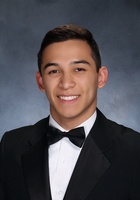
Certified Tutor
6+ years
Samuel
Samuel's applied math training at Caltech intersects directly with AP CSP's algorithm and data units — he can trace how a sorting algorithm's efficiency scales or why lossy compression works because he uses that math daily. He also taught a discrete mathematics course through PACT, which means pseud...
California Institute of Technology
Bachelor of Science, Applied Mathematics

Certified Tutor
5+ years
Benjamin
Benjamin's finance and economics training at Notre Dame meant constant work with data modeling, algorithmic thinking, and spreadsheet automation — skills that map directly onto AP CSP's units on data analysis, abstraction, and the impact of computing. He approaches the Create Task like a business ca...
University of Notre Dame
Bachelor of Science in Finance and Economics (minor: Innovation and Entrepreneurship)
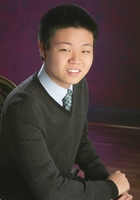
Certified Tutor
9+ years
Daniel
Daniel's biomedical engineering coursework at Rice means he writes algorithms to process real biological data — exactly the kind of computational thinking AP CSP tests through its Big Ideas on data analysis and abstraction. He brings that applied perspective to the Create Task, coaching students to ...
Rice University
Current Undergrad Student, Biomedical Engineering
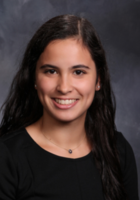
Certified Tutor
9+ years
Isabella
Having TA'd computer science courses at MIT and now pursuing a PhD in Operations Research at Georgia Tech, Isabella brings real programming fluency — particularly in Python — to the algorithmic thinking and data analysis threads that run through AP CSP. She digs into how pseudocode on the exam maps ...
Massachusetts Institute of Technology
Bachelor of Science in Mathematics (minors in Management Science and Ancient and Medieval Studies)
Georgia Institute of Technology-Main Campus
Current Grad Student, Operations Research
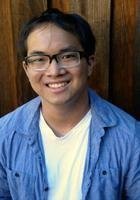
Certified Tutor
9+ years
David
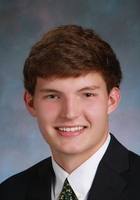
Cognitive science training at Stanford gave David an unusual lens for AP CSP — he studied how humans process information before studying how computers do, which means he can explain abstraction, algorithms, and data representation in terms that actually click. His experience teaching web and app dev...
Stanford University
Master of Science, Computer Science
Stanford University
Bachelor of Science, Cognitive Science
Stanford University
BS in Cognitive Science
Certified Tutor
9+ years
Daniel
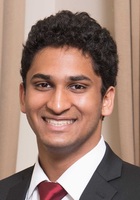
Daniel's electrical engineering coursework at Vanderbilt means he writes actual code in Java and works with hardware-software interfaces daily — background that makes the pseudocode and abstraction concepts in AP CSP click faster for students. He zeroes in on algorithm design and data representation...
Vanderbilt University
Bachelor of Engineering, Electrical Engineering
Certified Tutor
8+ years
Pratik
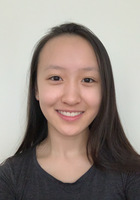
Pratik doesn't come from a traditional CS background, but his premed training at Cornell — where he regularly works with data sets, statistical models, and logical reasoning — maps directly onto the computational thinking AP CSP tests. He's especially effective at breaking down the data analysis and...
Cornell University
Bachelor in Arts, Biology, General
Certified Tutor
6+ years
Julia
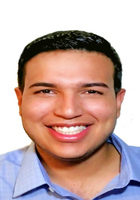
Stanford's economics curriculum leans heavily on data analysis and programming — skills that map directly onto AP CSP's units on data representation, algorithms, and computational thinking. Julia applies that quantitative training to demystify pseudocode logic and the Create Task's written responses...
Stanford University
Bachelor of Science, Economics
Certified Tutor
9+ years
Derek
Derek scored 5s on both AP Computer Science A and AP Physics C while taking 16 APs at the high school level, so he knows how to manage the breadth of a course like AP CSP without letting any Big Idea slip through the cracks. Now studying CS at Harvard with an applied math minor, he digs into the alg...
Harvard University
Bachelor in Arts, Computer Science
Certified Tutor
6+ years
Ronit
Ronit studies computer science at Yale and knows AP CSP's curriculum from the student side — which Big Ideas actually trip people up on the multiple-choice and where the Create Task rubric quietly punishes vague written responses. He digs into the explanatory writing piece that most students underes...
Yale University
Bachelor of Science, Computer Science
Nearby AP Computer Science Principles Tutors
Other Boston Tutors
Related Technology and Coding Tutors in Boston
Frequently Asked Questions
AP Computer Science Principles focuses on computational thinking and real-world applications of computing rather than heavy programming syntax. The course covers five big ideas: creative development, data, algorithms, programming, and computing systems. Students learn to design algorithms, analyze data, understand cybersecurity, and explore how computing impacts society. For students in Boston preparing for the exam, understanding these conceptual foundations is just as important as hands-on coding practice.
Score improvement depends on your starting point and consistency with tutoring. Students who work with tutors typically see gains of 1-2 score points on the 1-5 AP scale, with larger improvements possible if you're addressing fundamental gaps in understanding algorithms or data analysis. The key is identifying your specific weak areas—whether that's the multiple-choice section, the Create Performance Task, or conceptual topics like binary representation—and targeting those systematically over several months.
Many students struggle with the balance between conceptual understanding and practical application—the exam tests both your ability to code and your understanding of how computing systems work in the real world. The Create Performance Task, which requires students to design and document a program, is particularly challenging because it demands clear communication of computational thinking. Additionally, students often underestimate the importance of understanding binary, algorithms, and cybersecurity concepts, which make up a significant portion of the multiple-choice section.
The Create Performance Task is worth 30% of your AP score, and tutors can help you develop a strong project from conception through documentation. Expert tutors can guide you in selecting an appropriate program idea, breaking down the development process into manageable steps, and crafting clear written explanations of your code's functionality and design choices. They can also review your documentation to ensure it meets the College Board's specific requirements for demonstrating computational thinking.
Most students benefit from starting tutoring 3-4 months before the May exam, meeting weekly or bi-weekly depending on their comfort level with the material. If you're starting later or have significant gaps in understanding programming concepts or algorithms, more frequent sessions (2-3 times per week) can help you catch up. The ideal timeline gives you time to work through the curriculum systematically, take practice tests, identify weak areas, and refine your performance task before exam day.
On the multiple-choice section, read questions carefully—AP CSP questions often test conceptual understanding rather than just coding knowledge, so understanding what the question is really asking is critical. For time management, aim to spend about 1.5 minutes per question, flagging difficult ones to revisit. When approaching algorithm or code-tracing questions, work through them step-by-step on paper rather than trying to visualize in your head. Tutors can help you practice these strategies with released AP exams and teach you how to eliminate wrong answers efficiently.
Varsity Tutors connects you with expert tutors who specialize in AP Computer Science Principles and understand the specific demands of the exam. When getting matched with a tutor, look for someone with strong experience in both the conceptual topics (algorithms, data representation, cybersecurity) and the practical coding requirements. Many tutors for students in Boston offer flexible scheduling and can work with your school's curriculum pacing, whether you're taking the course in the fall or spring.
Your first session is typically an assessment and planning meeting. The tutor will ask about your current understanding of programming concepts, review your performance on any practice tests or assignments, and identify your specific strengths and areas for improvement. Together, you'll create a personalized study plan that addresses your goals—whether that's improving your overall score, mastering the performance task, or building confidence in specific topics. This foundation helps ensure every subsequent session is targeted and productive.
Connect with AP Computer Science Principles Tutors in Boston
Get matched with local expert tutors