Award-Winning Middle School Math Tutors
serving Kansas City, MO
Middle School Math
Tutors in Kansas City
Private 1-on-1 tutoring, weekly live classes for academic support, test prep & enrichment, practice tests and diagnostics, and more to elevate grades and test scores.
Based on 3.4M Learner Ratings
UniversitiesSchools & Universities
DeliveredHours Delivered
ProficiencyGrowth in Proficiency
Who needs tutoring?
No obligation. Takes ~1 minute.

The jump from elementary arithmetic to middle school math introduces proportional reasoning, negative numbers, and basic equation-solving all at once. Mubariz tackles each of these by connecting them to concrete situations — unit rates in recipes, temperature changes below zero — before moving to abstract notation. His 34 ACT composite reflects the kind of mathematical fluency he brings to even foundational topics.
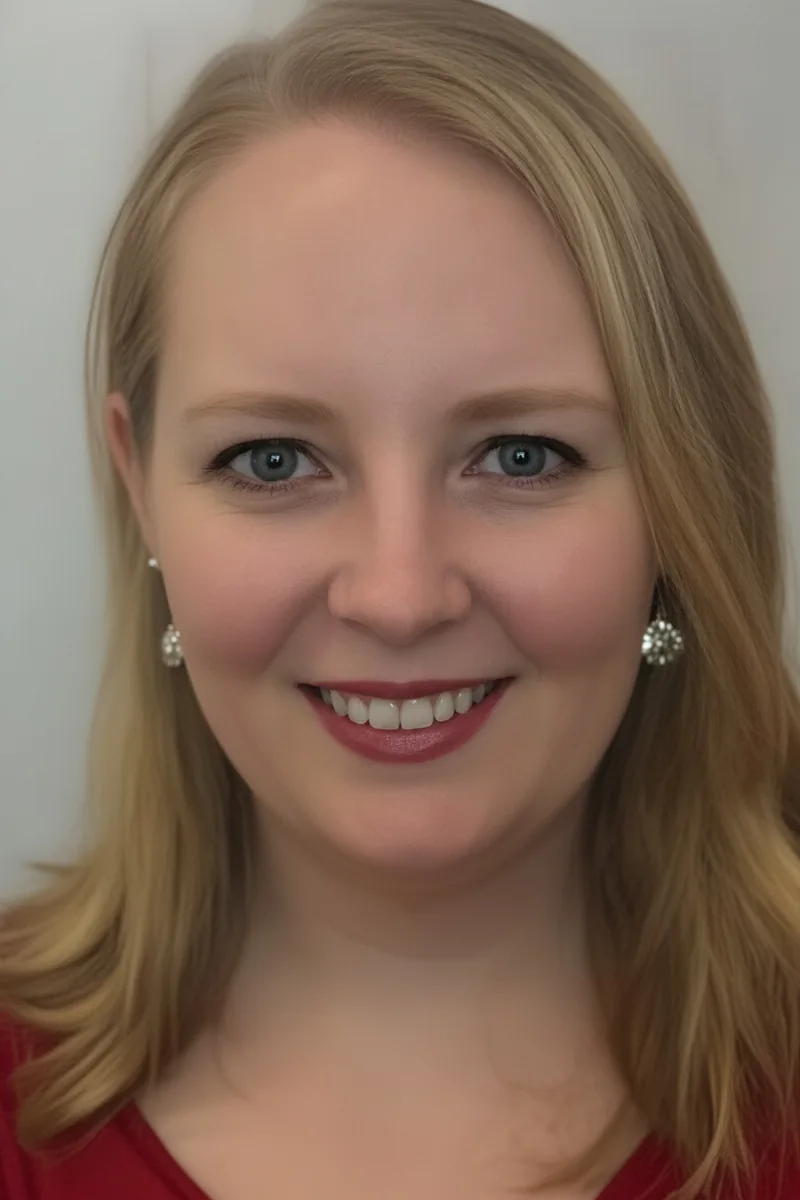
Teaching at a French immersion school across multiple grade levels gave Ann a front-row seat to how differently middle schoolers process math — some need visual models for fractions, others need to talk through ratio problems out loud. Her certified-teacher training means she can adapt explanations on the fly, whether the topic is decimal operations, basic geometry, or interpreting data. She makes sure students understand the reasoning behind each procedure, not just the shortcut.
From fractions and decimals to early equation solving, middle school math covers a huge range of skills in a short time. Drew breaks each topic into concrete steps and connects them to real-world problems — his background in aerospace and biotechnology gives him no shortage of examples showing why ratios, percentages, and basic geometry actually matter.
Seventh graders often struggle when math shifts from straightforward arithmetic to abstract reasoning — proportional relationships, integer operations, and solving multi-step equations all demand a new way of thinking. Kristen's two years teaching seventh grade gave her a front-row seat to exactly where students get stuck and how to get them unstuck. She breaks problems into concrete steps that build genuine number sense.
The jump from elementary math to middle school math introduces fractions, ratios, proportional reasoning, and negative numbers all at once, which can overwhelm even strong students. Austin tackles each concept with concrete examples — unit conversions, recipe scaling, temperature changes — that make abstract operations feel intuitive. His structured, patient approach gives students the confidence to handle multi-step problems on their own.
Fractions, ratios, and proportions trip up a lot of middle schoolers not because the math is too hard, but because the reasoning behind it never clicks. Bri breaks these concepts down using real-world scenarios — splitting a recipe, comparing prices, scaling a drawing — so the logic sticks before the formulas pile up. Her patient, language-oriented approach makes abstract ideas feel concrete.
The middle school years are where math branches out — ratios, proportional reasoning, basic geometry, and early equation-solving all land at once. Anita tackles each topic by tying it to concrete examples students can visualize, which builds the kind of number sense that pays off well into high school.
Ratios, proportions, and early linear equations can feel like a sudden jump in difficulty for middle schoolers who breezed through elementary math. Brianna teaches these concepts by connecting them to concrete situations students already understand — splitting a bill, scaling a recipe, reading a graph — so the abstract clicks faster. Her education training and 5.0 rating speak to how well she communicates with this age group.
Medical school at UMKC means Jessica lives in numbers daily — dosage calculations, biostatistics, pharmacokinetics — so the proportional reasoning and equation-solving that middle schoolers are building sits right in her wheelhouse. She's especially good at breaking down geometry concepts like area and volume into tangible, real-world examples that stick, drawing on the same skill she uses to make dense science material click for her own study groups.
Medical school at UMKC means Laura lives in numbers daily — dosage calculations, biostatistics, interpreting lab values — so the proportional reasoning and equation-solving that middle schoolers are wrestling with is material she uses fluently and can explain from multiple angles. She's particularly effective at showing students how to organize their work on multi-step problems, a habit that pays off long before high school. Rated 5.0 by students.
Ratios, proportional reasoning, and introductory geometry can feel like disconnected topics when a student doesn't see the thread running through them. Hannah, a mathematics major at Northwest Missouri State, connects each middle school concept to the algebra and geometry that's coming next. Her approach centers on letting students reason through problems themselves, stepping in only when they need a nudge in the right direction.
Testimonials
Because the right Middle School Math tutor makes all the difference.
Average Session Rating – Based on 3.4M Learner Ratings
Nearby Middle School Math Tutors
Other Kansas City Tutors
Related Math Tutors in Kansas City
Frequently Asked Questions
Tutors connect with students across Kansas City's 24 school districts, which use various curricula including Houghton Mifflin Harcourt, Pearson, and other standards-aligned programs. Whether your student is working with traditional textbooks or newer approaches emphasizing conceptual understanding, tutors are familiar with different teaching methods and can bridge gaps between how concepts are introduced in class and how your student learns best.
Middle school is when math becomes more abstract—moving from "doing" math to "understanding why" it works. Tutors help students build conceptual understanding by connecting new ideas to familiar concepts, showing patterns, and explaining the reasoning behind procedures. This foundation makes algebra, geometry, and higher math feel less intimidating and more logical.
Word problems require students to translate language into math, which is one of the biggest middle school challenges. Tutors teach problem-solving strategies like identifying what's given, what's unknown, and which operations apply—breaking the process into manageable steps. With personalized instruction, students build confidence recognizing problem types and develop systematic approaches rather than guessing.
Showing work reveals thinking and helps teachers (and tutors) identify where misunderstandings happen—whether it's a computational error or a conceptual gap. Tutors emphasize this too because it builds stronger problem-solving habits and prepares students for higher math where the process matters as much as the answer. It also catches careless mistakes before they compound.
Math anxiety often stems from feeling rushed or confused in a classroom with a 12.7:1 student-teacher ratio, where individual questions can get lost. One-on-one instruction lets students ask questions without judgment, work at their own pace, and experience small wins that rebuild confidence. Tutors help reframe mistakes as learning opportunities, which is key to reducing anxiety and fostering a growth mindset.
The first session focuses on understanding where your student is—what they grasp well, where they're stuck, and how they learn best. Tutors assess whether gaps are conceptual (not understanding why) or procedural (not remembering steps), then create a personalized plan. This diagnostic approach ensures tutoring targets the real obstacles rather than just reviewing material.
Yes—graphing and multi-step equations are major transition points where many students struggle because they require both procedural fluency and visual reasoning. Tutors break these skills into smaller steps, use multiple representations (tables, graphs, equations), and help students see how they connect. This approach builds deeper understanding so graphing feels like a tool for solving problems, not just a procedure to memorize.
Absolutely. Strong middle school math foundations are critical for success in high school algebra, geometry, and beyond. Tutors ensure students truly understand core concepts—not just procedures—so they're ready for more advanced work. Building confidence and problem-solving strategies now sets students up for success in increasingly rigorous coursework.
Let’s find your perfect tutor
Answer a few quick questions. We’ll recommend the right plan and match you with a top 5% tutor.