Award-Winning SAT Math Tutors
serving Mesa, AZ
SAT Math
Tutors in Mesa
Private 1-on-1 tutoring, weekly live classes for academic support, test prep & enrichment, practice tests and diagnostics, and more to elevate grades and test scores.
Based on 3.4M Learner Ratings
UniversitiesSchools & Universities
DeliveredHours Delivered
ProficiencyGrowth in Proficiency
Who will be getting tutoring?
No obligation. Takes ~1 minute.
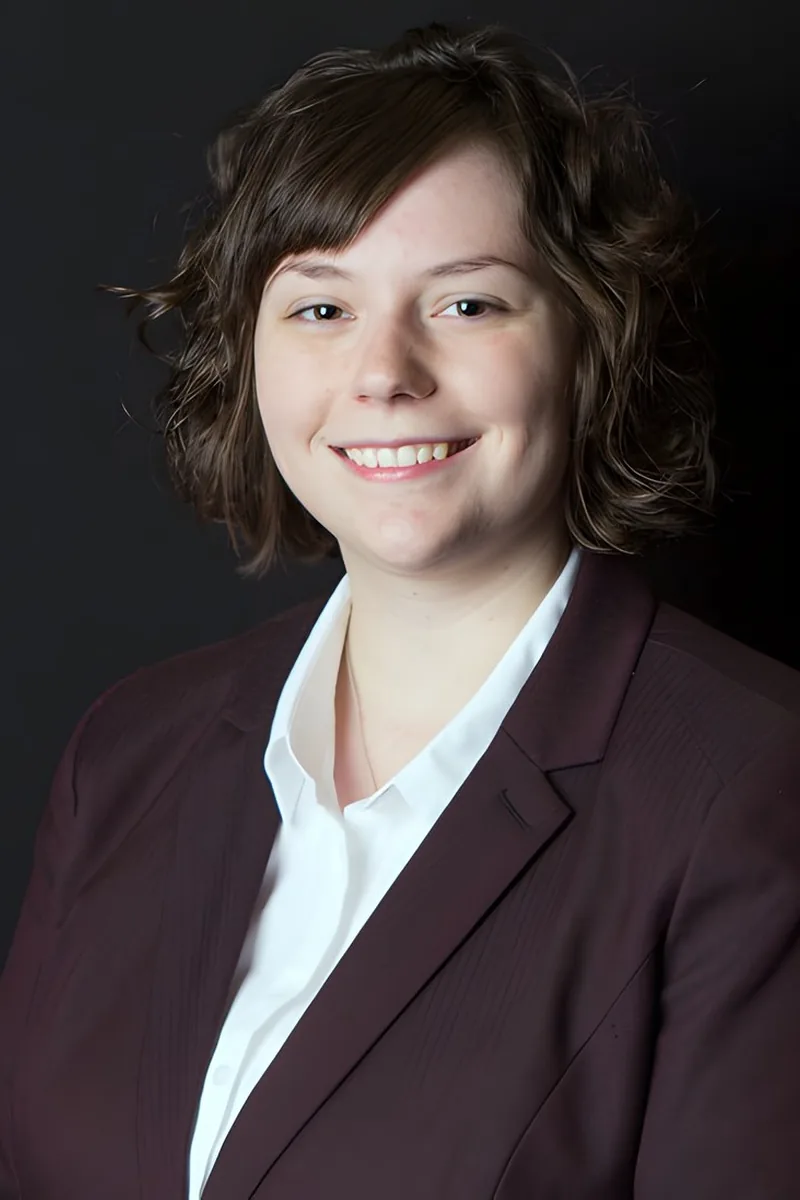
Lindsay scored 1480 on the SAT and brings a math-heavy academic background — a biology degree plus a mathematics minor — to breaking down the SAT Math section. She zeroes in on the areas where students lose the most points, like translating word problems into equations and navigating the no-calculator section's emphasis on algebraic fluency.

I'm Annelisa, originally from Phoenix, Arizona. I recently graduated from Yale University, where I studied art and its interactions with political journalism and science. I'm happy to tutor on a wide range of subjects, especially writing, college application, and the SAT!
Engineering coursework at Washington and Lee gave Alex daily practice with the exact math the SAT tests at its hardest level: systems of equations, quadratic modeling, and interpreting complex data tables. He scored a 1590 composite and now teaches students to distinguish between problems that reward algebraic manipulation and those better solved by plugging in values or back-solving. That strategic flexibility is often what separates a 700 from a 780.
I am a graduate student at Arizona State University studying Human and Social Dimensions of Science and Technology, and am passionate about the value of education at all levels. Previously I worked at the US Department of Energy on energy technology in Washington, DC. I have enjoyed setting up roots in Phoenix over the past few years, and am excited about sharing my knowledge and passion for learning with others in the area.I have a knack for explaining complicated ideas to people in simple terms, enjoy deepening people's understandings of issues, and value education highly. All of these characteristics make me an ideal tutor for Varsity Tutors, and I look forward to the opportunity to share my academic experiences and skills with tutees. In addition, I can give an expert's perspective on a wide range of topics including political science, public policy, various topics in science and technology, as well as an academic success-oriented mindset.
Engineering coursework means Alex solves math problems all day, but SAT Math has its own quirks — questions that look harder than they are and answer choices designed to punish rushing. He teaches students to identify those traps, especially on passport-to-advanced-math questions involving quadratics and exponential relationships. His 1560 SAT score backs up the approach.
Heart-of-Algebra and Passport-to-Advanced-Math questions make up the bulk of SAT Math scoring, and Amanda treats them as two distinct skill sets that need different preparation strategies. She earned a 1550 composite on the SAT and now teaches students to translate word problems into equations quickly and to recognize which calculator-permitted questions are actually faster by hand.
Jake's 1580 SAT composite came partly from treating the math section like a language — learning the College Board's specific way of phrasing linear relationship questions, disguising percent problems, and burying geometry inside data tables. He now teaches students to decode that language, so the math itself becomes the easy part. Rated 4.9 by students.
I'm Liz! I'm so excited to help my students reach their academic goals. I have a Bachelor's Degree in Government and Performance and Communication Arts, and a Master's Degree in Chinese Politics. With a long academic career and lots of experience with standardized tests, I'm ready help prepare my students for their next steps and help them succeed and build confidence where they are now. I can't wait to meet you!
Scoring 1550 on the SAT herself, Emily knows the specific traps the math section sets — misread graphs, unnecessary information in word problems, and algebra shortcuts that save critical minutes. As a math major at Smith College, she teaches the underlying reasoning behind each problem type so students can adapt when questions look unfamiliar.
Scoring a 1570 on the SAT himself, Yurok knows exactly where the College Board hides difficulty — the multi-step word problems in the calculator section, the tricky quadratic and systems questions in the no-calculator portion. As a physics and math double major at Emory, he doesn't just teach shortcuts; he makes sure students understand the underlying algebra and data analysis so they can handle any variation the test throws at them.
Galen scored 1480 on the SAT and brings a methodical, logic-driven approach to the Math section — particularly the word problems and data analysis questions where careful reading matters as much as computation. His philosophy background trained him to break down complex prompts and avoid the reasoning traps the SAT loves to set.
Scoring a 1510 SAT, Sam knows the math section inside out — from the no-calculator portion's emphasis on algebraic manipulation to the calculator section's data-interpretation and modeling questions. He pinpoints exactly where a student is losing points, whether it's passport-to-advanced-math problems involving quadratics and polynomials or the trickier systems-of-equations setups.
Teach for America gave Gordon experience working with K-12 students at wildly different math levels, which means he's quick at pinpointing whether an SAT Math struggle traces back to a shaky grasp of fractions and proportions or a timing issue on the more advanced quadratic and systems questions. His biology degree from ASU required heavy quantitative coursework — statistics, calculus, data interpretation — so the math on the SAT sits well within his comfort zone. He builds each session around the specific question types a student is losing points on rather than running through generic practice sets.
I am Arizona born and raised, my education includes an NYC law school degree with an undergraduate BS degree from University of Miami. In college I majored in Health Sciences with minors in Psychology and Public Health while in law school I leaned into corporate law and finance. Between law school and college I've pretty much covered every topic under the sun! In my spare time, I enjoy reading (especially mystery novels), pretending I'm a chef, and meditating.
I am here because I thoroughly enjoy working with students and watching them succeed in their academic studies. As a Mathematics major at the University of Arizona (currently a junior), I have extensive experience teaching and tutoring: I have been a teacher's assistant for a Calculus II section at my university and have spent a great deal of time assisting students with non-math related subjects as well such as English and essay-writing, time management and study skills techniques, and standardized test prep (SAT).
Three years of teaching math at a Kumon center — where students range from pre-K arithmetic to high school algebra — gave Megan an unusually clear map of where foundational gaps quietly sabotage SAT Math performance, especially on the ratio, proportion, and linear equation questions that punish shaky number sense. Now studying computer science at Harvey Mudd, she brings algorithmic thinking to test strategy: identifying the most efficient solve path for each problem type rather than defaulting to brute-force calculation. Her 1540 SAT backs up the approach.
I'm currently finishing my final year at ASU's Honors College with a major in Creative Writing. I've worked in teaching and tutoring positions with everyone from first graders to college students. I just returned from spending my last semester studying in Prague, Czech Republic, travelling extensively and broadening my perspective. I also received the Flinn Scholarship, a prestigious full-ride award given to 20 of the best and brightest students in Arizona out of a pool of nearly 600.
Heart-of-algebra and passport-to-advanced-math questions make up the bulk of SAT Math, and Anita approaches both categories by teaching students to translate word problems into equations before touching their calculator. Her 1550 SAT score came partly from that discipline — knowing when to set up a proportion versus a quadratic, and catching unit-conversion traps the test buries in lengthy problem setups.
The best part of tutoring is promoting students' long-term success through mastery of reading, writing, math, study skills, organization, and critical thinking. In particular, I enjoy helping students build test-taking strategies and core skills for the ACT, SAT, and other admissions tests. I also support pre-K and K-12 students learning math and ELA. Before joining Varsity, I tutored in a Reading and Writing Lab for university students with learning disabilities where I earned a College Reading and Learning Association (CRLA) certification. Since joining Varsity, I have completed continuing education through the Lastinger Center for Learning. I graduated from the University of Arizona in 2021 with a BA in Cultural Anthropology. In addition to tutoring, I have worked as an instructional aide for an art program, an applied anthropology researcher, and a nonprofit program coordinator. Out of all these experiences, I enjoy tutoring the most. I look forward to working with you!
I am no longer eligible to be a tutor, I have been looking for a way to keep doing what I love!
I'm a rising sophomore at Georgia Institute of Technology. I love teaching and got a lot of practice from tutoring my brother. Physics is probably my favorite subject to teach.
Adrian's approach to SAT Math zeroes in on the specific algebra and data analysis skills that dominate the no-calculator section, where fluency with manipulating expressions and solving equations by hand matters most. His 1450 SAT score and ongoing engineering training mean he can show students efficient shortcuts — like back-solving and strategic plugging-in — that shave critical seconds off each problem.
The SAT Math section leans heavily on algebra — and with a math degree and a 1520 SAT, Leah has the depth to explain not just how to solve linear systems and quadratic equations, but why specific manipulation steps work, which builds the kind of flexibility students need when the test phrases a familiar concept in an unfamiliar way. She's also taught across pre-algebra through calculus 2, so she can quickly identify when a student's SAT mistakes trace back to a shaky arithmetic or fraction habit and fix it at the root.
SAT Math covers a narrower range of topics than most students expect — heart-of-algebra problems and passport-to-advanced-math questions make up the bulk of the section. Taylor, who scored 1460 on the SAT and has a year of algebra tutoring experience, zeroes in on the specific equation types and word-problem translations that appear most frequently. She's especially attentive to calculator-vs-no-calculator strategy and time management.
Scoring a 1470 SAT means Alexis knows firsthand how the math section rewards strategic thinking — recognizing when a system of equations is hiding a simpler substitution, or when plugging in answer choices beats solving algebraically. She drills students on the specific algebra, data analysis, and passport-to-advanced-math question types that make up the bulk of the scoring. Her approach pairs concept review with timed practice sets so test-day pacing feels automatic.
Every SAT Math question can be solved in under two minutes if a student knows which tool to reach for — and that recognition is what Bridget drills. She scored 1460 on the SAT herself and now teaches high school math, so she connects classroom algebra and geometry concepts directly to the way College Board frames its trickiest problems.
I'm passionate and interested about the subjects I teach and tutor, and I believe strongly in showing my students how interesting those subjects can be and how enjoyable it is to learn. I've been tutoring my friends, peers, and neighbors since I was in high school all the way until I graduated from ASU this year with a bachelor in Conservation Biology. I'm most comfortable teaching biology, chemistry, physics, math, and history, and I believe that the purpose of a tutor is not to do the student's homework, but to teach them to do it themselves.
Scoring 1490 on the SAT gave Michelle firsthand insight into the traps College Board builds into its math questions — especially on topics like quadratic modeling, systems of inequalities, and data analysis where the wrong answer often looks right at first glance. She walks through each problem type with an eye toward recognizing those traps before they cost points.
I am one of a rare breed of native Arizonans born and raised in Tucson, Arizona. I graduated from the University of Arizona with a bachelor's degree in Astrophysics and a Master's degree in Teaching and Teacher Education. Before getting the master's degree in education I worked for NASA as an entry-level scientist/analyst, which essentially means I did A LOT of computer programming. I worked on the following projects: Galileo, Cassini, IRAF, UBV White-Dwarf Sky Survey, and NICMOS on the HST. However, while working on those projects I quickly discovered that my lifelong dream of being an astronaut was not really what I wanted to do. I had always had a passion for music, and was a good trumpet player, and with a little nudging from my College Band Director, well, the road definitely took a right turn.
Every SAT Math question has a fast path and a slow path, and the difference between a 700 and a 780+ often comes down to recognizing which one you're on. Jared scored a 1590 composite by mastering that recognition — knowing when to set up an equation, when to back-solve, and when a quick sketch of a graph answers the question instantly. He drills students on these decision points using real College Board problems.
I am looking at their work 'from the outside' and can therefore see where they have improved whereas the student might see their struggles more clearly than their progress. I also believe and emphasize that learning is an ongoing process, and academic skills don't come naturally to most people - they are skills which require practice over time. With a subject like Spanish, I try to relate to the student's struggles by talking about issues that I found difficult as well.
Scoring a 1420 on the SAT, Hritik knows how the math section tests familiar concepts in unfamiliar ways — especially with quadratic modeling, data interpretation, and systems of equations under time pressure. He teaches students to recognize what each problem is actually asking before jumping into calculations, which cuts down on careless errors and speeds up pacing.
I am passionate about learning and helping others learn.
Nitesh scored a 1430 on the SAT and knows exactly where the Math section tries to trip students up — especially on passport-to-advanced-math questions involving quadratics, systems, and polynomial reasoning. He breaks each problem type into a decision tree so students recognize what's being asked before they even pick up their pencil. Rated 4.9 by students.
I am a rising senior at Emory University majoring in Biology, B.S. on a pre-med track in the Biology Honors Program. In my sophomore year, I was a math and literacy tutor at Emory Reads where I worked with students at Ivy Prep Academy, Atlanta GA. Now, I lead review sessions for my fellow classmates in organic chemistry and biology to prepare for upcoming exams. In my past tutoring experiences and review sessions, I always used different colors and incorporated diagrams to improve conceptual understanding because I firmly believe every problem can be solved; if we have a solid foundation and truly understand a concept, we can apply it to any given scenario and figure out the solution. In order to make sure of this, I always encourage students to ask questions until all doubts have been cleared before moving on to decrease gaps in understanding. I can help with math, english, biology, chemistry, and physics although I think my favorite subjects to tutor would have to be Organic Chemistry and Human Physiology! I sincerely enjoy teaching these subjects and hope to show the students just how fascinating they can really be.
I am a graduate student currently working on my Master's Degree in Big Data Systems.
Ken's math specialty runs deep — from Algebra through AP Calculus AB in high school to his current computer science program at Barrett Honors College. On the SAT Math section specifically, he teaches students to recognize which problems reward algebraic manipulation versus strategic back-solving, a distinction that saves significant time on test day. He earned a 1440 SAT composite himself.
Scoring a 1490 on the SAT means John knows exactly where the tricky points hide — from quadratic modeling and systems of inequalities to the data analysis questions that trip up even strong math students. He breaks each problem type into a repeatable decision process so students stop second-guessing themselves on test day. Rated 5.0 by students.
I am a graduate of Williams College. I received my Bachelor of Arts in Philosophy. Since graduation, I have worked a wide variety of jobs: organic farm manager, solar panel installer, sous chef at a renowned restaurant, founder of a music cooperative in downtown Phoenix and, most recently, multi-instrumentalist in a band that tours all over the world. Obviously, my interests are broad. I view every personal endeavor as a fundamentally educational experience. While I tutor a broad range of subjects, I am most passionate about English, literature, history, philosophy, and Spanish (which I learned to speak while studying philosophy in Argentina). I really enjoy working with students to sharpen written assignments. Even the best writers require editing! I am a firm proponent of education, believing it to be absolutely necessary for an improved quality of life, and I try to impart this appreciation to all of my students. In my spare time, I enjoy making music, travel, and reading.
Testimonials
Because the right SAT Math tutor makes all the difference.
Average Session Rating – Based on 3.4M Learner Ratings
Practice SAT Math
Free practice tests, flashcards, and AI tutoring for SAT Math
Other Mesa Tutors
Related Test Prep Tutors in Mesa
Frequently Asked Questions
Score improvement depends on your starting point and commitment level, but most students see meaningful gains within 8-12 weeks of consistent practice. Students who work with a tutor typically improve faster because they can identify and target specific weak areas—whether that's algebra, geometry, or test-taking strategy—rather than studying broadly. The key is focusing on the question types and concepts that are costing you the most points.
Most students struggle with pacing because the SAT Math section requires both accuracy and speed—you have about 1.4 minutes per question on average. Many students either rush through and make careless mistakes or spend too long on difficult problems and run out of time. A tutor can teach you strategic approaches like identifying which questions to tackle first, when to skip and return, and how to work efficiently without sacrificing accuracy.
Taking a full-length practice test under timed conditions is the best way to identify your weak areas—you'll see exactly which question types and topics are causing you to lose points. Once you have that data, a tutor can help you prioritize: focus first on the concepts that appear most frequently on the test and that you find most challenging. This targeted approach is much more efficient than trying to review everything.
Your first session typically focuses on understanding where you stand and what you need. Varsity Tutors connects you with a tutor who will review your practice test results, discuss your goals, and assess which math concepts or test-taking strategies need the most work. From there, they'll create a personalized study plan tailored to your timeline and target score.
Yes—a lot of test anxiety comes from feeling unprepared or unsure about how to approach unfamiliar question formats. Working with a tutor builds confidence by helping you master the content, practice under realistic timed conditions, and develop strategies for staying calm when you encounter a tough problem. The more prepared you feel, the less anxiety tends to interfere with your performance.
Most students benefit from taking a full practice test every 1-2 weeks once they've built foundational knowledge, with shorter practice sections in between. This frequency lets you track progress, identify remaining weak spots, and get comfortable with the test's pacing and format. Your tutor can recommend a schedule based on your starting score and test date, and help you review your results to maximize learning from each attempt.
The no-calculator section (25 minutes) focuses on conceptual understanding and mental math, so you need to know when to simplify, estimate, or use algebraic shortcuts. The calculator section (55 minutes) rewards efficiency—you should use your calculator strategically for complex calculations, but don't rely on it for every step. A tutor can teach you which approach works best for different question types so you're not wasting time deciding when to calculate.
Varsity Tutors connects you with expert tutors who specialize in SAT Math and understand the test's format, timing, and common challenge areas. You'll be matched with a tutor based on your specific needs, schedule, and learning style—whether you need comprehensive prep or targeted help with specific topics. Get started by sharing your goals and test timeline, and you'll be paired with the right fit.
Let’s find your perfect tutor
Answer a few quick questions. We’ll recommend the right plan and match you with a top 5% tutor.