Award-Winning Algebra Tutors
serving Phoenix, AZ
Algebra
Tutors in Phoenix
Private 1-on-1 tutoring, weekly live classes for academic support, test prep & enrichment, practice tests and diagnostics, and more to elevate grades and test scores.
Based on 3.4M Learner Ratings
UniversitiesSchools & Universities
DeliveredHours Delivered
ProficiencyGrowth in Proficiency
Who needs tutoring?
No obligation. Takes ~1 minute.
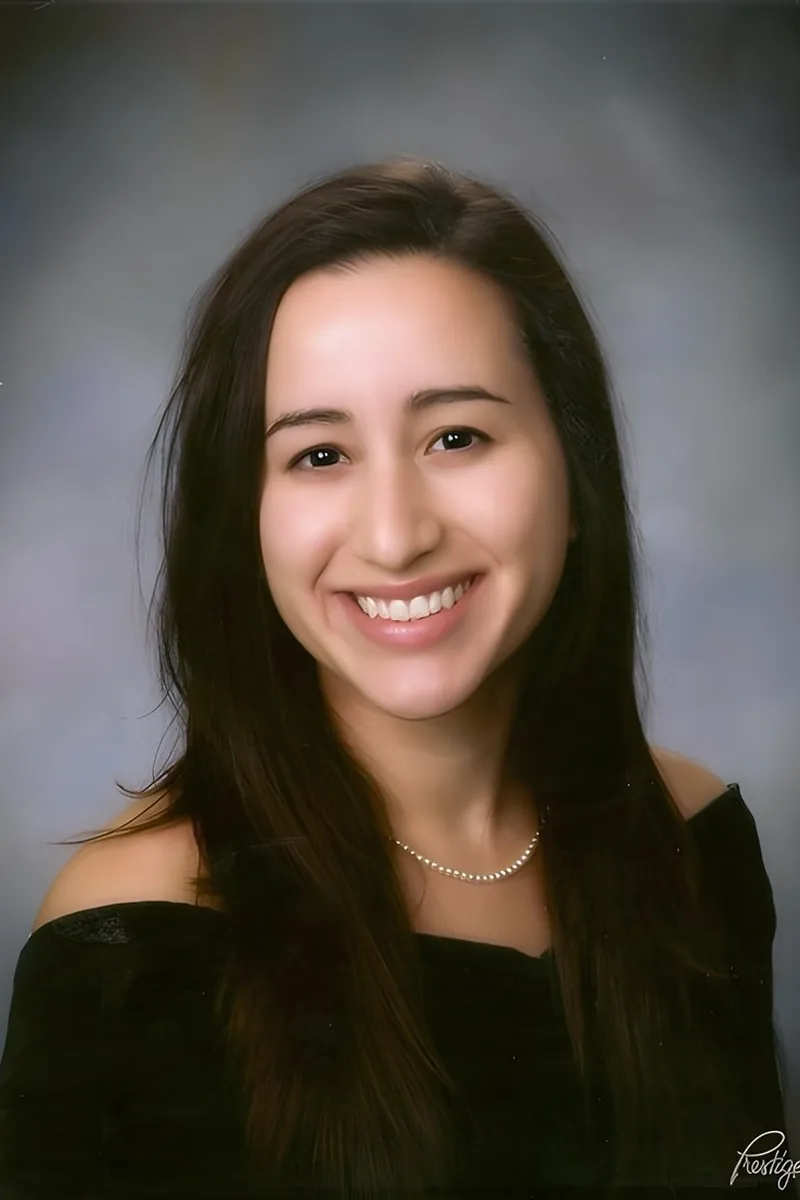
Alexis approaches algebra the way a coach approaches game film: break down each problem type, identify where mistakes happen, and practice until the technique becomes automatic. Whether it's solving systems of equations or factoring quadratics, she builds repetition into every session so students develop real fluency. Rated 5.0 by students.
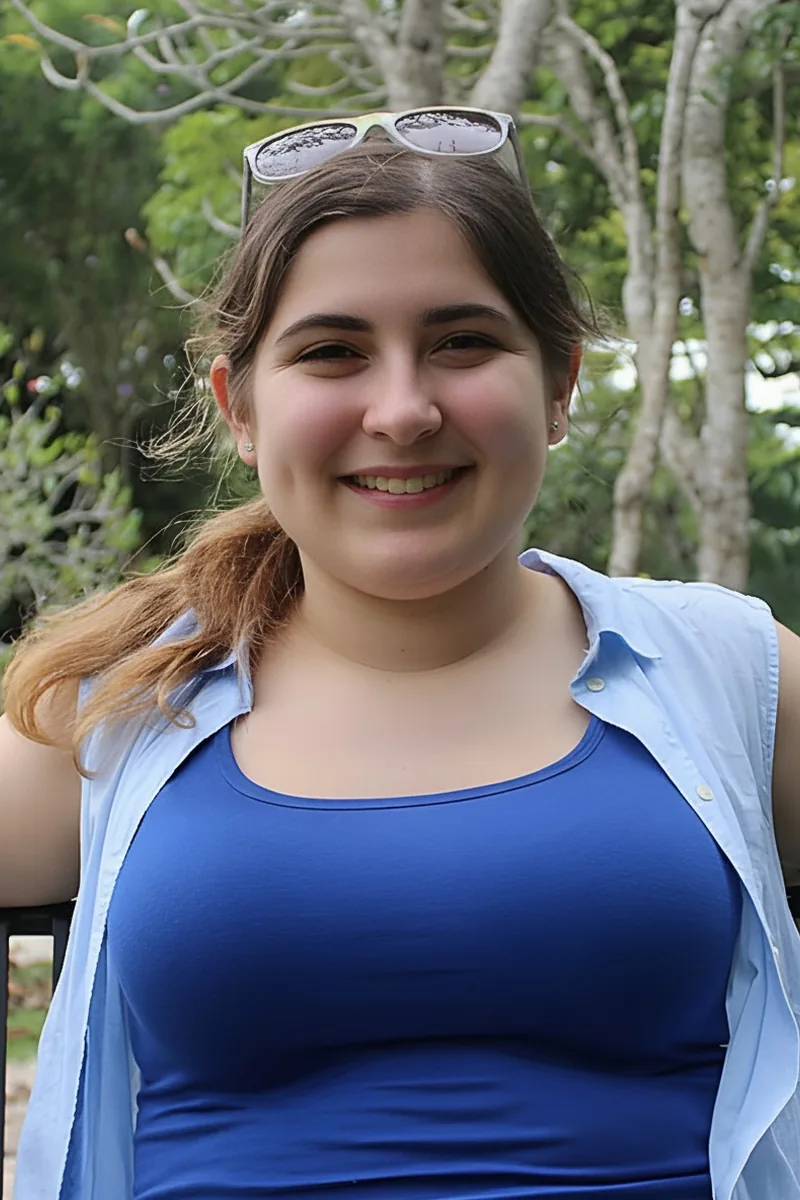
A methodical thinker with training in formal logic and quantitative analysis, Elizabeth breaks algebraic concepts like systems of equations and inequalities into clear, repeatable steps. Her 5.0 rating speaks to how well she translates abstract notation into language students actually understand.
Most algebra frustration comes from being told to follow steps without understanding the reasoning behind them — why you "flip and multiply" with fractions, or what solving for x actually means graphically. Kristi tackles algebra by making the logic visible, connecting symbolic manipulation to concrete meaning. Nearly a decade of tutoring across every math level gives her a sharp sense of where each student's understanding breaks down.
Linda's analytical background in philosophy translates surprisingly well to algebra, where the real challenge is often learning to think systematically about variables and relationships rather than just crunching numbers. She's particularly effective at unpacking word problems and translating verbal descriptions into equations — a skill that draws directly on her expertise in language and logic.
Most algebra struggles come down to not understanding *why* a rule works — why you flip the inequality when multiplying by a negative, or why cross-multiplication is valid. Rachelle digs into those underlying reasons rather than just drilling procedures, an instinct she developed earning her Summa Cum Laude philosophy degree at Arizona State.
The jump from arithmetic to algebra trips students up when variables start replacing numbers and equations require strategic thinking instead of straightforward computation. Alex tackles this by walking through the reasoning behind each manipulation — why you distribute, how to set up equations from word problems, what "solving for x" actually means — so the logic sticks. Rated 4.8 by students.
The leap from arithmetic to algebra — where numbers become variables and equations become puzzles — trips up more students than any single math concept. Megan spent four years tutoring peers in algebra and geometry during high school, building a knack for explaining ideas like solving systems of equations or factoring quadratics in plain, concrete language. She's now a computer science major at Harvey Mudd, where algebraic thinking is a daily tool.
The jump from arithmetic to algebraic thinking trips up a lot of students right around systems of equations and quadratic factoring, where the problems stop looking like puzzles with one obvious move. Elise spent years at Huntington Learning Center tutoring algebra across age groups, and she's developed a knack for diagnosing exactly where a student's reasoning breaks down and rebuilding from that point.
Having taken 10 AP classes and tutored algebra more than any other subject through high school, Thara built a mental catalog of exactly where students get tripped up — whether it's distributing negatives, setting up word problems, or losing track of steps when solving multi-variable equations. Now a pre-med sophomore at Duke, she still uses algebraic reasoning daily in her science coursework, which keeps those skills sharp and grounded in real application.
Law school trains you to isolate variables and build airtight logical chains — skills Jeff applies directly when teaching algebra concepts like inequalities and linear equations. His history background also means he's comfortable walking through multi-step problems narratively, showing students how each algebraic move follows from the last like an argument building toward a conclusion.
Before tackling the heavy quantitative reasoning in her medical program, Claire built her algebra instincts through a biology and psychology double major at ASU, where statistical modeling and data analysis demanded fluency with equations, inequalities, and functions. She's especially sharp at translating word problems into algebraic expressions — the step where most students get stuck.
Most algebra struggles come down to one thing: students can follow a procedure but can't set up the equation themselves. Tucker spends real time on translating word problems into algebraic expressions — figuring out what the variable represents, which operation a phrase implies, and how to check whether an answer actually makes sense. That translation skill is what turns algebra from rote symbol-pushing into a tool students can actually use.
Pre-med coursework doesn't let you forget algebra — every chemistry equation Sebastian balances and every dosage calculation he runs at Arizona State loops back to manipulating variables and solving for unknowns. That constant reinforcement means he can unpack topics like systems of equations or rational expressions by tying them to problems he's actually solved in his science courses, giving students a reason to care about the mechanics.
Variables, equations, and inequalities don't have to feel abstract — Tracey grounds each concept in logical steps that build toward real problem-solving, whether it's factoring quadratics or working through systems of equations. Pursuing her M.A. in Mathematics Education, she's studied how students actually learn algebraic thinking, not just how to present it. Rated 5.0 by students.
When a student stalls on algebra, it's usually not the math itself — it's a shaky grasp of one underlying concept, like how variables behave in inequalities or why distributing across parentheses works the way it does. Shannon digs into that root issue rather than re-explaining the same procedure louder and slower. Her approach treats algebra as a logical language students can actually learn to read.
A structured, logical mindset is what separates students who memorize algebra steps from those who actually understand them. Veronica's background in law trained her to build arguments from first principles — the same skill she brings to teaching students how to set up equations, manipulate expressions, and solve systems with confidence.
Most algebra struggles come down to one thing: students learn procedures without understanding what the equation is actually saying. Adrian flips that by starting with the relationship a problem describes — what's changing, what's constant, what depends on what — and then showing how the algebra captures it. His 34 ACT composite speaks to the kind of mathematical fluency he brings to even foundational topics like this one.
Most Algebra struggles come down to one thing: students learn steps without understanding why those steps work, and then freeze when a problem looks slightly different. Jared digs into the reasoning behind operations like factoring, solving systems, and manipulating inequalities so that students can adapt their thinking instead of hunting for a matching example in their notes.
Most algebra struggles come down to one thing: students learn to manipulate symbols without understanding what those symbols represent. Wallace, a Williams College philosophy graduate trained in formal logic, teaches algebra by making variables and equations meaningful — connecting expressions to real situations and showing how each transformation preserves equality. That emphasis on reasoning over rote procedure gives students tools that carry through to geometry and beyond.
Three and a half years as a peer math tutor at Stevenson gave Chris a front-row seat to exactly where algebra falls apart for most students — usually somewhere around translating word problems into equations or manipulating expressions with multiple variables. He teaches the underlying structure of algebraic reasoning so that new problem types feel like variations, not surprises. Rated 5.0 by students.
Most algebra struggles come down to one thing: students learn procedures without understanding what the symbols actually represent. Cameron tackles this by grounding variables, inequalities, and systems of equations in concrete scenarios, so that setting up and solving a problem becomes a logical process rather than a memorized recipe.
A lot of algebra frustration comes from losing track of what a variable actually represents — it stops being a quantity and becomes a letter to push around. Anita tackles that disconnect head-on, connecting equations and inequalities back to real scenarios so that solving a system or factoring a quadratic feels like answering a question rather than performing a ritual. Rated 5.0 by students.
Paul approaches algebra by anchoring every new idea — whether it's solving systems of equations or simplifying radical expressions — to a concrete example before moving to the abstract. His dual background in geological sciences and computer science gave him years of practice translating real problems into algebraic form, which is exactly the skill most algebra students need to develop.
Hi, I recently earned my Ph.D. in Organic Chemistry from Purdue University and have entered the private sector. In my program, I found that teaching and instructing students was very enjoyable and I wish to continue that by being a tutor. I have been a successful tutor for over a decade and know how to instruct to a variety of different skill sets and learning abilities.
A computer science degree runs on algebra — from manipulating equations in algorithms to understanding how functions behave. Shadman zeroes in on the transition points where students typically stall, like moving from linear equations into systems and inequalities, breaking each problem type into a clear, repeatable process.
Aerospace engineering at Georgia Tech means Naveen lives in algebra daily — rearranging formulas, solving for unknowns across multiple variables, building equations from physical constraints. He brings that hands-on fluency to teaching quadratic expressions and linear modeling, showing students how each manipulation serves a purpose beyond the textbook page.
Special education training reshapes how you think about teaching algebra — Maurice learned to diagnose exactly which step in a multi-step equation is causing a student to shut down, whether it's distributing negatives or isolating variables across an equals sign. His Master's in Special Education and years teaching across the full math spectrum mean he builds each explanation around how a particular student thinks, not around a one-size-fits-all procedure.
The moment algebra goes from "solve for x" to systems of equations or quadratic factoring, many students lose the thread of what they're actually doing and why. Isabel reconnects the logic — she teaches students to read an equation like a sentence, identifying what each piece means before touching a pencil to paper.
When factoring quadratics or solving systems of equations, the biggest hurdle is usually not the math itself but knowing which technique applies and why. Teresa zeroes in on that decision-making process, teaching students to read a problem and identify the right approach before picking up a pencil. It's an analytical skill she refined through her own coursework at Notre Dame and graduate studies at Arizona State.
Most algebra struggles come down to one thing: students learn to move symbols around without understanding what the symbols mean. Jamison teaches the logic behind each step — why you flip an inequality when multiplying by a negative, or what "solving for x" actually represents on a graph. That conceptual grounding, paired with steady practice on factoring and systems of equations, is what turns confusion into fluency.
Most Algebra struggles come down to one thing: students learn procedures without understanding what the symbols actually represent. Samuel digs into the reasoning behind solving equations, factoring expressions, and graphing linear relationships, so that when a problem looks slightly different from the textbook example, students still know how to move forward.
A mechanical engineering degree means Daniel solved algebra problems daily for four years — rearranging force equations, isolating variables in thermodynamic formulas, simplifying expressions buried inside larger system models. That repetition built an instinct for algebraic structure that makes him especially effective at teaching students how to approach multi-step equations and word problems without panic. His 34 ACT confirms the quantitative chops behind the approach.
Pooja's dual pursuit of biology and history degrees at the University of Houston means she's constantly toggling between quantitative and analytical thinking — balancing genetic probability calculations one hour and constructing historical arguments the next. That versatility makes her especially effective at teaching algebra as a language for problem-solving, particularly when it comes to translating word problems into equations and working through multi-step expressions. Rated 5.0 by students.
Most algebra struggles trace back to one or two gaps — maybe distributing negatives, maybe setting up equations from word problems. Yuxuan diagnoses those gaps quickly, a skill she sharpened tutoring high school classmates and UC Berkeley underclassmen across multiple subjects. From factoring quadratics to solving systems of equations, she walks through each method until the logic behind it is clear.
Solving for unknowns is something Emeka does daily as a practicing architect and engineer, whether he's calculating load distributions or scaling a floor plan. He breaks algebra topics like systems of equations and inequalities into logical steps that mirror how professionals actually think through problems. Students rate him 5.0.
The jump from arithmetic to algebra trips students up because suddenly they're solving for unknowns instead of computing answers. Mladen zeroes in on the transition points that cause the most confusion — translating word problems into equations, factoring quadratics, and understanding what a graph actually represents. His psychology background informs how he adapts explanations to match the way each student thinks.
I hold a B.S. in Mathematics from Arizona State University and bring over a decade of professional experience to university-level mathematics instruction. As a CRLA Certified educator tutoring since 2013, my methodology focuses on building a rigorous conceptual understanding of the mathematical architecture rather than relying on rote memorization. I specialize in dismantling complex gatekeeper courses, including Calculus, Differential Equations, Discrete Mathematics, Finite Mathematics, and Statistics. When students hit a wall in these advanced subjects, it is rarely a lack of effort. It is almost always a breakdown in foundational logic. My remote sessions utilize a premium digital whiteboard workflow to meticulously map out exact logical pathways and repair these foundational gaps. This first-principles approach rebuilds analytical independence and guarantees absolute precision for engineering, business, and advanced science applications.
As a dedicated tutor with a strong foundation in Chemical & Biomolecular Engineering from Johns Hopkins University, I have a passion for teaching complex subjects like Chemistry, Biochemistry, and Physics. Although my formal tutoring experience is limited, I have actively helped peers understand challenging material throughout my academic journey. My approach centers on identifying students' specific areas of confusion and building from there, fostering a supportive environment where they can thrive. I believe that teaching is most effective when students engage with the material actively, and I strive to make learning enjoyable and approachable. Outside of academics, I enjoy playing basketball, soccer, chess, and participating in engineering projects, which further enhances my problem-solving skills. I am eager to inspire students and help them achieve their academic goals.
Testimonials
Because the right Algebra tutor makes all the difference.
Average Session Rating – Based on 3.4M Learner Ratings
Practice Algebra
Free practice tests, flashcards, and AI tutoring for Algebra
Other Phoenix Tutors
Related Math Tutors in Phoenix
Frequently Asked Questions
Many algebra students focus on memorizing procedures without grasping why those steps work, which makes it harder to apply concepts to new problems. Personalized 1-on-1 instruction helps students build conceptual understanding by exploring the reasoning behind each step—why we combine like terms, what a variable truly represents, and how algebraic operations connect to real-world situations. Tutors work at your pace to identify gaps in foundational knowledge and rebuild understanding from there, which leads to stronger problem-solving skills and lasting confidence.
Word problems require translating everyday language into mathematical equations—a skill that doesn't always click without targeted support. Look for tutors who teach problem-solving strategies like identifying known information, defining variables clearly, and breaking multi-step problems into manageable chunks. The best tutors help students see patterns across different problem types and build a toolkit of approaches rather than relying on memorization. When you connect with a tutor through Varsity Tutors, you can discuss your student's specific challenges with word problems so they're matched with someone experienced in that area.
While knowing your student's specific textbook (like Houghton Mifflin, McGraw-Hill, or Pearson) can be helpful for alignment with homework and classroom focus, the underlying algebra concepts remain consistent across curricula. Expert tutors understand core algebra topics—linear equations, systems, polynomials, factoring, and graphing—and can teach these in ways that complement your student's classroom instruction. When you get matched with a tutor, let them know which textbook your school uses so they can reference familiar examples and pacing, but their expertise in explaining concepts clearly matters more than memorizing one specific program.
Graphing challenges often stem from weak understanding of coordinates, slopes, and how equations translate to visual representations on a plane. Personalized tutoring breaks this down step-by-step: building fluency with ordered pairs, exploring how slope describes a line's steepness, and connecting equations like y = mx + b to their graphs. Tutors use visual strategies, repeated practice with feedback, and real-world contexts to help the concepts stick. Given Phoenix's 17.6:1 student-teacher ratio across districts, many students benefit from the individualized attention that lets a tutor slow down and reinforce graphing skills without classroom time pressure.
Math anxiety often grows when students feel rushed or embarrassed to ask questions in class, leading to gaps that compound over time. With personalized 1-on-1 instruction, your student can work through problems at their own pace, ask for clarification without judgment, and experience small wins that rebuild confidence. Tutors create a low-pressure environment where mistakes become learning moments rather than failures. Over time, as your student sees themselves successfully solving problems they once avoided, confidence naturally grows—and that confidence transfers back to the classroom and test performance.
Showing work on multi-step equations isn't just about proving the answer—it helps students catch mistakes, understand their own thinking, and apply the process to harder problems later. Expert tutors teach a structured approach: isolating variables step-by-step, writing out what operation is performed on both sides of the equation, and checking solutions by substituting back into the original equation. Breaking the process into clear, documented steps also gives you visibility into where your student might be getting stuck. Tutors emphasize that organized, shown work builds problem-solving skills that pay off in algebra and beyond.
Varsity Tutors connects Phoenix students with expert tutors who specialize in algebra and understand the challenges students face at different levels. When you reach out, share details about your student's current struggles—whether it's graphing, word problems, building confidence, or keeping up with classroom pace—so the matching process pairs them with someone experienced in those specific areas. You can also discuss scheduling preferences and learning style, which ensures a strong fit. The personalized matching process means your student gets a tutor equipped to teach the way they learn best.
Let’s find your perfect tutor
Answer a few quick questions. We’ll recommend the right plan and match you with a top 5% tutor.