Award-Winning AP Environmental Science Tutors
serving Denver, CO
AP Environmental Science
Tutors in Denver
Private 1-on-1 tutoring, weekly live classes for academic support, test prep & enrichment, practice tests and diagnostics, and more to elevate grades and test scores.
Based on 3.4M Learner Ratings
UniversitiesSchools & Universities
DeliveredHours Delivered
ProficiencyGrowth in Proficiency
Who needs tutoring?
No obligation. Takes ~1 minute.
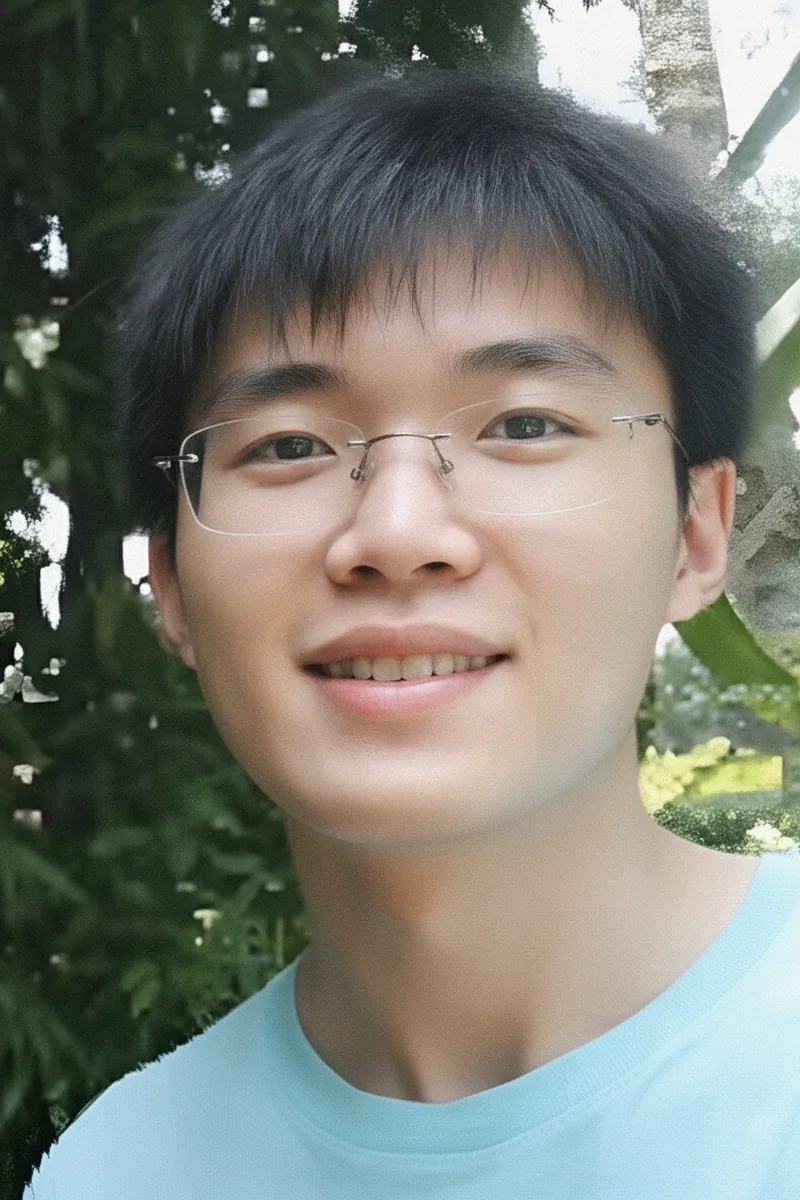
A Harvard-trained researcher who wrote his senior thesis on John Dewey's philosophy of education, Henry connects AP Environmental Science topics like biogeochemical cycles and ecosystem dynamics to the real-world policy debates that make them matter. He teaches students to interpret data sets and construct free-response answers that earn full credit by linking evidence to scientific claims.
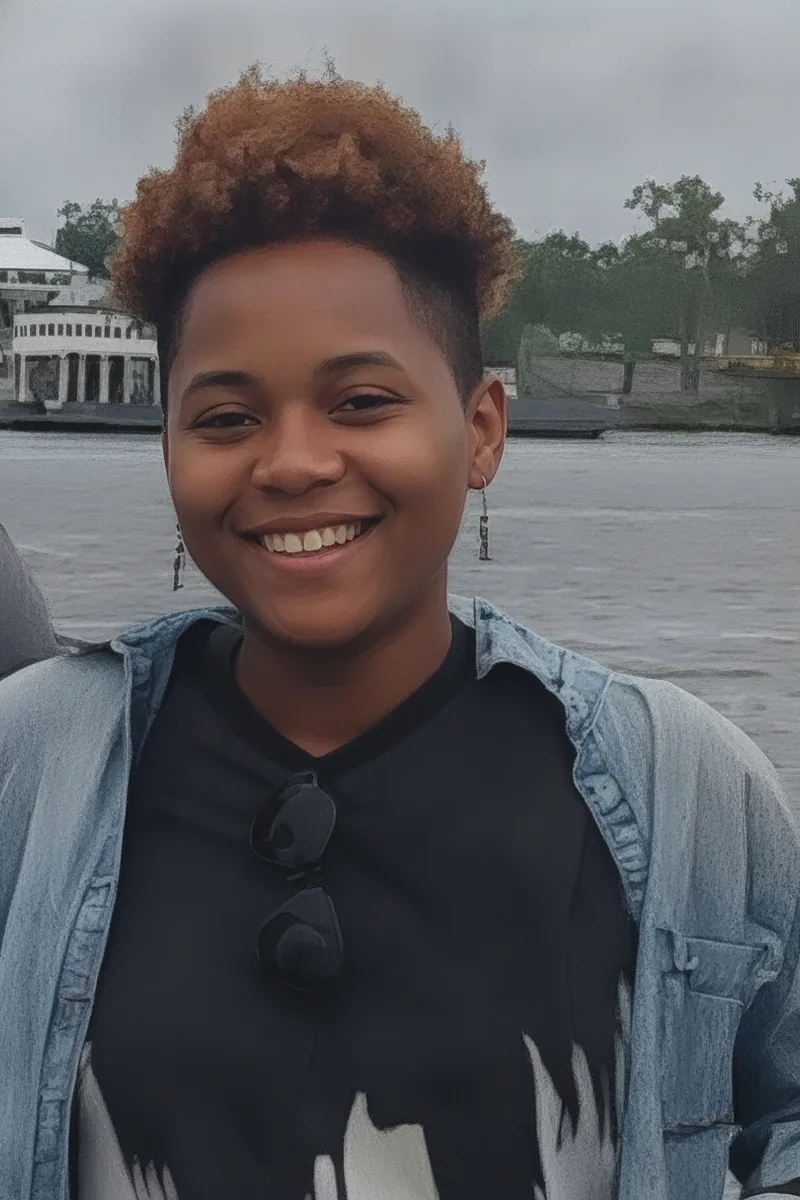
Supervising an AmeriCorps conservation program in New Mexico means Rachel doesn't just teach APES concepts like land management, resource depletion, and habitat restoration — she manages real projects dealing with them daily. Her Johns Hopkins master's in Environmental Health Sciences adds the scientific rigor behind topics like pollution pathways and risk assessment, while her public health training sharpens the kind of systems-level thinking the exam's free-response questions demand.
Studying Human Biology at Stanford with a concentration in health policy gives Jake a direct line into the APES units on public health, pollution, and environmental legislation — he understands how ecological disruptions translate into real human consequences, which is exactly the kind of reasoning the free-response section rewards. His 34 ACT and 5.0 tutoring rating back up an approach that emphasizes connecting biological systems to their policy implications rather than treating each unit as isolated material.
Eileen's neuroscience coursework at Vanderbilt — tracing how disruptions propagate through biological systems — gives her a useful lens for APES topics like bioaccumulation, feedback loops in climate systems, and how environmental toxins affect organisms at multiple scales. She scored a 36 on the ACT and brings that same precision to the data-interpretation and calculation questions that catch students off guard on exam day.
Todd's biology degree from UIUC gives him the ecological and cellular foundations that underpin APES topics like nutrient cycling, energy flow through trophic levels, and ecosystem disruption — and his social work training adds a surprisingly useful lens for the policy and human-impact questions that dominate the free-response section. He teaches students to trace cause-and-effect across units, which is the skill the exam actually scores on. Rated 5.0 by students.
Premed coursework in human biology builds an intuitive grasp of the biological systems that APES questions test — nutrient cycling, population growth models, and the health consequences of environmental degradation aren't abstract concepts for Sharan, they're threads running through his own studies at Cornell. He scored a 36 on the ACT, and that same precision with data shows up in how he teaches students to work through the math-based questions on ecological footprints and resource consumption that the exam buries between the conceptual material. Rated 5.0 by students.
A physics degree builds the kind of systems thinking that translates directly to APES — understanding energy budgets, thermodynamic constraints on ecosystems, and how to set up the quantitative problems around resource depletion or atmospheric carbon that the exam loves to test. Nima applies that physics-trained rigor to topics like global energy flow and climate modeling, where students who only memorize vocabulary tend to lose points on calculation-heavy free-response questions.
Eric's degree in Ecology & Evolutionary Biology means he studied the actual science behind APES — population ecology, species interactions, and ecosystem-level processes — not just the survey-course version. He teaches students to think about environmental problems the way an ecologist would, tracing how a disturbance like deforestation or nutrient loading ripples through trophic levels and feedback loops until the full picture clicks.
Having earned her bachelor's in Environmental Science, Patricia didn't just survey APES topics — she studied biogeochemical cycles, soil science, and ecosystem dynamics at the college level they're drawn from. She zeroes in on the quantitative side students often underestimate, like calculating energy transfer efficiency or interpreting species diversity indices, while also sharpening the cause-and-effect reasoning the free-response section demands.
Cognitive science trains you to think in systems — how inputs, feedback loops, and cascading effects connect across complex networks — which maps surprisingly well onto APES topics like biogeochemical cycles, ecosystem disruption, and human-environment feedback. Zachary applies that systems-thinking lens to help students trace cause-and-effect chains across units, which is the skill that separates 3s from 5s on the free-response section. He scored a 32 on the ACT and carries a 4.8 tutoring rating.
Medical training reshapes how you think about environmental health — Amanda's MD/MPH work means she understands toxicology pathways, epidemiological data, and the public health consequences of pollution at a clinical level, which gives her a distinctive angle on APES units covering air and water quality, disease vectors, and human impact. She teaches students to read dose-response data and environmental risk assessments the way a physician would, building the analytical reasoning the free-response section rewards.
Most APES students can memorize vocabulary lists but freeze when a free-response question asks them to explain how a neurotoxin moves through a food web or why bioaccumulation affects top predators disproportionately — Jhonatan's neuroscience specialization means he actually understands those biological mechanisms at the molecular level. He teaches students to trace environmental disruptions through living systems rather than treating each unit as isolated content, which is the connective thinking the exam scores highest. Rated 5.0 by students.
Three years working on organic farms and sustainable land stewardship projects gave Dylan firsthand experience with the biogeochemical cycles, soil science, and ecosystem dynamics that AP Environmental Science tests in detail. He connects FRQ-style questions back to real fieldwork — explaining nutrient runoff or biodiversity loss through situations he's actually observed — which makes the material stick far better than rote review.
What sets APES apart from most AP exams is how much it rewards interdisciplinary thinking — linking ecology to policy, economics to resource depletion, human behavior to environmental degradation. Rachel's background spans history, writing, and the humanities, which makes her particularly effective at coaching the argument-style free-response questions where students must weave evidence into structured, persuasive explanations of environmental trade-offs. Rated 5.0 by students.
Creative writing isn't the obvious path to APES, but Sydney's strength is in the skill most students neglect: constructing clear, evidence-driven free-response answers that earn full credit instead of rambling through half-remembered vocabulary. Her 35 ACT and 1600 SAT reflect the kind of analytical reading ability that translates directly to interpreting experimental designs and data sets on the exam. Rated 4.9 by students.
An anthropology degree might seem like an unusual background for APES, but it's surprisingly relevant — Libby understands human-environment interactions, resource use patterns, and cultural dimensions of environmental policy, which are exactly the themes the exam's free-response questions probe. She teaches students to think about ecological problems through the lens of human systems, connecting topics like land use, pollution, and sustainability to the societal forces driving them. Rated 5.0 by students.
Computer science and environmental science don't often overlap — until the APES exam asks students to interpret large data sets on biodiversity indices, model population growth curves, or analyze trends in atmospheric CO₂ concentrations, which is where Firas's PhD-level data analysis and machine learning research at Princeton becomes genuinely useful. He teaches students to read graphs and tables with the systematic precision of a data scientist, breaking down the quantitative free-response questions that catch memorization-focused students off guard. Rated 5.0 by students.
Kiera is majoring in Ecology and Evolutionary Biology at Dartmouth, which means she's studying biodiversity, population dynamics, and ecosystem interactions at a level well beyond what the APES exam requires — and her engineering modification adds the quantitative rigor needed for calculations like energy transfer efficiency and ecological footprint math. She scored a 35 on the ACT and holds a 5.0 tutoring rating, bringing that same precision to the data-analysis and experimental-design questions that make up the bulk of the free-response section.
Kelsey earned her Master of Science in Environmental Sciences and Policy from Johns Hopkins, which means she doesn't just know the APES curriculum — she's done the fieldwork and data analysis behind it. From biogeochemical cycles to environmental legislation and ecological footprint calculations, she teaches students to think like environmental scientists, not just memorize vocabulary for the exam. Rated 4.9 by students.
A history and political science background turns out to be a real asset for the APES units on environmental legislation, resource policy, and the human-systems questions that dominate the free-response section — Andrew can explain why the Clean Air Act matters in both a political and ecological context. He also tutors across math and science, so he's comfortable walking through the quantitative problems like resource depletion rates and energy calculations that trip up students who expected a purely memorization-based course.
Neuroscience teaches you to think about interconnected systems — how a single disruption cascades through networks of dependent processes — and Ankit applies that same framework to APES topics like trophic cascades, biogeochemical disruptions, and feedback loops in climate systems. His dual background in neuroscience and computer science at Duke, combined with a perfect 36 ACT, means he's comfortable with both the conceptual modeling and the quantitative problem-solving the exam demands.
Cellular and molecular biology at Johns Hopkins means Christopher studies the biochemical machinery behind processes like photosynthesis, decomposition, and nitrogen fixation — the same mechanisms that drive the ecosystem-level concepts APES tests on. He bridges that molecular understanding to big-picture topics like climate feedback loops and biodiversity loss, giving students the mechanistic "why" behind each environmental process instead of just a surface-level definition.
Shawn's master's in chemistry gives him a molecular-level understanding of the processes that drive APES content — ocean acidification equilibria, nitrogen fixation pathways, ozone depletion mechanisms — so he can explain the why behind environmental phenomena instead of just naming them. He also teaches the course's surprisingly tricky math, from parts-per-million conversions to energy budget calculations, with the comfort of someone who's done far harder stoichiometry. Rated 4.9 by students.
Sofia's ecology concentration at the University of Chicago means AP Environmental Science isn't a subject she just studied — it's her field. She unpacks FRQ-heavy topics like biogeochemical cycles, biodiversity loss, and energy resource tradeoffs with the depth of someone who does research in a neurobiology lab and thinks about ecosystems professionally. That firsthand scientific context makes the difference between memorizing vocabulary and actually understanding environmental systems.
Between his dual majors in Statistics/Economics and Business Analytics at Carnegie Mellon, Nitin spends most of his time building and interpreting data models — which is exactly the skill set APES leans on when students have to calculate ecological footprints, analyze pollution trends, or interpret population growth curves on the exam. He approaches the course's free-response questions as data-driven arguments, teaching students to pull evidence from graphs and tables and structure answers that actually earn full credit.
Running a marine biology summer camp means Zoey has taught kids to trace real ecological relationships — predator-prey dynamics, nutrient runoff in coastal systems, habitat loss from human development — which map directly onto the APES curriculum's core units. Her master's in marine biology gives her the field-level understanding of biodiversity, conservation, and ecosystem interactions that turns abstract exam topics into concrete examples students actually remember. Rated 4.9 by students.
Katie holds a master's in science education and a bachelor's in natural resources and conservation — meaning she didn't just study APES topics like land use, biodiversity, and resource management as exam content; they were her actual field of study. She teaches students to think in cause-and-effect chains across units, connecting deforestation to soil erosion to water quality decline, which is exactly the kind of multi-step reasoning the free-response rubrics reward. Rated 5.0 by students.
Chemical engineering coursework at Princeton drills material and energy balances — tracking what flows in, what transforms, and what flows out — which maps directly onto APES topics like biogeochemical cycles, pollution transport, and energy resource calculations. Satya applies that systems-level thinking to the exam's quantitative questions, breaking down ecological footprint math and efficiency problems with an engineer's precision. A perfect 36 ACT score speaks to the data-interpretation and scientific reasoning skills the free-response section demands.
Brown's public health curriculum digs into the human side of environmental problems — epidemiology, toxicology, resource policy — and Paul pairs that perspective with a biology major's understanding of the ecological systems APES actually tests. He teaches students to connect pollution sources to health outcomes and trace nutrient cycles through ecosystems, building the kind of layered cause-and-effect reasoning that earns full marks on free-response questions. Rated 5.0 by students.
Training as a family medicine resident means Jordan regularly encounters the real-world health consequences of environmental issues — lead exposure, air quality-driven asthma, waterborne illness — which gives her a clinical lens on APES units covering pollution, toxicology, and human impact that most tutors can't offer. She teaches students to think through dose-response relationships and environmental health data the way a physician evaluates a patient, building the cause-and-effect reasoning that free-response questions reward. Rated 5.0 by students.
Hello, students! My name is Pranav, and I'm so excited to be tutoring with Varsity Tutors. I have vast experience tutoring both personally and professionally; I've held officer positions in several nonprofit organizations, including STEMpals and The Do Re Mi Project, teaching courses ranging from biology to music theory. I took 16 AP courses throughout high school with all 5s, and I earned a 1570 on my SAT, so I'm pretty familiar with the majority of academic subjects! I have experience tutoring any and all skill levels, and I'm always open to expanding my horizons, so please don't hesitate to book your first lesson. I'm looking forward to meeting with you!
Most APES tutors come at the subject from biology or policy — Courage holds a Master's in Environmental Science, meaning he studied climate systems, land degradation, and resource management as his primary discipline, not a sidebar. He digs into the interconnections between Earth systems that the exam's free-response questions demand, teaching students to trace how a single disruption — deforestation, nutrient runoff, atmospheric CO₂ increases — ripples across multiple units.
I am a sophomore at UIUC studying agricultural and biological engineering. Eventually, I hope to work on environmental engineering related projects concerning the improvement of ecosystem management and reducing the harmful effects of pollutants in the environment. As an aspiring engineer, my favorite subjects to teach students are math and science. I've been working with kids as a swim instructor and music teacher for the past six years now. As I've begun developing experience tutoring students, my favorite part about helping students learn math and science concepts is teaching them how these different concepts interconnect and later helping them to develop critical thinking skills to work through difficult material.
Scott earned his Master's in Ecology studying exactly the systems the AP Environmental Science exam tests — biogeochemical cycles, biodiversity loss, population dynamics, and resource management. He breaks down free-response questions by teaching students to connect data interpretation with the underlying ecological principles, which is where most points are won or lost on exam day.
Having spent a year as a climate change researcher at the University of Helsinki — where she completed PhD-level atmospheric science coursework — Marika brings firsthand lab and field experience to AP Environmental Science. She digs into biogeochemical cycles, energy flow, and climate modeling with the depth the AP exam demands, connecting FRQ strategies to the actual science behind each topic.
Computer science at UCLA might not scream environmental science, but David's training in modeling complex systems and analyzing large datasets maps directly onto APES topics like climate feedback loops, population modeling, and resource depletion calculations. He tackles the quantitative side of the exam — unit conversions, energy math, experimental design — with the algorithmic precision of a software engineer, which is exactly what the data-heavy free-response questions demand. Rated 4.8 by students.
Studying biological sciences means Liana is learning the underlying mechanisms — cellular respiration, nutrient cycling, population growth models — that APES questions are built on, rather than encountering them as isolated vocabulary terms. She breaks down topics like energy flow and species interactions using the same biological logic her college coursework demands, which pays off on free-response questions that ask students to explain processes rather than just name them. Rated 4.9 by students.
Chellam earned her Environmental Science degree from UC Berkeley with a biological science concentration, which means AP Environmental Science isn't a subject she studied once — it was her entire academic focus. She breaks down everything from biogeochemical cycles to environmental policy analysis with the depth of someone who's done the fieldwork and the lab work behind the textbook diagrams.
Business students learn to think in systems — supply chains, market feedback loops, cost-benefit trade-offs — and Myna applies that same framework to APES topics like resource depletion, environmental policy trade-offs, and the economic arguments embedded in free-response questions about sustainability. Her 34 ACT reflects sharp reading comprehension and data interpretation skills, which she channels into breaking down the graphs, experimental designs, and calculation problems that catch students off guard on exam day.
I am a 3rd year bio major at GT with minors in biochemistry and computer science. My tutoring subjects are math, bio, and chem. I have tutored for a few years, and I have also TAed! My favorite subjects are general chemistry and molecular biology (: My personal belief is that anyone can enjoy a subject once they truly understand it.
Testimonials
Because the right AP Environmental Science tutor makes all the difference.
Average Session Rating – Based on 3.4M Learner Ratings
Practice AP Environmental Science
Free practice tests, flashcards, and AI tutoring for AP Environmental Science
Nearby AP Environmental Science Tutors
Other Denver Tutors
Related Science Tutors in Denver
Frequently Asked Questions
Score improvements depend on your starting point and commitment level, but students who work with tutors typically see gains of 1-2 points on the AP scale (out of 5). The median AP Environmental Science score nationally is around 2.5, so reaching a 3 (passing score) or 4 (strong) is very achievable with focused preparation. Tutors help by identifying your specific weak areas—whether that's ecosystems, human impacts, or data analysis—and targeting practice to strengthen those sections.
Many students struggle with the breadth of topics—the course covers everything from ecology to pollution to environmental policies. The exam also requires strong data interpretation skills, particularly for graphs and charts, which trips up students who haven't practiced enough with real environmental datasets. Time management is another challenge; the free-response section requires you to analyze scenarios and propose solutions quickly. Tutors can help you master the most-tested topics and develop efficient strategies for tackling multi-part questions under pressure.
Most students benefit from 3-4 months of consistent preparation, starting around January or February for the May exam. However, if you're already comfortable with the material, 6-8 weeks of focused review may be enough. The key is regular practice—working through past exam questions and full-length practice tests weekly reveals which topics need more attention. A tutor can help you build an efficient study plan that balances review of weaker areas with continued practice on your strengths.
The multiple-choice section (80 questions in 90 minutes) requires you to work quickly without sacrificing accuracy. The best approach is to read questions carefully, eliminate obviously wrong answers, and trust your first instinct on questions you know well. For trickier questions, use your knowledge of environmental science concepts to reason through the answer rather than guessing. Tutors recommend taking full practice tests under timed conditions to build your pacing confidence and identify which question types give you the most trouble—whether that's ecology questions, calculations, or scenario-based analysis.
The three free-response questions test your ability to analyze real-world environmental scenarios and communicate solutions clearly. Success comes from practicing how to organize your answer: identify the environmental issue, explain the underlying science, and propose evidence-based solutions. Many students lose points by writing too vaguely or not connecting their answer back to specific concepts like nutrient cycles or population dynamics. Working with a tutor on past free-response questions helps you learn what graders are looking for and develop the habit of structuring answers with clear science reasoning.
The exam emphasizes four key areas: ecosystems and energy flow, human population and sustainability, land and water resource use, and pollution and climate change. Within these, energy transfer, nutrient cycling, population dynamics, and human impacts on biodiversity appear most frequently. That said, no topic is negligible—the exam tests breadth of understanding. A tutor can review released exam questions with you to show which concepts appear most often and which are likely to appear in the multiple-choice versus free-response sections, so you can allocate study time strategically.
Varsity Tutors connects Denver students with expert tutors who specialize in AP Environmental Science and understand the exact curriculum and exam format you'll face. When matching you with a tutor, we consider your current understanding, target score, and learning style—whether you learn best through practice problems, concept explanation, or discussion of real-world examples. You can start the process by sharing your goals and timeline, and we'll connect you with a tutor ready to help you build confidence and improve your score.
Let’s find your perfect tutor
Answer a few quick questions. We’ll recommend the right plan and match you with a top 5% tutor.