Award-Winning MCAT Psychological, Social, and Biological Foundations of Behavior Tutors
serving Denver, CO
Who needs tutoring?
FEATURED BY


TUTORS FROM
- YaleUniversity
- PrincetonUniversity
- StanfordUniversity
- CornellUniversity
Award-Winning MCAT Psychological, Social, and Biological Foundations of Behavior Tutors serving Denver, CO
Certified Tutor
6+ years
Rhea
The Psych/Soc section of the MCAT is deceptively content-heavy — from operant conditioning and social identity theory to the biological underpinnings of perception and memory. Rhea tackles this section by linking psychological and sociological terminology to concrete examples, making hundreds of voc...
University of Chicago
Bachelor of Science, Biology, General
Certified Tutor
10+ years
Zachary
Psych/Soc is the section many science-heavy students underestimate, but it covers a sprawling range of material from social psychology to neurobiology to research methodology. Zachary approaches it by building a framework around the highest-yield terms and theories — operant conditioning, symbolic i...
Yale University
Bachelors, Biochemistry and Biophysics
Certified Tutor
Tony
Many science-minded students underestimate the Psych/Soc section, but it covers a huge content domain — from neurotransmitter pathways to sociological theories of deviance. Tony's interest in psychiatry and neurology, combined with his biology training at Yale, gives him a natural grip on the biolog...
Yale University
Bachelor of Science in Biology
Certified Tutor
6+ years
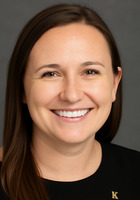
David
Spanning sociology, psychology, and biology in a single section, Psych/Soc rewards students who can think across disciplines — exactly what David's neuroscience and bioethics background trained him to do. He tackles high-yield frameworks like social identity theory, the stress-diathesis model, and s...
Yale University
Bachelor of Science in Neuroscience
Harvard University
Current Grad Student, Bioethics and Medical Ethics
Certified Tutor
Laura
Most pre-med students underestimate the Psych/Soc section because it seems "softer" than the science-heavy ones, but it requires precise recall of terminology from psychology, sociology, and neuroscience. Laura tackles this by connecting abstract concepts — operant conditioning, social stratificatio...
Massachusetts Institute of Technology
Bachelors, Economics
Certified Tutor
9+ years
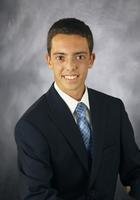
Benjamin
The Psych/Soc section of the MCAT sits right at the intersection of Benjamin's expertise — his neuroscience training covered the biological underpinnings of behavior, from neurotransmitter systems to brain region function, while his broad liberal arts education at Vanderbilt exposed him to sociologi...
Vanderbilt University
Bachelor's degree in neuroscience and Russian
Certified Tutor
8+ years
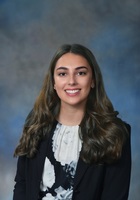
Amanda
The Psych/Soc section of the MCAT trips up many pre-meds because it blends sociology, psychology, and biology into passage-based questions that reward conceptual thinking over rote recall. Amanda tackled this section during her own MCAT prep and now, as a medical student finishing her MD and MPH, sh...
The University of Alabama
Bachelor of Science, Biology, General
Baylor College of Medicine
Doctor of Medicine, Public Health
Certified Tutor
6+ years
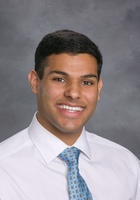
Sanjay's medical school training gives him firsthand familiarity with the psychology and sociology concepts the MCAT Psych/Soc section tests — from Erikson's developmental stages to social determinants of health and the neurobiological basis of behavior. He breaks down passage-based questions by tea...
Rice University
Bachelor in Arts

Certified Tutor
15+ years
Matthew
The MCAT's Psych/Soc section catches a lot of science-heavy applicants off guard because it rewards conceptual fluency with theories — Piaget's stages, the elaboration likelihood model, social stratification frameworks — rather than raw memorization. Matthew's interdisciplinary range, spanning biolo...
Stanford University
Master of Science, Mechanical Engineering
The University of Texas at Austin
Bachelor of Science, Mechanical Engineering
Certified Tutor
14+ years
Jason
The MCAT's Psych/Soc section trips up many pre-med students because it tests conceptual distinctions — operant vs. classical conditioning, functionalism vs. conflict theory — rather than raw science recall. As a Penn medical student who also earned a master's in education studying learning and behav...
University of Pennsylvania
PHD, Medicine and Education
University of Pennsylvania
Master's degree in Education
Yale University
Bachelor's degree in History
Nearby MCAT Psychological, Social, and Biological Foundations of Behavior Tutors
Other Denver Tutors
Related Graduate Test Prep Tutors in Denver
Frequently Asked Questions
This section tests your understanding of how psychological, social, and biological factors influence human behavior and mental processes. You'll encounter questions on:
- Neuroscience and the nervous system (brain structures, neurotransmitters, neural pathways)
- Sensation and perception
- Learning and conditioning (classical, operant, observational)
- Memory systems and cognition
- Consciousness and sleep
- Motivation, emotion, and personality
- Individual differences and intelligence
- Social psychology (attitudes, conformity, group behavior)
- Culture and identity
- Abnormal psychology and mental health
- Biology of behavior (hormones, genetics, evolution)
The section emphasizes how these concepts apply to real-world scenarios, so understanding both the scientific foundations and practical applications is essential for strong performance.
The Psych/Soc section gives you 95 minutes to answer 59 questions, which works out to roughly 96 seconds per question. Effective pacing requires:
- Skim questions first: Spend 10-15 seconds identifying question type (passage-based, discrete, or experimental scenario) before diving into content
- Prioritize passage reading: These questions are interconnected, so reading the passage efficiently (2-3 minutes) saves time on multiple questions
- Flag and move: Don't get stuck on conceptually dense questions—flag them and return if time permits
- Use passage structure: Social science passages often have clear topic sentences; use them to navigate quickly
Working with a tutor can help you develop a personalized pacing strategy based on whether you struggle more with dense passages or tricky discrete questions.
Students preparing for the MCAT in Denver and beyond commonly struggle with:
- Distinguishing similar concepts: Classical vs. operant conditioning, or various neurotransmitter functions, can blend together without targeted review
- Applying theory to scenarios: The MCAT tests application, not just memorization—you need to recognize how concepts like Erikson's developmental stages or social influence play out in unfamiliar situations
- Dense, jargon-heavy passages: Social science prose can be harder to parse than biology or chemistry, making it easy to misread questions
- Balancing breadth and depth: The section covers many topics, but you also need deep understanding of high-yield concepts like memory, learning, and neurotransmitters
- Integrating biological and social perspectives: Understanding how neurobiology connects to behavior and social context requires synthesis, not isolated knowledge
Personalized tutoring helps identify which specific gaps are holding you back and creates a focused study plan to address them.
Score improvement depends on your starting point, study timeline, and engagement level. Most students see meaningful gains of 2-4 points (on the 118-132 scale) with focused, structured preparation over 6-12 weeks. However, the size of your improvement varies:
- Foundational gaps: If you struggle with core concepts like neural transmission or conditioning, clearing these up can unlock faster improvement
- Test-taking skills: Many students leave points on the table by misreading passages or second-guessing correct answers—refining these strategies often yields quick gains
- Time constraints: If pacing is your bottleneck, targeted timing practice with feedback can noticeably boost your score
- Practice test performance: Consistent improvement on full-length practice tests is the best predictor of real score gains
Working with an expert tutor helps you focus on high-leverage areas rather than spreading effort too thin across the entire section.
The best preparation combines official MCAT materials with targeted, section-specific practice:
- Official AAMC resources: Full-length practice tests and Section Bank questions are essential—they reflect real test difficulty and question style
- Discrete questions: Start with isolated concept questions to build foundational knowledge, then progress to passage-based sets
- Passage practice: Focus on reading efficiency and extracting key information, since most questions rely on passage details
- Timed practice: After untimed practice, always do some questions under time pressure to build pacing confidence
- Review and tracking: Keep a log of mistakes (conceptual gaps vs. careless errors vs. time pressure) to identify patterns
A tutor can help you select the most relevant materials based on your weak areas and design a practice schedule that builds skills progressively rather than randomly drilling questions.
Find a tutor with expertise in these key areas:
- Content mastery: They should explain neurobiology, behavioral concepts, and social psychology with clarity and confidence
- Test strategy experience: They've coached students through this specific section and understand common pitfalls—dense passages, application-heavy questions, and pacing challenges
- Diagnostic skills: They can quickly identify whether your struggles stem from concept gaps, passage comprehension, timing, or test anxiety
- Flexible teaching: Some students benefit from deep conceptual review; others need rapid-fire strategy refinement. Look for someone who adapts to your learning style
- Practice test analysis: They review your full-length results to spot patterns and adjust your prep accordingly
Varsity Tutors connects you with tutors who specialize in MCAT Psychology and Social Behavior prep. During your first session, discuss your target score and current weak areas so the tutor can design a focused plan.
A realistic study timeline depends on your baseline knowledge and target score:
- 8-12 weeks of focused prep: If you're starting with moderate content knowledge and aiming to improve by 2-4 points, plan on studying this section 5-7 hours per week alongside other MCAT sections
- 4-6 weeks of intensive review: If you're already scoring well but need to patch specific gaps (like neurotransmitters or research methods), concentrated, targeted work can yield quick gains
- Ongoing throughout MCAT prep: Since many concepts integrate across sections, continue light review of high-yield topics throughout your full MCAT study period
- Final 2 weeks: Shift from learning new content to timed full-length tests and strategic review of your mistake patterns
Working with a tutor from the start helps you create a timeline that fits your schedule and maximizes efficiency, so you're not wasting time on material you already know.
Connect with MCAT Psychological, Social, and Biological Foundations of Behavior Tutors in Denver
Get matched with local expert tutors