Award-Winning SAT Reading Tutors
serving Denver, CO
Who needs tutoring?
FEATURED BY


TUTORS FROM
- YaleUniversity
- PrincetonUniversity
- StanfordUniversity
- CornellUniversity
Award-Winning SAT Reading Tutors serving Denver, CO

Certified Tutor
9+ years
Vansh
I am currently pursuing a Bachelors of Science in Aerospace Engineering at the Georgia Institute of Technology. I am also a graduate of the high school International Baccalaureate Program. I have informal experience tutoring high school physics, but am most passionate about tutoring students for the...
Georgia Institute of Technology-Main Campus
Bachelor of Science, Aerospace Engineering

Certified Tutor
Julia
An English and linguistics double major who scored a perfect 1600 SAT composite, Julia treats Reading passages the way a linguist treats any text — mapping how syntax, tone, and word choice work together to build an argument before ever looking at the questions. That structural approach is especiall...
The College of William & Mary
Bachelors, English & Linguistics

Certified Tutor
5+ years
Arthur
I am available to tutor in a broad range of subjects, though I am most passionate about Economics, History, and Civics. Please feel free to contact me and I would be happy to arrange a session.
Middlebury College
Bachelor in Arts, Economics

Certified Tutor
6+ years
Rhea
Scoring a 1550 SAT composite while carrying a full pre-med course load at UChicago means Rhea knows how to read fast and accurately under pressure — the exact demand of the Reading section's timed passage sets. She's especially sharp on the science passages, where her biology and chemistry backgroun...
University of Chicago
Bachelor of Science, Biology, General

Certified Tutor
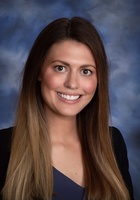
Max
The SAT Reading section rewards students who can distinguish an author's central claim from supporting evidence and identify how word choice shapes tone. Max, who scored 1580 on the SAT and spends his days parsing dense scientific literature for his computational biology research, applies that same ...
Ball State University
Bachelors, Biology, General
Certified Tutor
8+ years
Emily
I am currently a fourth year medical student in Indianapolis. I completed my undergraduate education at Indiana University Bloomington, where I majored in Biology and Spanish. I also completed two minors in Mathematics and Chemistry. While at IU, I worked for the Department of Mathematics and Depart...
Indiana University-Bloomington
Bachelor of Science, Biology, General
Indiana University-Purdue University-Indianapolis
Doctor of Medicine, Community Health and Preventive Medicine

Certified Tutor
9+ years
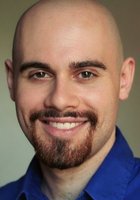
Conor
The SAT Reading section rewards a specific skill: finding what the passage actually says versus what it seems to say. Conor scored a 1560 composite and developed a method for attacking evidence-based questions by teaching students to anchor every answer choice in explicit textual support. He's espec...
Stony Brook University
Bachelor of Engineering, Biomedical Engineering
Drexel University
Doctor of Medicine, Biomedical Sciences
Certified Tutor
16+ years
John
The SAT Reading section isn't really testing whether you understood the passage — it's testing whether you can find the specific lines that prove an answer choice right or wrong. John, who earned a 1420 SAT and teaches literature and reading across multiple levels, approaches each passage type diffe...
University of St Thomas
Bachelor of Fine Arts, English/Drama
American Academy of Dramatic Arts
Associates, Acting

Certified Tutor
10+ years
Samantha
Scoring a perfect 1600 SAT composite means Samantha knows exactly how the Reading section tries to trip students up — especially on those paired-evidence questions where the tempting wrong answer sounds right but doesn't match the cited lines. Her global health coursework at Duke involved constant c...
Duke University
Bachelors in Global Health Determinants, Behaviors, and Interventions
Harvard Medical School
Current Grad Student, MD

Certified Tutor
Anya
As an adjunct professor at Parsons who teaches interdisciplinary humanities courses, Anya reads dense, argument-driven texts daily — exactly the kind of passage analysis the SAT Reading section demands. She teaches students to map a passage's structure in the first read, pinpointing the author's cen...
The New School University
Master of Arts, Fashion Studies
Practice SAT Reading
Free practice tests, flashcards, and AI tutoring for SAT Reading
Nearby SAT Reading Tutors
Other Denver Tutors
Related Test Prep Tutors in Denver
Frequently Asked Questions
Score improvement depends on your starting point and commitment level, but most students see meaningful gains with focused preparation. Students typically improve 50-100 points through structured practice and personalized instruction, though larger jumps are possible if you're addressing fundamental comprehension or timing issues. The key is identifying your specific weak areas—whether that's vocabulary in context, inference questions, or pacing—and targeting those through targeted practice and strategy work.
Many students struggle with the 65-minute window to read passages and answer 52 questions. Effective approaches include: reading the passage first then tackling questions (traditional method), skimming the passage then using it as a reference, or even reading questions first to know what to focus on. The best strategy depends on your reading speed and comprehension style. A tutor can help you test different approaches during practice tests to find what maximizes both accuracy and speed for your strengths.
The most frequent challenges include: choosing answers that sound good but aren't supported by the text, misunderstanding what inference questions are actually asking, rushing through vocabulary-in-context questions, and getting derailed by tricky wrong answers designed to catch careless readers. Many Denver students also struggle with the dual-passage comparative reading questions, which require careful attention to how the two sources relate. Personalized instruction helps you recognize your specific error patterns and develop targeted strategies to avoid them.
A structured approach works best: take a full practice test every 1-2 weeks to track progress and identify patterns, but spend most study time on targeted drilling of question types and passages where you struggle. After completing a full test, spend several days analyzing your mistakes—understanding not just what you got wrong, but why. This cycle of full tests plus focused practice typically takes 3-4 months for meaningful improvement. A tutor can customize this schedule based on your timeline and current performance level.
Traditional vocabulary memorization is less effective for SAT Reading than you might think. The test emphasizes "vocabulary in context," where the surrounding text provides clues to word meaning. Rather than flashcard drilling, focus on practicing these in-context questions and learning to identify textual clues like synonyms, definitions, and contrasts. That said, building general vocabulary through reading does help with comprehension of complex passages. A balanced approach—combining vocabulary-in-context practice with exposure to challenging reading material—tends to yield the best results.
The SAT Reading section includes four main passage types: literature (fiction excerpts), history/social studies, science, and dual passages (two shorter related texts). Each type has slightly different question patterns and requires different reading strategies. Literature passages often test inference and tone, while science passages focus on data interpretation and main idea questions. Understanding the quirks of each passage type helps you adjust your approach accordingly. Tutors can help you develop specific strategies for the passage types that give you the most trouble.
Test anxiety often stems from feeling unprepared or losing confidence when you encounter a difficult passage. The best antidote is building genuine confidence through repeated, successful practice. Working with a tutor allows you to practice in a supportive environment, learn to identify which questions are genuinely hard versus which ones just feel hard due to anxiety, and develop mental strategies for staying calm (like taking deep breaths between passages). Many students also benefit from practicing relaxation techniques and adopting a growth mindset—viewing challenging questions as opportunities to learn rather than threats.
Connect with SAT Reading Tutors in Denver
Get matched with local expert tutors