Award-Winning Calculus Tutors
serving Chicago, IL
Calculus
Tutors in Chicago
Private 1-on-1 tutoring, weekly live classes for academic support, test prep & enrichment, practice tests and diagnostics, and more to elevate grades and test scores.
Based on 3.4M Learner Ratings
UniversitiesSchools & Universities
DeliveredHours Delivered
ProficiencyGrowth in Proficiency
Who needs tutoring?
No obligation. Takes ~1 minute.
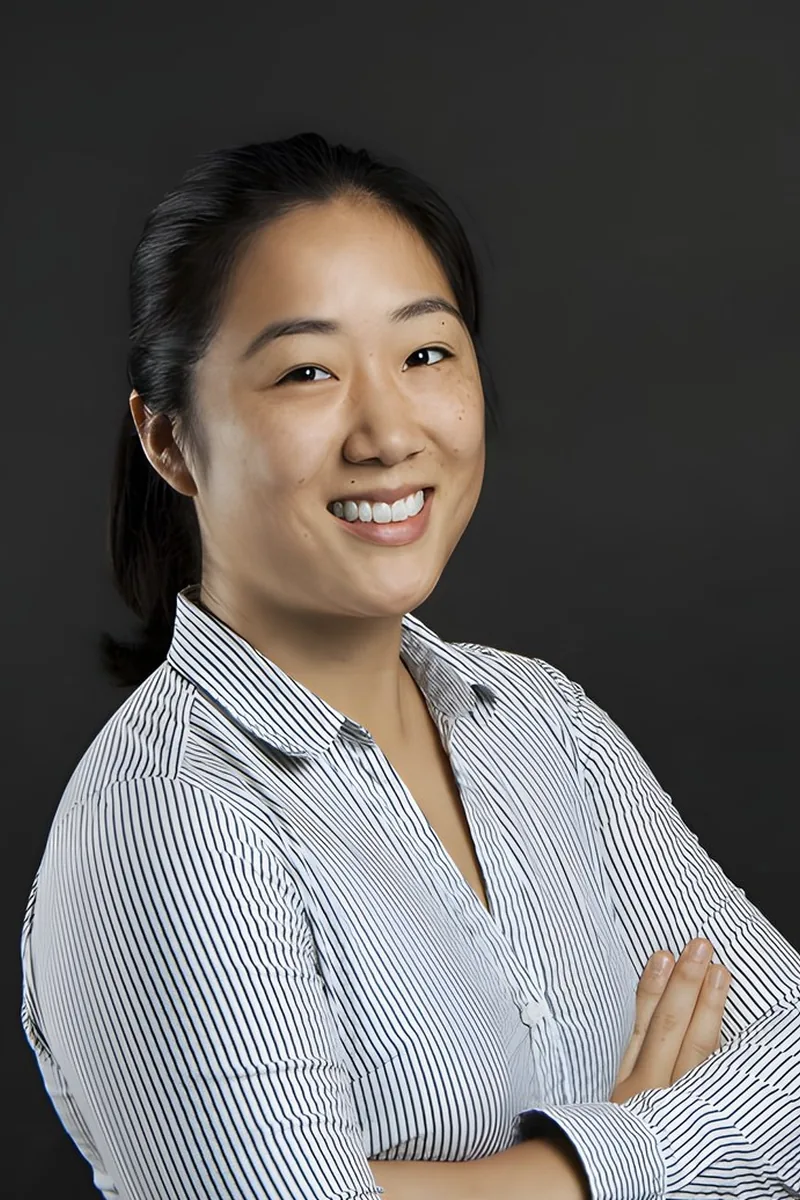
Limits, derivatives, and integrals each demand a different kind of thinking, and students who try to memorize procedures without grasping the underlying logic tend to hit a wall at the chain rule or related rates. Asta unpacks each concept visually and algebraically so the reasoning behind techniques like u-substitution actually clicks. Her 35 ACT composite speaks to the quantitative rigor she brings.
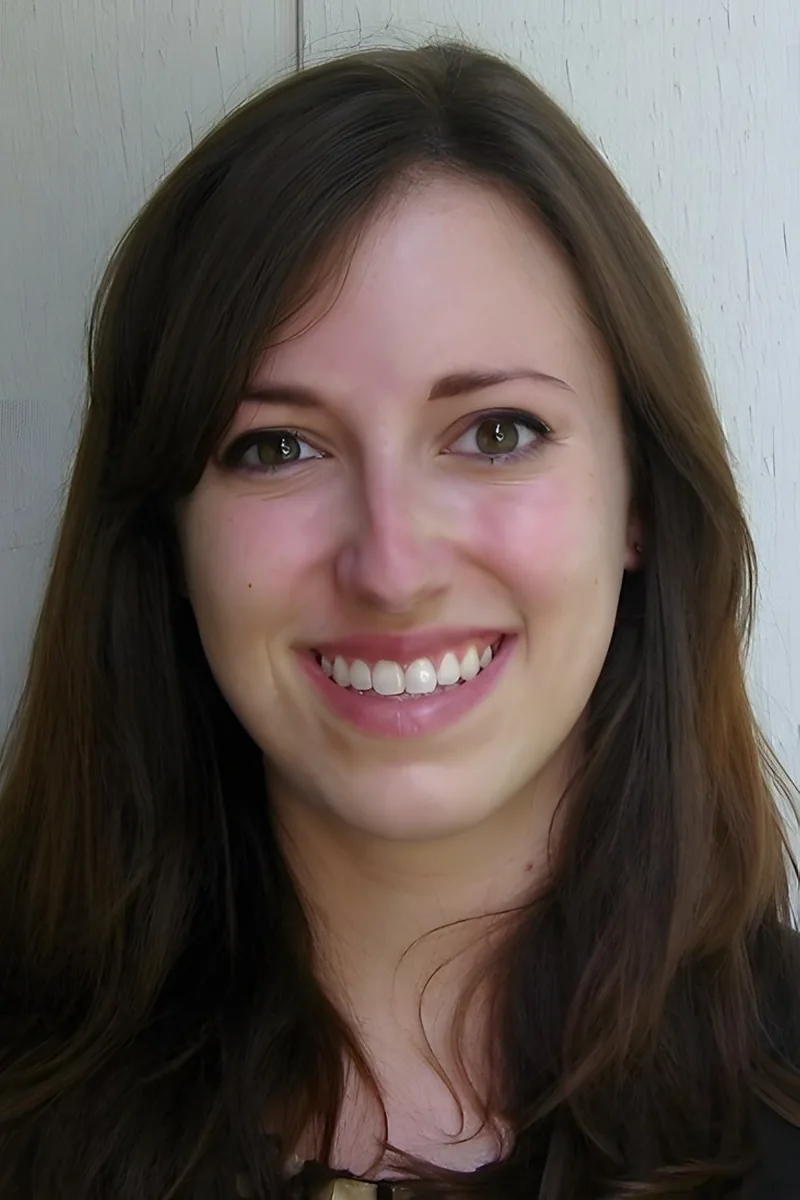
Elena's academic path runs through government, Spanish, and law — not mathematics — so calculus isn't her deepest subject. That said, a perfect 1600 SAT demonstrates serious quantitative ability, and her tutoring philosophy of listening to students work through problems and pinpointing exactly where their reasoning breaks down applies especially well to early calculus, where a single misunderstanding about limits or continuity can derail everything downstream.
Philosophy at Northwestern trained Emily to dissect complex arguments into their smallest logical steps — a skill that maps surprisingly well onto the sequential reasoning calculus demands, especially when unpacking what a limit definition actually says or why the chain rule works the way it does. Her legal career sharpened that precision further, since building a case and building a proof share the same demand: every step must follow inevitably from the last.
Between pharmacokinetics in medical school and the quantitative modeling baked into her MBA coursework at Kellogg, Anna has used calculus as a working tool — not just a classroom exercise. She teaches derivatives and integrals by connecting them to the rate-of-change problems she actually solves, like how drug concentrations shift over time or how marginal cost curves drive business decisions. A 36 ACT composite and 5.0 tutoring rating back up the quantitative chops.
Philosophy trains you to follow an argument step by step, testing each claim before moving to the next — which turns out to be exactly how you survive a calculus proof or a related-rates problem. Jeff's Princeton philosophy degree and 1550 SAT give him both the logical rigor and the quantitative chops to unpack derivatives and integrals methodically, even though math isn't his primary academic home. He treats each new rule the way he'd treat a philosophical premise: something to justify from the ground up, not just accept on authority.
Until age 16, Viktor thought math was just blind formula memorization — then a series of teachers revealed the deeper logic underneath, and he ended up majoring in mathematics at UChicago. That shift from "why do I need this" to genuine understanding is exactly what he brings to calculus: unpacking concepts like the chain rule or integration by parts so each step follows naturally from the last, not from a memorized recipe. His 1600 SAT and current CS master's work at NYU keep him immersed in the kind of mathematical thinking calculus demands.
Economics at the University of Chicago is calculus-heavy — demand curves, marginal utility, optimization problems, and elasticity all run on derivatives and integrals applied to real decision-making. Ellie has worked through that material firsthand, which means she can teach the mechanics of differentiation and integration alongside the intuition for what those tools actually measure. Her 1520 SAT confirms the quantitative chops to back it up.
Economics at the University of Chicago is calculus-heavy — demand curves, marginal analysis, and optimization problems all run on derivatives and integrals, so Benjamin encounters this material constantly in his coursework. His 35 ACT composite backs up that quantitative fluency, and he teaches calculus by connecting each rule to the economic intuition behind it, making concepts like the chain rule or related rates feel purposeful rather than abstract.
Studying political science at the graduate level meant Alex spent years building arguments through logical, sequential reasoning — a skill that maps surprisingly well onto the step-by-step logic of early calculus, where each concept (limits, continuity, the definition of a derivative) depends on genuinely understanding the one before it. He also teaches algebra and quantitative reasoning, so he can quickly spot and shore up the prerequisite gaps that often make calculus feel harder than it actually is.
Psychology at Duke doesn't scream calculus, but Pinelopi's 1530 SAT and her coursework in statistical modeling and research methods mean she's comfortable with the quantitative reasoning that underpins derivatives and integration. She breaks down problems by connecting each new rule to the algebraic patterns students already know from pre-calc, making the transition into calculus feel like a logical next step rather than a cliff. Rated 5.0 by students.
Molly's degrees are in History and Elementary Education rather than mathematics, so she's straightforward that calculus is not her area of depth. That said, her 1480 SAT and years teaching math through middle school mean she can walk students through the conceptual groundwork — particularly the intuition behind limits and what a rate of change actually represents — with the patient, step-by-step clarity that's earned her a 5.0 rating.
I am a recent graduate of the University of Chicago with a BA in English and a MA in the Humanities. My specialties are tutoring in test prep, writing, and reading. I am more than happy to spend time on my students outside of our organized sessions to ensure everyone meets their goals. Please do not hesitate to reach out if you have any questions. Looking forward to our tutoring sessions!
Literature majors don't usually end up on a calculus page, and Jacob is honest that this isn't his deepest subject — but his 35 ACT composite reflects real quantitative ability, and his analytical instincts from close-reading complex texts translate surprisingly well to parsing multi-step problems. He's strongest with the conceptual scaffolding of early calculus, walking through what a derivative actually represents before diving into computation.
Derivatives and integrals become far less intimidating once a student can visualize what's actually happening on a curve. Brett approaches Calculus by grounding each rule — chain rule, product rule, u-substitution — in concrete graphical meaning before drilling the procedural side. That balance between understanding and practice is what keeps students from freezing on exam day.
Mahalia's academic home is creative writing and language arts, not mathematics, so she's candid that calculus sits well outside her primary expertise. That said, her 1550 SAT and 35 ACT demonstrate real quantitative ability, and her knack for breaking complex ideas into clear, logical steps — honed through years of teaching writing structure — carries over surprisingly well to unpacking early calculus concepts like limits and derivative rules.
Before pivoting to his PhD in Comparative Human Development at the University of Chicago, Gabriel built his academic foundation on math — he calls it his favorite subject going back to childhood, and his teaching history spans pre-algebra through calculus. That genuine enthusiasm for quantitative thinking means he can trace the thread from algebraic manipulation all the way through limits and integration, showing students how each new idea grows out of something they already understand. Rated 5.0 by students.
Architecture studio work is surprisingly calculus-heavy — optimizing structural loads, calculating areas under curves for material estimates, and modeling how forces distribute across surfaces all require fluency with derivatives and integrals. Grace's architecture degree from the University of Chicago means she's applied these concepts to real design problems, not just textbook exercises. Her 1530 SAT and 5.0 tutoring rating back up that quantitative strength.
Teaching middle school math in Chicago Public Schools means Elizabeth spends every day building the algebraic and geometric reasoning that calculus eventually demands — so she knows exactly which gaps trip students up when they hit limits and derivatives for the first time. Her 34 ACT composite confirms she can handle the quantitative side herself, and her 5.0 tutoring rating shows she can make that transition from pre-calculus thinking to calculus thinking click for others.
Economics at the University of Chicago is calculus-heavy — demand curves, marginal utility, and optimization problems all run on derivatives and integrals, so Ethan encounters this math in nearly every core class. That daily exposure means he can walk through differentiation rules and integration techniques with the fluency of someone who actually uses them, not just someone who passed the course. His 1550 SAT confirms the quantitative chops to back it up.
Karishma's degrees are in English and Psychology rather than mathematics, so calculus is honestly outside her primary wheelhouse. That said, her 34 ACT demonstrates real quantitative ability, and her psychology training — which leans on statistical modeling and interpreting rates of change in behavioral data — gives her a foothold for walking through early concepts like limits and derivatives in plain, jargon-free language.
Charlie's English literature degree from the University of Chicago isn't a math credential, but a 35 ACT composite and five-plus years of tutoring math at multiple levels show he can handle quantitative material with real fluency. His approach to calculus mirrors how he tackles dense texts — slow down, identify the underlying structure, and make sure each logical step is airtight before moving forward, which pays off especially when students hit the chain rule or related rates and need to see how multiple ideas connect at once.
Fourth-year med students don't escape calculus — Brian's biology undergrad and medical training meant working through rate-of-change problems in contexts like enzyme kinetics, drug absorption curves, and physiological modeling, so he teaches derivatives and integrals with that applied science lens. His 33 ACT composite backs up the quantitative chops, and his approach emphasizes understanding the mechanics behind each rule so students can adapt when problems look unfamiliar.
Stage management is essentially applied problem decomposition — taking a chaotic production with dozens of moving parts and organizing it into a sequence that makes sense to everyone involved. Ariela brings that same instinct to calculus, breaking down problems like related rates or chain rule applications into ordered, manageable steps where each piece logically feeds the next. Her 1590 SAT confirms the quantitative chops to back up that organizational skill.
Zac's Human and Organizational Development major at Vanderbilt isn't a math degree, so he's honest that calculus isn't his deepest subject — but a 34 ACT composite demonstrates strong quantitative chops, and his coursework touches the kind of data-driven problem solving that makes early calculus concepts accessible. He breaks down the intuition behind derivatives and rate-of-change problems by connecting them to real-world decision-making scenarios, turning abstract notation into something that actually tracks.
Scoring highly on AP Calculus and completing a rigorous policy analysis program at Northwestern, Nathaniel brings an applied mindset to derivatives, integrals, and limit problems. He connects calculus concepts to real-world modeling — the kind of quantitative reasoning his public policy work demanded daily.
Marketing coursework at Northwestern included the quantitative side — optimization problems, marginal analysis, and the derivative logic that underpins pricing and demand curves — so Jack has seen calculus applied in business contexts where rates of change drive real decisions. His 1520 SAT confirms strong quantitative reasoning, and he teaches early calculus by connecting each rule to a tangible scenario rather than leaving it as abstract symbol manipulation.
Studying the biological basis of behavior at the college level meant Ruthie worked through calculus in the context of modeling neural signals, growth curves, and the quantitative methods that underpin behavioral research — so derivatives and integrals aren't abstract to her. She teaches the material by connecting each concept back to how rates of change actually function in biological systems, making the math feel purposeful. Rated 5.0 by students.
Statistics at the University of Chicago is built on calculus — probability density functions, expected value derivations, and the integration techniques that underpin statistical inference are all part of Dylan's daily coursework. That means he teaches derivatives and integrals as tools he actively uses, not abstract procedures from a class he took years ago. His 1480 SAT confirms the quantitative chops to back it up.
Law school sharpens one specific skill that transfers directly to calculus: building an argument step by step, where each piece depends logically on the one before it. Camilla applies that sequential reasoning from her JD training at Washington University to walking through limit definitions and derivative rules, treating each new concept as a claim that needs to be justified before moving forward. Her summa cum laude undergraduate record confirms she can handle rigorous quantitative material even outside her primary field.
Sociology at the University of Chicago is surprisingly quantitative — statistical modeling, regression analysis, and the rate-of-change thinking that underpins calculus all show up when studying population dynamics and social trends. Zo brings that applied math fluency plus a 32 ACT composite to early calculus topics like limits and derivatives, grounding abstract rules in the kind of real-world data interpretation she uses in her own coursework. Rated 5.0 by students.
Computational neuroscience lives in calculus — Gabriel uses derivatives to model neural response curves and integrals to analyze signal data in his research at NYU's Center for Neural Science. That daily, applied relationship with limits, differentiation techniques, and integration means he can show students not just how to solve problems but why the machinery of calculus works the way it does.
Having taught calculus throughout a physics PhD — where integrals and derivatives aren't abstract exercises but the literal language of motion, energy, and field theory — Jonathan brings a depth of understanding that makes the subject feel purposeful. He unpacks concepts like the chain rule or integration by parts by connecting them to the physical problems they were invented to solve, so the reasoning sticks. Rated 5.0 by students.
Studying neuroscience meant Jhonatan spent years applying calculus to real problems — modeling neural firing rates with derivatives, calculating drug concentrations with integrals. He brings that applied perspective to topics like limits, optimization, and differential equations, making the material feel purposeful for students whether they're heading into STEM or just need to pass the course.
I am a recent graduate of Princeton University's Mechanical and Aerospace Engineering Department. I am passionate about teaching and mentoring and have done so in multiple capacities over the last four years, including a fellowship during which I taught pre-algebraic math to a group of middle school students from traditionally underserved backgrounds in Saint Paul, MN. I love interacting with students and seeing them grow over the course of their studies. I'm ecstatic at the opportunity to learn alongside them as we venture into educational rabbit holes and uncover key concepts about math, science, and everything else.
Earning a perfect score on the BC Calculus AP exam means Richard didn't just learn derivatives and integrals — he internalized them. He digs into the reasoning behind the chain rule, integration by parts, and series convergence so students develop real intuition instead of fragile memorization. His PhD research at Northwestern keeps him actively using calculus in modeling and data analysis.
The jump from "find the derivative" to "understand what the derivative means" is where most calculus students get stuck. Nicki unpacks concepts like limits, rates of change, and area under a curve by tying them to real-world scenarios — particularly applications in population modeling and epidemiology drawn from her public health research at GW.
Biomedical engineering at Vanderbilt meant Sparsh didn't just take calculus — he used it daily, from modeling fluid dynamics in cardiovascular systems to analyzing signal processing in medical devices. That applied fluency means he can teach integration techniques or multivariable concepts by connecting them to real physical systems where the math has stakes. His 1570 SAT confirms the quantitative chops to back it up.
Public policy analysis at UChicago isn't a math degree, but it's more quantitative than people assume — regression models, cost-benefit curves, and the marginal thinking that underpins policy decisions all draw directly on calculus concepts. Allison uses that applied background to make derivatives and optimization problems feel like tools for answering real questions rather than abstract exercises. Her 32 ACT composite confirms she's comfortable with the quantitative reasoning the material demands.
Biology coursework at Northwestern — particularly genetics and genomics — meant Amber spent serious time with the calculus that underpins population genetics models, growth rate equations, and the quantitative side of biological research. Her concentration in those fields gives her a concrete way to explain derivatives and integrals as tools for describing how systems change, not just abstract rules to memorize. A 32 ACT composite backs up that quantitative fluency.
I am a graduate of Cornell University's College of Arts and Sciences. I received my Bachelor of Arts in Chemistry with Distinction in 2015. Since graduation, I was a physics/chemistry teacher and soccer coach at a private school in Virginia for a year, where I led the soccer team to an undefeated season. Before teaching and coaching professionally, I was a Teaching Assistant for the Cornell Math and Physics Departments, where I taught many subjects including calculus, mechanics, electromagnetism. Throughout my time at Cornell and as a teacher, I tutored subjects ranging from the SAT to AP Physics and Algebra II, which is where my true talents lie: in small group or one-on-one settings where I can give students the full attention they deserve and tailor my approach specifically to their learning styles. This is why I am now pursuing tutoring as a part-time occupation at Varsity Tutors. I embrace teaching all math and science subjects, especially physics and calculus, at both the college and high school level and will go above and beyond to make sure all of my students succeed, according to their definition of success. In my spare time, I enjoy playing league soccer, basketball, tennis and guitar, and also like to travel and see as much of the world as I can.
Testimonials
Because the right Calculus tutor makes all the difference.
Average Session Rating – Based on 3.4M Learner Ratings
Nearby Calculus Tutors
Other Chicago Tutors
Related Math Tutors in Chicago
Frequently Asked Questions
Many students struggle with the transition from algebra and precalculus to the conceptual thinking required in Calculus. Common pain points include understanding limits and continuity, applying derivatives and integrals to real-world problems, and mastering multi-step problem-solving strategies. Word problems can be particularly challenging because they require students to translate English into mathematical notation and then solve. Personalized tutoring helps students build conceptual understanding rather than just memorizing procedures, which is key to success in Calculus.
During your first session, a tutor will assess your current understanding of Calculus concepts, identify specific areas where you're struggling, and learn about your learning style and goals. Whether you're working through limits, derivatives, integrals, or applications, the tutor will ask questions to understand your thought process and where misconceptions might be forming. This personalized approach allows the tutor to create a tailored plan that addresses your unique needs and builds your confidence from day one.
One of the biggest differences between getting an answer right and truly understanding Calculus is being able to explain your reasoning step-by-step. Tutors work with you to develop clear problem-solving strategies, identify which rules and theorems apply to each problem, and articulate why you're taking each step. This focus on showing work not only improves your test performance but also helps you catch errors early and build the conceptual understanding needed for more advanced mathematics.
Chicago's 12 school districts use different textbooks and approaches to teaching Calculus, from traditional calculus sequences to AP Calculus AB/BC or IB Higher Level Math. Tutors connected through Varsity Tutors are experienced with multiple curricula and can adapt their instruction to match your specific course materials and teaching style. Whether your school emphasizes graphical, numerical, or analytical approaches, a tutor can help you master the concepts in the way that makes most sense for your class.
Math anxiety is real, and Calculus can feel overwhelming—especially when you're making the jump to more abstract concepts. Personalized tutoring creates a low-pressure environment where you can ask questions, make mistakes, and build confidence at your own pace. Tutors help you see patterns and connections in Calculus rather than viewing it as a series of disconnected procedures, which often reduces anxiety and helps you approach problems with more curiosity than fear.
Word problems require you to translate a real-world scenario into mathematical language, set up the right equation or integral, and then solve it—which involves multiple steps where students often get stuck. Tutors teach you a structured approach: identifying what you know and what you're solving for, sketching diagrams when helpful, and breaking complex problems into manageable pieces. With practice and feedback on your reasoning, you'll develop the problem-solving strategies that work for your brain and gain confidence tackling unfamiliar scenarios.
AP Calculus AB and BC exams test both conceptual understanding and procedural fluency, with multiple-choice and free-response sections that require you to show your work and explain your reasoning. Tutors can help you master the specific topics on the exam, practice time management, learn how to earn partial credit on free-response questions, and build confidence with the types of problems you'll encounter. Personalized instruction allows you to focus on your weakest areas while reinforcing your strengths as test day approaches.
Varsity Tutors matches you with expert tutors for students in Chicago who have experience teaching Calculus and understand your specific course and goals. You can share details about your current level, what you're struggling with, and your schedule, and you'll be connected with a tutor who's a great fit. From there, you'll work together on a personalized plan to build your understanding and confidence in Calculus.
Let’s find your perfect tutor
Answer a few quick questions. We’ll recommend the right plan and match you with a top 5% tutor.