Award-Winning High School Chemistry Tutors
serving Chicago, IL
High School Chemistry
Tutors in Chicago
Private 1-on-1 tutoring, weekly live classes for academic support, test prep & enrichment, practice tests and diagnostics, and more to elevate grades and test scores.
Based on 3.4M Learner Ratings
UniversitiesSchools & Universities
DeliveredHours Delivered
ProficiencyGrowth in Proficiency
Who needs tutoring?
No obligation. Takes ~1 minute.

Chemistry can feel like learning a new language — balancing equations, interpreting the mole concept, predicting reaction types — and Asta treats it that way, breaking each topic into its own vocabulary and logic. Her experience tutoring internationally in Hong Kong gave her practice explaining scientific concepts to students from varied academic backgrounds. Rated 5.0 by students.
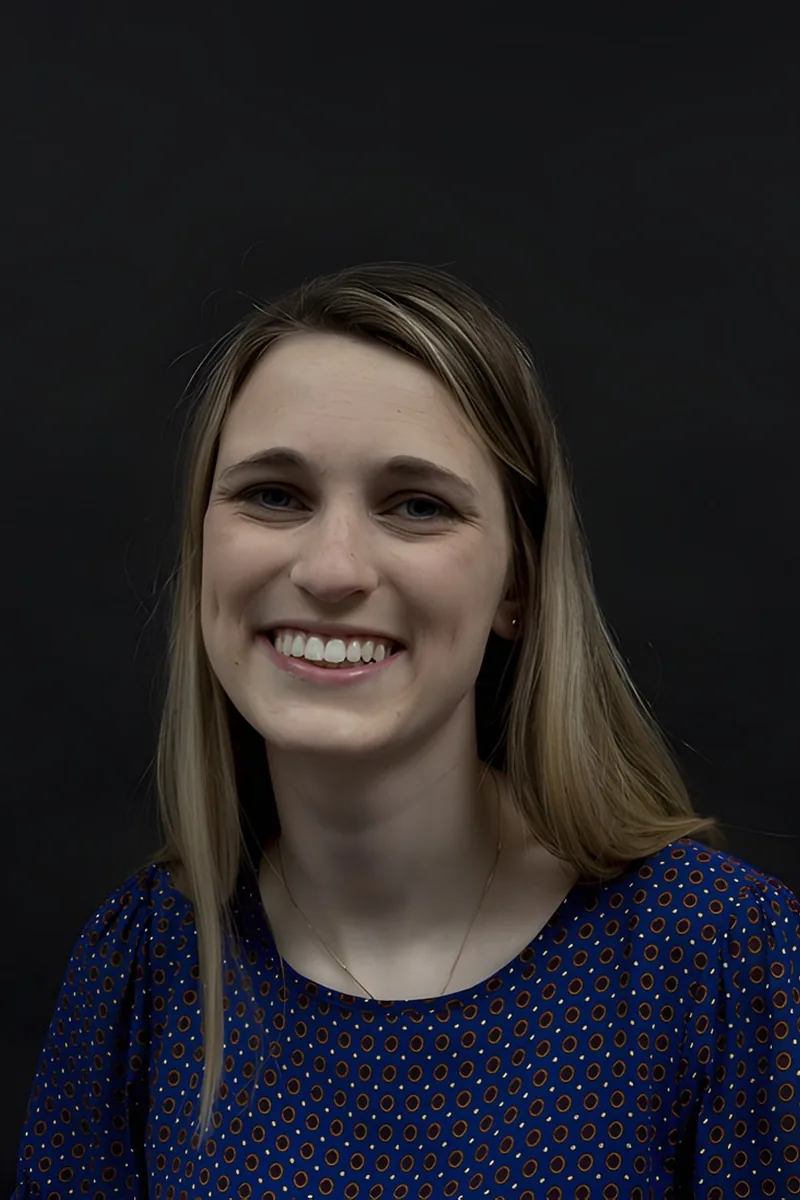
Chemistry clicks when students see how atomic structure drives everything else — why electronegativity explains polarity, why polarity explains solubility, and so on up the chain. Amber's biological sciences background at Northwestern means she regularly connects chemistry concepts like equilibrium and acid-base reactions to real biological systems, giving students a reason to care about what's on the board.
An MD/PhD student at Northwestern with his PhD work specifically in chemistry, Austin lives in the world of molecular behavior daily — which means high school topics like electron configurations, periodic trends, and bonding aren't simplified versions of what he knows but the actual building blocks he still uses. He teaches stoichiometry and reaction balancing by anchoring them in the atomic-level logic that makes the math feel inevitable rather than arbitrary.
Kheya's path to dental school through UIC's Guaranteed Dental program means she's currently deep in the science coursework where concepts like stoichiometry, periodic trends, and chemical bonding aren't elective — they're prerequisites she has to genuinely master. She takes problems slow and methodical, layering in practice until students can set up and solve calculations like mole conversions on their own rather than mimicking steps from a worked example.
Callie's pre-med coursework at the University of Chicago means she's currently immersed in the same chemistry concepts her students are tackling — gas laws, reaction types, and thermodynamics — just at a higher level. That proximity to the material lets her pinpoint exactly where a topic like molarity or Lewis structures starts to feel confusing and break it down before frustration sets in. Rated 4.9 by her students.
The jump from memorizing the periodic table to actually understanding stoichiometry, bonding, and equilibrium is where most high school chemistry students get stuck. Lee's biomedical engineering background means he uses chemistry daily and can explain concepts like mole ratios or electron configurations in concrete, practical terms rather than abstract definitions.
A PhD in chemistry means Taryn has spent years doing the discipline, not just studying it — and that depth shows when she teaches topics like equilibrium, reaction kinetics, or electron orbital theory, where surface-level explanations often leave students more confused. She digs into the conceptual architecture behind each topic so that word problems and multi-step calculations become puzzles to reason through rather than formulas to memorize.
Stoichiometry, equilibrium, acid-base reactions — high school chemistry throws a lot of conceptual shifts at students in a short time. Klaas holds a master's in chemistry teaching and knows exactly where most students get tripped up, so he sequences explanations to prevent confusion before it starts. His 5.0 rating speaks to how well that approach lands.
As a recent high school graduate now deep in university-level science, Sofia remembers exactly where high school chemistry gets confusing — mole conversions, electron configurations, acid-base titrations. She teaches these topics with the study strategies she personally used to bridge the gap between memorizing periodic trends and actually understanding why elements behave the way they do.
Stoichiometry and gas laws tend to click faster when the person explaining them uses those concepts every day — and as a medical student with a biochemistry degree, Grant still thinks in terms of molar relationships and reaction energetics regularly. He teaches the quantitative side of chemistry by connecting it back to the molecular logic, so students understand why a balanced equation has to balance before they start crunching numbers.
Stoichiometry, acid-base reactions, and thermochemistry each demand precision with both concepts and calculations, which is where most high school chemistry students get stuck. Pal's pre-med science training at UIC means he's recently worked through these exact topics at an advanced level, and he explains the quantitative side of chemistry with the clarity of someone who just mastered it himself.
Pre-med coursework forced Hannah to rely on chemistry long after her high school course ended — organic chemistry, biochemistry, and lab sciences all demand fluency with concepts like molecular polarity, reaction types, and acid-base equilibria. She draws on that sustained exposure to teach nomenclature and dimensional analysis as practical tools rather than isolated homework exercises. Rated 5.0 by students.
The jump from memorizing the periodic table to actually using it — predicting bond polarity, drawing Lewis structures, calculating enthalpy changes — is where high school chemistry gets real. Masooma walks students through each concept with enough repetition and variation that the logic behind the rules clicks, not just the procedures.
Dhrumil's public health major at UIC meant working through general chemistry with an emphasis on how concepts like concentration, pH, and chemical reactivity show up in environmental and health contexts — think water quality standards or how toxins interact with biological systems. He uses that practical framing to make topics like molarity and acid-base chemistry feel less abstract, tying the calculations to scenarios where getting the numbers right actually matters. Rated 4.9 by students.
Martina doesn't just tutor high school chemistry — she's deep in it as a chemistry major at Princeton, which means she can explain where concepts like electron configuration and acid-base theory are heading, not just what's on tomorrow's test. That bigger picture turns topics like mole conversions and reaction types from rote memorization into something students genuinely understand.
Hi! I am Vivek Pisharodi and I work in operations for a software company called Gamma Technologies. I graduated with a bachelor's degree in Chemical and Biomolecular Engineering from Georgia Tech and a master's degree in Material Science and Engineering from the University of Washington, focusing on electrochemical battery synthesis and analysis. My tutoring journey began as a way to stay engaged during a gap year between undergraduate and graduate school, but it quickly became a passion. I found immense fulfillment in helping students build confidence in math and science, guiding them toward academic success. While at the University of Washington, I continued tutoring student-athletes, supporting them in balancing rigorous coursework with their athletic commitments.
Stoichiometry, equilibrium, and acid-base reactions tend to be the units where high school chemistry students first feel lost. Ellen's approach is to slow down at those inflection points and unpack the logic behind the math, drawing on her chemistry minor and years of experience teaching the subject. Once a student understands why mole ratios work, balancing equations stops feeling arbitrary.
Stoichiometry and gas laws click differently when your tutor spent years doing mass and energy balances in a chemical engineering master's program — Daniel doesn't just remember these topics, he's applied them at industrial scale. His chemistry bachelor's gives him the molecular-level grounding, while his engineering training means he teaches students to set up problems systematically, tracking units and quantities the way a working engineer would.
A chemistry minor alongside dual science degrees at Pitt means Sareen didn't just pass through general chemistry — she used concepts like equilibrium, thermodynamics, and acid-base chemistry as daily tools across neuroscience, psychology, and pre-med coursework. She teaches the mole concept and stoichiometry by tracing the logic of unit relationships rather than drilling formula templates, which tends to unstick students who've been going through the motions without understanding the math. Rated 5.0 by students.
Stoichiometry trips up more high school chemistry students than almost any other topic, and it's usually because the dimensional analysis framework wasn't taught clearly the first time. Hanna regularly tutors General Chemistry at UIC and applies that same rigor to high school coursework — from gas laws to electron configurations. Her biology background also means she can show how these reactions play out in living systems, not just on paper.
Studying biology at Lewis means Yusuf is actively using chemistry — balancing redox reactions in metabolic pathways, thinking about electronegativity when studying protein folding — so high school topics like bonding and stoichiometry stay sharp through daily application. He walks through dimensional analysis and mole calculations by anchoring each step in the biological context where those numbers actually mean something, which tends to click for students who wonder why chemistry matters.
A physics degree builds an unusual advantage for teaching chemistry: Edward already thinks in terms of atomic structure, energy states, and conservation laws, which are the backbone of topics like stoichiometry, electron configuration, and chemical bonding. He's also preparing for a PhD in Chemistry, so he approaches high school material with the depth of someone who's going much further with it.
Mole conversions, electron configurations, and balancing redox equations each demand a slightly different kind of thinking, and most students struggle when they try to memorize procedures instead of understanding the logic underneath. Kyle unpacks the reasoning behind each step so that when a problem changes shape on a test, the approach still holds. His 4.9 client rating speaks to how clearly he communicates.
Stoichiometry, equilibrium, and acid-base chemistry tend to be the units where high school students either lock in or fall behind. Rohan walks through dimensional analysis and reaction predictions step by step, making sure the logic is clear before speeding up to exam pace. He's rated 5.0 and teaches across both math and science, which means he's comfortable with the quantitative side that trips up many chemistry students.
That moment when moles stop making sense or electron configurations start blurring together is usually where high school chemistry gets frustrating. Kate teaches these concepts as a DePaul teaching assistant and chemistry major, so she knows exactly which explanations land and which ones just add confusion. She connects each topic — whether it's gas laws or periodic trends — back to a clear, visual logic.
Mechanical engineering students don't just take chemistry — they depend on it, especially when thermodynamics, material properties, and energy transfer show up in every upper-level course. Grant's engineering curriculum keeps concepts like gas behavior, enthalpy, and reaction energetics in active rotation, so he explains them with the fluency of someone who actually uses them rather than someone recalling a past class. His 1490 SAT reflects the kind of quantitative precision that makes the math-heavy side of chemistry — stoichiometry, dimensional analysis, molarity — click faster.
Beth's academic background is in languages, not science, but her 32 ACT composite — including the Science section — shows she knows how to systematically work through data-heavy, analytical problems, which is exactly what stoichiometry and gas law calculations demand. She approaches chemistry the way a strong generalist does: methodically setting up the logic of each problem before touching the math, which clicks for students who feel lost when a topic like mole conversions seems to come out of nowhere. Rated 4.9 by students.
Balancing redox equations or predicting products in a double-replacement reaction becomes much less intimidating when someone explains the 'why' behind each rule. Kurt's science-heavy PA coursework covered general and organic chemistry in depth, so he can connect concepts like mole ratios and periodic trends to concrete examples students actually remember. He holds a 5.0 rating from students who appreciate that approach.
Stoichiometry clicks differently when the person explaining it uses those same mole relationships every day in medical school pharmacology and physiology. Jacob's biochemistry degree and fourth-year med student perspective mean he can trace a high school topic like gas laws or equilibrium all the way to how it plays out in the body, which tends to make the abstract feel worth learning. Rated 5.0 by students.
Testimonials
Because the right High School Chemistry tutor makes all the difference.
Average Session Rating – Based on 3.4M Learner Ratings
Nearby High School Chemistry Tutors
Other Chicago Tutors
Related Science Tutors in Chicago
Frequently Asked Questions
High school chemistry requires balancing abstract molecular concepts with concrete problem-solving skills. Students often struggle with balancing chemical equations, understanding stoichiometry, and visualizing how atoms and molecules interact at scales we can't see. Many also find unit conversions and dimensional analysis challenging, especially when applying them to gas laws and solution concentrations. Personalized tutoring helps students build confidence with these foundational skills so they can tackle more complex topics like equilibrium and thermodynamics.
During your first session, a tutor will assess your current understanding of chemistry concepts, identify specific areas where you need support, and learn about your learning style and goals. Whether you're struggling with bonding and molecular structure, preparing for the AP Chemistry exam, or need help understanding lab reports, the tutor will create a personalized plan tailored to your needs. This foundation ensures every future session builds directly on what matters most to your success.
Yes. Tutors can help you understand the scientific method behind experiments, interpret lab results, and connect hands-on observations to theoretical chemistry concepts. Whether you're learning to use lab equipment, writing lab reports, or troubleshooting why an experiment didn't produce expected results, personalized instruction helps you develop both practical skills and deeper conceptual understanding. This bridges the gap between what happens in the lab and the chemistry principles you're learning in class.
Not at all. While chemistry does involve learning some key formulas and the periodic table, true mastery comes from understanding the underlying principles—why reactions happen, how electron configurations determine bonding, and how energy changes drive chemical processes. Tutors focus on building your conceptual understanding so you can apply knowledge to new problems rather than just recall facts. When you understand the 'why' behind chemistry, memorization becomes easier and you're better prepared for exams and real-world applications.
Chemistry involves visualizing things we can't see—electron orbitals, molecular geometry, reaction mechanisms—which is challenging for many students. Tutors use diagrams, models, animations, and real-world examples to make these abstract concepts concrete and tangible. For instance, understanding VSEPR theory becomes clearer when you can visualize molecular shapes, and redox reactions make more sense when you track electron movement step-by-step. Personalized instruction adapts to your learning style, whether you're a visual, kinesthetic, or verbal learner.
AP Chemistry requires mastery of core concepts plus the ability to apply them to complex multi-step problems and lab scenarios. Tutors can help you build a strong foundation in equilibrium, thermodynamics, kinetics, and electrochemistry, then practice strategic problem-solving and time management for the exam. Many students benefit from personalized instruction that targets their weak areas—whether that's calculation-heavy topics or conceptual understanding—rather than generic test prep. Starting early with a tutor gives you time to develop both depth of knowledge and test-taking confidence.
Varsity Tutors connects you with expert tutors who have deep knowledge of high school chemistry and experience helping students in Chicago succeed. You can specify your goals—whether you need help with a specific unit, exam preparation, or overall course support—and get matched with a tutor whose expertise and teaching style fit your needs. The right tutor understands both the chemistry content and how to explain complex concepts in ways that click for you.
Many students notice improved understanding and confidence within a few sessions, especially when tutoring targets specific problem areas like balancing equations or stoichiometry. However, deeper conceptual mastery and grade improvement typically develop over several weeks of consistent, personalized instruction. The timeline depends on your starting point, the topics you're working on, and how frequently you meet with your tutor. Regular sessions combined with practice between meetings accelerate progress and help concepts stick long-term.
Let’s find your perfect tutor
Answer a few quick questions. We’ll recommend the right plan and match you with a top 5% tutor.