Award-Winning AP Physics C: Electricity and Magnetism Tutors
serving Memphis, TN
AP Physics C: Electricity and Magnetism
Tutors in Memphis
Private 1-on-1 tutoring, weekly live classes for academic support, test prep & enrichment, practice tests and diagnostics, and more to elevate grades and test scores.
Based on 3.4M Learner Ratings
UniversitiesSchools & Universities
DeliveredHours Delivered
ProficiencyGrowth in Proficiency
Who needs tutoring?
No obligation. Takes ~1 minute.
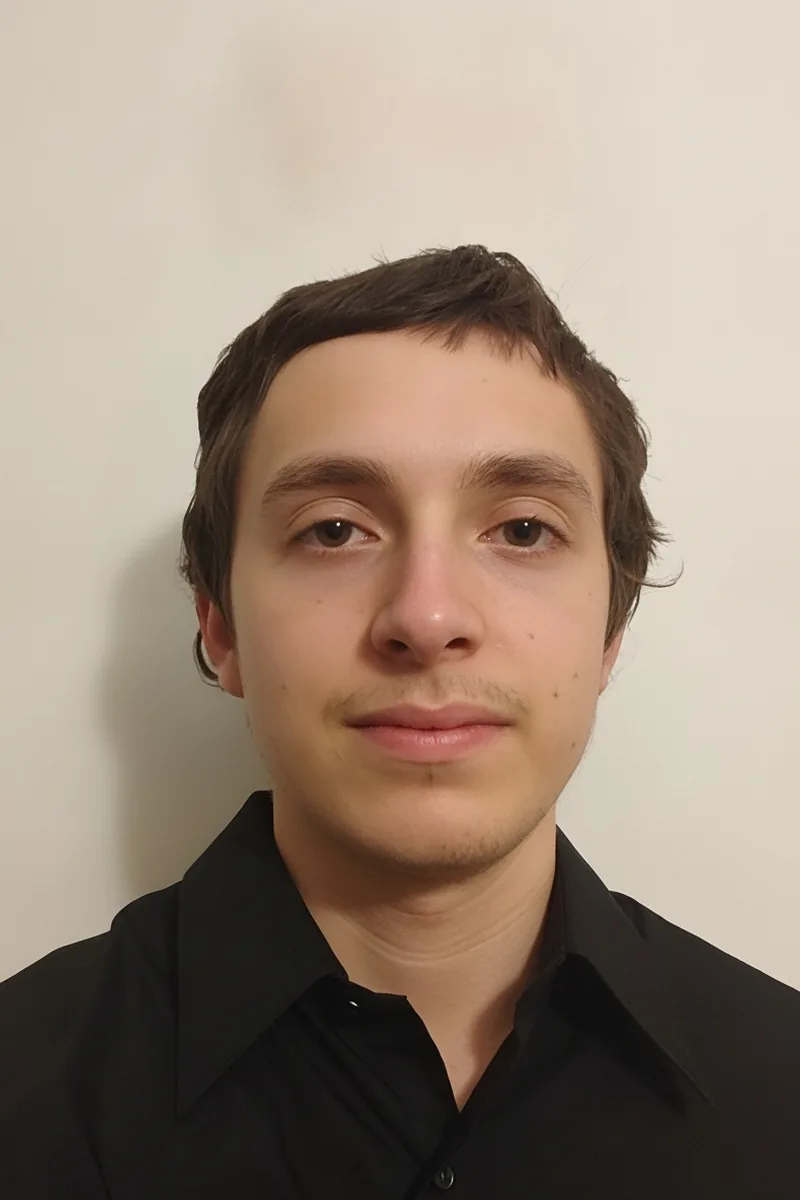
Gauss's law, Ampère's law, Faraday's law, RC circuits — AP Physics C: E&M asks students to wield vector calculus in physical contexts most haven't encountered before. Justin earned his bachelor's in physics and mathematics at Washington University in St. Louis before completing a PhD in Computational Mathematics at the University of Chicago, giving him the exact blend of mathematical rigor and physical intuition this course demands. He breaks down intimidating surface integrals and field superposition problems into clear, repeatable reasoning steps.
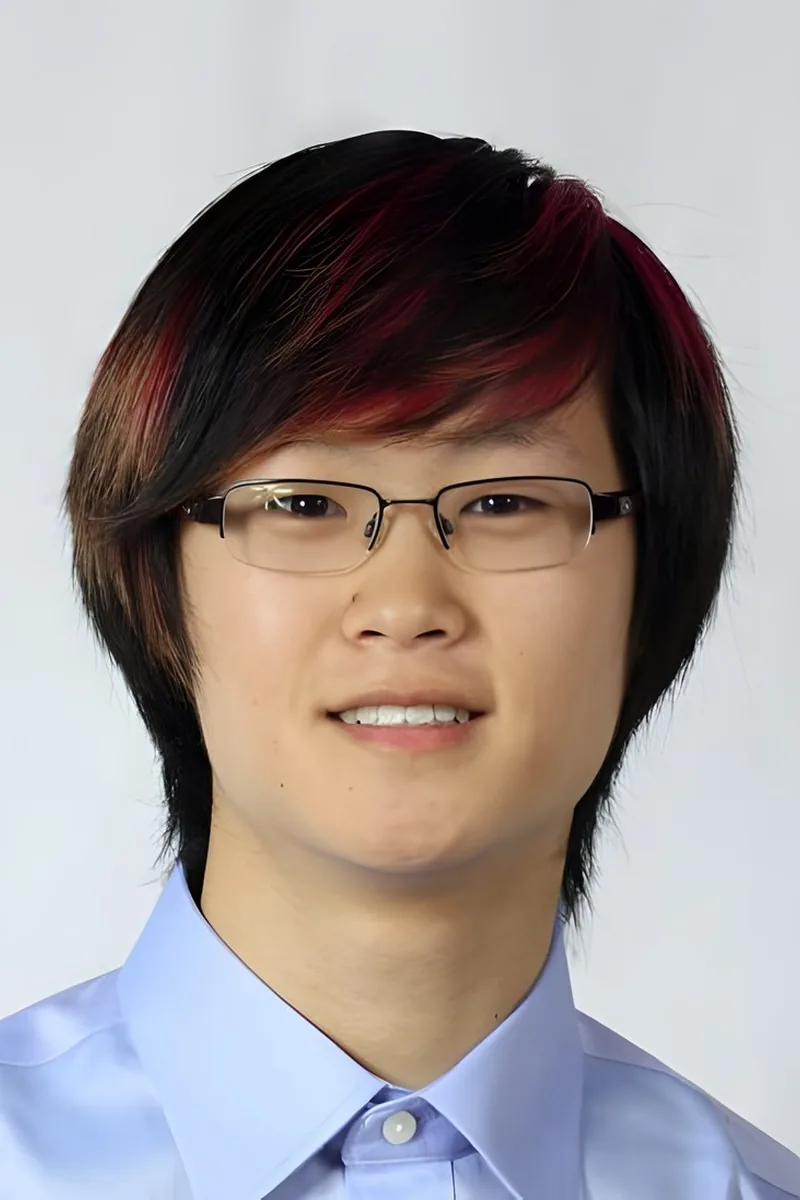
Gauss's law, Ampère's law, RC circuits, electromagnetic induction — AP Physics C: E&M is where most students hit a wall because the math and the physical intuition have to work together simultaneously. Dennis's research designing optical-electronic multiplexers required him to model electromagnetic wave behavior at a professional level, and he brings that fluency to breaking down the toughest problems on the exam.
Electromagnetism was the centerpiece of Michael's teaching at the University of Michigan, where he designed and led undergraduate lab courses on circuits, fields, and waves. AP Physics C: E&M demands comfort with Gauss's law, Ampère's law, Faraday's law, and RC/RL circuit analysis — all topics he's taught extensively at the college level. He knows exactly where the conceptual gaps tend to open up, especially around flux integrals and the superposition of electric fields.
E&M is where most AP Physics students hit their ceiling — Gauss's law, Ampère's law, and Faraday's law demand spatial reasoning and calculus fluency at the same time. Bidyut's biomedical engineering curriculum at Johns Hopkins required extensive work with electromagnetic theory, from circuit analysis to field modeling. He unpacks each law by building the physical picture first, then layering in the math so the integrals actually make sense.
Gauss's law, Ampère's law, Faraday's law — E&M asks students to visualize invisible fields and then do calculus on them, which is a uniquely difficult combination. Ava's engineering training at Washington University in St. Louis gave her deep practice with vector calculus and electromagnetic theory in applied settings like circuit analysis and energy systems. She unpacks each law by grounding it in a physical scenario before touching the math, so the integrals actually make sense.
Gauss's law, Ampère's law, Faraday's law — E&M demands comfort with vector calculus that most high schoolers haven't fully developed yet. Sanjana's applied math training at Harvard means she can teach the calculus and the physics simultaneously, connecting flux integrals and field equations to physical intuition rather than leaving students to wrestle with two subjects at once.
Gauss's law, Ampère's law, Faraday's law — E&M asks students to visualize invisible fields and then describe them with surface and line integrals. Bryan breaks each problem into two stages: building geometric intuition about what the field looks like, then choosing the right mathematical tool to exploit symmetry. His physics degree and 5.0 student rating back up that structured approach.
Gauss's law, Ampère's law, and Faraday's law all require students to visualize invisible fields and reason through multivariable integrals — a combination that trips up even strong physics students. Dylan's coursework at Vanderbilt covers exactly this material, and his instinct is to sketch field lines, draw Gaussian surfaces, and build physical intuition before diving into the math. That graphical-first approach turns E&M from the most feared AP Physics exam into something manageable.
Electricity and Magnetism trips students up because it layers vector calculus onto already-abstract concepts like electric flux, Gauss's law, and electromagnetic induction. Rachel's calculus expertise gives her a solid handle on the integral and differential equations that drive E&M problem-solving. She's upfront that this is one of the toughest AP courses offered, and she approaches it by making sure the math never becomes the bottleneck.
AP Physics C: E&M is widely considered the hardest AP science exam, demanding fluency with vector calculus, Gauss's law, Faraday's law, and RC/RL circuit analysis under serious time pressure. Nima is a physics major at Duke who earned a 1580 SAT, and he unpacks these topics by deriving results from Maxwell's equations so students understand the structure behind each problem type rather than pattern-matching from examples.
Gauss's law, Ampère's law, Faraday's law — E&M demands that students think in three dimensions about invisible fields, which is a fundamentally different challenge than mechanics. Corrina tackles this by connecting each Maxwell equation to physical setups she encountered in her engineering coursework, making abstract flux integrals feel concrete. Rated 4.7 by students.
AP Physics C: E&M is widely considered the hardest AP science exam, and it's also the subject closest to Sabrina's daily life as a Princeton electrical engineering student with an applied physics focus. She digs into Gauss's law, Ampère's law, RC circuits, and Faraday's law with the fluency of someone who uses Maxwell's equations in her own research and coursework. Her physics research at a Max Planck Institute adds another layer of depth to her explanations.
AP Physics C: E&M is one of the hardest AP exams for a reason — Gauss's law, Ampère's law, and RC/RL circuits all require setting up integrals in contexts most students have never seen. Nicholas pairs his MIT-level math fluency with a chemistry major's comfort in electrostatics and electromagnetic theory to walk through each problem type methodically. Rated 5.0 by students.
During his physics PhD, Jonathan taught E&M at the university level — not just the conceptual overview, but the full calculus-heavy treatment of Maxwell's equations, dielectric materials, and magnetic induction that AP Physics C demands. He walks students through the reasoning behind each problem setup, showing how to identify symmetry, choose the right integration path, and connect the math back to what the fields are actually doing. Rated 5.0 by students.
Gauss's law, Ampère's law, Faraday's law — AP Physics C: E&M throws vector calculus at students who are often still getting comfortable with multivariable thinking. Matthew studies both mathematics and physics at Harvard and has coursework in multivariable calculus, so he can unpack the geometry behind flux integrals and field line arguments in a way that makes Maxwell's equations feel less like magic.
Gauss's law, Ampère's law, Faraday's law — AP Physics C: E&M asks students to wield vector calculus in the service of invisible fields, which is a genuinely difficult conceptual shift. Spencer's biomedical engineering studies require exactly this skill set, since electromagnetic principles drive technologies like MRI and neural signal processing. He unpacks each law with clear diagrams and step-by-step integral setups so the math reinforces the physics instead of obscuring it.
Gauss's law, Ampère's law, RC circuits, electromagnetic induction — E&M demands that students think in vector fields and apply calculus to invisible phenomena. As a Stony Brook physics major who also codes simulations, Kiran unpacks these abstractions by walking through the physical setup before touching an integral, which turns intimidating problems into a sequence of logical steps.
Gauss's law, Ampère's law, Faraday's law — AP Physics C: E&M asks students to wield vector calculus inside electromagnetic theory, which is a steep jump from most prior coursework. Steven approaches each topic by first explaining the physical picture, then showing the mathematical framework, then working through a practical example that ties both together. His PhD in chemical engineering required deep work with electromagnetic principles and multivariable calculus alike.
I am a graduate of Cornell University's College of Arts and Sciences. I received my Bachelor of Arts in Chemistry with Distinction in 2015. Since graduation, I was a physics/chemistry teacher and soccer coach at a private school in Virginia for a year, where I led the soccer team to an undefeated season. Before teaching and coaching professionally, I was a Teaching Assistant for the Cornell Math and Physics Departments, where I taught many subjects including calculus, mechanics, electromagnetism. Throughout my time at Cornell and as a teacher, I tutored subjects ranging from the SAT to AP Physics and Algebra II, which is where my true talents lie: in small group or one-on-one settings where I can give students the full attention they deserve and tailor my approach specifically to their learning styles. This is why I am now pursuing tutoring as a part-time occupation at Varsity Tutors. I embrace teaching all math and science subjects, especially physics and calculus, at both the college and high school level and will go above and beyond to make sure all of my students succeed, according to their definition of success. In my spare time, I enjoy playing league soccer, basketball, tennis and guitar, and also like to travel and see as much of the world as I can.
Gauss's law, Ampère's law, and Faraday's law each require students to set up integrals over surfaces and paths that feel nothing like standard calculus problems. Vishank's comfort with multivariable math and his experience teaching across physics and calculus let him bridge that gap — showing exactly how to choose a Gaussian surface or an Amperian loop and why the math works the way it does.
AP Physics C: E&M is where calculus and physics collide — Gauss's law integrals, Faraday's law, and RC/RL circuit analysis all demand fluency in both. Jared's mechanical engineering PhD work at Lehigh means he uses Maxwell's equations and vector calculus daily, so he can unpack the math behind each concept rather than just handing students formulas to memorize.
AP Physics C: E&M is where calculus and physics collide — Gauss's law, Ampère's law, and Faraday's law all require setting up and solving integrals that many students haven't encountered in their math classes yet. Raphael's combined strength in calculus and physics, built through his Cornell science curriculum, means he can teach both the mathematical machinery and the physical intuition behind electromagnetic fields and circuits. Rated 5.0 by students.
Gauss's law, Ampère's law, Faraday's law — E&M demands that students think in three dimensions about invisible fields, which is a fundamentally different skill than anything in Mechanics. Pratik tackles this by teaching students to visualize field lines and flux before jumping into the calculus, building geometric intuition that makes the integral setups feel natural.
Gauss's law and Ampère's law become far more manageable once a student can visualize the symmetry each problem is really asking about. Emily's physics coursework at Cornell covered electricity and magnetism at the calculus level, and she approaches each concept by connecting the integral setup to the physical scenario. Her 4.8 rating speaks to how clearly she translates abstract field equations into something students can actually work with.
Gauss's law, Ampère's law, Faraday's law — AP Physics C: E&M throws vector calculus at students who are still getting comfortable with electric fields and circuits. Will breaks each law down to its physical meaning first, then layers in the integral formulations so students understand what they're computing and why. As a current Rice physics student, he's recently worked through this exact material at the college level.
AP Physics C: E&M is where calculus meets abstract field theory, and most students struggle not with the math itself but with visualizing what's happening inside capacitors, inductors, and current-carrying loops. Aleksandar pairs his UPenn physics coursework with a structured problem-solving method — breaking each scenario into a diagram, an equation selection, and a calculus setup — that turns intimidating free-response questions into repeatable steps.
This is Michael's home turf. As an electrical and computer engineering major at Northwestern specializing in robotics and control systems, he lives in the world of Gauss's law, Faraday's law, and RC/RL circuits every semester. He unpacks Maxwell's equations and circuit analysis in ways that connect the abstract math to real systems — like the power electronics he builds for Northwestern's solar car.
Gauss's law, Ampère's law, Faraday's law — AP Physics C: E&M asks students to wield vector calculus in physical contexts that feel genuinely abstract at first. Jacques tackles this by grounding each law in a concrete setup (a charged sphere, a solenoid, a changing magnetic flux) before layering in the integral formulations. His engineering training at Princeton and decades of classroom physics teaching make him unusually comfortable in this territory.
I love to teach. I love young minds and fresh brains. Those are just like clean sheets of papers I can draw anything I like. I really like to help young people to achieve their full capacities with my long experience of teaching. I am very patient and good at explaining complex concepts in simple terms. I am looking forward to meeting students who need my help.
Hello, my name is Yosef and I would be happy to serve as a math tutor. I place strong emphasis on a good balance between knowledge of mathematical content and proficiency in problem-solving, reasoning, and conveying mathematical ideas in writing. There are times when a student needs to be informed of a solution, times when he or she also needs to hear the explanation of why the solution works, and times when he or she should be guided to finding the solution on his or her own. It is important for the tutor to recognize which approach is appropriate. Frequently, when students struggle, it is because they do not understand the notation or terminology in use. In such cases, it is important to reassure the student, reminding him or her that he or she is only struggling with understanding a single word, not the entire mathematical concept. As a rule, people perform better and are better motivated when they have self-confidence, not when the task ahead seems frighteningly daunting. It is also important to recognize that different students learn best through different means. As an example, some students are visual learners and can understand the material best through pictures and gestures. Other students learn best through hearing the procedures vocalized, while still others learn best through writing out the steps of the solution procedure. I know to adapt my teaching style to the individual student. with these considerations in mind, I promise to provide the best assistance that I can, taking your individual needs into consideration.
Gauss's Law, Ampère's Law, Faraday's Law — E&M asks students to think in three dimensions about invisible fields, which is a genuinely different skill from anything in Mechanics. Lila tackles this by grounding each law in a concrete setup (a charged sphere, a solenoid, a changing flux through a loop) before generalizing, so the vector calculus feels like a tool rather than an obstacle.
Gauss's law, Ampère's law, Faraday's law — AP Physics C: E&M asks students to wield vector calculus in contexts that feel nothing like their math class. Cory breaks each problem into two layers: the physical picture (what are the charges and fields actually doing?) and the mathematical machinery (which symmetry makes the integral tractable?). That dual-track approach keeps students from drowning in formalism while still earning top scores.
AP Physics C: E&M is one of the toughest AP exams because it layers calculus on top of already abstract concepts like Gauss's law, Faraday's law, and RC circuits. Ian's chemical engineering program at Cornell covers electromagnetism in depth, so he can unpack Maxwell's equations and walk through the calculus-heavy derivations the exam demands. He treats each problem as a chance to build physical intuition, not just grind through integrals.
Gauss's law, Ampère's law, RC circuits — AP Physics C: E&M demands comfort with vector calculus applied to invisible fields, which is a steep jump for most students. David's engineering coursework at UCLA keeps him immersed in this material, and he excels at translating abstract field equations into concrete, visual reasoning.
I am pursuing a career in dentistry/oral surgery and will be beginning dental school at Boston University this fall. For this reason I recently took the DAT, which I am capable of assisting you with as well. During my undergraduate education, which I completed this past December, I worked in my school's tutoring center, helping my peers succeed in mathematics and science courses. Outside of my academic life, I am a big sports fan and I mostly follow the New York sports teams. For fun, I like to play basketball and golf with my friends. I am looking forward towards getting to know you and helping you with your academic needs.
AP Physics C: E&M is where calculus and physics genuinely merge — Gauss's law, Ampère's law, and Faraday's law all require setting up and evaluating integrals that many students haven't encountered outside a math class. Maxwell's dual degree in mathematics and physics means he tackles both the vector calculus and the physical intuition simultaneously, so concepts like electric flux and induced EMF actually click. Rated 5.0 by students.
Gauss's law, Ampère's law, RC circuits — AP Physics C: E&M piles abstract vector calculus on top of already counterintuitive electromagnetic concepts. Victoria unpacks each topic by building physical intuition first, like visualizing electric field lines before setting up a flux integral, so the math serves the physics instead of obscuring it. Her background in medical imaging gives her real-world examples of how electromagnetic principles show up beyond the textbook.
Gauss's law, Ampère's law, Faraday's law — AP Physics C: E&M asks students to wield vector calculus in physical contexts that feel deeply abstract. Shira tackles this by grounding each law in a concrete scenario first (a charged sphere, a solenoid, a changing magnetic flux) before layering on the integral setup, so students build physical intuition alongside mathematical fluency.
Gauss's law, Ampère's law, Faraday's law — AP Physics C: E&M throws a wall of abstract vector calculus at students who were just getting comfortable with mechanics. Lillian tackles each law by grounding it in a concrete physical scenario first, then layering in the math. Her systematic approach to problem-solving, sharpened through years of STEM coursework, translates well to navigating complex circuit and field problems.
Gauss's law, Ampère's law, Faraday's law — AP Physics C: E&M asks students to wield vector calculus in three dimensions, often before they've fully internalized what a flux integral actually means. Rishik unpacks each law by starting with the geometry of the field before jumping into the math, so the integral setup feels logical rather than memorized. His parallel background in calculus and computer science gives him multiple ways to visualize abstract electromagnetic concepts.
Testimonials
Because the right AP Physics C: Electricity and Magnetism tutor makes all the difference.
Average Session Rating – Based on 3.4M Learner Ratings
Practice AP Physics C: Electricity and Magnetism
Free practice tests, flashcards, and AI tutoring for AP Physics C: Electricity and Magnetism
Nearby AP Physics C: Electricity and Magnetism Tutors
Other Memphis Tutors
Related Science Tutors in Memphis
Frequently Asked Questions
AP Physics C: Electricity and Magnetism covers electrostatics, conductors and dielectrics, electric circuits, magnetic fields, and electromagnetic induction. The course emphasizes calculus-based problem solving and requires understanding both conceptual principles and mathematical applications. Most students find the transition from kinematics to field theory challenging, so many benefit from focused instruction on foundational concepts like Coulomb's law, Gauss's law, and Faraday's law before tackling complex circuit and induction problems.
Students typically struggle most with Gauss's law applications, understanding magnetic force on moving charges, and electromagnetic induction problems that require visualizing field changes over time. The calculus integration required for these topics—particularly line and surface integrals—often trips up students who haven't solidified their calculus skills. Personalized tutoring can help you identify which specific concepts are holding you back and build the mathematical foundation needed to solve complex problems confidently.
The AP Physics C exam is scored on a scale of 1-5, with a 3 typically considered passing. Most colleges grant credit for scores of 4 or 5, though some accept 3s. The national average hovers around 2.5-3.0, so scoring a 4 or 5 puts you well above typical performance. With focused preparation and expert guidance on problem-solving strategies, many students improve their projected score by one full point over a semester of tutoring.
The exam consists of two 45-minute sections: a 35-question multiple-choice section and a 3-question free-response section. For multiple choice, aim to spend about 1 minute per question, flagging difficult ones to return to. For free-response, allocate roughly 15 minutes per question, starting with the one you feel most confident about to build momentum. Expert tutors can help you practice with full-length exams and develop timing strategies tailored to your strengths, ensuring you don't rush through conceptual problems or get stuck on calculations.
Most successful students complete at least 4-6 full-length practice tests over their preparation period, spacing them out to allow time for review and targeted studying between attempts. Taking practice tests under timed conditions helps you identify weak topics, build test-taking stamina, and get comfortable with the exam format. After each test, review every question you missed—not just the answers, but the reasoning behind correct solutions. Tutors can help you analyze your practice test results to pinpoint exactly which concepts need reinforcement.
Varsity Tutors connects Memphis students with expert tutors who specialize in AP Physics C and understand the specific challenges of the Electricity and Magnetism curriculum. When you get matched with a tutor, you'll work together to assess your current understanding, identify gaps, and create a personalized study plan leading up to the exam. Your tutor can focus on your weakest topics, teach you effective problem-solving strategies, and help you build the confidence needed to perform well on test day.
Yes—AP Physics C is calculus-based, so you'll need comfort with derivatives, integrals, and differential equations to solve problems involving fields and circuits. If your calculus foundation is shaky, it's worth addressing that early in your preparation. Many students benefit from tutoring that bridges physics and calculus concepts, showing how derivatives describe rates of change in electric fields and how integrals calculate total charge or flux. A tutor can help you strengthen both subjects simultaneously so calculus becomes a tool rather than an obstacle.
Your first session is typically diagnostic—your tutor will assess your current understanding of foundational concepts, review your recent test scores or assignments, and learn about your goals for the exam. Together, you'll identify which topics need the most attention and discuss your learning style so your tutor can tailor their approach. By the end of the session, you'll have a clear roadmap for your tutoring relationship and know exactly what to focus on before your next meeting.
Let’s find your perfect tutor
Answer a few quick questions. We’ll recommend the right plan and match you with a top 5% tutor.