Award-Winning Calculus Tutors
serving Orlando, FL
Calculus
Tutors in Orlando
Private 1-on-1 tutoring, weekly live classes for academic support, test prep & enrichment, practice tests and diagnostics, and more to elevate grades and test scores.
Based on 3.4M Learner Ratings
UniversitiesSchools & Universities
DeliveredHours Delivered
ProficiencyGrowth in Proficiency
Who needs tutoring?
No obligation. Takes ~1 minute.
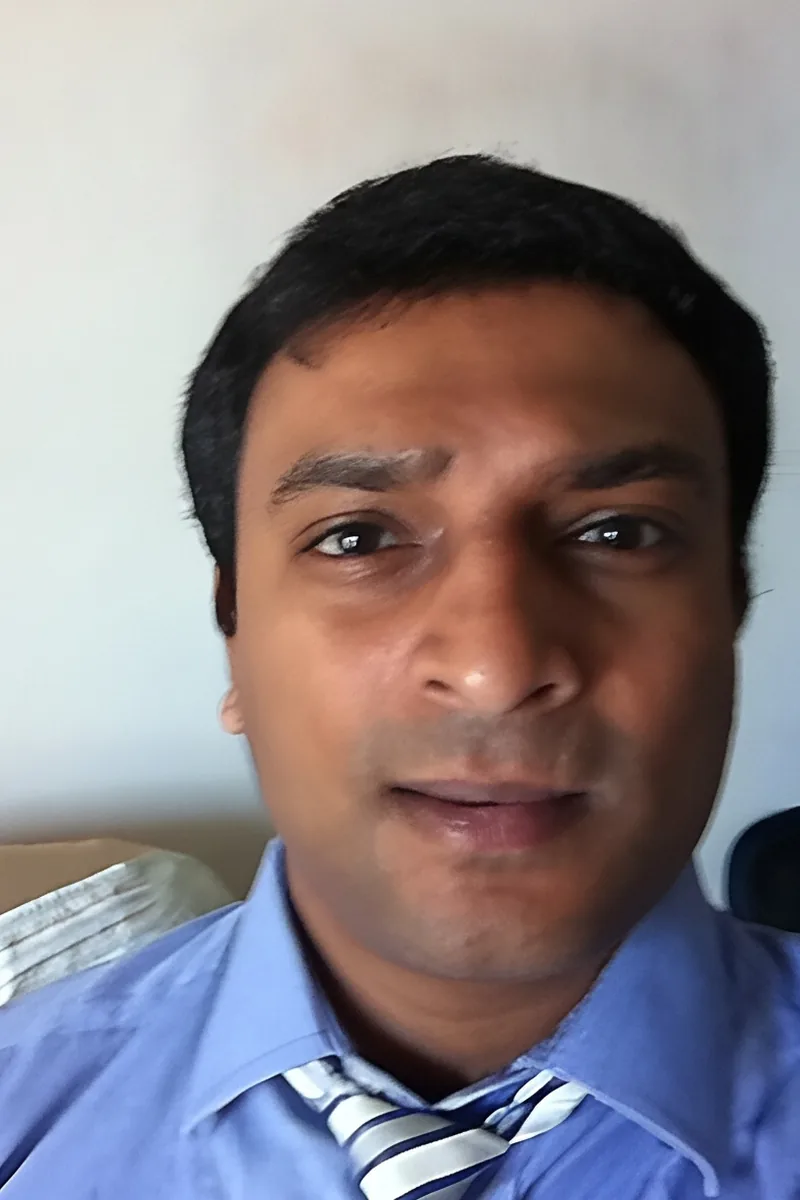
The jump from derivatives as formulas to derivatives as ideas — rates of change, optimization, area accumulation — is where most calculus students stall. Hari approaches each concept graphically and algebraically in parallel, so students see what a limit or integral actually represents before drilling computation. His finance and economics training gives him a deep library of applied problems to make abstract ideas tangible.
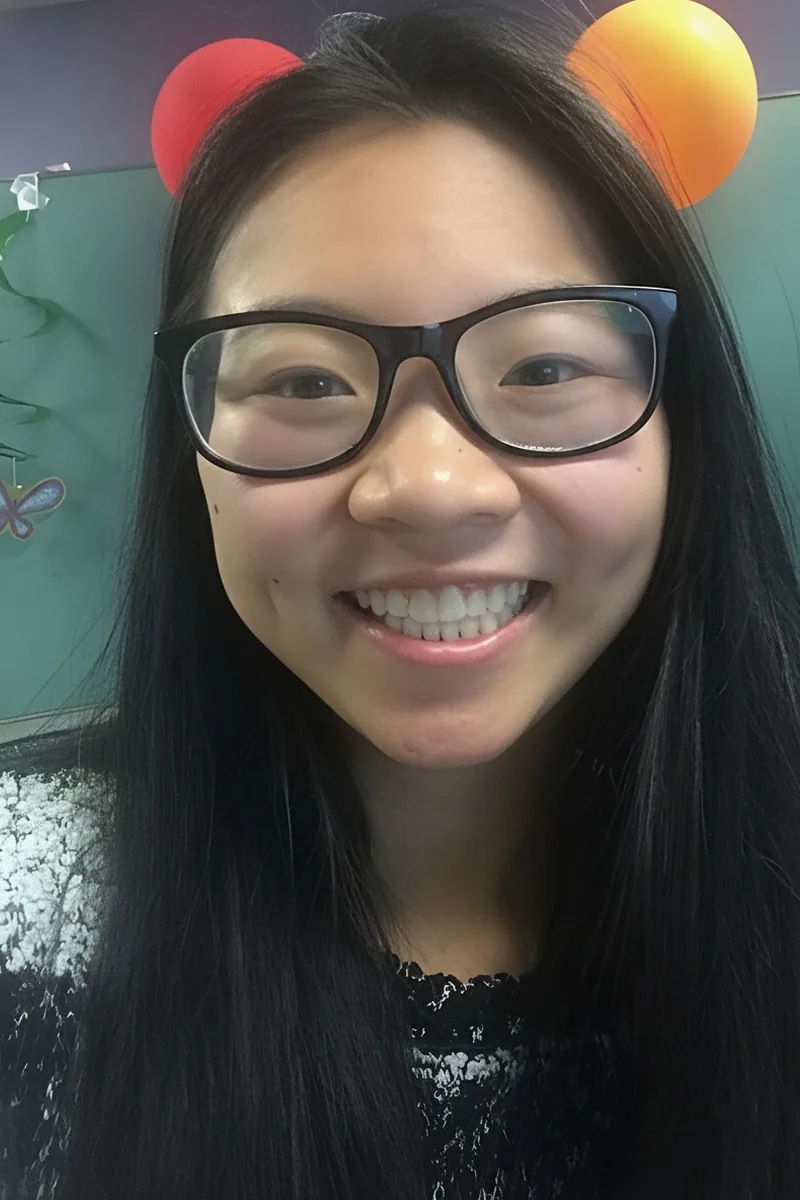
I am graduated from Penn State University in Industrial Engineering in 2017. I've tutored ever since I was in high school, and I love helping people! I like to help my students understand math (and other topics) instead of just doing it blindly. My goal is to help my students improve their math (and other topics) and build skills that will help them find learning easier in the future! Fun fact, I used to work for Disney and I like to salsa dance!
Whether it's a first encounter with limits and derivatives or a deeper dive into integration techniques, calculus demands both conceptual understanding and mechanical fluency. Wanqi's civil engineering degree means she's applied every major calculus concept — from related rates to definite integrals — to real structural and design problems, and she brings that applied perspective into every session.
The jump into limits, derivatives, and integrals trips up students who were comfortable with algebra because calculus demands a new kind of thinking about change and accumulation. Matthew's quantitative background — spanning a psychology research degree and a statistics-focused Master's — means he regularly uses calculus concepts in applied settings and can connect abstract rules like the chain rule or integration by parts to problems that actually matter.
Aerospace engineering at Georgia Tech is essentially applied calculus — orbital mechanics, fluid dynamics, and thrust equations all demand fluency with derivatives, integrals, and differential equations that Vansh works through daily in his coursework. That engineering context lets him teach concepts like the chain rule or integration by parts as tools that solve real problems, not just exercises on a worksheet. Rated 5.0 by students.
Law school trains you to build arguments one logical step at a time — which is exactly how Jess approaches early calculus concepts like limits and continuity, where each definition builds precisely on the last. Her IB background and English-trained analytical rigor mean she's comfortable sitting with abstract notation until it makes sense, walking through the reasoning rather than rushing to a formula. Rated 4.9 by students.
Limits, derivatives, and integrals all build on each other, so Rick spends time making sure each piece genuinely clicks before moving forward. His health sciences coursework at UCF required heavy calculus application — modeling drug absorption rates, population growth, and physiological change — so he connects the math to scenarios that make the logic stick.
Hannah's accounting program at UCF requires working through calculus as applied math — cost functions, marginal analysis, and the derivative logic that underpins financial modeling — so she's encountered the material in a practical, problem-solving context rather than a purely theoretical one. Her comfort across the full algebra-to-calculus pipeline means she can pinpoint exactly where a student's understanding breaks down and rebuild from that specific gap.
Game design relies on calculus more than most people realize — camera smoothing algorithms use derivatives, physics engines run on integration, and animation curves are literally Bézier functions. Ema's interactive media coursework at UCF gave her hands-on experience with these applications, so she can ground abstract concepts like rates of change and area under a curve in the visual, tangible logic of how games actually render motion. Rated 5.0 by students.
Between human biology coursework at UC San Diego and second-year medical school at UCF, Kevin has used calculus as a working tool — modeling reaction rates in biochemistry, interpreting dose-response curves, and applying integration to physiological systems like cardiac output. That hands-on context means he teaches derivatives and integrals as things that describe real biological behavior, not just abstract procedures on a problem set. Rated 4.9 by students.
Spending semesters in a nanotechnology lab gave Harrison a reason to care about every corner of calculus, from epsilon-delta proofs to improper integrals. He teaches the subject by connecting each technique — u-substitution, integration by parts, multivariable partial derivatives — to the kind of problem it was invented to solve, which makes the logic behind each method easier to remember.
Nursing coursework at the graduate level involves more quantitative reasoning than most people expect — dosage calculations that depend on rates of change, IV drip modeling, and pharmacokinetic curves that are fundamentally calculus problems in clinical clothing. Tanya's MSN training and decades in healthcare mean she can connect early derivative and integral concepts to tangible scenarios like how drug concentration rises and falls in the body. It's not a traditional math background, but it's a practical one.
Theology and philosophy at Fordham trained Vivian in the kind of rigorous logical reasoning that actually maps well onto early calculus — building an argument step by step is structurally similar to working through a limit definition or proving why a derivative rule holds. Her Classics and Medieval Studies background means she's comfortable with dense, unfamiliar notation systems, which is half the battle when students first encounter integral signs and summation symbols. Rated 5.0 by students.
Computer science at UCF means Sebastian lives in calculus daily — from analyzing algorithm efficiency with limits and series to applying integrals in physics simulations. He breaks down concepts like the chain rule and u-substitution by connecting them to real computational problems, making abstract procedures feel purposeful. Rated 4.8 by students.
Biotechnology coursework doesn't just touch calculus — it lives in it, from modeling bacterial growth rates to analyzing enzyme kinetics curves where derivatives describe exactly how fast a reaction proceeds. Fulton's BS in Biotechnology means he learned integration and differentiation as tools for solving real biological problems, not as abstract exercises. That applied background lets him anchor concepts like the chain rule or area under a curve in scenarios where the math actually does something.
Limits, derivatives, and integrals each layer on top of every algebra and trig concept a student has ever learned, so gaps from earlier courses show up fast. Joshua pinpoints exactly where those gaps are and rebuilds the connections — whether that means revisiting function behavior before tackling the chain rule or strengthening algebraic manipulation for integration techniques.
Limits, derivatives, and integrals each build on the last, and losing the thread at any point can make the rest of the course feel impossible. Evan approaches calculus by making sure students can articulate *why* a rule works — not just when to apply it — which turns problem-solving into pattern recognition. His 5.0 rating speaks to how well that method clicks.
Fifteen passed AP exams — including both AP Calculus AB and BC — mean Nathan didn't just survive calculus in high school, he mastered it twice before starting his computer science degree at UCF. That CS coursework keeps him actively using integration techniques, series convergence, and differential equations in contexts like algorithm analysis and signal processing. Rated 4.9 by students.
Whether it's related rates, optimization, or integration by parts, Noelle unpacks each calculus problem by identifying what type of question it actually is before diving into computation. That diagnostic habit — trained by years of algorithmic thinking in computer science — turns intimidating problems into recognizable patterns.
Computer science at UCF means Hassan writes code that depends on calculus daily — think gradient descent in machine learning, animation curves, or optimizing algorithm efficiency through asymptotic analysis. That constant exposure to derivatives and integrals as functional tools, not just textbook exercises, shapes how he teaches the material: every rule ties back to something it actually does. Rated 5.0 by students.
Dolmecia's background is in finance and education rather than advanced mathematics, so she's honest that calculus isn't her deepest subject. That said, her finance degree required working through derivatives in the context of marginal analysis and rate-of-change problems tied to financial modeling, giving her a practical handle on the core concepts. Her two decades of teaching experience mean she's especially skilled at slowing down and rebuilding shaky algebra foundations that often trip students up before calculus even starts.
Teaching both algebra and French might seem like an unusual combination, but it means Lane is wired to spot patterns and structure in everything — exactly what clicks when students hit the chain rule or integration by substitution for the first time. He breaks each technique into its underlying logic, connecting new calculus ideas back to the algebraic instincts students already have. Rated 5.0 by students.
Limits, derivatives, and integrals are the mathematical engine behind aerospace engineering, so Annalyn didn't just study calculus — she used it daily to model flight dynamics and structural loads. She walks through each concept with concrete physical meaning attached, which makes the chain rule or integration by parts feel purposeful rather than abstract.
I am a senior at Rollins College and have my IB diploma from high school. I did TOK, HLs: Psych, Econ, language and literature, and SLs: Spanish, biology, and mathematical studies. I prefer psych, econ, business, and anything English or literature related. I can do paper revisions, essay help, reading comprehension, elementary/middle/high school math. I would prefer more basic math and science, can help with reading and writing in Spanish, and am up for anything.
Pre-dental coursework in biomedical sciences means Emyli has pushed through the full calculus sequence — derivatives, integrals, and the applied problems that show up in pharmacokinetics and biomechanics modeling. She teaches the material with an eye toward what each concept actually does in a scientific context, which tends to make the abstract rules stick faster than drilling formulas in isolation.
Derivatives and integrals click faster when a student understands what they physically represent — rates of change and accumulated quantities — not just the power rule. Suchir connects each calculus technique to a concrete problem, whether it's related rates, optimization, or area under a curve, so the mechanics and the meaning develop together.
Years of chemical engineering coursework — including Calc 2 and Calc 3 — gave Dana deep fluency with derivatives, integrals, and their applications in real systems. She brings that applied perspective into tutoring, so when a student encounters related rates or area-under-the-curve problems, the setup feels purposeful rather than abstract.
I am one year from completing my Bachelor of Science at the Florida Institute of Technology. I am majoring in both Astronomy and Astrophysics, as well as Planetary Science; with a minor in Computer Science. Upon completion of my Bachelor degree I plan on pursuing a Masters degree, most likely in Physics, Exoplanetary Studies, or Engineering Physics. I find that most students struggle in math and physics because they lack true engagement towards these topics, it is my personal philosophy that how you learn a subject can immensely impact your abilities to succeed in and willingness to pursue related subjects in your academic career. I enjoy working with all ages, as I believe it is never too late to start learning and I enjoy helping students become passionate about their studies. Personally; I am passionate about the fundamental interplay between foundational mathematics and its applications to higher-level physics. My tutoring style/strategies require interactive engagement with students and honest communication; this allows me to understand precisely what is necessary to enhance your learning experience, and encourages students to engage with the content with curiosity and excitement. I feel comfortable tutoring subjects ranging from elementary school mathematics, up to college level mathematics and physics courses. I have experience tutoring my college peers in a wide-range of topics from college algebra and calculus to advanced physics courses such as Electromagnetic Theory and Physical Mechanics.
Testimonials
Because the right Calculus tutor makes all the difference.
Average Session Rating – Based on 3.4M Learner Ratings
Nearby Calculus Tutors
Other Orlando Tutors
Related Math Tutors in Orlando
Frequently Asked Questions
Many students struggle with the shift from algebra and precalculus to abstract thinking about rates of change and limits. Common pain points include understanding why derivative and integral rules work (not just memorizing them), connecting graphs to equations, and tackling multi-step word problems that require translating real-world scenarios into mathematical models. Personalized tutoring helps students build conceptual understanding alongside procedural skills, which is key to moving beyond memorization.
Math anxiety often stems from feeling rushed or unsure about the 'why' behind concepts. With personalized 1-on-1 instruction, tutors work at your pace, breaking down complex ideas into manageable steps and building confidence through targeted practice. Tutors can also help you develop problem-solving strategies and show you how to check your work, transforming Calculus from intimidating to understandable.
Word problems require you to translate English into mathematical notation, identify which calculus concepts apply, and execute the solution—that's a lot of steps. Expert tutors help you develop a systematic approach: reading carefully, defining variables, sketching diagrams, and connecting the problem to specific derivative or integral applications. With guided practice and feedback on your reasoning, you'll recognize patterns and build the confidence to tackle unfamiliar scenarios.
Showing work is essential in Calculus—it helps you catch errors, demonstrates your understanding, and earns partial credit on exams. Good work includes clearly stating what you're finding, writing out key steps (like the chain rule or u-substitution), and explaining your reasoning where it matters. Tutors can review your work and give you feedback on clarity and completeness, helping you develop habits that improve both accuracy and communication.
Yes—whether your school uses AP Calculus, IB, dual enrollment, or a standard high school or college curriculum, tutors can align with your specific course. Tutors in Orlando are familiar with the approaches used across the area's schools and can help you master the particular topics, problem styles, and expectations your teacher emphasizes. This personalized alignment ensures tutoring directly supports your success in your actual course.
Your first session focuses on understanding where you are and what you need. Tutors will assess your comfort with precalculus foundations (functions, limits, rates of change), discuss specific challenges or upcoming topics, and learn your learning style. From there, you'll work together on a problem or concept to establish a baseline and build a personalized plan—whether that's strengthening fundamentals, preparing for an exam, or diving deeper into challenging topics.
Calculus is built on interconnected ideas—derivatives and integrals are inverses, the chain rule appears everywhere, and graphical, algebraic, and numerical perspectives all tell the same story. Tutors help you see these connections by working across multiple representations (equations, graphs, tables) and showing you how concepts build on each other. This deeper understanding makes problem-solving more intuitive and helps you retain concepts long-term.
Many students see noticeable improvement in understanding and confidence within 2-4 weeks of consistent tutoring, especially when addressing specific weak spots. For longer-term goals like exam preparation or mastering a full unit, a sustained plan over a semester works best. The timeline depends on where you're starting and your goals, which is why tutors work with you to set realistic milestones and adjust the plan as you progress.
Let’s find your perfect tutor
Answer a few quick questions. We’ll recommend the right plan and match you with a top 5% tutor.