Award-Winning Middle School Math Tutors
serving Orlando, FL
Middle School Math
Tutors in Orlando
Private 1-on-1 tutoring, weekly live classes for academic support, test prep & enrichment, practice tests and diagnostics, and more to elevate grades and test scores.
Based on 3.4M Learner Ratings
UniversitiesSchools & Universities
DeliveredHours Delivered
ProficiencyGrowth in Proficiency
Who needs tutoring?
No obligation. Takes ~1 minute.
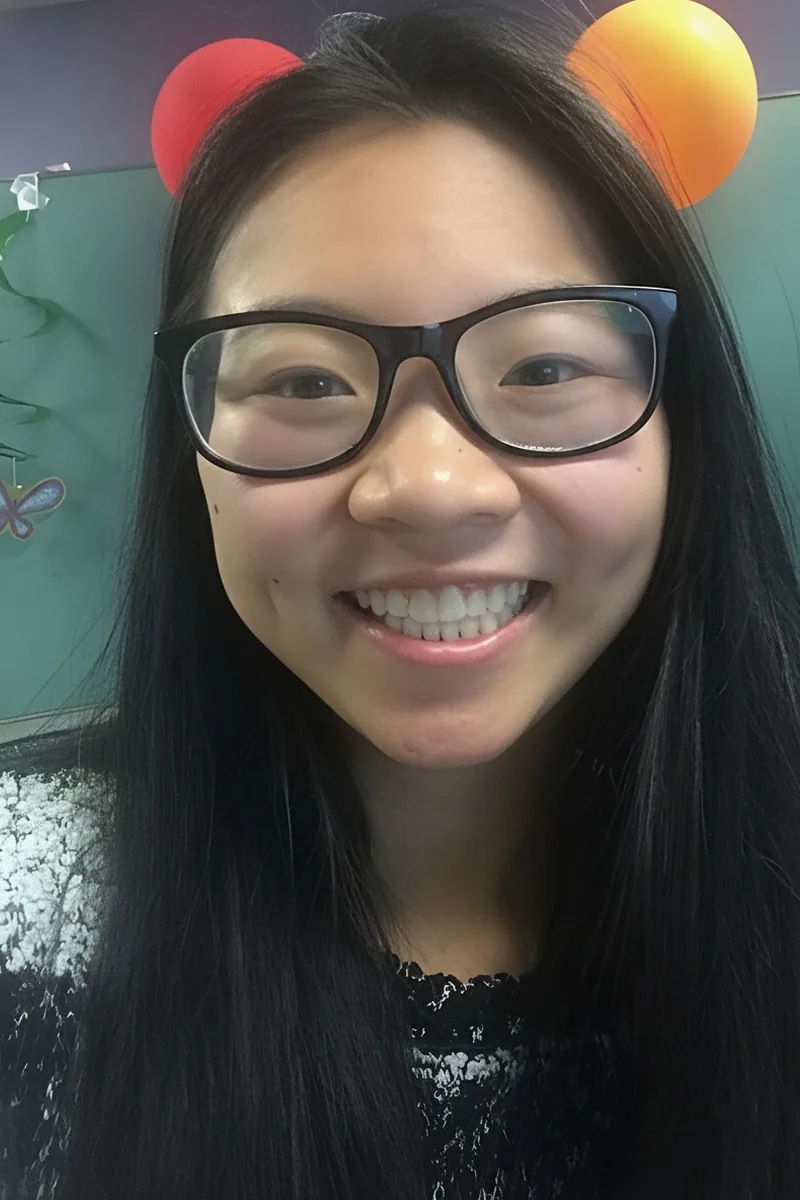
I am graduated from Penn State University in Industrial Engineering in 2017. I've tutored ever since I was in high school, and I love helping people! I like to help my students understand math (and other topics) instead of just doing it blindly. My goal is to help my students improve their math (and other topics) and build skills that will help them find learning easier in the future! Fun fact, I used to work for Disney and I like to salsa dance!
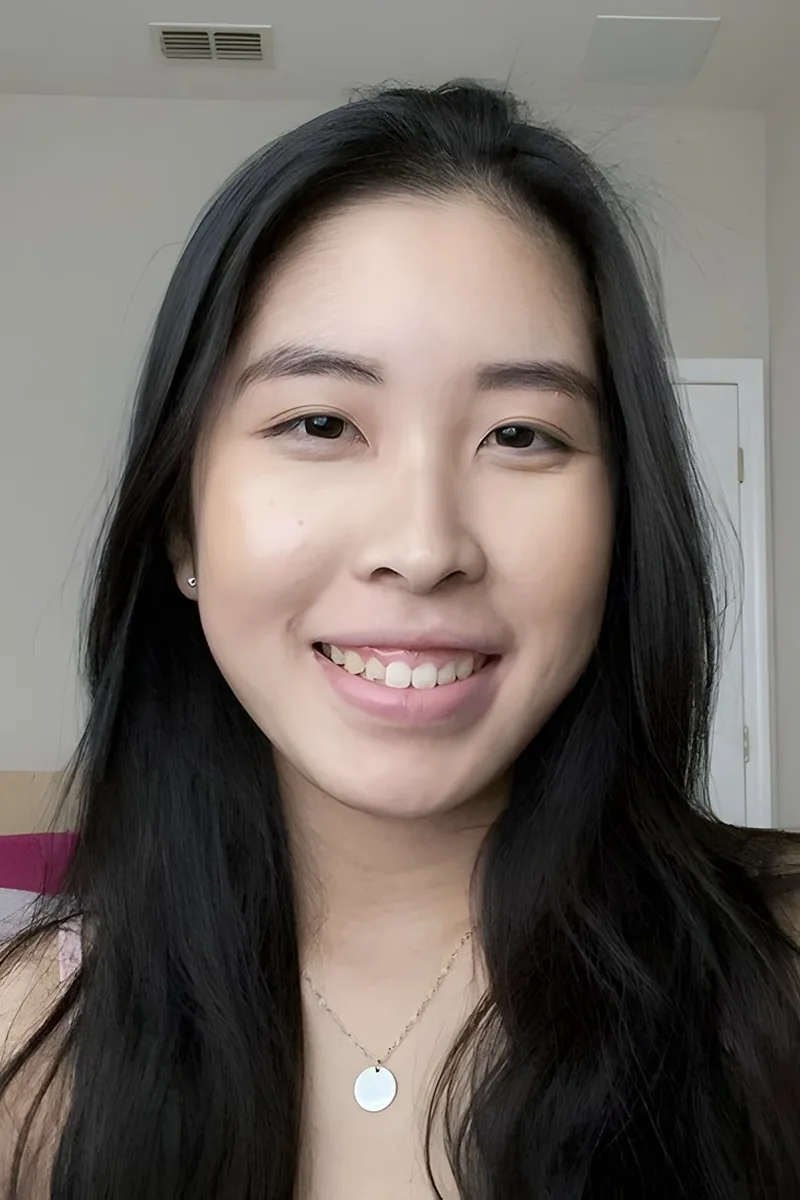
Building number sense in middle school — fractions, ratios, proportional reasoning, early equation-solving — sets the trajectory for every math class that follows. Wanqi approaches these topics with structured, step-by-step explanations that make abstract rules feel concrete, drawing on the same precision her engineering training demands.
Ratios, proportions, and basic equation-solving can feel like a sudden leap from elementary math, and Rick breaks each concept into concrete steps before layering in complexity. His experience as a Supplemental Instruction leader at UCF trained him to spot where understanding breaks down and adjust explanations on the fly.
The jump from elementary math to middle school math introduces ratios, proportions, and negative numbers all at once, which can feel overwhelming. Hannah tackles these topics by connecting them to patterns students already recognize, making the abstract feel concrete. She's pursuing a second degree in accounting at UCF, so breaking down quantitative problems is second nature to her.
The jump from arithmetic to pre-algebraic thinking — variables, proportional reasoning, negative numbers — is where many students quietly lose confidence in math. Harrison approaches these topics by building number sense first, using concrete examples before introducing notation so that equations feel like a natural next step rather than a foreign language.
The jump from elementary arithmetic to ratios, proportions, and introductory equations can feel overwhelming without someone who explains the "why" behind each step. Joshua tackles middle school math by connecting new concepts to what students already know, turning abstract ideas like negative numbers and coordinate graphing into something concrete. Rated 5.0 by students.
The jump from arithmetic to pre-algebra is where math starts demanding real problem-solving — fractions, ratios, negative numbers, and early equation work all land at once. Nathan's experience with 15 AP exams means he knows exactly where middle school concepts lead, so he teaches them in ways that build toward what's coming next. He keeps sessions structured but relaxed enough that younger students stay engaged.
Ratios, proportions, and integer operations can feel abstract until someone connects them to real scenarios — and Aqsa's business and finance background gives her a deep well of practical examples to draw from. She breaks down multi-step problems into clear, repeatable processes so students build genuine confidence with pre-algebra and beyond.
Ratios, proportions, and early geometry problems all click faster when a student sees how the pieces connect instead of treating each chapter as isolated. Annalyn's engineering background means she naturally ties middle school math concepts back to tangible scenarios — calculating areas, interpreting graphs, or setting up equations from word problems.
I am a senior at Rollins College and have my IB diploma from high school. I did TOK, HLs: Psych, Econ, language and literature, and SLs: Spanish, biology, and mathematical studies. I prefer psych, econ, business, and anything English or literature related. I can do paper revisions, essay help, reading comprehension, elementary/middle/high school math. I would prefer more basic math and science, can help with reading and writing in Spanish, and am up for anything.
The jump from elementary math to middle school topics like ratios, proportions, and integer operations trips up a lot of students who were previously confident. Emyli's biomedical sciences background means she uses real-world measurement and data examples to make these concepts click, turning abstract problems into something tangible.
The jump from arithmetic to proportional reasoning and basic equation-solving is where a lot of middle schoolers lose confidence. As a certified math teacher with five-plus years in the classroom, Dana knows exactly where those stumbling blocks appear — fractions, ratios, negative numbers — and breaks each one down until the logic clicks.
Testimonials
Because the right Middle School Math tutor makes all the difference.
Average Session Rating – Based on 3.4M Learner Ratings
Nearby Middle School Math Tutors
Other Orlando Tutors
Related Math Tutors in Orlando
Frequently Asked Questions
Middle school math moves from learning procedures (like how to divide) to understanding why those procedures work. Students start seeing algebra as a way to represent patterns and relationships, not just a set of rules to follow. This shift can feel challenging at first, but once students grasp the underlying concepts, they develop stronger problem-solving skills that carry through high school and beyond.
Orlando's three school districts—Orange County, Osceola, and Seminole—may use different textbooks and approaches, but the core Florida standards are consistent across all of them. Tutors who work with students in Orlando are familiar with these standards and can adapt their instruction whether your student is using Eureka Math, Big Ideas, or another curriculum. They focus on building conceptual understanding rather than just teaching to a specific textbook.
Word problems require students to translate language into mathematical thinking—a skill that takes practice. Tutors help students develop a systematic approach: identifying what they know, what they're looking for, and which operations or strategies apply. By working through problems step-by-step and discussing the reasoning behind each choice, students build confidence and see word problems as puzzles to solve rather than obstacles.
Showing work reveals how a student thinks through a problem, making it easier to spot where misunderstandings happen. It also helps students catch their own mistakes and reinforces the reasoning behind each step. Tutors emphasize this practice because it builds stronger problem-solving habits and helps students explain their thinking—skills that matter far beyond math class.
Graphing connects abstract equations to visual patterns, which helps many students understand relationships between variables more clearly. Tutors break down the process—finding points, identifying slopes, understanding intercepts—and help students see how each piece of an equation affects the graph. This visual-algebraic connection often transforms how students think about equations and functions.
Yes. Math anxiety often stems from feeling lost or unsupported, and personalized 1-on-1 instruction creates a low-pressure space to ask questions and work through challenges. Tutors celebrate progress, break problems into manageable steps, and help students see their own capability. Over time, as students understand concepts more deeply and experience success, anxiety typically decreases and confidence grows.
The first session is about getting to know your student—their learning style, current strengths, specific challenges, and goals. A tutor will assess where they stand in the curriculum, identify any gaps, and discuss what support would be most helpful. This foundation allows the tutor to design personalized instruction that targets your student's needs from day one.
Multi-step equations require students to keep track of operations, maintain equation balance, and remember the order of steps—all while managing potential arithmetic mistakes. Tutors teach students to work systematically, verify each step, and understand why inverse operations matter. By practicing with guided support and discussing the reasoning, students develop the organizational skills and confidence to handle increasingly complex equations.
Let’s find your perfect tutor
Answer a few quick questions. We’ll recommend the right plan and match you with a top 5% tutor.