Award-Winning Statistics Tutors
serving Boston, MA
Statistics
Tutors in Boston
Private 1-on-1 tutoring, weekly live classes for academic support, test prep & enrichment, practice tests and diagnostics, and more to elevate grades and test scores.
Based on 3.4M Learner Ratings
UniversitiesSchools & Universities
DeliveredHours Delivered
ProficiencyGrowth in Proficiency
Who needs tutoring?
No obligation. Takes ~1 minute.

A public policy background is surprisingly useful for teaching statistics — Noel spent his University of Chicago coursework interpreting real datasets, evaluating survey methodology, and distinguishing correlation from causation in policy research. He brings that same lens to topics like hypothesis testing, confidence intervals, and probability distributions, grounding abstract formulas in concrete examples that make the reasoning intuitive.
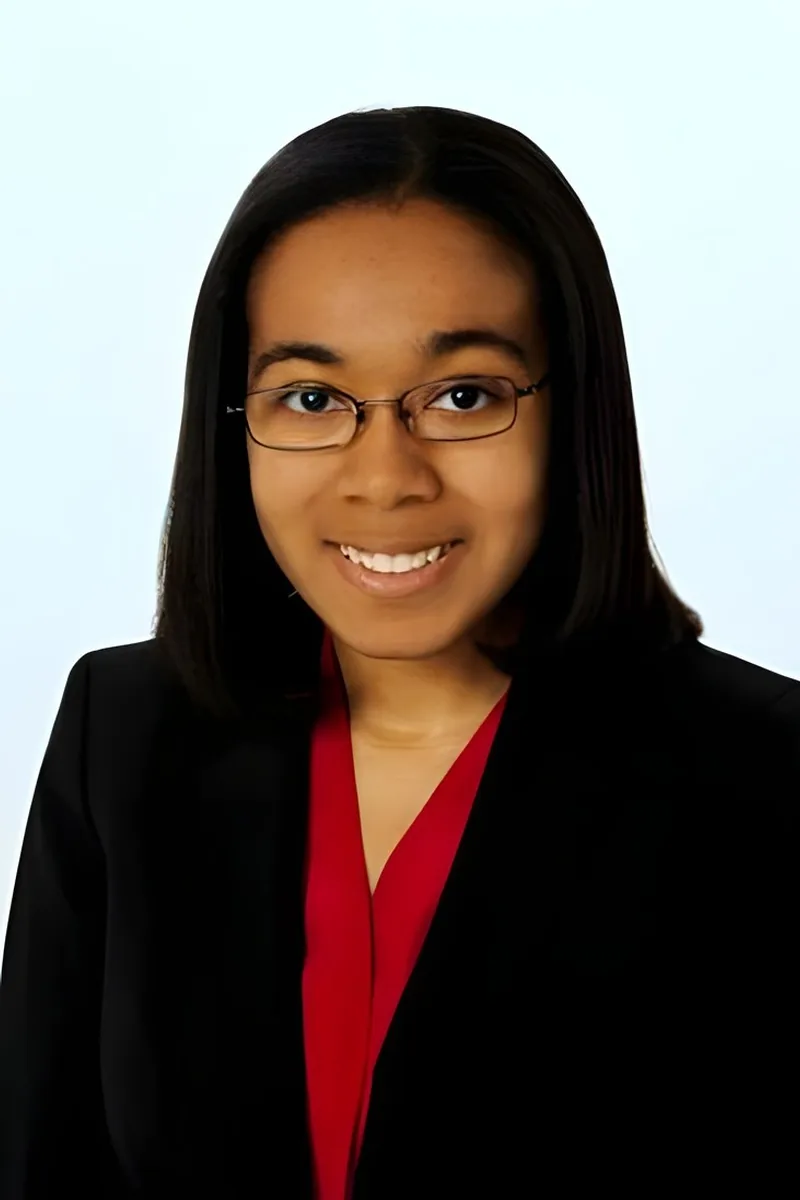
Reading a research paper in medical school means interrogating p-values, confidence intervals, and study design on a daily basis — so Jean knows statistics as a working tool, not just a textbook subject. She teaches concepts like probability distributions and hypothesis testing by grounding them in real scenarios where the numbers actually matter. Students walk away understanding not just how to run a calculation but what the result means.
Graduate research in global health and population means Sarah uses statistics daily — designing studies, running biostatistical analyses, and interpreting results that inform real public health decisions. That applied context makes her especially effective at teaching concepts like confidence intervals, sample size calculations, and regression, because she can show exactly where each one matters outside the classroom. Rated 5.0 by students.
As a research scientist studying Alzheimer's and Parkinson's therapies, Anthony uses statistical methods daily — hypothesis testing, regression analysis, and probability distributions are part of how he evaluates experimental data. That real-world context makes him effective at explaining why a p-value matters or how a confidence interval actually works. He turns statistics from an abstract math course into something students can see applied to actual research questions.
As a postdoctoral researcher at Harvard Medical School, Patrick uses statistics every day — regression models, ANOVA, probability distributions — to draw conclusions from experimental data. That real-world immersion means he teaches statistics as a way of thinking about evidence, not just a set of calculator procedures. He's rated 5.0 by students.
The jump from calculating a mean to understanding what a p-value actually tells you is where most statistics students get lost. Fernando tackles that gap head-on, teaching hypothesis testing, probability distributions, and regression analysis through the lens of real data problems he encounters in his Harvard biophysics research.
Probability distributions, hypothesis testing, and standard deviation all require a kind of mathematical reasoning that's different from what most students are used to. As a political science major who regularly interprets polling data and statistical models, Justin connects stats concepts to real-world questions — which makes the logic behind z-scores and confidence intervals far more intuitive.
Interpreting a confidence interval or explaining what a standard deviation actually measures requires a different kind of math thinking than most students are used to. Kathrine's graduate program in Mathematics Secondary Education at BU specifically addresses how to teach statistical reasoning, giving her tools to make probability distributions and hypothesis testing feel less like guesswork and more like structured logic.
After completing secondary school in South Africa, I did a PG year at a high school in Connecticut. During my year in Connecticut, I took Honors and AP Chemistry, Honors and AP Physics, and Honors Calculus; I also received the CollegeBoard AP Scholar with Honors Award. I have experience tutoring the New SAT. I understand the material and subtle nuances of the test. I have developed test-taking strategies that help a great deal when taking the SAT.
I am a current first-year honors student at Northeastern University pursuing a B.A. in Political Science and a B.A. in History, Culture, and Law. I am a youth activist and have experience working for campaigns and elected officials and am particularly passionate about mental health, climate change prevention, and LGBTQ+ rights. I have done private tutoring for the past three years with students in Elementary, Middle, and High School in a variety of school subjects including but not limited to Math, History, and Writing/Grammar. I am passionate about education and want to use my skillset and knowledge to help other students achieve their best selves. I'm from Denver, Colorado, and currently live in Boston and love to read, watch sitcoms and, of course, tutor my students.
I am currently a Finance major at Boston College. I graduated from the United World College in Mostar in Bosnia and Herzegovina. At this school, my interest in tutoring and getting to know different people was ignited when I started tutoring non-native English speakers. I learned to be patient while teaching new subjects and to cater to the needs and interests of my students. I have lots of experience taking standardized tests such as the ACT and AP tests and would love to spread my knowledge to my tutees in an exciting and dynamic way.
I am excited to be your GRE and/or math and economics tutor! I recently graduated from the University of Pennsylvania, where I studied economics and math and gained experience as a peer tutor. On my most recent GRE test, I scored a 170V and 169Q, and am excited to share what I learned about test content, strategy, and study techniques with you! Please feel free to send me a message for more info!
I am currently working toward my M.S. in Medical Sciences at Boston University School of Medicine. In college, I worked with a high school student, for his 9th grade year, focusing mostly on his biology and writing assignments. I was a research coordinator at the Marcus Autism center where I worked with very young kids (ages 2-9) with and without learning disabilities. We worked on general school-related skills and any homework they brought. In my master's program, I did a lot of group study. Frequently, this meant teaching a group of my peers who needed to see the material presented in a new way. I love learning and I want to help others love it, too. Throughout my studies, grades never just came easily to me. I was constantly working at getting better and trying to figure out how to solve problems in many different ways. With this type of experience, I want to help other students who may be struggling with a concept to get to a place where they see how fun and rewarding it can be to really understand the material. I tutor a wide variety of topics; however, my favorites are biology and anatomy. Biology is so exciting for me because it is the foundation for all of life, and helps us understand the world we live in. Anatomy is great because you are living in your own cheat sheet (your body)! When I am tutoring, I want to hear or see my students' thought processes. It's great if you can get to the right answer, but truly learning means knowing how you got there. So, I love having my students teach the concepts back to me. Outside of school, I play slow-pitch softball and I love to cook and bake.
Testimonials
Because the right Statistics tutor makes all the difference.
Average Session Rating – Based on 3.4M Learner Ratings
Practice Statistics
Free practice tests, flashcards, and AI tutoring for Statistics
Nearby Statistics Tutors
Other Boston Tutors
Related Math Tutors in Boston
Frequently Asked Questions
Statistics is taught across Boston's schools with varying emphasis on AP Statistics, introductory college-prep courses, and data science electives. Tutors working with students in Boston are familiar with the standards used across the city's 6 school districts and can adapt their instruction to match your school's specific curriculum, textbooks, and pacing. Whether you're using a traditional probability-first approach or jumping straight into data analysis, tutors can help you master the concepts your teacher expects.
Statistics word problems require translating real-world scenarios into mathematical language—identifying variables, determining which statistical method applies, and interpreting results in context. This multi-step translation process trips up many students. Tutors help by breaking down what each question is really asking, teaching you to spot keywords that signal specific techniques (like "margin of error" for confidence intervals or "relationship between variables" for correlation), and practicing problems across different contexts so you see the underlying patterns rather than memorizing individual problem types.
Many students can plug numbers into the standard deviation formula or calculate a z-score without understanding why these tools matter or when to use them. Procedural knowledge gets you through homework; conceptual understanding prepares you for real data analysis, AP exams, and college-level work. Tutors focus on helping you see that the standard deviation measures spread, that z-scores compare values on the same scale, and that hypothesis testing answers specific questions about populations. When you understand the "why," you can adapt these tools to new situations instead of freezing when a problem looks unfamiliar.
One of the most overlooked skills in Statistics is explaining what results mean. A p-value isn't just a number—it's evidence about whether your data contradicts a claim. A confidence interval isn't just a range—it's a statement about where a population parameter likely falls. Tutors help you practice translating statistical output into plain language, avoiding common misinterpretations (like confusing correlation with causation), and writing clear conclusions that non-statisticians can understand. This skill becomes essential in AP Statistics exams and any data-driven field.
Statistics anxiety often stems from feeling like you're missing foundational pieces or that the subject requires a special "math brain." It doesn't. Tutors work with you at your pace, identifying exactly where confusion starts—whether that's probability basics, reading data displays, or hypothesis testing logic—and rebuild from there. As you solve real problems with a tutor's guided support, you'll see patterns emerge, develop your own problem-solving strategies, and realize you actually understand this material. Many students discover Statistics clicks once someone shows them the forest instead of just the trees.
The best Statistics tutors combine subject expertise with the ability to explain concepts clearly—they should know not just formulas but the reasoning behind statistical methods. Look for tutors who ask questions to understand where you're stuck (Is it the concept? The formula? Reading the problem?), who can show you multiple approaches to problems, and who emphasize why you're doing each step. Experience working with students in Boston schools and familiarity with your specific curriculum is also valuable. Varsity Tutors can connect you with expert tutors who match your needs and learning style.
The sooner you address gaps, the easier recovery becomes. If you're struggling with probability fundamentals, getting help early prevents those gaps from undermining hypothesis testing and inference later. Many students wait until before an exam or AP test, which limits time for concepts to solidify. That said, it's never too late—even if you're mid-course or prepping for a final, tutors can help you focus on high-impact topics and develop strategies for the material you'll see on the test. For Boston students aiming for strong AP Statistics scores or college readiness, starting tutoring early in the course (or even in a prerequisite) pays dividends.
Let’s find your perfect tutor
Answer a few quick questions. We’ll recommend the right plan and match you with a top 5% tutor.