Award-Winning ACT Math Tutors
serving Charlotte, NC
ACT Math
Tutors in Charlotte
Private 1-on-1 tutoring, weekly live classes for academic support, test prep & enrichment, practice tests and diagnostics, and more to elevate grades and test scores.
Based on 3.4M Learner Ratings
UniversitiesSchools & Universities
DeliveredHours Delivered
ProficiencyGrowth in Proficiency
Who needs tutoring?
No obligation. Takes ~1 minute.
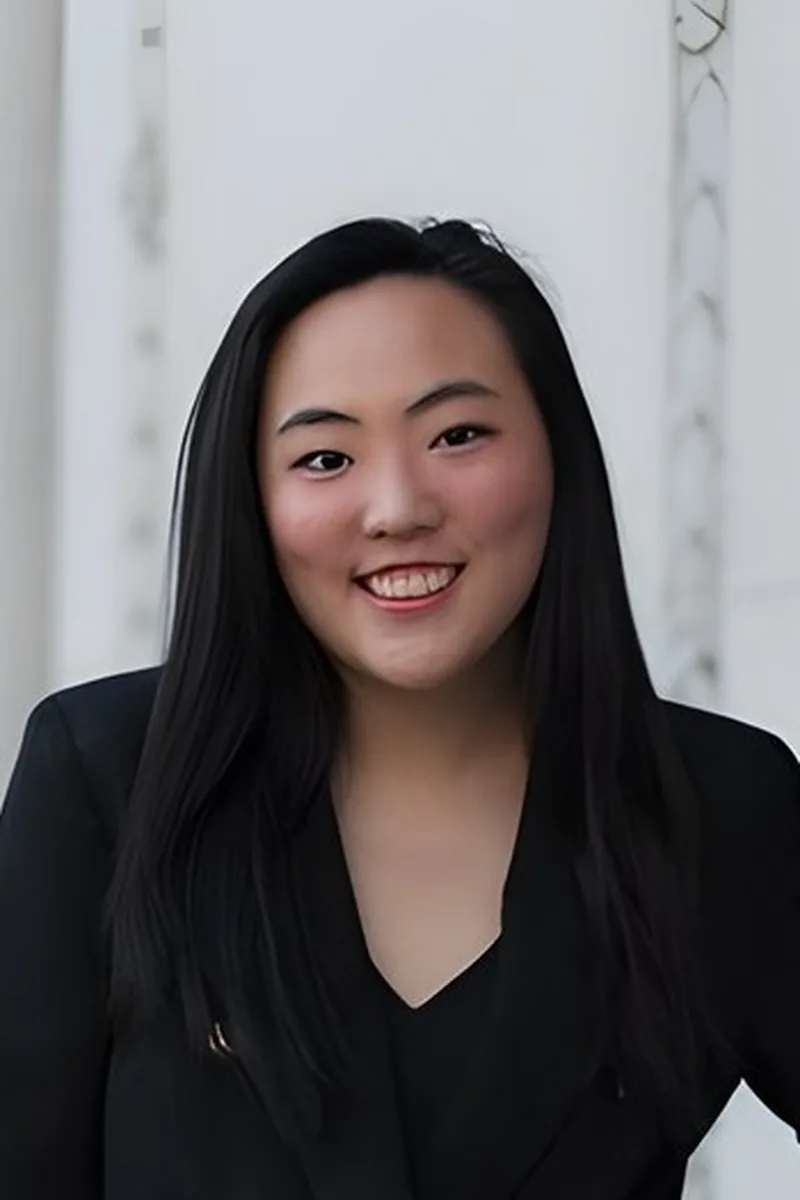
Scoring a 34 ACT composite, Rebecca knows the math section inside out — from the straightforward algebra questions early on to the coordinate geometry and trigonometry problems that separate good scores from great ones. She teaches students to recognize question patterns quickly so they spend their limited time on the problems that actually challenge them. Her systematic pacing strategies are especially useful for students who understand the math but run out of clock.

Scoring a 34 ACT composite, Jack knows the math section inside out — where it tests familiar algebra and geometry concepts and where it sneaks in coordinate geometry or probability questions designed to eat up time. He teaches students to recognize problem types on sight so they can allocate their 60 minutes strategically instead of grinding through every question at the same pace.
I am open to helping any student of any age with nearly any subject (math, reading, writing, biology, chemistry, economics, civics, Spanish etc). I'm also happy to help with test prep (hello SAT and ACT takers), as well as college application assistance. I'm a strong believer in a patient, non-judgmental, non-intimidating approach to tutoring, and I really try to prioritize the comfort of my students. As someone who has used tutoring myself in some of my harder classes in college, I understand that not everything comes easily to everyone, so I want all of my students to feel comfortable asking any and all questions they might have, or going over a topic as many times as needed to understand it. I'm all about friendly, humble service!
I am a current student at Guilford College pursuing a degree in Biology, and I would love to help any student find their passion in math and science! I especially enjoy teaching cellular biology and botany, as those are my academic specialties. I love working with visual learners especially to help create diagrams and charts that can take information to a new level. Outside of the classroom, I like to hike and tend to my plants in my garden. Let me know if I can be of any service, either online or in a local coffee shop!
I am currently a fourth year medical student who is looking forward to helping other students enjoy math and science! I have a masters of science in physiology from Georgetown was well as a bachelors degree in anthropology with minors in medical Spanish and chemistry from UNC Chapel Hill. Having been in school for a very long time, I understand that everyone learns differently and at different paces. I will tailor my tutoring to best help you achieve the grades and changes that you would like to see.
Scoring a 32 ACT composite, Gatlin knows the math section rewards speed and strategy as much as raw ability — especially on coordinate geometry and trigonometry questions that many students skip. He teaches time-saving techniques like back-solving and estimation that turn 60-second problems into 30-second ones. His approach is particularly useful for students already solid on algebra who need to pick up points on the harder question types.
Scoring a 32 ACT composite, Daiven knows the math section's rhythm: straightforward algebra and geometry early on, then a sharp jump to trigonometry, matrices, and complex word problems in the final stretch. He teaches students to lock in easy points quickly so they have real time left for the harder questions that actually move scores. His approach is strategic as much as mathematical.
Srikavya scored a 32 ACT composite and brings particular strength to the Math section's time-pressure challenges — coordinate geometry, trigonometric identities, and the handful of matrix or logarithm questions that trip up students aiming for 30+. She teaches efficient problem setups so students spend less time translating word problems and more time solving them.
I'm a current student at the University of Virginia, working and studying in Charlottesville during the school year and Charlotte during summer! I'm looking forward to tutoring you or your children! I'm a persistent, dedicated student who has experience working with those younger than me and I hope to share my academic knowledge and experiences. High school AP classes are my favorite subjects to tutor. In my free time, I enjoy sailing, hiking, practicing yoga, and spending time with my miniature dachshund.
I am a recent magna cum laude graduate of Duke University and a full-time educator in North Carolina. I have a passion for helping young people figure things out and have experience writing professionally.
I am currently a student at Duke University studying Biomedical Engineering and Economics. Just a little bit about me and some of my interests. Some of my favorite academic interests include memoirs and modern classics. I think Catcher in the Rye is still one of my all time favorite books but Percy Jackson, a modern classic, is up there too. Beyond academics, I take great guilty pleasure in watching TV shows such as Westworld, Sherlock, How I Met Your Mother, and even The Bachelorette when I'm at a low point.
Bryce's computer science coursework at Duke — heavy on logic, discrete math, and algorithmic thinking — trained him to break multi-step problems into clean, sequential decisions, which is exactly the skill that separates fast ACT Math finishers from students who stall mid-problem. With a 35 ACT composite and deep comfort across algebra, trig, and coordinate geometry, he zeroes in on teaching students to identify what a question is really asking before they start calculating.
The ACT Math section covers everything from pre-algebra to trigonometry in 60 minutes, which means pacing and pattern recognition matter as much as raw math ability. Dimitry earned a 35 ACT composite and breaks down each question type — coordinate geometry, matrices, logarithms — by the shortcuts and setups the test writers rely on most frequently.
Scoring a 35 ACT composite himself, Tanay knows the math section inside out — from the coordinate geometry and trigonometry questions that cluster near the end to the time-management traps scattered throughout all 60 questions. He teaches students to identify which problems deserve full work and which can be solved in under 30 seconds with the right approach. His 5.0 rating speaks to how well that strategy translates into real score gains.
Sophia's 35 ACT composite means she knows exactly where the Math section tries to trip students up — especially on coordinate geometry, matrix problems, and the later-numbered trig questions that feel harder than they actually are. She teaches students to identify which problems deserve full work and which can be solved by back-plugging answer choices, a triage approach that consistently saves time for the questions that matter most.
Every ACT Math question can be solved in under a minute if you spot the right approach — and that's a trainable skill, not a talent. Abir scored a 36 composite and teaches students to recognize which problems reward algebraic setup versus back-solving or plugging in, especially on the trickier coordinate geometry and trigonometry questions near the end of the section.
Duke's computer science curriculum — plus a physics minor — means Florence has spent years doing the kind of rapid algebraic manipulation and trigonometric reasoning that the ACT Math section tests under a 60-minute clock. She earned a perfect 36 ACT composite and now channels that experience into teaching students to identify which mathematical tool each question is really asking for, cutting through the noise on problems designed to look harder than they are. Rated 5.0 by students.
I am a freshman at Vanderbilt University currently pursuing a B.S. in Biochemistry. My inquisitive nature has fostered a love for mathematics, the natural sciences, and how they interact to produce the world we experience every day. This extends to my teaching strategy, where I emphasize the importance of conceptual understanding rather than pure memorization of equations and steps. My recent experience in a wide variety of Advanced Placement courses lends me insight to recent changes in course objectives and exam formatting.
Scoring well on ACT Math means moving fast through a mix of algebra, geometry, and trigonometry without getting tripped up by unfamiliar phrasing. Natalie earned a 35 composite and, as a Duke engineering student, brings deep fluency with every math concept the test throws at you — from coordinate geometry to logarithms. She teaches efficient problem-solving strategies that cut through the time pressure.
Speed is what separates a good ACT Math score from a great one — there are 60 questions in 60 minutes, and knowing the content isn't enough without efficient strategies. Zhong scored a 34 ACT composite and teaches students to recognize question types on sight, particularly the coordinate geometry and trigonometry problems that tend to eat up the most time in the final third of the section.
Scoring a 34 ACT composite, Parth knows the math section inside out — from the straightforward early algebra questions to the coordinate geometry and trigonometry problems that separate high scorers. He teaches students to identify which formula or shortcut each question is really testing, cutting down on wasted time and second-guessing under pressure.
I am so excited to get to work with you. I am a student at Duke University and love academia! My favorite parts about teaching are how much I get to learn, which I think is amazing, and getting to serve others through education.
Scoring well on ACT Math means moving quickly through 60 questions that span pre-algebra through trigonometry, and the real skill is recognizing which tool each problem requires. Alisha earned a 34 ACT composite and considers math her strongest subject — she teaches students to spot problem types at a glance so they spend their time solving, not deciding where to start. Her coverage of coordinate geometry shortcuts and trig identity patterns is especially useful for students aiming above a 30.
Hello! My name is Sanvi. I am a second-year student at the University of North Carolina at Chapel Hill majoring in Neuroscience and Psychology. I have a strong academic foundation in mathematics, the natural sciences, and the humanities; I earned a 35 on the ACT and have extensive experience tutoring students in SAT/ACT prep, Algebra, and English Grammar and Writing. My interdisciplinary education allows me to connect concepts across multiple fields and subjects to explain ideas clearly, whether we are working through math fundamentals or strengthening reading and writing skills. My teaching philosophy centers around understanding and clarity. I believe that students learn best when they grasp the underlying principles behind concepts. I adapt my teaching to each student's preferences to create a supportive and effective learning environment. I am organized, patient, and encouraging, and I am dedicated to helping students build academic skills and confidence in learning.
I am a rising sophomore at Harvard College and I am studying social studies with a focus on Near Eastern Languages and Civilizations. I have lived my whole life until college in the incredible countries of Rwanda and Kenya (with one year in Egypt). Since education wasn't easily accessible to me through elementary school, very early on I had to learn how to love learning and teach myself. Even after many years of more formal education I haven't lost that spark and that ownership of my education yet! I love tutoring because it allows me to bring people into that same kind of ownership of their knowledge. I love tutoring all sorts of different subjects, but I have the most experience (and maybe the most love) for tutoring in calculus, French, Arabic, English as a second language, and test prep!
As a dedicated tutor who is currently a Political Science and Public Policy student at the University of North Carolina at Chapel Hill, I am passionate about fostering a love for learning in my students. I specialize in ACT and SAT preparation, AP Literature and Language courses, and any other English or writing related subjects! My teaching philosophy centers on creating a supportive environment where students feel encouraged to express themselves and engage with the material. I strive to tailor my approach to each individual learner, ensuring that they not only grasp the concepts but also gain confidence in their abilities. Outside of tutoring, I enjoy reading literature and exploring new ideas, which I believe enriches my teaching and inspires my students.
I am inclusive and accepting of students from all walks of life, regardless of identity (race, color, religion, gender, gender expression, age, national origin, disability, marital status, sexual orientation, military status, citizenship status, etc). Instruction is only available in Spanish, however.
Earning a 34 ACT composite, Lexy knows the Math section's particular challenge: 60 questions in 60 minutes means even students who understand the algebra, geometry, and trigonometry can run out of time. She creates targeted worksheets that train students to identify the fastest path to an answer — when to set up an equation versus when to backsolve or plug in. Her math tutoring background with middle and high school students means she can quickly diagnose which content gaps are costing the most points.
I am a senior Public Policy major at the University of North Carolina at Chapel Hill with a minor in Southern Studies and History. I will be attending law school next fall. I tutor the LSAT, English, general essay writing and composition, American history, music theory, economics, statistics, and more. In my free time, I'm reading a book, playing the piano, or watching college basketball.
Cornell's biological and physical sciences curriculum keeps Katrina deep in the quantitative work — calculus, statistics, data analysis — that maps directly onto the algebra and modeling questions filling most of the ACT Math section. She scored a 35 ACT composite herself and uses that experience to teach students how to read tricky setups quickly and avoid the second-guessing that burns clock on the back half of the test. Rated 5.0 by students.
I am eager to tutor new students and help them learn the ins and outs of reading and writing!
I am currently studying English literature and secondary education at Meredith College in Raleigh, North Carolina. I love Game of Thrones, Warhammer, and YouTube channels about world travel and languages. I am currently learning Spanish and Arabic, and I hope to be fluent in both someday. My biggest bucket list item is to travel to Bolivia and see the Salar de Uyuni. I have had extensive experience as a tutor of all ages, from helping kindergarteners learn to read and write English to working with adult students on their term papers for college. I am available to tutor reading, writing, basic Spanish, SAT/ACT prep, algebra, geometry, and study skills. As your tutor, my goal is to provide you with the tools to catch your own mistakes rather than just correcting them myself. I want to help you grow as a learner so you can use your own strengths to master the material.
I am a graduate student at George Mason University studying Computer Science. I also graduated at Vanderbilt University, with Bachelors Degrees in Computer Science, Mathematics, and Philosophy. When a student does not understand a topic or concept, I believe the best way to teach it is to meet students where they are at, providing individually catered feedback, and exploring the aspects of a student's weaknesses, finding a way to explain the concept in a way that resonates with and makes sense to the student. I am most familiar with tutoring for the SAT, where I have generally increased scores by 120-300 points.
Scoring a 32 ACT composite, Devin knows the math section rewards speed and strategy as much as raw skill. He teaches students to recognize which problems are straightforward algebra and which are disguised geometry or trig questions, so they spend their time where it counts instead of getting stuck on unfamiliar-looking setups.
I am a soon-to-be law student who enjoys working with people, and would love to help you prepare for the LSAT!
Scoring a 35 ACT composite means James knows how the math section's 60-minute clock pressures students into careless mistakes on problems they actually understand. He teaches pacing strategies alongside the content — showing when to set up an equation versus when to estimate or plug in answers. His approach zeroes in on the pre-calculus and trigonometry questions in the final third of the test, where most score gains happen.
The ACT Math section throws 60 questions at you in 60 minutes, which means knowing when to solve algebraically versus when to backsolve or estimate is just as important as knowing the math itself. Matthew covers the content — coordinate geometry, trigonometry, probability — but spends equal time on pacing strategies that keep students from burning time on the hardest problems at the expense of easier points. He scored a 33 composite and treats the Math section as a time-management challenge as much as a math one.
Artem scored a 34 ACT composite and knows exactly where the Math section tries to trip students up — especially on coordinate geometry, trigonometry identities, and problems that look harder than they are. His engineering background means he thinks in efficient shortcuts, and he teaches students how to identify the fastest path to an answer under time pressure. Rated 5.0 by students.
Scoring a 33 ACT composite means Taariq knows exactly where the Math section gets tricky — coordinate geometry problems that layer multiple concepts, or probability questions buried in word-heavy setups. He walks students through the specific algebra, trig, and geometry topics the ACT tests most frequently and teaches pacing strategies so nothing gets left blank. His Duke math degree gives him the depth to explain not just the how but the why behind each solution path.
I am a senior college student at the University of North Carolina at Chapel Hill, majoring in Philosophy with a minor in Politics, Philosophy, and Economics. I have experience working with elementary and middle school students, but am also prepared to tutor students at the high school level. I am proficient in writing, reading skills, composition, IB Extended Essay and Theory of Knowledge tutoring, as well as philosophy and psychology. My favorite area of tutoring is, naturally, philosophy, given the analytical and logically focused virtue of that domain, though writing and reading skills are inherently tied to its practice, and I therefore also favor working with students in these areas. My main goal with students is to endow them with the skills necessary to excel in their chosen fields without the fears of lack of preparation or unfamiliarity with the given subject. I typically begin with a diagnostic overview of the students capabilities, and once their abilities have been assessed, continued with a targeted approach to augment their deficiencies and highlight their individual skills. Beyond academia, I love studying and playing Chess, Tennis, and Skiing, schedule permitting!
Testimonials
Because the right ACT Math tutor makes all the difference.
Average Session Rating – Based on 3.4M Learner Ratings
Practice ACT Math
Free practice tests, flashcards, and AI tutoring for ACT Math
Other Charlotte Tutors
Related Test Prep Tutors in Charlotte
Frequently Asked Questions
Score improvement depends on your starting point and commitment level, but most students see meaningful gains within 8-12 weeks of focused preparation. Students who work with tutors on targeted weak areas—whether that's algebra, geometry, or test-taking strategy—often improve by 2-4 points on the ACT Math section. The key is identifying exactly which concepts or question types are holding you back, then practicing those areas strategically rather than studying everything equally.
The ACT Math section gives you 60 minutes for 60 questions, so pacing is critical. Most students benefit from working through easier questions first to build confidence and secure points, then tackling harder ones with remaining time. A tutor can help you identify which question types you solve quickly versus slowly, then develop a personalized pacing strategy. Practice tests are essential here—they help you internalize timing so you're not rushing or second-guessing yourself on test day.
The best approach is to take a full practice test under timed conditions, then analyze your results by topic—algebra, geometry, trigonometry, and data analysis each appear regularly on the ACT. You'll likely notice patterns: maybe you miss most geometry questions, or you run out of time on word problems. A tutor can review your practice tests to pinpoint these gaps and create a focused study plan that prioritizes your biggest opportunities for improvement.
Test anxiety often stems from feeling unprepared or unsure of your approach to questions. Working with a tutor to build confidence through repeated practice—especially on your trickiest topics—reduces anxiety significantly. Tutors also teach concrete strategies like skipping difficult questions and coming back to them, using scratch paper effectively, and staying calm when you encounter unfamiliar question formats. The more you practice under timed conditions, the more automatic your problem-solving becomes, which naturally reduces stress on test day.
Your first session focuses on understanding where you stand and what you need. Expect to discuss your target score, review a recent practice test or diagnostic, and identify your strongest and weakest areas. A tutor will ask about your timeline, learning style, and any specific frustrations you've had with ACT Math. From there, you'll create a personalized study plan that prioritizes the topics and strategies most likely to boost your score.
Most students benefit from taking at least 3-5 full practice tests under timed conditions before their actual ACT. This gives you enough repetition to internalize pacing, question formats, and your personal problem-solving patterns. Between full tests, you can do targeted practice on specific topics. A tutor can help you space out these practice tests strategically, review your results to identify trends, and adjust your study plan based on what you're seeing.
Yes—the ACT Math section emphasizes speed and breadth (60 questions in 60 minutes), while SAT Math allows more time per question but includes some harder concepts. The ACT covers more trigonometry and straightforward algebra, while the SAT includes more complex word problems and data interpretation. If you're deciding between tests or taking both, a tutor can help you figure out which one plays to your strengths and give you targeted prep for whichever you choose.
Varsity Tutors connects Charlotte students with expert tutors who specialize in ACT Math and understand your specific goals and timeline. When you reach out, you'll be matched with a tutor based on your target score, learning style, and availability. Most tutors offer flexible scheduling and personalized instruction tailored to your weak areas, so you're not wasting time on concepts you already know.
Let’s find your perfect tutor
Answer a few quick questions. We’ll recommend the right plan and match you with a top 5% tutor.