Award-Winning Pre-Calculus Tutors
serving Philadelphia, PA
Pre-Calculus
Tutors in Philadelphia
Private 1-on-1 tutoring, weekly live classes for academic support, test prep & enrichment, practice tests and diagnostics, and more to elevate grades and test scores.
Based on 3.4M Learner Ratings
UniversitiesSchools & Universities
DeliveredHours Delivered
ProficiencyGrowth in Proficiency
Who needs tutoring?
No obligation. Takes ~1 minute.
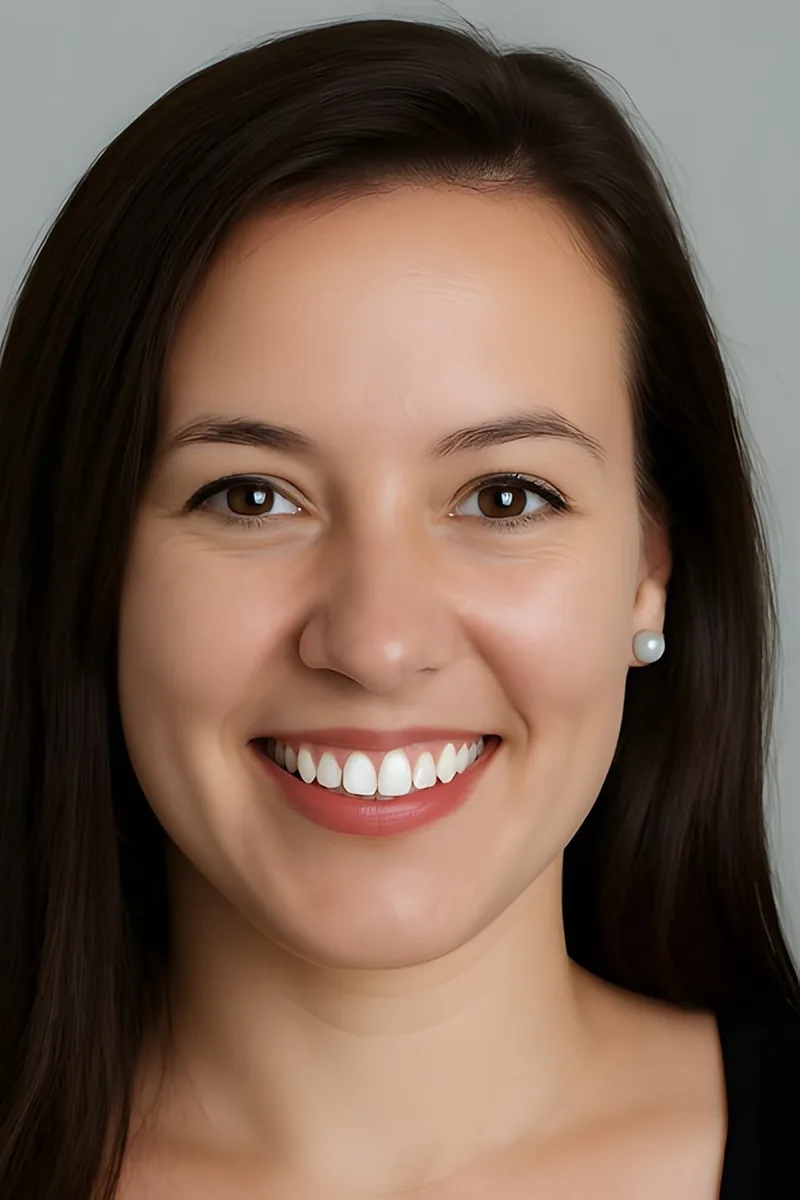
Environmental engineering coursework — modeling pollutant dispersion, watershed flow rates, decay of contaminants — runs on exactly the exponential, logarithmic, and trigonometric functions that pre-calculus introduces. Kate teaches these topics with the instinct of someone who's built real models around them through both her bachelor's and master's work, connecting each function family to the physical behavior it describes. Her 1580 SAT and 4.9 rating confirm the precision she brings to every session.
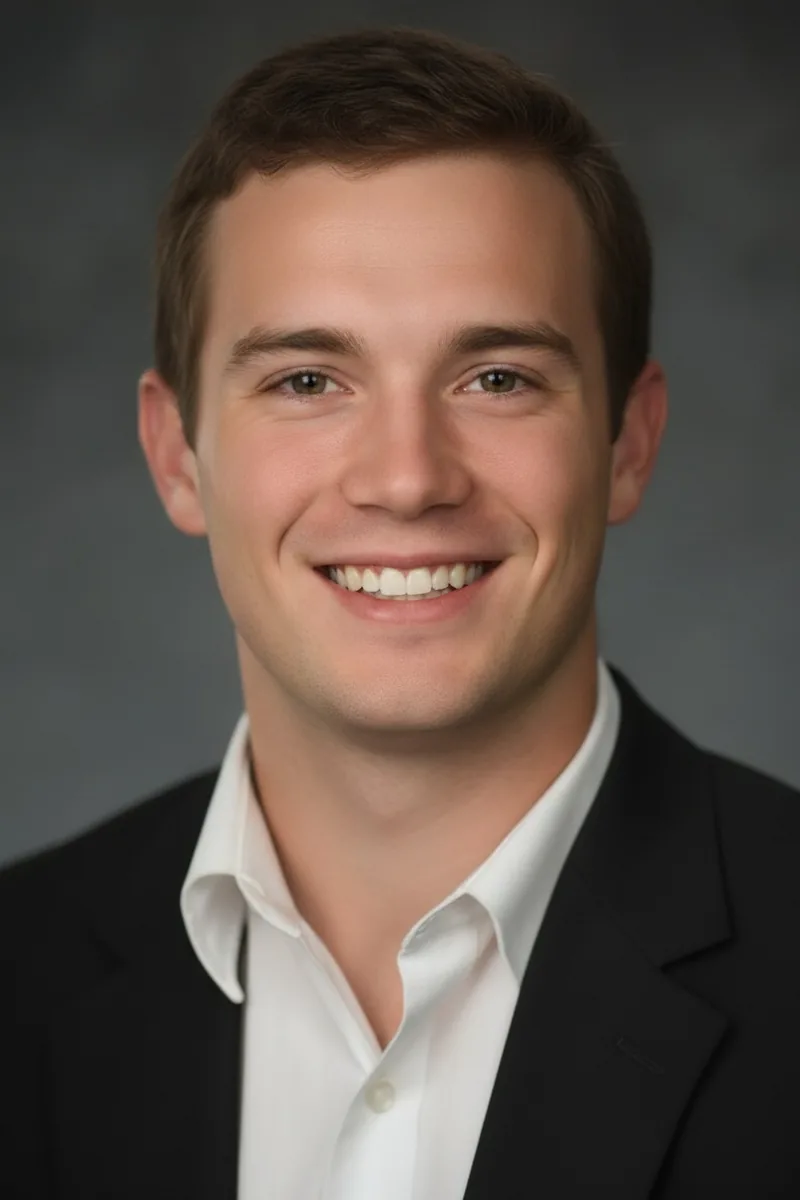
Holding degrees in both mechanical and electrical engineering, Steve has spent years in the territory where pre-calculus stops being coursework and starts being the toolkit — trigonometric analysis for signal processing, polynomial modeling for system dynamics, vectors and complex numbers for circuit design. He teaches the course knowing exactly which skills will matter most when students hit calculus and engineering-track courses, and builds each lesson around that forward view. Rated 4.9 by students.
Philosophy trained Keenan to construct rigorous logical arguments; computer science at Penn trained him to think in functions, recursion, and formal systems — and pre-calculus sits right at that intersection, where algebraic intuition has to become precise functional reasoning. He's especially sharp on the discrete math side of things like sequences and series, and he connects topics like composite and inverse functions to the programming concepts that make them feel less abstract. Holds a 5.0 rating from students.
Mechanical engineering at Penn means Larkin solves problems daily where pre-calculus is the entry point — parametric curves for motion analysis, trigonometric decomposition for force diagrams, and conic sections for structural geometry. His physics degree built the habit of treating each function family as a tool with specific behavior rather than a formula to memorize, which makes topics like transformations and inverse functions click faster. Holds a 5.0 rating and a 35 ACT.
Biomedical engineering at Yale means Jonathan spends most of his time in the territory just beyond pre-calculus — differential equations, signal processing, biomechanical modeling — so he knows exactly which skills from this course actually carry weight later and which are just procedural filler. He zeroes in on building real intuition around function transformations and trigonometric reasoning, connecting each topic back to the calculus and physics applications waiting on the other side. His 1550 SAT and 5.0 rating back that up.
Sarah's math degree from Penn covered the full arc from algebra through analysis, so she teaches pre-calculus as the course where all the earlier algebraic skills finally converge — rational expressions become rational functions, basic trig becomes the unit circle, and isolated skills start behaving like a connected toolkit. She's particularly sharp at demystifying function transformations and composite functions, two areas where students often memorize steps without seeing the underlying pattern. Rated 4.9 by students, with a 35 ACT confirming the quantitative depth.
Having earned a 34 ACT and a 1510 SAT, Ade brings sharp quantitative instincts to the specific pre-calculus skills that trip students up most — particularly the shift from manipulating equations to reasoning about how functions behave, transform, and combine. His biology background means he's used exponential and logarithmic models in scientific contexts, so he teaches those function families as tools with real meaning rather than abstract formulas on a page. He digs into the why behind each topic so students walk into calculus already thinking like mathematicians.
Pursuing a doctorate in music might seem unrelated to pre-calculus, but Jackson's work in music theory runs on the same structures — periodic waveforms, harmonic series, and the function transformations that describe how sound behaves. That mathematical intuition, backed by a 1460 SAT, means he teaches topics like trigonometric graphs and sequences by drawing out the patterns students can hear before they see them on paper. He's especially sharp at bridging the gap between algebraic mechanics and the more abstract functional thinking pre-calc demands.
Five years of tutoring every math level from elementary through calculus means Joyce has watched hundreds of students hit the same pre-calc walls — the moment rational functions stop behaving like anything they saw in algebra, or the first time a trig identity requires working backward. She teaches those pivot points by making the algebraic scaffolding explicit, so students see exactly which earlier skills carry forward and which habits need upgrading. Her 1590 SAT reflects the kind of precision that catches the small errors pre-calc punishes most.
Full-time tutor, former Chemistry graduate student at University of Pennsylvania, BS Chemistry with Math Minor from Rochester Institute of Technology. My philosophy is that students learn best when they can understand why they're learning the material. I aim to help students effectively utilize and seek out tools for learning concepts while also practicing examples and building knowledge of the concepts themselves. I have a passion for mentoring students in chemistry and mathematics and giving them the knowledge and tools they need to comprehensively understand the foundations and applications of the material they're learning and to succeed in their education.
Pre-calc sits at an awkward crossroads — part review, part brand-new abstraction — and the jump to limits and series notation catches a lot of students off guard. Felipe's approach is to anchor each new concept (composite functions, conic sections, sequences) in concrete examples before layering on the formal notation, so students arrive at calculus already comfortable with the language.
Cognitive science trains you to think in systems — how inputs transform into outputs, how variables interact across layers of complexity — and Kimberly brings that same structural thinking to pre-calculus topics like function composition and graph transformations. She's especially sharp at making the leap from algebraic mechanics to the kind of abstract functional reasoning that trips students up right before calculus. Her 34 ACT and 5.0 rating back it up.
The jump to pre-calculus trips up a lot of students because it demands fluency with function behavior, trigonometric identities, and limits — all at once. Ian tackles these topics by connecting them back to the algebra and geometry concepts students already know, making the transition feel less like a leap. His structured, preparation-first approach keeps students from falling behind as the material accelerates.
I am happy when my student completely understands the material. I highly discourage memorization.
Tom's neurobiology concentration at Penn meant daily encounters with the mathematical scaffolding pre-calculus provides — modeling action potentials with sinusoidal functions, tracking neural decay through exponential equations, and interpreting dose-response relationships on logarithmic scales. He tackles the course by connecting each function family to the biological phenomena that make them intuitive, turning abstract graph behavior into something students can visualize and reason through.
Trigonometric identities, rational functions, and the behavior of logarithms all converge in pre-calculus, and each one reappears heavily in the engineering courses Joey studied at Glasgow and Penn. He connects these topics to tangible applications — like modeling oscillations or analyzing growth rates — so students see the purpose behind the algebra before they ever open a calculus textbook.
I am a very passionate teacher who has worked in public and private school settings at both the high school and college level. I have an undergraduate mathematics degree, and taught AP Calculus at a North Carolina high school. I also have a PhD in philosophy, and have taught at major research universities in Missouri and Ohio. I am personally invested in my students' success, and take pride in being clear, conscientious, and accessible.
The leap from algebra to calculus hinges on pre-calc — specifically on whether students genuinely understand limits, function behavior, and how exponential and logarithmic functions work under the hood. Dhinakaran unpacks these ideas by showing what each function actually describes rather than just drilling transformation rules. His 4.9 rating speaks to an approach that leaves students ready for calculus, not just surviving pre-calc.
Steven's biology degree at Drexel had him knee-deep in organismal physiology, where modeling growth rates, decay curves, and oscillatory systems meant pre-calculus wasn't just a prerequisite — it was the mathematical language of his entire concentration. He teaches the course by zeroing in on how polynomial and rational functions actually behave, building intuition for end behavior and asymptotes so students aren't just memorizing rules they'll forget by exam day. His 34 ACT and 5.0 rating back that up.
I am currently a graduate student in Chemical Engineering at the University of Delaware. I am working on using magnetic and flow fields to create advanced materials by directing the self-assembly process of nanoparticles . I have tutored students in Chemistry, Physics and Math all throughout undergraduate and graduate work. I truly enjoy breaking material down into its core components that allows the students to understand complicated information.
Having served as a teaching assistant for multiple math courses at Penn, Giancarlo knows exactly where students lose the thread between algebra and calculus — and pre-calculus is where that handoff happens. He digs into the mechanics of polynomial end behavior and rational function asymptotes, building the graphical intuition that makes calculus concepts land later. Rated 5.0 by students.
Studying the biological basis of behavior alongside a math track means Jonathan lives in both worlds — modeling neural dynamics with the same polynomial, trigonometric, and exponential functions that pre-calculus students are wrestling with for the first time. His 1530 SAT and 33 ACT confirm the quantitative chops, but what sets his sessions apart is how naturally he connects abstract function behavior to the biological systems that actually depend on it. He's especially sharp on graph transformations and rate-of-change intuition, two areas that pay off immediately once calculus starts.
Having tutored math and physics alongside his computer science and math studies, Kevin approaches pre-calculus as the bridge where algebraic skills have to mature into functional thinking — and he zeroes in on the spots where that transition stalls, like grasping how composite functions behave or why logarithmic and exponential relationships are inverses of each other. His data science concentration means he regularly builds models that depend on exactly the function families pre-calc introduces, so he teaches them as practical tools with real structure, not just formulas to memorize before calculus.
An astrophysics degree means Jacob spent years where pre-calculus wasn't a course — it was the baseline language for orbital mechanics, wave equations, and stellar luminosity models. He teaches topics like conic sections and trigonometric functions by drawing on that physical intuition, connecting each concept to the real systems where it matters. His 1550 SAT confirms the mathematical precision behind that approach.
The jump from Algebra 2 to Pre-Calculus is where many students first encounter limits of their old problem-solving habits — suddenly they need to think about function behavior, not just function answers. Alex tackles topics like rational functions, sequences, and polar coordinates by tying each one back to the bigger picture of how calculus will use them. His biomedical engineering coursework keeps him fluent in exactly these tools.
Ian's Cornell degree in Biometry and Statistics meant years of working with the polynomial, exponential, and logarithmic models that form the backbone of pre-calculus — except he was fitting them to real biological datasets, not just textbook exercises. That applied statistics background gives him a sharp eye for function behavior, making him especially effective at teaching students how transformations and compositions actually work rather than just what they look like on a worksheet. He also teaches through calculus and differential equations, so he knows exactly which pre-calc skills need to be airtight before moving on.
Having studied biology and biochemistry at UNC Chapel Hill, Kimberly knows firsthand how pre-calculus concepts like exponential models and logarithmic relationships become essential tools in upper-level science — she learned them twice, once in math class and again when they showed up in enzyme kinetics and population dynamics. That dual exposure sharpens how she teaches function transformations and rate-of-change intuition, connecting each topic to something concrete rather than leaving it floating in abstraction. Her 1590 SAT and 4.9 rating reflect serious quantitative skill paired with consistent student results.
Training to become a math teacher means Melissa doesn't just solve pre-calculus problems — she's actively learning how to explain them, breaking down topics like rational functions and trigonometric graphs in ways that build from the algebra her students already understand. Her psychology background gives her a sharp read on where confusion actually starts, which is often two steps before the problem a student is stuck on. She holds a 5.0 rating and a 1490 SAT.
Holding both a bachelor's and master's in mechanical engineering, Nicholaus spent years relying on the exact toolkit pre-calculus teaches — parametric equations for modeling motion, trigonometric functions for analyzing forces, and conic sections for designing mechanical components. He breaks down these topics by connecting them to the physical systems where they actually matter, which makes the jump from algebraic manipulation to functional reasoning feel intuitive rather than arbitrary.
Sean's physics degree means he spent years where pre-calculus wasn't a standalone course but the operating system — trigonometric decomposition for projectile motion, logarithmic models for decay problems, vector analysis for force diagrams. He teaches those topics by connecting them to the physical scenarios that make function behavior intuitive, showing students what a graph actually describes before drilling the algebra behind it. Holds a 5.0 rating.
Erin's math degree means she didn't just pass through pre-calculus — she built the rest of her undergraduate work on top of it, which gives her a clear sense of exactly where students get stuck on topics like rational functions, sequences, and the shift from algebraic manipulation to genuine functional thinking. She zeroes in on the conceptual bridges that make calculus possible, particularly how transformations and composition work together to describe complex behavior. Her 1530 SAT confirms the quantitative rigor behind her teaching.
What makes pre-calculus tricky isn't any single topic — it's that the course asks students to juggle trigonometric identities, rational functions, and sequences all at once without making clear how they connect. Alex's math degree means he can trace those threads explicitly, showing how a concept like function composition ties together material that otherwise feels like a dozen unrelated chapters. His 1480 SAT reflects the same quantitative range he brings to bridging algebra and calculus.
The jump to Pre-Calculus is often where students realize they can't rely on memorized shortcuts anymore, especially with trigonometric identities and limits. Daniel approaches each topic by building the reasoning behind the formulas, so students understand why a unit circle works the way it does — not just where to look on a reference sheet.
Testimonials
Because the right Pre-Calculus tutor makes all the difference.
Average Session Rating – Based on 3.4M Learner Ratings
Practice Pre-Calculus
Free practice tests, flashcards, and AI tutoring for Pre-Calculus
Other Philadelphia Tutors
Related Math Tutors in Philadelphia
Frequently Asked Questions
Pre-Calculus requires students to shift from procedural math (following steps) to conceptual understanding (knowing why those steps work). Many students struggle with word problems that require translating real-world scenarios into equations, graphing complex functions, and understanding the connections between algebraic and geometric representations. Additionally, gaps from earlier algebra courses often surface in Pre-Calculus, making it harder to keep up with new material. Personalized tutoring helps identify these specific gaps and builds the foundational confidence needed to tackle more advanced concepts.
During an initial session, a tutor will assess your current understanding of key Pre-Calculus topics—such as functions, transformations, and trigonometry—to identify strengths and areas needing support. They'll ask about your learning style, specific challenges you're facing, and your goals (whether that's improving a grade, preparing for the AP exam, or building confidence). This personalized approach allows the tutor to create a tailored plan that addresses your unique needs rather than using a one-size-fits-all approach.
Many Pre-Calculus students can get answers but struggle to communicate how they arrived at them—a skill that becomes critical for calculus and standardized tests. Expert tutors teach problem-solving strategies that emphasize the 'why' behind each step, not just the 'how.' Through guided practice and feedback, you'll learn to organize your work clearly, justify your reasoning, and recognize patterns that make solving similar problems easier in the future.
Graphing and word problems are two of the biggest pain points in Pre-Calculus because they require connecting multiple concepts at once. Tutors break these down into manageable steps: for graphing, they help you understand transformations and how parameters affect a function's shape; for word problems, they teach a systematic approach to translating language into equations. Regular practice with feedback helps you see the underlying patterns, so similar problems feel less intimidating over time.
Yes. Philadelphia's 91 school districts use various Pre-Calculus textbooks and approaches, and expert tutors are familiar with the most common ones. Whether your school uses a traditional sequence focusing on functions and trigonometry, or an integrated approach, Varsity Tutors connects you with tutors who can align their instruction with your specific curriculum and pacing. This ensures the tutoring directly supports what you're learning in class.
Absolutely. Math anxiety is common, especially in Pre-Calculus when material becomes more abstract, but it's very treatable with the right support. Personalized tutoring builds confidence by breaking complex topics into smaller, manageable pieces and celebrating progress along the way. When you work one-on-one with a tutor in a low-pressure environment, you can ask questions freely, work at your own pace, and gradually develop the confidence that comes from truly understanding the material rather than just memorizing steps.
Yes. Strong Pre-Calculus fundamentals are essential for success in AP Calculus, and tutors can help you build those foundations strategically. They'll identify which Pre-Calculus topics are most critical for calculus (like understanding function behavior, limits, and rates of change) and ensure you have deep, conceptual mastery rather than surface-level knowledge. This preparation significantly improves your readiness for AP Calculus and your performance on the exam.
Getting started is simple: tell us about your Pre-Calculus needs, your current challenges, and your goals. Varsity Tutors will connect you with an expert tutor whose background and teaching style match what you're looking for. From there, you'll work together to create a personalized learning plan and begin your first session. Most students see improvement within a few weeks of consistent, focused tutoring.
Let’s find your perfect tutor
Answer a few quick questions. We’ll recommend the right plan and match you with a top 5% tutor.