Award-Winning Middle School Math Tutors
serving Austin, TX
Middle School Math
Tutors in Austin
Private 1-on-1 tutoring, weekly live classes for academic support, test prep & enrichment, practice tests and diagnostics, and more to elevate grades and test scores.
Based on 3.4M Learner Ratings
UniversitiesSchools & Universities
DeliveredHours Delivered
ProficiencyGrowth in Proficiency
Who needs tutoring?
No obligation. Takes ~1 minute.
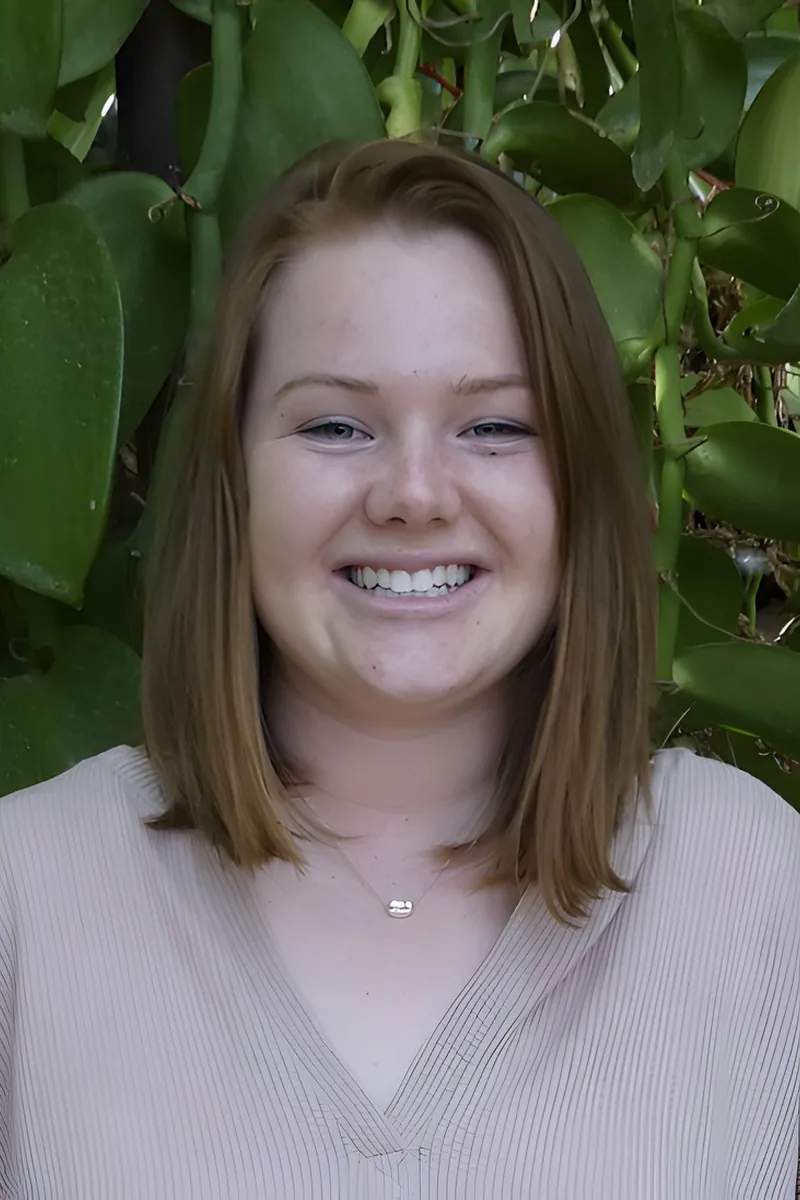
Economics majors spend their days building models out of exactly the kind of math middle schoolers are learning — graphing relationships, manipulating equations, interpreting data — so Mackenzie can show students where skills like proportional reasoning and solving for unknowns actually lead. Her 35 ACT score speaks to rock-solid fundamentals, and she's particularly effective at helping kids organize their scratch work so careless mistakes stop eating into their grades. Rated 4.8 by students.
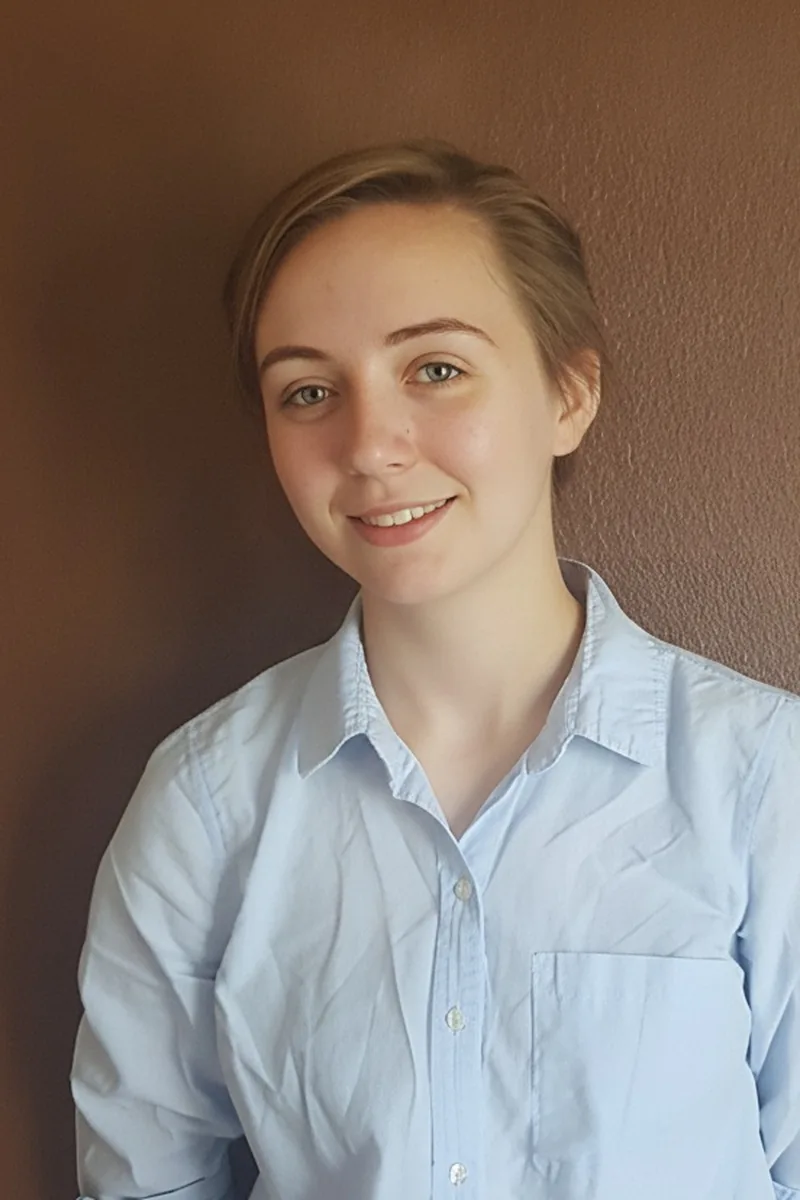
English and computer science at Carleton College might seem like an unlikely combination for middle school math, but the CS side means Meagen thinks in logic, sequences, and variables every day — exactly the reasoning that kicks in when students move from arithmetic into pre-algebra. She scored a 34 on the ACT, so the quantitative skills are genuine, and her 5.0 rating suggests she communicates them clearly. Her strength is in making the abstract notation of expressions and equations feel like a language students can actually read.
The jump from elementary math to middle school math piles on new territory fast: ratios, negative numbers, coordinate graphing, basic geometry. Paul's economics background means he's comfortable translating abstract math into real-world examples — percentages become budgets, rates become speed problems, and the math starts to make sense.
The jump from arithmetic to algebraic thinking is one of the biggest conceptual leaps in all of math, and it happens in middle school. John makes that transition concrete — turning abstract ideas like variables and proportional reasoning into problems students can visualize and talk through, building the kind of number sense that pays off for years.
Psychology research at the undergraduate level means Katelyn spent years running statistical analyses and interpreting data — skills rooted in the same proportional reasoning, probability, and algebraic thinking that middle schoolers are just beginning to formalize. Her experience with special needs and gifted students gives her a read on pacing that most tutors have to learn the hard way: she knows when to slow down and re-explain integer operations and when to push a student who's ready for more abstract problem-solving.
Growing up in a family of teachers and now finishing a medical residency, Jordan has spent a lifetime watching people learn — and learning how to break complicated ideas into pieces that actually land. That skill translates directly to middle school math, where concepts like ratios, decimal operations, and basic geometry often need to be unpacked rather than just demonstrated. Rated 5.0 by students.
Harsh's biology coursework in the Health Science Scholars program at UT Austin keeps him fluent in the quantitative reasoning — ratios, unit conversions, interpreting data — that middle schoolers are just starting to formalize. His 35 ACT score speaks to the kind of across-the-board mathematical fluency that lets him explain not just how to solve a proportion or simplify an expression, but why the method works in the first place.
Every concept in middle school math — fractions, proportions, basic geometry, coordinate graphing — becomes easier when a student can picture it. Alicia's architecture training at MIT gave her an unusual ability to make numerical relationships visual and spatial, turning abstract problems into something a student can practically see and touch.
Having learned core math and science concepts multiple times — first across 14 AP classes, then again through a biochemistry degree at Texas A&M — Gabriel can explain the same idea three different ways until one clicks, which is exactly what middle schoolers need when topics like ratios or basic equation-solving start feeling slippery. His 5.0 rating from students backs up that flexibility. The biochemistry background also means he naturally ties number sense to real measurement and data contexts, giving students a reason to care about precision.
I am currently a senior at the University of Texas at Austin and graduated from high school in 2022 earning a 4.0 GPA along with a 1530 SAT (800 Math, 730 Reading) and a 34 ACT (30 Math, 34 Science, 35 English, 35 Reading). Achieving these results taught me that strong outcomes come from effective habits, not shortcuts, and I spent years refining study techniques such as active recall and spaced repetition that helped me learn more efficiently and with less stress. These strategies continue to support me in my college coursework and shape how I approach teaching. I began tutoring during high school and quickly discovered how meaningful it was to help other students gain confidence in subjects they once found intimidating. I have experience working one-on-one with middle school and high school students in both volunteer and informal tutoring settings, focusing on math, English, and standardized test preparation. My tutoring style centers on patience and clarity, breaking down complex ideas into manageable steps and reinforcing understanding through practice. I place a strong emphasis on helping students understand how to study effectively, rather than relying on memorization alone. I am comfortable tutoring math and English at all levels, as well as SAT Math and Reading and ACT Math and Reading. Having recently navigated rigorous coursework and competitive testing myself, I understand the pressures students face and strive to create a supportive, encouraging learning environment. My goal is not only to help students improve their grades or scores, but also to equip them with study skills and confidence that will benefit them well beyond our tutoring sessions.
Fractions, ratios, proportions, and early geometry proofs are the building blocks that either click or become long-term obstacles. Ria has tutored students as young as elementary age and understands how to make abstract ideas tangible — using visuals, real-world examples, and patient repetition until a concept sticks. Her enthusiasm for math is contagious, which matters a lot at this age.
Certified to teach math, language arts, social studies, business, and special education in Texas, Steve brings a rare cross-subject fluency that pays off when middle schoolers hit geometry vocabulary or word-heavy ratio problems — he can untangle the language barrier that often masquerades as a math barrier. His five years in corporate account management also mean he's comfortable with the practical, numbers-driven thinking that makes topics like percentages and proportional reasoning click for students who want to know when they'll actually use this stuff.
The jump from elementary math to middle school math often exposes gaps in fraction fluency, decimal operations, or proportional reasoning that snowball fast if left unaddressed. Ehigbor's premed background means she's comfortable with numbers at every level, and she's particularly sharp at diagnosing exactly which foundational skill is causing a student to stall on ratio and percent problems.
Having served as a UT orientation advisor, Laila knows how to meet younger learners with patience and encouragement while still pushing them forward. She tackles middle school math topics like ratios, proportional reasoning, and introductory geometry by grounding each concept in everyday scenarios students can visualize. Her goal is always for students to walk away trusting their own problem-solving instincts.
Fractions, ratios, and early equation-solving can feel pointless to a middle schooler unless someone shows them why the logic matters. Atharva makes those connections concrete — turning proportional reasoning into real scenarios and giving students a reason to care about the math underneath. He's earned a 5.0 rating doing exactly that.
An electrical engineering degree means Jake spent years solving circuits using the same proportional reasoning, equation-solving, and variable manipulation that middle schoolers encounter for the first time — so he can trace exactly how today's homework on expressions or ratios scales into the math that powers real technology. He also teaches programming and robotics, which gives him a toolbox of concrete, hands-on examples when a purely abstract explanation isn't landing. Rated 5.0 by students.
Fractions, ratios, and proportions click faster when students see how they connect to real scenarios — like calculating medication dosages, which Corey does daily as a working nurse. She breaks down pre-algebra concepts and integer operations step by step, building the kind of number sense that carries into high school math.
Fractions, decimals, ratios, and early equation-solving are the building blocks that every future math course depends on. Rakhi teaches middle schoolers to reason through these ideas instead of relying on tricks — asking why you flip and multiply, or what a negative exponent actually represents. That conceptual grounding is what makes algebra feel manageable later.
Ratios, proportional reasoning, and early equation-solving are the building blocks that everything in high school math depends on. Diana tackles middle school math by making sure students understand *why* a procedure works — not just how to follow it — so they walk into algebra already thinking like problem-solvers.
Teaching English in Argentina and working as a TA at the Summer Institute for the Gifted gave Thomas practice explaining concepts across language barriers and ability levels — a skill that pays off when a sixth grader can't articulate exactly where they got lost on a fraction or integer problem. His psychology training also means he picks up on the frustration cues that make middle schoolers shut down before they even ask for help, and he's quick to shift gears when an explanation isn't landing. Rated 4.9 by families.
At the middle school level, math shifts from computation to reasoning — students are suddenly asked to interpret ratios, graph proportional relationships, and solve multi-step equations. Andrew's liberal arts background gave him strong communication skills that most pure-engineering tutors lack, and he uses that to explain the 'why' behind each procedure. He's tutored siblings and classmates at every level and genuinely enjoys making this transitional stage less intimidating.
The jump from arithmetic to pre-algebraic thinking — working with variables, negative numbers, ratios, and proportional reasoning — is one of the trickiest transitions in a student's math life. Tyler trained in the UTeach program specifically to teach math and science to younger learners, and he asks students to talk through their reasoning so he can pinpoint exactly where a concept breaks down. That diagnostic approach makes a real difference at the middle school level.
The jump from arithmetic to pre-algebraic thinking — working with integers, proportional reasoning, and basic equation solving — is one of the most important transitions in a student's math life. Roozbeh has tutored students from ninth grade all the way down to younger learners and understands how to make concepts like fractions, ratios, and order of operations click before they become obstacles in high school. His 5.0 rating speaks to how well he builds that confidence early.
The jump from elementary math to middle school math means suddenly juggling ratios, proportional reasoning, and coordinate graphing all at once. Jacqueline's computer science background gives her a knack for teaching students to think step-by-step through multi-part problems rather than getting overwhelmed by new notation.
Before pivoting to Classics and archaeology, Brandi was on track to become a chemist — so the quantitative thinking behind middle school topics like order of operations, expressions, and basic equation solving comes naturally to her. She's taught across multiple educational settings up through the undergraduate level, which means she knows how to adjust her explanations for a twelve-year-old who needs math to feel concrete before it can feel logical. Rated 4.8 by families.
From ratio tables to basic equation solving, middle school math is where students either build genuine number sense or start memorizing without understanding. Sourav taught primary and middle school students through an NGO in India, and that experience gave him a sharp eye for the specific moments where a concept stops making sense and needs to be re-explained differently.
The jump from elementary arithmetic to ratios, proportions, negative numbers, and basic algebraic expressions can feel enormous for a middle schooler. Muhammad spent time as Lead Assistant at Kumon working with students at exactly this level, building their confidence with integers, fractions, and equation-solving one step at a time. He keeps lessons structured but conversational, so students actually ask questions instead of shutting down.
I'm Jay! I'm currently going to college at the University of Texas at Austin. I am majoring in fine arts and I am also in the pre-medical program. Even though I'm not done with college, I have already published papers in the field of epigenetics since my freshmen year of college. Even though I consider myself to have an expertise in languages, I decided to teach areas in the field of natural sciences because those are the subjects that I am most passionate about.
The jump from arithmetic to algebraic thinking is where middle school math gets tricky — suddenly there are variables, negative numbers, and proportional reasoning everywhere. Matt tackles these concepts by building each new idea from something a student already understands, so topics like solving equations or graphing on the coordinate plane feel like natural extensions rather than foreign territory.
I am a graduate of Barnard College, Columbia University where I received my Bachelor of Arts in Mathematics and Economics. My academic interests while at Barnard were focused on microeconomics and statistical research. I am a believer that a strong education can propel you to achieve your goals. I think that anyone can learn math and logical thinking with a little help. I have experience tutoring high school students in Algebra I and was always helping my fellow classmates with their economics problem sets in college. While working professionally, my job demanded strong technical skills in data programming. Each year, I taught my coworkers the necessary programming skills both through classroom setting lectures and through one-on-one tutoring. In my free time I love going to spin class, learning how to cook, and watching MSNBC!
Ratios, proportions, and early equation-solving can feel abstract until someone connects them to problems that actually make sense. Min ties middle school math concepts to real-world scenarios drawn from her science background at UT Austin, giving students a reason to care about what they're solving.
Biology runs on math — ratios in genetics, statistical analysis in biostatistics, unit conversions in chemistry — and Barnabas uses all of it daily across his science coursework, giving him a practical fluency with the quantitative skills middle schoolers are building. He's particularly effective at showing students how to set up and solve problems involving fractions and ratios by grounding them in tangible examples from the natural world. Rated 4.8 by students.
The jump from arithmetic to pre-algebra thinking — ratios, proportions, negative numbers, basic equation solving — can feel sudden for middle schoolers. Sneha tackles that transition by building each new idea visually before moving to symbolic notation, so students understand the reasoning behind the math they're doing.
Electrical engineering at UIUC means Ramsey lives in math daily — but he remembers exactly when concepts like negative numbers, fraction division, and basic variable manipulation first felt confusing, because he's tutored across the full spectrum from pre-algebra through AP Calculus BC. That range gives him an unusual ability to teach a sixth grader's current topic while knowing precisely which habits will pay off two or three years down the road. His 1500 SAT and National AP Scholar recognition back up the depth behind his explanations.
Biochemistry at UT Austin means Riley solves equations with variables, unit conversions, and proportional reasoning every week in coursework — so when a seventh grader hits a wall with ratios or basic equation-solving, she can ground the explanation in how she actually uses that math. Her background coaching gymnastics and working with kids gives her a read on when to push and when to slow down, which matters a lot at an age where math confidence is still fragile.
The jump from elementary math to middle school math often catches students off guard when fractions, negative numbers, and basic geometry all collide in the same problem set. Bennet's computer science training means he thinks in logical sequences, and he applies that same structured thinking to walk through multi-step problems so students see exactly where each piece fits.
Fractions, decimals, ratios, and proportional reasoning are the concepts that either build a student's confidence or quietly erode it before high school even starts. Jaxon tackles middle school math by identifying exactly where a student's understanding breaks down and rebuilding from that point. His experience teaching college science labs taught him how to explain quantitative ideas in language that actually lands.
About With over three years of experience as a Financial Accountant at FXSpotStream LLC, contributed to enhancing financial processes and accuracy through expertise in FX derivatives, general ledger reconciliations, and analytics. Previous experience as a private tutor honed problem-solving and communication skills.
Fractions, decimals, and ratios start making more sense when a student can see how they connect to each other — and Matthew's broad math background, spanning pre-algebra through calculus, means he can trace those connections clearly without jumping too far ahead. His ACT score of 34 signals strong fundamentals, and his experience across writing and grammar gives him an edge when it comes to unpacking the tricky language buried in word problems.
Ratios, proportions, and early equation-solving can feel pointless to a middle schooler until someone ties them to something real. Spencer's biology research at UT gives him a library of concrete examples — like calculating concentrations or scaling measurements — that make these concepts click rather than feel like busywork.
Testimonials
Because the right Middle School Math tutor makes all the difference.
Average Session Rating – Based on 3.4M Learner Ratings
Nearby Middle School Math Tutors
Other Austin Tutors
Related Math Tutors in Austin
Frequently Asked Questions
Tutors connect with students in Austin are familiar with the different math programs and textbooks used across the city's 24 school districts. During an initial conversation, tutors learn which curriculum your student follows—whether it's a traditional sequence or an integrated approach—and tailor instruction to match what's being taught in class. This alignment means tutoring reinforces classroom learning rather than introducing conflicting methods.
Middle school is where math shifts from "follow these steps" to "understand why these steps work"—and that's where many students struggle. Personalized 1-on-1 instruction helps students move beyond memorizing procedures to seeing the patterns and connections behind concepts like equations, fractions, and functions. When students understand the 'why,' they can apply math to new problems instead of just repeating what they've memorized.
Word problems require students to translate language into math, which is a skill separate from computation. Tutors work with students to break down problems into manageable steps: identifying what's given, what's being asked, and which operations apply. With guided practice and specific problem-solving strategies, students build confidence and learn to see word problems as puzzles to solve rather than obstacles.
Showing work reveals a student's thinking process, which helps teachers (and tutors) identify where misunderstandings happen—not just whether the final answer is right. This is especially important in middle school as math becomes more complex. Tutors help students organize their work clearly and explain their reasoning, skills that build strong problem-solving habits and often improve test performance.
Math anxiety is common in middle school and often stems from feeling lost or embarrassed to ask questions in a classroom of 25+ students. With the 14.9:1 average student-teacher ratio in Austin schools, individual attention in class can be limited. Personalized 1-on-1 instruction creates a safe space to ask questions, work through mistakes without judgment, and experience small wins that rebuild confidence over time.
Multi-step equations require students to hold multiple operations in mind, follow order of operations correctly, and remember to apply the same operation to both sides of the equation. Many students rush through steps or lose track of what they're solving for. Tutors slow down the process, help students identify common mistakes, and use visual strategies (like balance scales or color-coding) to make the logic stick.
Graphing and proofs require students to connect visual, algebraic, and logical thinking—a big jump for many middle schoolers. Tutors use concrete examples, manipulatives, and step-by-step scaffolding to make abstract concepts tangible. Whether it's plotting points to see patterns or writing proofs line-by-line with clear reasoning, personalized instruction breaks these topics into digestible pieces.
The first session is focused on understanding your student's strengths, challenges, and learning style rather than diving into heavy content. Tutors ask diagnostic questions, review recent classwork or test results, and identify specific gaps—whether it's foundational skills or confidence with recent topics. This foundation helps tutors create a personalized plan that targets what your student needs most.
Let’s find your perfect tutor
Answer a few quick questions. We’ll recommend the right plan and match you with a top 5% tutor.