Award-Winning Calculus Tutors
serving Dallas, TX
Calculus
Tutors in Dallas
Private 1-on-1 tutoring, weekly live classes for academic support, test prep & enrichment, practice tests and diagnostics, and more to elevate grades and test scores.
Based on 3.4M Learner Ratings
UniversitiesSchools & Universities
DeliveredHours Delivered
ProficiencyGrowth in Proficiency
Who needs tutoring?
No obligation. Takes ~1 minute.
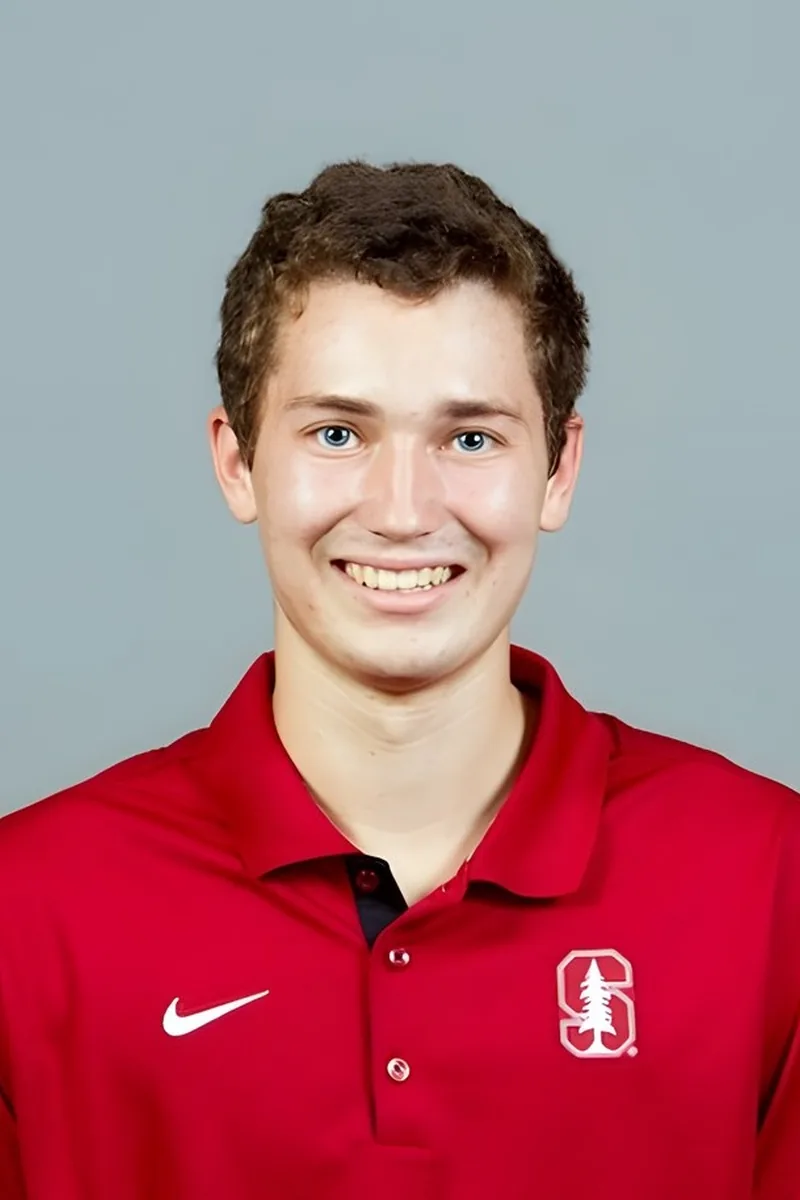
Studying Human Biology at Stanford means Jake has encountered calculus where it actually lives — modeling enzyme kinetics, interpreting growth curves, and understanding how biological rates shift under changing conditions. That firsthand experience with derivatives and integrals in scientific contexts gives him a practical vocabulary for explaining the math, not just the mechanics. Rated 5.0 by students.
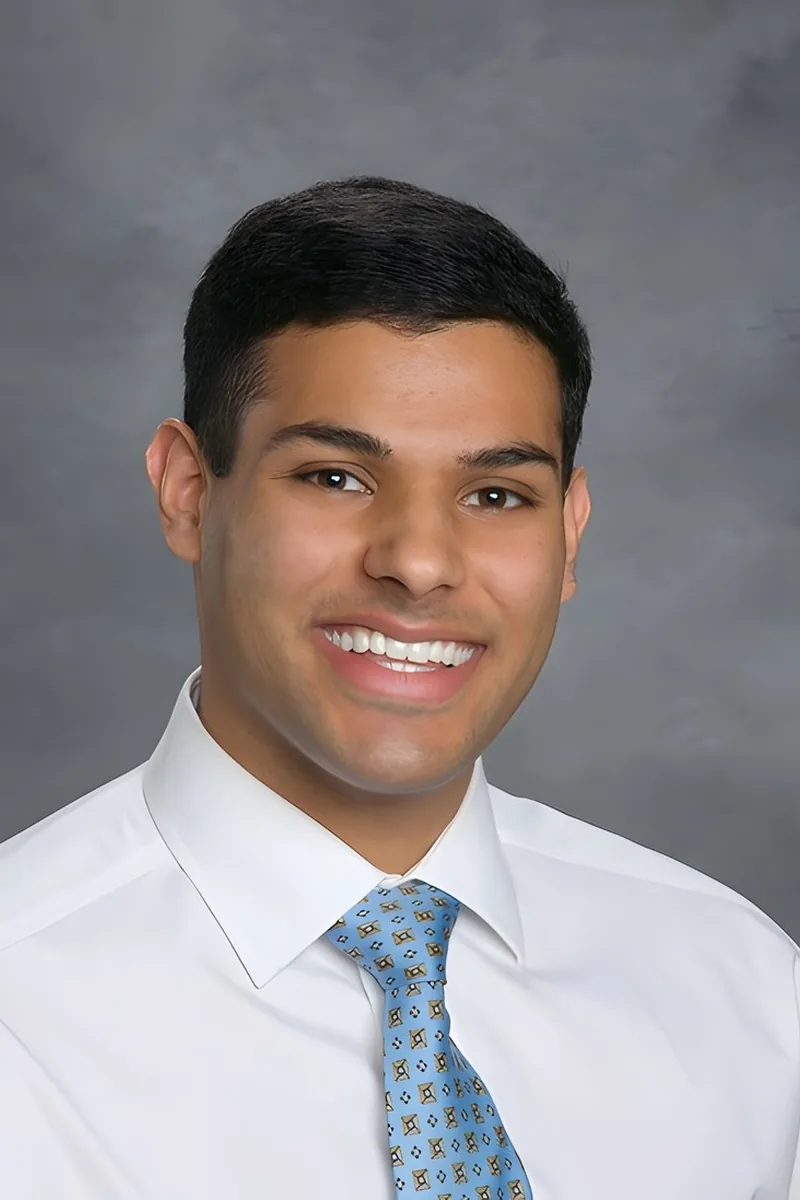
Sanjay's biochemistry and molecular biology training at Rice University meant heavy use of calculus — from modeling enzyme kinetics with differential equations to applying integration in thermodynamics problems. That science-rooted perspective lets him show students why concepts like derivatives and integrals matter beyond the textbook, making abstract rules click in concrete ways.
I am an Atlanta native. I hold an undergraduate degree in Business from Tennessee State University and graduated degree in Education from Cambridge College. I am a Georgia and Texas certified teacher. I have always enjoyed working with kids. I have taught kindergarten, first, second and fourth grade. I am a hard-worker, team player and passionate about my students succeeding in whatever they set their minds too. I currently hold endorsements in K-5 Mathematics, Teacher Support Specialist, and ESOL (English for Speakers of Other Languages). I am able to provide instruction that meets the needs of all students. I have the ability to differentiate instruction so that I cater to all learning styles and levels.
A kinesiology degree at Rice meant Si didn't just take calculus — he applied derivatives and integrals to real problems in biomechanics and physiology. That background makes him especially effective at connecting abstract ideas like limits, chain rule applications, and area-under-the-curve problems to tangible scenarios. He writes out solutions methodically, so students can trace the logic of each step long after the session ends.
Political economy coursework gave Misael hands-on experience with the calculus that drives economic modeling — marginal analysis, optimization of utility functions, and the derivatives behind supply-and-demand dynamics. That background means he can walk through differentiation and integration as tools with clear purpose, not just abstract symbol manipulation. His 1420 SAT confirms the quantitative reasoning to back it up.
Research in microbiology and botany is built on quantitative modeling — growth curves, decay rates, nutrient diffusion — all of which are calculus problems at their core. Brian's PhD work means he's applied derivatives and integrals to real biological data, so he teaches the material with the fluency of someone who's used it daily rather than just studied it in a textbook. Rated 5.0 by students.
An English professor by trade, Toni doesn't claim calculus as her wheelhouse — but a 1520 SAT shows she's no stranger to quantitative reasoning, and years of teaching college students how to break apart complex arguments translates surprisingly well to unpacking the logic behind limits and early derivatives. She treats unfamiliar notation the way she'd treat a dense passage: slow it down, identify the moving parts, and make sure every step makes sense before moving forward.
A Human Biology background means Angela regularly applied calculus to real problems — modeling population growth with integrals, analyzing rates of change in physiological systems. She brings that applied perspective to limits, derivatives, and integration, showing students why the math matters beyond the textbook.
Derivatives and integrals become far more intuitive when a student can see what they actually describe in the real world. Alyssa's physical therapy doctoral program relies on calculus-based biomechanics — analyzing rates of force production, joint angular velocity, and motion curves — giving her concrete examples most calculus tutors can't offer.
Kevin's Medicine, Health and Society major involved the quantitative side of health sciences — interpreting rate-of-change relationships in epidemiological data and understanding how biological processes are modeled mathematically. That background gives him a practical handle on derivatives and their applications, and his 33 ACT confirms he can move comfortably through the underlying math. Rated 5.0 by students.
Linguistics trains you to see structure in complexity — breaking a sentence into morphemes isn't so different from breaking a function into the pieces that determine its behavior at a boundary. John applies that same decomposition instinct to calculus, walking through how limits, derivatives, and rates of change emerge logically from simpler algebraic ideas. Rated 4.8 by students.
Biology at Brown meant Shreya didn't just take calculus — she used it, working through exponential growth models, enzyme kinetics curves, and the rate-of-change problems that underpin genetics and ecology coursework. That experience gives her a practical grip on derivatives and integrals that's rooted in watching the math do something real. Her additional statistics tutoring background reinforces the analytical rigor needed to tackle integration techniques and series convergence.
Pre-med at Duke means Sarah has taken calculus alongside biology and chemistry students who need it to actually mean something — reaction rates, dosage curves, statistical models in psychology research. That context lets her explain derivatives and integrals as tools with a purpose, not just abstract procedures to survive. Her 1500 SAT and 34 ACT confirm she's comfortable with the quantitative reasoning that underpins the material.
Julia's degree is in business administration, not pure mathematics, so she's upfront that calculus isn't her deepest subject. That said, business coursework at Vanderbilt means she's worked through optimization problems and marginal analysis where derivatives have a concrete purpose — finding maximum profit, minimizing cost, interpreting how quantities change at the margin. That practical exposure, combined with her 5.0 tutoring rating, makes her a solid fit for students who want calculus concepts tied to something tangible.
An MBA program doesn't let you skip the quantitative work — Kari's business coursework covered optimization, marginal analysis, and the derivative-based reasoning behind cost and revenue curves. That background means she can ground early calculus concepts like differentiation and integration in practical business scenarios where the math actually drives decisions.
I am a graduate of UC San Diego with a Bachelors in Neuroscience through the Psychology department. After graduating, I went to Michigan Technological University and did some graduate work, before moving to Texas to be closer to my parents. I did my alternative certification program through Texas Teachers and am highly qualified to teach Science for grades 7-12. I have been a teacher in public and charter schools for the last four years, and have tutoring experience extending over ten years behind me as well.
Scott's ecology and evolutionary biology degree meant working through calculus in contexts like population modeling and rate-of-change problems in natural systems, so he knows where derivatives and integrals actually show up outside a textbook. His management studies training added optimization and marginal analysis to that foundation, giving him two distinct lenses for explaining why calculus works the way it does.
I am a graduate of Georgetown University where I earned my Bachelor of Science degree in International Politics with a concentration on Foreign Policy. I also earned a Certificate in Latin American Studies and am a member of Pi Sigma Alpha, The National Political Science Honor Society. I have experience tutoring students in both the SAT and the SSAT. Additionally, my time as an 8th Grade Science teacher here in Dallas has prepared me for the curriculum and challenges facing students in the area. While I offer tutoring in a broad range of subjects from foreign languages to grammar and writing to math and science, I find Physics to be the most enjoyable subject to teach. I see Physics as the science that allows all the other sciences to occur, and I find it helpful to use Physics demonstrations when studying the subject. When it comes to tutoring, I believe that whoever is doing the talking is doing the learning, so my students will be doing the leg work when it comes to their learning. I believe that every student can achieve success in school; each student just learns at their own pace and in their own way. When I have free time, I enjoy reading a good book, playing a game of tennis, or participating in or watching theatrical events.
Geology might seem far from calculus, but Cameron's undergraduate work required fluency with derivatives, integrals, and rate-of-change problems — calculating erosion rates, modeling fluid dynamics in rock formations, and interpreting slope fields. That applied perspective means he teaches limits and integration techniques with tangible examples rather than purely abstract notation. His 33 ACT composite speaks to the broad analytical skills he brings to higher-level math.
Del's BFA in Drama rather than math means calculus isn't his deepest subject — but a 1490 SAT demonstrates real quantitative chops, and his National Merit Scholarship background reflects the kind of disciplined, analytical thinking that early calculus rewards. He tackles limits and derivatives by treating each problem like a scene: figuring out what's actually happening step by step before worrying about the final result.
Erin's psychology major at TCU doesn't scream calculus, but her hands-on, interactive tutoring style — built over years of math instruction from pre-algebra through calc — means she tackles derivatives and integrals by having students work through problems actively rather than passively watching steps on a board. That approach is especially useful for early calculus concepts like the limit definition of a derivative, where genuine understanding comes from wrestling with the logic yourself.
Pursuing a PhD at SMU means Mary lives in the world of rigorous argumentation and structured reasoning — skills that translate directly to walking through the logical chain behind limits and early derivative concepts. Her approach treats each calculus rule as a claim that needs to be justified step by step, the same way she'd build an academic argument in her graduate work. Rated 5.0 by students.
Starting medical school at UC Davis this fall, Daniel used calculus extensively in his biology coursework — modeling population growth with integrals, analyzing rates of enzyme reactions through derivatives. He unpacks limits, differentiation rules, and integration techniques by tying them to real problems rather than abstract notation. Students get someone who's applied this math recently and remembers exactly where the conceptual stumbling blocks are.
Biomedical engineering at UT Austin means Shyon uses calculus daily — whether it's integrating pressure-flow relationships in cardiovascular systems or differentiating signal curves in biomechanics modeling. That constant hands-on application gives him a fluency with the chain rule, u-substitution, and related rates that comes from solving real problems, not just textbook exercises. Rated 5.0 by students.
Computer science at UT Dallas doesn't just brush up against calculus — it lives in it, from analyzing algorithm complexity with limits to optimizing functions in machine learning. Snipta's dual background in CS and cognitive science means he's actually implemented derivatives and integrals in code, which gives him a concrete, computational way to explain why the chain rule or integration by parts works the way it does. Rated 5.0 by students.
An English master's degree doesn't scream calculus, and Binny is honest about that — math isn't her primary lane. Still, her 31 ACT shows solid quantitative chops, and her habit of dissecting complex texts translates surprisingly well to unpacking the layered logic of limits and early derivative problems, where reading the notation carefully matters as much as computing the answer.
Accounting majors don't just take calculus — they use it, particularly when working through cost functions, marginal analysis, and the optimization problems that underpin financial decision-making. Zach's accounting coursework at SMU means he can connect derivative rules and integral concepts to practical scenarios where the math drives real business answers. Rated 4.8 by students.
As an electrical engineering undergrad, Muhammad doesn't just remember calculus — he uses derivatives and integrals regularly to analyze signals, circuits, and system behavior. That ongoing practice means he can explain concepts like the chain rule or integration by parts through multiple angles until one lands. Students working through limits, Riemann sums, or related rates get someone who genuinely thinks in calculus.
Alexandra's academic home is creative writing and Spanish, not mathematics, so she's straightforward that calculus isn't her deepest subject. That said, her 33 ACT shows solid quantitative chops, and her experience tutoring math across grade levels means she can walk students through the conceptual shift from algebra into early calculus — particularly unpacking what a limit is really saying or why the slope of a curve behaves differently than the slope of a line. Rated 4.9 by students.
Limits, derivatives, and integrals each build on the last, so one shaky concept can snowball fast. Devon tackles calculus by connecting each new idea back to the algebra and graphing intuition students already have, making the leap to abstract reasoning feel manageable rather than overwhelming.
I am a seasoned educator and tutor with a Ph.D. in Literature, an M.A. in Literature, and an M.B.A. in international business. I have taught many, many students to write, read, speak, and think academically. Since 2005, I have worked taught in universities in China, Bosnia, the UAE, Afghanistan and Bahrain (teaching our troops!) and Cambodia. I recently returned to the USA. If you are feeling uncertain about your writing assignments, your English or Literature courses, public speaking, or standardized testing, I believe I can help! No one is born with the ability to read, think critically, and write an essay that will get people to stand up and take notice. These are skills that everyone must be taught to become successful, and they can be learned. Students often think they 'just aren't capable' of improving their skills, but as a professional who specializes in English and Writing, I know they are wrong. Every student, with the right motivation, systems, and tools can improve their skills. I have been teaching and tutoring students for over 20 years. As a professor, I know what steps students need to take to become better in writing, reading, literature, critical thinking, and public speaking. As a faculty member at universities and colleges for over 20 years, I know what will be expected of students both in educational settings, and in the professional world after they graduate. I love to work with students, and I have had a great deal of success in helping them to improve. I have developed proven methods to give students the help they need to write better essays, read with greater comprehension, and test more effectively. Most students tell me that I am funny, and that my lessons are far less 'painful than they expect them to be! I look forward to working with you-
The leap into limits, derivatives, and integrals trips up students who never built strong intuition for what's actually happening on the graph. Clairemarie approaches calculus conceptually first — what a derivative means as a rate of change, why the area under a curve matters — before drilling the mechanics of differentiation and integration rules.
A chemistry degree requires serious calculus — from modeling reaction rates with derivatives to calculating areas under curves for thermodynamic processes. Maleah brings that applied perspective to limits, integrals, and differential equations, showing students what these tools actually do beyond the textbook. She breaks multi-step problems into manageable pieces so the logic behind each step stays visible.
Microbiology and Cell Science at the University of Florida meant Maria couldn't avoid calculus — modeling bacterial growth curves, enzyme reaction rates, and diffusion processes all demand fluency with derivatives and integrals. That lab-science context gives her a way to teach concepts like the chain rule or area under a curve by connecting them to systems where quantities genuinely change over time. Rated 5.0 by students.
Second-year med student coursework at Nova Southeastern means Brianna uses calculus constantly — modeling drug absorption rates, interpreting concentration-time curves, and working through the quantitative side of physiology that most pre-med students dread. Her biology degree built the foundation in differential and integral calculus that now shows up daily in her clinical studies, so she teaches the material as something with a purpose rather than an abstract exercise. Rated 4.9 by students.
Pre-med coursework means Gabriele has pushed through calculus in the context of reaction rates, dosage modeling, and the quantitative reasoning that medical school admissions demand — her 1480 SAT confirms she can handle that level of math. She teaches derivatives and integrals by connecting each concept to a concrete problem, breaking down the notation until the underlying logic is clear. Rated 5.0 by students.
Biochemistry at Texas Tech means Bryan lives in calculus — from modeling reaction rates with derivatives to using integrals in thermodynamics problems. That constant application gives him a feel for which concepts students struggle with most, particularly limits and the chain rule. He walks through problems step by step, connecting each technique back to a bigger picture of how calculus describes change.
Biostatistics and environmental biology both lean heavily on calculus — modeling bacterial growth rates, analyzing population dynamics, and interpreting the differential equations behind ecological change. Adeyemi's graduate training in environmental biology means he's actually used integration and derivatives to solve real research problems, not just worked through textbook exercises. That applied fluency makes him especially effective at connecting abstract calculus rules to the quantitative reasoning behind them.
Third-year medical school at UT Southwestern means Samantha uses calculus constantly — modeling drug absorption rates, interpreting dose-response curves, and working through the differential equations that govern physiological systems. Her undergraduate biology training at CU Boulder built the mathematical foundation, and med school turned it into applied fluency, so she teaches derivatives and integrals as tools that describe how real quantities change rather than abstract procedures to memorize. Rated 4.9 by students.
Research analyst work means Maruka spends her days modeling trends and interpreting rates of change in business data — skills that map directly onto derivatives and curve analysis in calculus. Her MBA coursework reinforced optimization and marginal analysis, so she teaches concepts like the chain rule and integration by connecting them to the quantitative reasoning she uses professionally.
Testimonials
Because the right Calculus tutor makes all the difference.
Average Session Rating – Based on 3.4M Learner Ratings
Nearby Calculus Tutors
Other Dallas Tutors
Related Math Tutors in Dallas
Frequently Asked Questions
Many students struggle with the transition from algebra and precalculus to the conceptual thinking required in Calculus. The biggest hurdles include understanding limits and continuity, mastering derivative and integral concepts, and applying these ideas to word problems. Additionally, students often feel anxious about the abstract nature of the material and worry about showing their work correctly. Personalized 1-on-1 instruction helps students build confidence by breaking down these complex concepts into manageable pieces and connecting them to real-world applications.
During the first session, a tutor will assess your current understanding of foundational concepts like limits, functions, and rates of change to identify specific gaps. They'll discuss your learning goals—whether you're preparing for an AP Calculus exam, working toward college credit, or strengthening your grade in a regular Calculus course. From there, the tutor creates a personalized plan tailored to your pace and learning style, focusing on the areas where you need the most support.
Yes. Dallas schools use various Calculus approaches and textbooks, and tutors are experienced working with all of them. Whether your course focuses on AP Calculus AB, AP Calculus BC, IB Higher Level Math, or standard college-prep Calculus, tutors can align their instruction to your specific curriculum. They understand how different textbooks present derivatives, integrals, and applications, and can help you master the concepts regardless of which approach your school uses.
Word problems require translating real-world situations into mathematical language—a skill that's essential in Calculus but often feels overwhelming. Tutors teach problem-solving strategies like identifying what you're solving for, sketching diagrams, and breaking complex problems into smaller steps. Through guided practice and feedback on your work, you'll develop the confidence to tackle optimization, related rates, and motion problems that connect Calculus concepts to practical scenarios.
In Calculus, showing your work isn't just about getting the right answer—it demonstrates your understanding of the process and reasoning behind each step. Tutors help you develop clear, organized problem-solving habits by modeling how to write out your thinking, justify your steps, and explain your reasoning. This approach builds deeper conceptual understanding and ensures you're ready for exams and college-level coursework where partial credit depends on demonstrated work.
Calculus is built on recognizing patterns—how functions behave, how derivatives relate to graphs, how integrals reverse differentiation. In a classroom setting with a 15.3:1 student-teacher ratio in Dallas schools, it's easy to miss these connections. Personalized 1-on-1 instruction allows tutors to slow down, use visual explanations, and guide you through examples until the patterns click. This deeper understanding helps you apply concepts flexibly across different problem types rather than memorizing procedures.
Absolutely. Math anxiety is common, especially with a challenging subject like Calculus, but personalized tutoring creates a low-pressure environment where you can ask questions without judgment. Tutors work at your pace, celebrate small wins, and help you build confidence by breaking material into manageable pieces. As you experience success and understand concepts more deeply, anxiety naturally decreases and your confidence grows.
AP Calculus preparation requires both conceptual mastery and test-taking strategy. Tutors help you review all topics on the AP Calculus AB or BC exam, practice with released exam questions, and develop time-management skills for the multiple-choice and free-response sections. They'll identify your weak areas, provide targeted practice, and teach you how to show your work in ways that earn maximum credit on the exam.
Let’s find your perfect tutor
Answer a few quick questions. We’ll recommend the right plan and match you with a top 5% tutor.