Award-Winning Calculus Tutors
serving Houston, TX
Calculus
Tutors in Houston
Private 1-on-1 tutoring, weekly live classes for academic support, test prep & enrichment, practice tests and diagnostics, and more to elevate grades and test scores.
Based on 3.4M Learner Ratings
UniversitiesSchools & Universities
DeliveredHours Delivered
ProficiencyGrowth in Proficiency
Who needs tutoring?
No obligation. Takes ~1 minute.
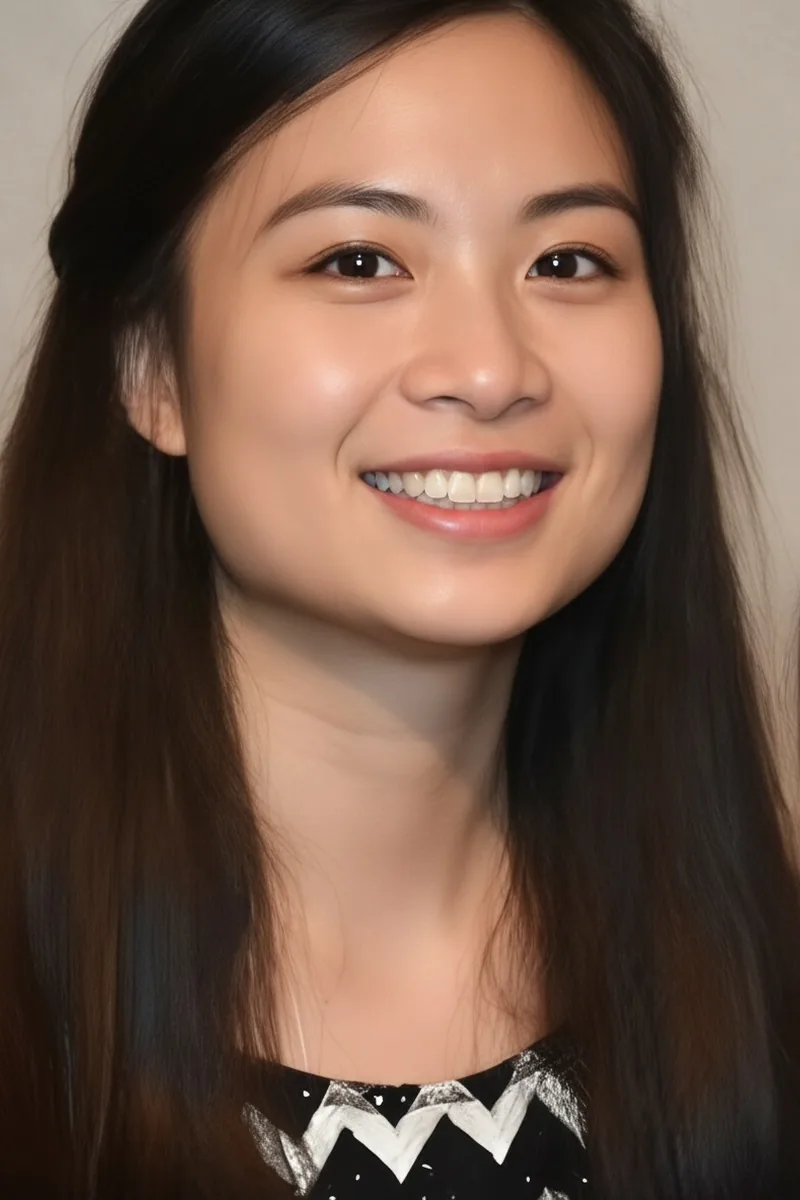
As a biochemistry major at Rice, Michelle used calculus constantly — modeling reaction rates, analyzing enzyme kinetics, interpreting area-under-the-curve problems with real lab data. She teaches derivatives and integrals by connecting the mechanics of each rule to the reasoning behind it, so students understand when and why to apply techniques like chain rule or u-substitution.
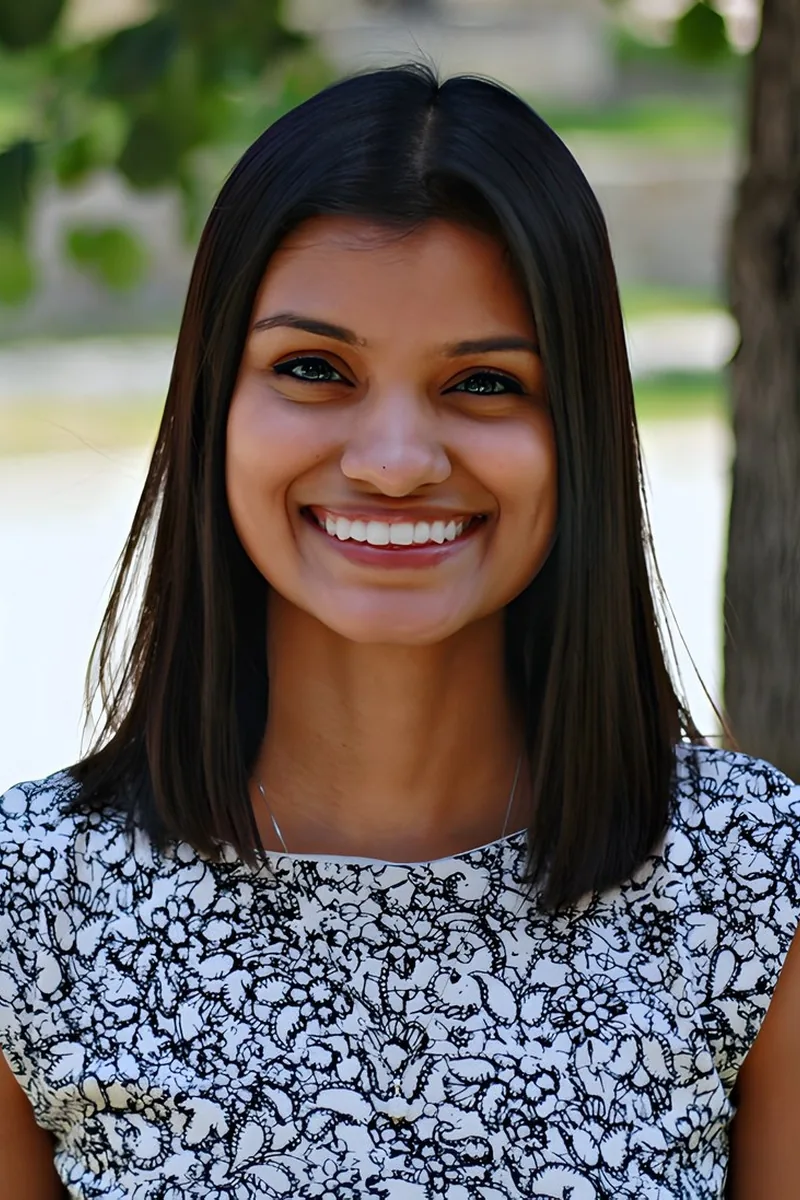
Limits, derivatives, and integrals each demand a shift in how students think about change and accumulation. Sugi's biochemistry background means she regularly used calculus to model reaction kinetics and enzyme behavior, so she can show students what these tools actually do beyond textbook exercises. She walks through each concept with concrete examples that make the abstraction tangible.
Art history and archaeology aren't typical math backgrounds, but Elena's 33 ACT composite shows she handles quantitative reasoning well, and her graduate-level research training at SMU sharpened the kind of precise, analytical thinking that early calculus demands. She breaks down the logic behind limits and derivatives methodically — the same way she'd walk through a visual analysis — making sure each concept earns its place before moving to the next.
Studying mathematics and computer science at Rice means William isn't just passing through calculus — he's built on it, using derivatives and integrals daily in contexts like algorithm analysis and multivariable optimization. That depth lets him teach everything from limit definitions through integration techniques and series convergence with the fluency of someone who actually uses the material, not just someone who once completed the course.
Cognitive science at Rice meant Adam didn't just take calculus — he used it, working through computational models of learning and decision-making where derivatives describe how the brain updates predictions in real time. That background lets him teach concepts like the chain rule and optimization by connecting them to systems that actually compute, rather than treating them as abstract symbol manipulation. His 34 ACT composite confirms the quantitative chops to back it up.
Understanding why the chain rule works — not just when to apply it — changes how students approach every problem from related rates to integration by substitution. Alexander, an Applied Mathematics major at Rice, treats calculus as a framework for thinking about change rather than a collection of procedures. That perspective makes topics like the Fundamental Theorem click in a way that sticks long after the final exam.
Tackling limits, derivatives, and integrals requires comfort with every layer of math that came before — algebra, trig, and function behavior all converge at once. Sajel's biochemistry and molecular biology coursework at Rice put her through rigorous calculus sequences, so she understands both the mechanics of differentiation and the conceptual reasoning behind theorems like the chain rule and the Fundamental Theorem of Calculus.
Biophysics at Rice means Aadith uses calculus daily — whether it's modeling protein folding dynamics, analyzing thermodynamic systems, or solving the differential equations that describe how molecules move through membranes. A 1590 SAT confirms the quantitative horsepower behind that applied experience, and he teaches integration techniques and multivariable concepts by connecting them to the physical systems where they originate.
Premed coursework at Rice University means Jessy has pushed through calculus in the context of biological modeling — growth rates, concentration changes, and the quantitative reasoning that underpins upper-level science. Her 34 ACT composite backs up that math fluency, and she teaches derivatives and integrals by connecting each rule to the kinds of problems where the math actually does something. Rated 5.0 by students.
Liz holds a psychology degree rather than a math degree, so she's honest that calculus isn't her deepest subject — but her 32 ACT composite reflects real quantitative chops, and psychology's statistical backbone means she's comfortable with the kind of rate-of-change reasoning that underpins early derivatives. She takes a structured, step-by-step approach to demystifying limit notation and slope behavior, leaning on the same analytical habits that make her effective across her other subjects.
Studying computational mathematics at Rice means Vinson isn't just tutoring calculus — he's immersed in it daily, from epsilon-delta proofs to the integration techniques that power applied math research. That fluency lets him break down topics like the chain rule or convergence tests by showing the underlying logic rather than handing students a formula sheet. His 36 ACT and 4.8 rating speak to the precision he brings to every session.
Kendall's academic background is in the arts and humanities, not mathematics, so calculus isn't her deepest subject — but a 1580 SAT demonstrates she can handle rigorous quantitative reasoning. She's particularly good at translating dense notation into plain English, walking through what a derivative or integral is actually saying before jumping into the mechanics of solving it.
Biochemistry and molecular biology at the undergraduate level means Raj has pushed through the full calculus sequence — not as an abstract math exercise, but to understand reaction rates, enzyme kinetics, and the thermodynamic models that underpin his major. That fluency with derivatives and integrals in scientific contexts lets him explain the chain rule or integration by parts with real problems attached, not just symbol manipulation. Rated 5.0 by students.
Studying economics and biochemistry at Rice means Jennifer uses calculus constantly — modeling marginal cost curves, analyzing rates of enzyme reactions, interpreting integrals as accumulated quantities. That dual-subject fluency lets her explain derivatives and integrals through multiple lenses, which is especially useful for students who need to see *why* a concept matters before the notation makes sense.
Behavioral biology at Johns Hopkins isn't just memorizing anatomy — Emmanuel's coursework and computational neuroscience research required modeling neural dynamics, fitting curves to experimental data, and thinking in terms of rates of change, all of which are calculus in practice. That hands-on fluency with derivatives and integrals means he teaches the material as a toolkit he's actually used, not a set of rules to memorize for an exam. Rated 5.0 by students.
Communication majors don't usually end up on a calculus page, and Molly is honest that this sits at the edge of her math tutoring range rather than its center. That said, her experience tutoring algebra through pre-calculus means she knows the buildup — she's especially useful for students who need someone to slow down and walk through the conceptual shift into limits and early derivative thinking before the notation starts piling up.
Working in a UTHealth research lab, Emily applies calculus daily — modeling rates of change in biological systems, interpreting integrals as accumulated quantities, and thinking about differential equations in real experimental contexts. She brings that applied perspective to limits, derivatives, and integration techniques, connecting each rule to a concrete reason it exists.
Kenneth's political science and law background means calculus isn't his deepest subject, but his LSAT training sharpened exactly the kind of logical, step-by-step reasoning that makes limits and derivatives click — breaking complex problems into smaller, sequential arguments. He brings that same structured thinking to early calculus concepts, treating each rule as something to understand and justify rather than just memorize. Holds a 5.0 rating.
Cognitive science at Rice means Natalie encounters calculus constantly — modeling learning curves, signal detection theory, and the mathematical frameworks that describe how the brain processes information over time. That daily exposure to derivatives and integrals in context gives her a practical fluency with the material, so she can unpack concepts like the chain rule or area-under-the-curve problems by connecting them to systems that actually behave that way.
Biological and physical sciences coursework means Mingee has used calculus as a working tool — computing reaction rates, modeling physical systems, and applying integrals to real measurement problems rather than treating them as abstract exercises. That hands-on scientific context gives her a concrete way to explain why the chain rule or integration by parts exists, not just how to execute the steps. Rated 5.0 by students.
Andria's degrees are in English literature and global health, not mathematics, so she's straightforward that calculus isn't her deepest subject. That said, her global health master's at Duke required biostatistics coursework — building fluency with rates of change, cumulative distributions, and the integral-based logic behind epidemiological modeling — which gives her a practical handle on core calculus concepts that purely humanities-trained tutors often lack.
Cognitive neuroscience at Penn isn't just theory — Giovanna's coursework required working through the calculus that models neural signal propagation, synaptic decay rates, and the mathematical underpinnings of brain imaging techniques. That hands-on exposure to derivatives and integrals in a scientific context means she can ground abstract calculus rules in real applications where rates of change describe something tangible. Rated 4.9 by students.
Sociology research at Rice involves more quantitative analysis than most people expect — regression models, rate-of-change interpretations in demographic data, and the kind of graph reading that maps directly onto early calculus concepts like limits and derivatives. Caio brings that applied context to tutoring, connecting the mechanics of differentiation to real patterns in data rather than leaving them as abstract exercises. Rated 5.0 by students.
Amanda's background is in languages and sociology rather than mathematics, so she's honest that calculus isn't her deepest subject — but her years teaching elementary and middle school math mean she understands how to build numerical intuition from the ground up. That skill matters most in early calculus, where grasping what a derivative actually represents often depends on how well a student internalized slope and rate of change long before they saw the formal notation.
Limits, derivatives, and integrals each build on the one before, so a shaky grasp of early concepts can snowball fast. As a biochemistry major at Rice, Malcolm uses calculus regularly in his coursework — modeling reaction rates, analyzing curves — and he walks students through each rule with the kind of concrete examples that make abstraction feel manageable.
Biomedical engineering at Rice means Theresa uses calculus daily — whether she's modeling fluid flow through prosthetic heart valves, analyzing stress-strain curves in tissue scaffolds, or optimizing device parameters through differential equations. That hands-on engineering context lets her teach integration techniques and multivariable concepts as tools with immediate physical meaning, not just abstract exercises. Rated 5.0 by students.
Bioengineering runs on calculus — from modeling drug diffusion rates to analyzing fluid dynamics in biological systems — so Casey didn't just learn integration and differentiation, she applied them constantly. She digs into the conceptual "why" behind the chain rule, related rates, and convergence tests so students can set up problems independently rather than pattern-matching from examples. For students cramming before an exam, she's also built supplemental problem sets designed to be harder than typical homework.
Public policy analysis at the graduate level is surprisingly calculus-adjacent — Briana's coursework involved rate-of-change modeling, optimization problems in resource allocation, and interpreting the quantitative outputs that drive policy decisions. She teaches derivatives and integrals by connecting them to those real-world tradeoffs, making the math feel like a tool for answering actual questions rather than an abstract exercise.
Mechanical engineering at Brown means Chelsea doesn't just remember how to differentiate and integrate — she applies derivatives to rate-of-change problems and integrals to real physical systems every week. Students working through limits, the chain rule, or related rates get someone who can explain both the theory and why it matters beyond the textbook.
Art history and child development aren't the usual path to calculus, so Sarah is straightforward that this isn't her deepest subject — but her 1430 SAT shows real quantitative ability, and her experience tutoring math from elementary through algebra means she understands the conceptual ladder students climb before reaching limits and derivatives. She's strongest at bridging that transition, making sure the algebraic reasoning underneath actually holds before new notation piles on.
Jocelyn's degrees are in history and French studies rather than mathematics, so she's honest that calculus isn't her wheelhouse. That said, her experience tutoring math across grade levels means she can walk students through the early conceptual hurdles — what a limit is really saying, how average rate of change becomes instantaneous — by slowing down the language and making sure the logic lands before the notation piles up.
Studying computer science at Vanderbilt means Xavier uses calculus constantly — from optimization problems to understanding how rates of change drive algorithms. He walks through limits, derivatives, and integrals by connecting the graphical intuition to the formal definitions, so the epsilon-delta proofs and chain rule applications actually make sense rather than feeling like arbitrary steps.
Pursuing a pure math PhD at Boston College means Jacob doesn't just know how to do calculus — he knows the theory underneath it, from epsilon-delta proofs to the formal construction of the integral. That depth lets him explain not only how to apply the chain rule or evaluate an improper integral, but why each technique works the way it does. Rated 5.0 by students.
Law school trains you to dissect complex arguments into logical sequences — and that's essentially what early calculus asks you to do with limits, continuity, and the definition of a derivative. Erik's JD from the University of Chicago built the kind of precise, step-by-step reasoning that translates surprisingly well to walking through epsilon-delta proofs or unpacking the chain rule. Rated 5.0 by students.
Chemical engineering coursework is essentially calculus applied on repeat — heat transfer equations, reaction rate modeling, fluid dynamics — so Jonathan has spent years using derivatives and integrals as everyday tools rather than abstract exercises. That engineering fluency means he can unpack topics like integration techniques in Calc 2 or the chain rule by connecting them to physical systems where the math actually drives real outcomes.
Rice University's Mathematical Economic Analysis program is calculus-intensive — optimization problems, marginal analysis, and modeling economic behavior all run on derivatives and integrals. Frances brings that firsthand fluency to her teaching, connecting the mechanics of differentiation and integration to the kinds of problems where they actually do something. Rated 5.0 by students.
Sociology research at the undergraduate level and graduate-level social work both rely on statistical modeling — interpreting rates of change in population data, analyzing trend curves, and understanding how variables shift over time — all of which are calculus concepts in disguise. Onjheney draws on that quantitative reasoning to make early topics like limits and derivatives feel grounded in real data rather than purely abstract. Her Washington University training reinforces the analytical rigor needed to walk through each step carefully.
Derivatives and integrals become far more manageable once a student sees them as extensions of ideas they already know — rates of change and accumulated area. Alexander's math degree at Rice required heavy calculus coursework, and his background in risk analysis means he can show where techniques like integration by parts or the chain rule actually get used.
Teaching EC-6 and middle school math means Joyce has spent years building the algebraic reasoning that calculus eventually rests on — understanding how slopes behave, how functions change, and why variables relate the way they do. Her English and reading background also gives her an unusual edge when it comes to decoding the dense notation and word-heavy problem setups that trip students up in early calculus. Rated 4.8 by students.
Tackling limits, derivatives, and integrals requires more than memorizing formulas — it demands understanding what's happening graphically and conceptually. Alfonso's engineering coursework means he uses calculus daily, from analyzing circuits to modeling signals, so he can show students what these tools actually do in practice. That applied perspective makes topics like the chain rule or Riemann sums feel purposeful instead of arbitrary.
Testimonials
Because the right Calculus tutor makes all the difference.
Average Session Rating – Based on 3.4M Learner Ratings
Nearby Calculus Tutors
Other Houston Tutors
Related Math Tutors in Houston
Frequently Asked Questions
Many students struggle with the transition from algebra and precalculus to Calculus because it requires both procedural fluency and deeper conceptual understanding. Common pain points include grasping the concept of limits, understanding derivatives and integrals beyond memorizing formulas, applying calculus to word problems, and visualizing how graphs relate to equations. Working with a tutor helps you move beyond just "plugging and chugging" to truly understanding why these concepts work, which makes problem-solving much more intuitive.
Your first session focuses on understanding where you are right now. A tutor will review your current coursework, identify specific topics that are unclear, and discuss your goals—whether you're aiming for a stronger grade, better test performance, or just building confidence. This assessment helps create a personalized plan targeting your exact needs, whether that's solidifying foundational concepts or tackling advanced applications.
Calculus instructors expect you to justify each step, not just arrive at an answer. Tutors teach you how to organize multi-step problems clearly, explain your reasoning at each stage, and recognize when a solution approach makes sense conceptually. This skill is especially important for free-response sections on AP Calculus exams and college-level assessments, where showing rigorous work often determines your score.
Word problems require you to translate real-world situations into mathematical language, set up the right equations, and then apply calculus concepts—it's a multi-step process that combines reading comprehension with mathematical thinking. A tutor helps you develop a systematic approach: identifying what you're solving for, recognizing which calculus tools apply (derivatives for rates of change, integrals for accumulation), and checking whether your answer makes sense in context. With practice and pattern recognition, word problems become much more manageable.
Yes. Whether you're using your school's specific textbook, preparing for AP Calculus AB or BC, or taking dual-enrollment college courses, tutors adapt to your exact curriculum and teaching style. Houston's 45 school districts use various approaches, and experienced tutors understand how to bridge different notations, problem formats, and conceptual frameworks so the tutoring aligns perfectly with what you're learning in class.
Calculus can feel intimidating because it builds on years of prior math skills, and one gap can create confusion down the line. One-on-one tutoring removes the pressure of a classroom setting and lets you ask questions without worry. As you work through problems with a tutor and start seeing patterns and connections you didn't notice before, your confidence naturally grows—and that confidence directly improves your performance on tests and assignments.
Varsity Tutors connects you with tutors who have expertise in Calculus and understand the Houston curriculum landscape. When you describe your goals—whether you're strengthening a weak grade, preparing for AP exams, or moving toward college-level math—you get matched with someone whose experience aligns with exactly what you need. This personalized matching ensures you're working with a tutor who can address your specific challenges effectively.
Many students notice clearer understanding of specific concepts within 2-3 sessions, especially when tutoring targets a particular topic like derivatives or integrals. Grade improvement and test score gains typically follow within 4-6 weeks of consistent tutoring, depending on where you're starting and how frequently you meet. The key is regular practice between sessions combined with the conceptual clarity you gain from personalized instruction.
Let’s find your perfect tutor
Answer a few quick questions. We’ll recommend the right plan and match you with a top 5% tutor.