Award-Winning Pre-Calculus Tutors
serving Miami, FL
Pre-Calculus
Tutors in Miami
Private 1-on-1 tutoring, weekly live classes for academic support, test prep & enrichment, practice tests and diagnostics, and more to elevate grades and test scores.
Based on 3.4M Learner Ratings
UniversitiesSchools & Universities
DeliveredHours Delivered
ProficiencyGrowth in Proficiency
Who needs tutoring?
No obligation. Takes ~1 minute.
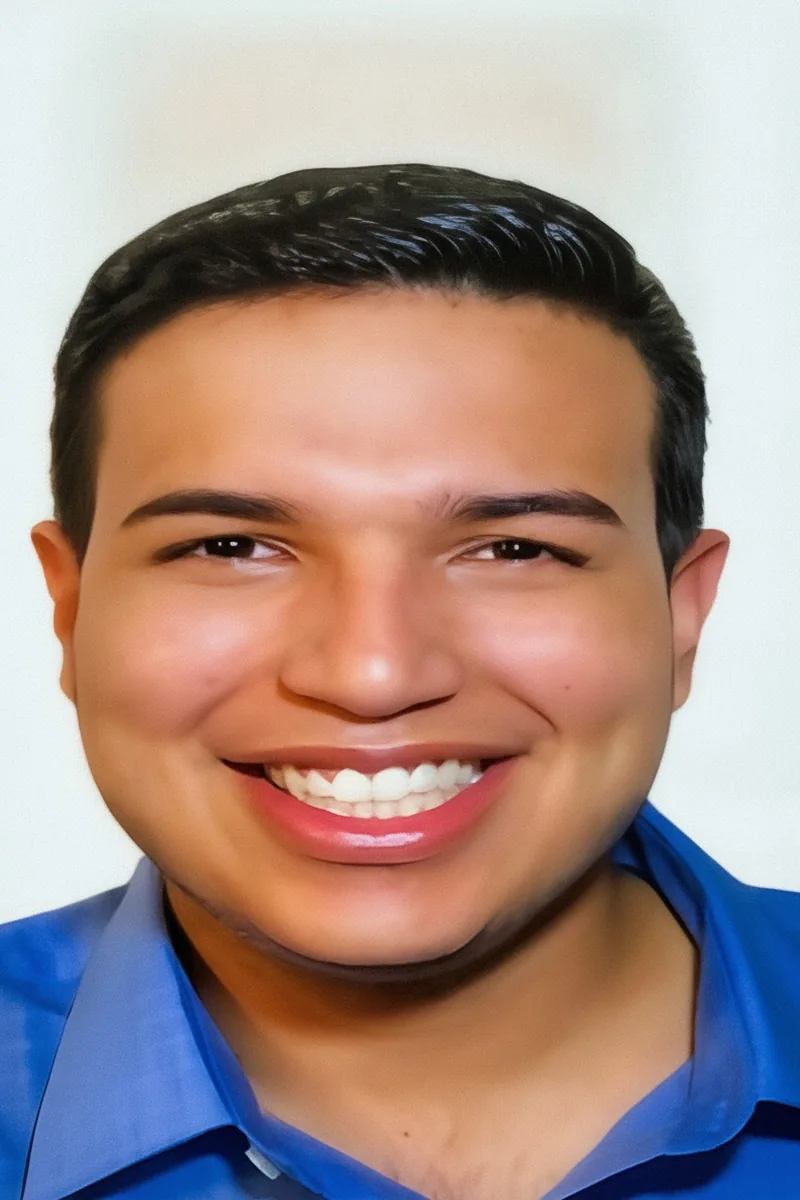
Having scored 5s on both AP Calculus BC and AP Physics C while at a Harvard-track pace of 16 AP courses, Derek built the kind of deep pre-calculus fluency — limits of rational expressions, trigonometric manipulation, composite function analysis — that only comes from leaning on those tools constantly across multiple disciplines. His computer science major adds a distinctive angle: he teaches sequences, recursive definitions, and function behavior through the algorithmic thinking that makes those concepts precise rather than fuzzy. A 1550 SAT and 4.9 rating round out the picture.
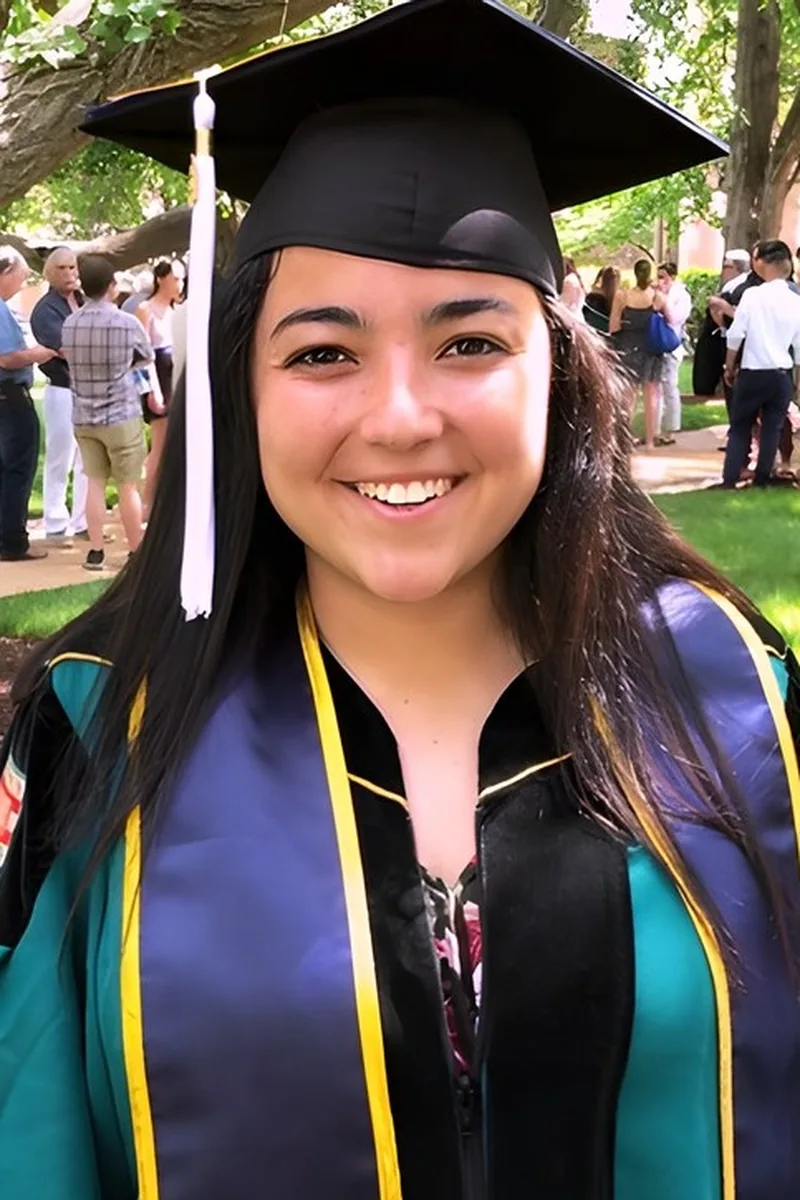
Growing up bilingual and pre-med might seem unrelated to pre-calculus, but Manuela's science prerequisites demand exactly the kind of functional reasoning this course builds — manipulating rational expressions, interpreting asymptotic behavior, and connecting algebraic structure to graphical output. She zeroes in on the transition points where students typically stall, like moving from memorizing trig values to actually understanding the unit circle as a tool. Her 1520 SAT and 5.0 rating confirm she delivers on the quantitative side.
Aerospace engineering at Princeton means Nicolas is constantly solving problems where trigonometric identities, parametric equations, and vector analysis aren't optional — they're the foundation of orbital mechanics and fluid dynamics. He teaches pre-calculus with that forward-looking fluency, breaking down how each concept slots into the bigger mathematical toolkit students will need in calculus and beyond. Holds a 5.0 rating and a 1580 SAT.
Dalila's math degree means she didn't just pass through pre-calculus — she built on it through semesters of calculus, proof-based courses, and applied problem sets that kept circling back to the same core skills: manipulating rational expressions, reasoning about function behavior, and thinking fluently in trigonometric terms. She zeros in on the specific algebraic moves that trip students up during the transition from concrete arithmetic to abstract function analysis. Her 1520 SAT reflects the same quantitative precision she brings to breaking down transformations and compositions.
Andrew's environmental biology background means he's built models with exponential growth curves, logarithmic decay, and periodic functions long before most students see them labeled as pre-calculus — he teaches those function families by connecting them to the ecological data where they actually show up. His 33 ACT and writing minor give him the rare combination of quantitative skill and the ability to explain tricky concepts like composite functions or asymptotic behavior in plain, precise language.
Biomedical engineering at UIC meant Apoorva spent semesters immersed in the signal processing and biomechanical modeling that demand real command of trigonometric functions, polar coordinates, and composite function behavior — not just surface-level familiarity. She zeroes in on the conceptual bridges between algebra and calculus, particularly how transformations and rate-of-change intuition develop through careful work with function families. Her 34 ACT and 4.6 rating reflect steady results across a wide range of math students.
Juan's industrial engineering and statistics coursework at the University of Florida means he's constantly applying the exact toolkit Pre-Calculus builds — composing functions, manipulating logarithmic and exponential expressions, and reasoning about sequences and series. He zeroes in on the algebraic fluency that makes or breaks students when calculus arrives, especially strengthening the symbolic manipulation skills that often get glossed over in class. Rated 4.9 by students.
Civil engineering at UF means Cavan is constantly applying the tools pre-calculus introduces — solving systems with matrices, modeling load distributions with trigonometric functions, and analyzing rates of change that foreshadow calculus. He teaches the course knowing exactly which skills carry forward into engineering math, so students build real understanding of topics like composite functions and graphical transformations instead of surface-level familiarity. Holds a 5.0 rating and a 1500 SAT.
The leap into Pre-Calculus often feels like learning an entirely new language: polar coordinates, trigonometric identities, limits as a preview of calculus. Veronica tackles these topics by showing how each one feeds directly into the calculus and engineering coursework she's doing at the University of Florida. She makes the "why are we learning this" question easy to answer because she uses these tools every week.
Heading to law school after finishing a business economics degree at the University of Miami, Noah brings the kind of structured logical thinking to pre-calculus that makes polynomial behavior and rational function analysis feel less like guesswork. He zeroes in on building the algebraic reasoning that connects earlier coursework to the function transformations and logarithmic properties students need before calculus. His 32 ACT confirms solid quantitative instincts across the board.
I am working towards a Bachelor of Arts in Pure and Applied Mathematics as well as a Bachelor of Arts in Astronomy and Physics. I have enjoyed studying math and science since I was in elementary school. I would always help my friends out by answering their questions about the material. For about the last five years, I have had my own tutoring business where I have tutored a wide variety of math courses from elementary school math to pre-calculus and calculus. I like to make sure my students have a complete understanding of the core concepts before going into practice questions. I have also had experience helping my peers with physics and computer science courses.
Having tutored a student through Calculus II at the University of Miami, Christine knows exactly which pre-calculus skills — especially algebraic manipulation and trigonometric foundations — make or break that transition. Her mathematics and economics double major keeps her actively working with polynomial behavior, function composition, and rate-of-change intuition, so she teaches these topics as someone still immersed in them daily. A 32 ACT confirms the quantitative instincts she brings to each session.
I am a law student, but I took an unusual route to get there. I used to attend medical school but had a change of heart in my career path. Part of this was due to my political science major (double major with biology) in college as well as a number of Spanish and other courses that I took. Tutoring is something, I feel, that has come naturally to me, even back to my high school days. My goal is to help you learn as much as you can and reach your true potential. I will work hard to make sure that this happens, as long as you put in the work, too! We will work together to tailor your learning experience to your needs.
Four years tutoring math through the Tufts Literacy Corps — covering everything from arithmetic through trigonometry — gave Jiwen a sharp sense of exactly where students' algebra skills start to buckle under the weight of pre-calculus concepts like rational functions and composite transformations. Now pursuing an Ed.M. at Harvard's Graduate School of Education, she approaches the course as a bridge-builder, connecting the algebraic reasoning students already have to the function analysis and trigonometric thinking that calculus will demand.
A physics degree gives Payal an unusual advantage in pre-calculus — she learned trigonometric functions, vector decomposition, and exponential models as essential tools for solving real problems, not as abstract textbook exercises. She breaks down topics like polar coordinates and function composition by tying them to the physical intuition she developed studying wave mechanics and projectile motion. Rated 5.0 by students.
Testimonials
Because the right Pre-Calculus tutor makes all the difference.
Average Session Rating – Based on 3.4M Learner Ratings
Practice Pre-Calculus
Free practice tests, flashcards, and AI tutoring for Pre-Calculus
Nearby Pre-Calculus Tutors
Other Miami Tutors
Related Math Tutors in Miami
Frequently Asked Questions
Pre-Calculus bridges algebra and calculus by building deep conceptual understanding of functions, which form the foundation for everything in calculus. Key topics include polynomial and rational functions, exponential and logarithmic functions, trigonometry, sequences and series, and complex numbers.
Rather than just memorizing procedures, Pre-Calculus emphasizes seeing patterns and understanding how different functions behave. This conceptual foundation is crucial—when students enter calculus, they need to recognize why derivatives and integrals make sense, not just how to compute them. A tutor can help you move beyond "plug and chug" to truly understanding how these topics connect.
Word problems are often where Pre-Calculus students struggle most, because they require translating real-world situations into mathematical expressions. Many students can solve equations procedurally but freeze when asked to set up a problem from scratch.
Personalized 1-on-1 instruction allows a tutor to show you the problem-solving strategies that work—like identifying what you're solving for, determining which function type applies, and working backwards from the answer to check your setup. A tutor can also tailor practice to the specific types of problems you encounter, whether that's optimization, rate of change, or modeling situations with functions.
Different schools and textbooks vary in how they sequence topics, emphasize certain concepts, and present trigonometry. Some programs frontload trigonometry, while others weave it throughout. Some use unit circles first, others use right triangles. These variations can be confusing if you're seeking outside help.
When you connect with a tutor through Varsity Tutors, they work with whatever curriculum your Miami school uses—whether that's Pearson, Houghton Mifflin Harcourt, McGraw-Hill, or another publisher. A tutor familiar with your specific textbook and approach can help you understand not just the math, but also how your school's materials present it, making it easier to apply tutoring help directly to your classwork.
Graphing and function transformations are visual topics, but many students learn them mechanistically—just shifting numbers around without understanding why. This makes it hard to predict what a graph looks like or solve problems that depend on that understanding.
A tutor can use sketching, technology, and step-by-step reasoning to help you see patterns in transformations (how does f(x-2) differ from f(x)? What about -f(x)?). Rather than memorizing rules, you'll develop intuition about how parameters change a graph. This visual understanding becomes essential when you start calculus and need to connect derivatives to the shape of a function.
Pre-Calculus assumes solid algebra skills—especially factoring, solving equations, and understanding function notation. If you struggled with these in Algebra 2, gaps will become painful in Pre-Calculus, where algebra is a tool you use constantly rather than the main focus.
A tutor can quickly assess where you stand and recommend whether to address foundational skills first or move forward with targeted support in Pre-Calculus. Many students benefit from both: refreshing algebra concepts while learning Pre-Calculus material. This approach prevents you from falling behind while building the confidence and skills you need to succeed.
Math anxiety is real and common, especially in Pre-Calculus where concepts become more abstract. It often stems from past negative experiences or feeling lost when material moves quickly in a classroom of 25+ students.
Personalized instruction creates a judgment-free space where you can ask questions, work at your own pace, and build competence step by step. When you understand the "why" behind Pre-Calculus concepts rather than just memorizing steps, confidence naturally grows. A tutor can also help you develop problem-solving strategies and checking methods that reduce test-day anxiety by building genuine mastery.
This depends on where you're starting and what you're working toward. Some students need help staying current with their course and see improvement in 2-3 weeks of consistent tutoring. Others are rebuilding foundational skills or preparing for exams and benefit from longer-term support.
Most students notice progress within the first few sessions once a tutor understands their learning style and specific challenges. Since Pre-Calculus is cumulative, consistent tutoring (weekly sessions are common) helps prevent gaps from snowballing. Your tutor can set clear goals with you and track progress toward them—whether that's mastering a specific unit, improving test scores, or building the confidence to participate more in class.
Let’s find your perfect tutor
Answer a few quick questions. We’ll recommend the right plan and match you with a top 5% tutor.