Award-Winning SAT Math Tutors
serving Miami, FL
SAT Math
Tutors in Miami
Private 1-on-1 tutoring, weekly live classes for academic support, test prep & enrichment, practice tests and diagnostics, and more to elevate grades and test scores.
Based on 3.4M Learner Ratings
UniversitiesSchools & Universities
DeliveredHours Delivered
ProficiencyGrowth in Proficiency
Who will be getting tutoring?
No obligation. Takes ~1 minute.
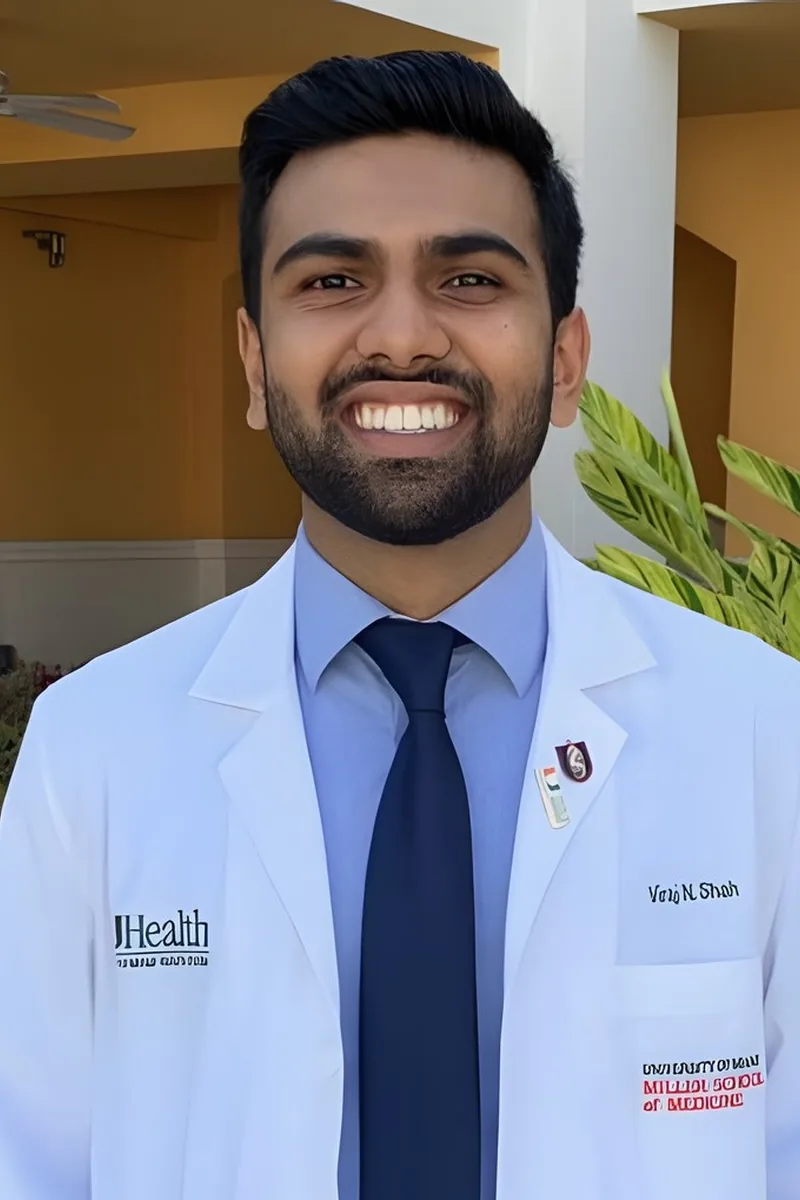
I'm a 2nd year medical student at the University of Miami. I have extensive experience tutoring in all science subjects (orgo, biology, genetics, physics), math and reading. I have been an SAT and ACT tutoring for over 6 years now at the local Boys and Girls Club. I also have extensive experience tutoring for the MCAT, from best practices to more technical skills as well. I enjoy tutoring and realize everyone learns in a unique way. I try to cater my style to my student and help them reach the full extent of their capabilities.
An 800 on the SAT Math Level 2 Subject Test and a 1550 SAT composite give Derek deep familiarity with every question type the College Board throws at students, from quadratic modeling to data interpretation. He teaches students to recognize which problems deserve full solutions and which can be solved in under thirty seconds with strategic shortcuts. Rated 4.9 by students.
I am a 22-year-old medical student. In college, I triple majored in Theoretical Mathematics, Computer Science, and Chemistry. My tutoring experience includes over a dozen classes where I was a TA or grader, many of which involved me teaching classes independently. I am looking forward to tutoring hardworking and motivated students who want to challenge themselves.
Scoring a 1550 on the SAT gave Max firsthand knowledge of how the Math section layers algebra, data analysis, and advanced math concepts into multi-step problems that punish careless mistakes. He teaches students to identify which tool each question actually requires — whether it's setting up a system of equations or interpreting a scatterplot's line of best fit — before picking up a pencil. That deliberate problem-identification step is often the difference between a 650 and a 750.
I'm an undergraduate at Princeton University working toward a degree in Mechanical and Aerospace Engineering, with the Sustainable Energy Certificate.
I'm Veena and I recently graduated from the University of Miami with a B.S. in Microbiology and Immunology with Chemistry and English Literature as my minors. I've tutored at a Math and Reading learning center in high school and became an employee of the Academic Resource Center at UM where I tutored my peers in STEM subjects. I was an assistant science teacher at a middle school for a year, and a workshop leader for chemistry classes at UM.
My tutoring sessions are interactive, patient, and highly personalized. I don't believe in a one-size-fits-all methodeach student learns differently, so I adapt my approach to match their individual pace, goals, and learning style. I focus on helping students truly understand the why behind each concept, not just memorize formulas or shortcuts. Together, we work step-by-step through problems, discussing reasoning, strategy, and underlying principles until everything clicks. My goal is to build lasting confidence and clarity. Whether a student is catching up, aiming to excel, or just trying to feel more comfortable with the material, I create a supportive environment where they can ask questions freely, think critically, and stay engaged. I also believe in strong communicationkeeping parents informed and helping students take ownership of their learning. Above all, I want my students to leave each session feeling capable, confident, and genuinely connected to what they're learning.
Dalila scored a 1520 on the SAT and brings a math major's depth to the quantitative section — she knows which algebra, geometry, and data analysis concepts the test leans on hardest and where students most often lose points. Her approach breaks each problem type into a decision tree so students can identify the fastest path to the answer under time pressure.
Most SAT Math mistakes aren't conceptual — they come from misreading what a problem is actually asking or picking the slow path to the answer. Cavan earned a 1500 SAT and approaches each practice section by categorizing problems into algebra, advanced math, and data analysis buckets so students build targeted speed where they need it most. His engineering coursework at UF keeps these skills sharp daily.
Scoring 1500 on the SAT, Veronica knows the math section inside out — from the no-calculator questions that test algebraic fluency to the data-analysis problems that reward careful reading. She teaches specific time-management strategies for each question type so students aren't just getting answers right but getting them right quickly. Her engineering background also means she can explain the underlying math, not just test-taking tricks.
The SAT Math section rewards pattern recognition more than raw computation, and Michelle's 1510 SAT score reflects how well she cracked those patterns. She breaks down problem types — from quadratic modeling to data interpretation — so students learn to identify what a question is really asking before they ever pick up a pencil.
Scoring 1520 on the SAT gave Manuela a sharp sense of which math concepts the test leans on hardest — quadratic modeling, systems of equations, and data interpretation problems that reward careful reading as much as calculation. Her pre-med coursework keeps her fluent in quantitative reasoning, and she breaks down word-heavy SAT Math questions so students stop second-guessing what's actually being asked.
Scoring high on SAT Math means knowing when a problem is testing algebra versus number properties versus coordinate geometry — and picking the fastest path to the answer. Jenna earned a 1560 SAT and brings particular clarity to the no-calculator section, where students often panic over problems that have elegant shortcuts built into them. She's rated 5.0 and covers everything from quadratic modeling to data analysis with equal confidence.
I'm now an undergraduate at the University of Florida and I'm seeking a Bachelor's in Mathematics and a Doctorate in Pharmacy.
I am currently studying Medicinal and Biological Chemistry at Palm Beach Atlantic University in West Palm Beach, Florida, where I have just finished my sophomore year. After graduation, I hope to attend medical school, and one day become a physician. For over a year, I have been tutoring my peers in chemistry and anatomy & physiology through a peer tutoring program at my university. My favorite subject to tutor is by far chemistry, because it is extremely rewarding to help a student understand a difficult concept and then watch them be able to work though problems and apply those concepts on their own. I believe that students can only succeed if they understand the purpose of what they are learning, so I always make it a point to explain the "why" behind important concepts and ideas. This way, the student can develop a strong foundation of knowledge and can become more confident in their understanding of the subject. In my free time, I enjoy working out, reading exciting novels, and exploring my home city of Miami, Florida.
Payal scored a 1530 SAT and approaches the Math section the way a physicist would — by identifying what concept each problem is actually testing beneath its wording. She's especially sharp on the topics where students lose points late in each section: systems of inequalities, quadratic modeling, and data analysis with scatterplots. Her 5.0 rating comes from making those higher-difficulty problems feel systematic rather than intimidating.
Dylann treats SAT Math like a puzzle — her word, not ours — which means she actually enjoys digging into the section's trickier multi-step problems instead of just drilling formulas. Her psychology background gives her a sharp read on why students second-guess correct answers or misread carefully worded questions, and she teaches specific habits to short-circuit those patterns. Her own 1470 SAT and 5.0 rating back up the approach.
I am a law student, but I took an unusual route to get there. I used to attend medical school but had a change of heart in my career path. Part of this was due to my political science major (double major with biology) in college as well as a number of Spanish and other courses that I took. Tutoring is something, I feel, that has come naturally to me, even back to my high school days. My goal is to help you learn as much as you can and reach your true potential. I will work hard to make sure that this happens, as long as you put in the work, too! We will work together to tailor your learning experience to your needs.
I am excited to return the favor. I recently graduated with a bachelors in Cell and Molecular Biology with a minor in Biochemistry. I love to tutor biology, it is so fascinating to learn about. I am constantly learning more and am amazed by the questions students ask me that urge me to keep learning. I also enjoy tutoring en Espanol which I learned from my parents growing up and continued to learn throughout high school.
A lot of SAT Math prep wastes time drilling problems students can already solve. Jairo identifies the specific question types — whether it's passport-to-advanced-math quadratics or tricky percent-change word problems — where each student actually loses points, then builds targeted practice around those gaps. He earned a 1480 SAT and approaches test prep with the analytical rigor of his economics training.
I am certified in the state of Florida to teach Middle Grades Mathematics 5-9. I have a bachelors degree in Finance and Masters degree in Sustainable Real Estate Development from Tulane University. I previously worked in real estate for two years prior to moving to Miami and was involved as a mentor with Big Brothers Big Sisters for much of that time.
I am a rising senior at Duke University who is Pre Med and majoring in Asian and Middle Eastern Studies. I was born and raised in Miami FL and went to public school until college (Sunset Elementary, GW Carver Middle and Coral Reef Senior High for those from Miami). I decided to start tutoring because I would not be on this path had I not had good teachers supporting me along the way. For that reason I want to be able to help others achieve their goals without academics being a huge hurdle.
Industrial engineering is basically applied optimization — minimizing costs, maximizing efficiency, modeling systems with algebra and statistics — which means Tyler spends his coursework solving the same types of problems the SAT Math section packages as "real-world" word problems about rates, percentages, and linear models. His 1470 SAT and math minor give him both recent test fluency and the conceptual depth to explain *why* a particular setup works, especially on the geometry and quadratic questions where students tend to second-guess themselves. Rated 5.0 by students.
Marissa scored a 1460 SAT composite and tackles the Math section by sorting problems into the categories College Board actually uses: Heart of Algebra, Passport to Advanced Math, and Problem Solving with Data Analysis. She zeroes in on the algebra and function manipulation questions that make up the bulk of the score, then builds speed on the no-calculator section where mental math shortcuts matter most. Students get targeted practice on the exact question types where their points are hiding.
I am a current senior at Coral Reef Senior High in the International Baccalaureate program and will be headed to Dartmouth College in the fall to study environmental science and public policy. I am a native Spanish speaker, and have taken the highest level classes available to me. I am very passionate about science and history, and have tutored those subjects extensively with the Social Studies Honors Society and Science Honors Society at my school. I have also tutored for the past three years with Tutoring For Tomorrow, a local charity that donates tutoring revenue to local nonprofits in need. Having recently finished the college application process, I know the intricacies of the system and am uniquely suited to help other students with it.
I am a student of the University of Central Florida currently working on a PhD in Digital Media. As a tutor for Varsity Tutors, I have the unique ability to be able to combine two of my greatest passions--writing, and helping others. This is a combination of interests that I've been working with for a while now whether in High School tutoring children from my old elementary school, mentoring middles schoolers and high schoolers as part of Write Away, and tutoring college students on essay writing with Tutor.com. When it comes to tutoring, I specialize in reading and writing, though find my preference to be mostly in writing as it is a subject I am both strong in as well as take a personal interest in as an aspiring writer. Outside of writing stories, however, interests of mine including consuming media of all types such as books, movies, television shows, or video games, enjoying all so long as they have good stories to back them up.
I am currently an Ed.M. candidate at Harvard Graduate School of Education. For the past four years, I have been a math tutor for the Tufts Literacy Corps, focusing on arithmetic, algebra, trigonometry and geometry. I have also taught Earth and Space Science at Breakthrough Collaborative, violin at the Tufts Community Music Program, and worked with students from age seven to seventeen.
Scoring a 1570 on the SAT, Perry knows exactly where the math section tries to trip students up — especially on quadratic and exponential word problems that test conceptual understanding rather than computation speed. He teaches efficient strategies for data analysis and passport-to-advanced-math questions that turn tricky phrasing into straightforward algebra. Rated 5.0 by students.
I am currently pursuing a Bachelors of Science in Aerospace Engineering at the Georgia Institute of Technology. I am also a graduate of the high school International Baccalaureate Program. I have informal experience tutoring high school physics, but am most passionate about tutoring students for the ACT standardized test, having had extensive experience preparing for standardized tests throughout high school. I am eager to aid students in boosting their scores before their upcoming college applications, an important milestone in many students' lives. In my free time, I also enjoy playing tennis.
Scoring 1500 on the SAT gave Priya a clear picture of what the Math section actually tests versus what students think it tests. She zeroes in on the algebra and data analysis questions that make up the bulk of the score, breaking down multi-step word problems into manageable pieces so students stop second-guessing themselves.
Chemical engineering coursework at Johns Hopkins means Joshitha solves math problems all day that are far harder than anything on the SAT — so she knows exactly which algebraic shortcuts and number-sense instincts make the difference when time pressure strips away the safety net of a calculator. Her 1580 SAT backs that up, and she zeroes in on the geometry and trigonometry questions that many high scorers still fumble by teaching students to sketch, label, and reason visually before jumping to computation. Rated 5.0 by students.
No subject, no test, and no question is bigger than you. By the end of our time together, I hope to make you see that my only job was really just to make you see--you really had it in you, all along. If there's any subject in which you truly believe you suck--that you're just the worst, and that nothing will ever help you improve--then don't you dare give up until you've given me a call! I'm a writer, but I love numbers, and nothing makes me more proud than helping students overcome their biggest challenges. I've scored near-perfect on both standardized tests, and I've been helping students understand how to improve their own scores ever since. I'm also capable of tutoring advanced Music Theory topics, as well as Spanish and Mandarin Chinese
I am a rising sophomore at Columbia University studying philosophy. I specialize in tutoring high school math, English, and the SAT. This past year I tutored English and math at an elementary/middle school near Columbia. In my free time, I enjoy listening to and playing jazz in a band at Columbia as well as exploring NYC.
A certified math teacher with a 1430 SAT composite, Anthony approaches SAT Math prep by teaching the underlying reasoning behind each problem type — so when a linear system shows up disguised as a word problem about ticket sales, students already know how to set it up. His background in mathematics education means he builds lasting problem-solving instincts, not just test-day tricks.
I am definitely qualified to tutor. However, more than being qualified, what I've always hoped to achieve as a tutor is to develop the ability in my tutees to become strong independent learners with effective study strategies that they can take with them wherever they go. My motto is "Study Smarter, not just Harder!"
Computer science majors solve math problems all day — and Parker's dual focus in CS and studio art means he attacks SAT Math questions from two angles: the systematic, algebraic reasoning that drives the Heart of Algebra block, and the spatial intuition that makes geometry and graph-based problems click faster. His 1600 SAT speaks for itself, and a 5.0 tutoring rating suggests he's just as good at explaining the shortcuts as he is at using them.
Jessica scored a 1540 SAT and uses that firsthand experience to pinpoint where students lose points — whether it's coordinate geometry, advanced algebra, or the no-calculator section's emphasis on number properties. She builds targeted practice around the specific question types a student struggles with rather than grinding through full-length tests repeatedly. Rated 4.8 by her students.
Scoring a 1570 SAT composite required near-perfect execution on the Math section, and Harrison knows exactly where the test hides difficulty — nested functions, systems with no solution, and multi-step word problems that punish students who skip setting up equations. His interdisciplinary science background means he can connect abstract algebra concepts to real modeling scenarios, which is increasingly what the SAT rewards.
Testimonials
Because the right SAT Math tutor makes all the difference.
Average Session Rating – Based on 3.4M Learner Ratings
Practice SAT Math
Free practice tests, flashcards, and AI tutoring for SAT Math
Nearby SAT Math Tutors
Other Miami Tutors
Related Test Prep Tutors in Miami
Frequently Asked Questions
Score improvement depends on your starting point and how consistently you work with a tutor. Students typically see gains of 50-150 points within 8-12 weeks of focused preparation, though some improve more quickly if they identify specific weak areas early. The key is targeted practice on the question types and concepts that challenge you most—a tutor can pinpoint these gaps and create a personalized study plan rather than having you spend time on topics you already understand.
Many students struggle to complete all 58 questions in 80 minutes, often rushing through the harder problems and making careless mistakes. A tutor can teach you which question types to tackle first, how to quickly identify when a problem is taking too long, and strategic approaches like plugging in answer choices or working backwards. Practice with timed sections helps build the pacing skills you need so test day doesn't feel overwhelming.
Taking a full practice test under timed conditions is the best starting point—it reveals which question types and concepts are costing you points. Common trouble areas include algebra and systems of equations, advanced functions, geometry, and data analysis. Varsity Tutors connects you with tutors who analyze your practice test results and past work to create a customized study plan, so you spend time where it matters most instead of reviewing topics you've already mastered.
Most students benefit from taking 3-5 full practice tests under authentic timed conditions spaced throughout their prep timeline. The first one establishes your baseline, the middle ones help you track progress and test strategies, and the final one builds confidence. Between full tests, working on targeted problem sets for specific topics is more efficient than constantly retaking entire exams. A tutor can recommend which practice tests to use and help you analyze what went wrong on questions you missed.
Test anxiety often comes from feeling unprepared or encountering unfamiliar question formats. Working with a tutor desensitizes you to test-like problems through repeated practice and exposure—the more familiar the format feels, the calmer you'll be. Tutors also teach concrete strategies like taking deep breaths when you hit a hard problem, skipping it strategically, and coming back to it later. Knowing you have a plan and understand the material goes a long way toward reducing anxiety on test day.
Not necessarily. The calculator section allows calculators, but some problems are actually faster and more accurate to solve by hand or mentally. A tutor can help you develop judgment about when a calculator speeds you up versus when it slows you down. They'll also teach you how to use your calculator efficiently—knowing which functions to use and how to catch common input errors. Many students waste time on the calculator section simply because they haven't practiced being strategic about when to use it.
Most students benefit from 8-12 weeks of consistent preparation, meeting with a tutor 1-2 times per week while doing independent practice in between. If you're starting significantly below your target score or need to build foundational skills, 3-4 months gives you room to work through material thoroughly. The best timeline depends on your starting score, target score, and test date. Varsity Tutors connects you with tutors who help you create a realistic prep schedule based on your specific situation and goals.
Let’s find your perfect tutor
Answer a few quick questions. We’ll recommend the right plan and match you with a top 5% tutor.