Award-Winning Greek Tutors
serving Springfield, MA
Greek
Tutors in Springfield
Private 1-on-1 tutoring, weekly live classes for academic support, test prep & enrichment, practice tests and diagnostics, and more to elevate grades and test scores.
Based on 3.4M Learner Ratings
UniversitiesSchools & Universities
DeliveredHours Delivered
ProficiencyGrowth in Proficiency
Who needs tutoring?
No obligation. Takes ~1 minute.
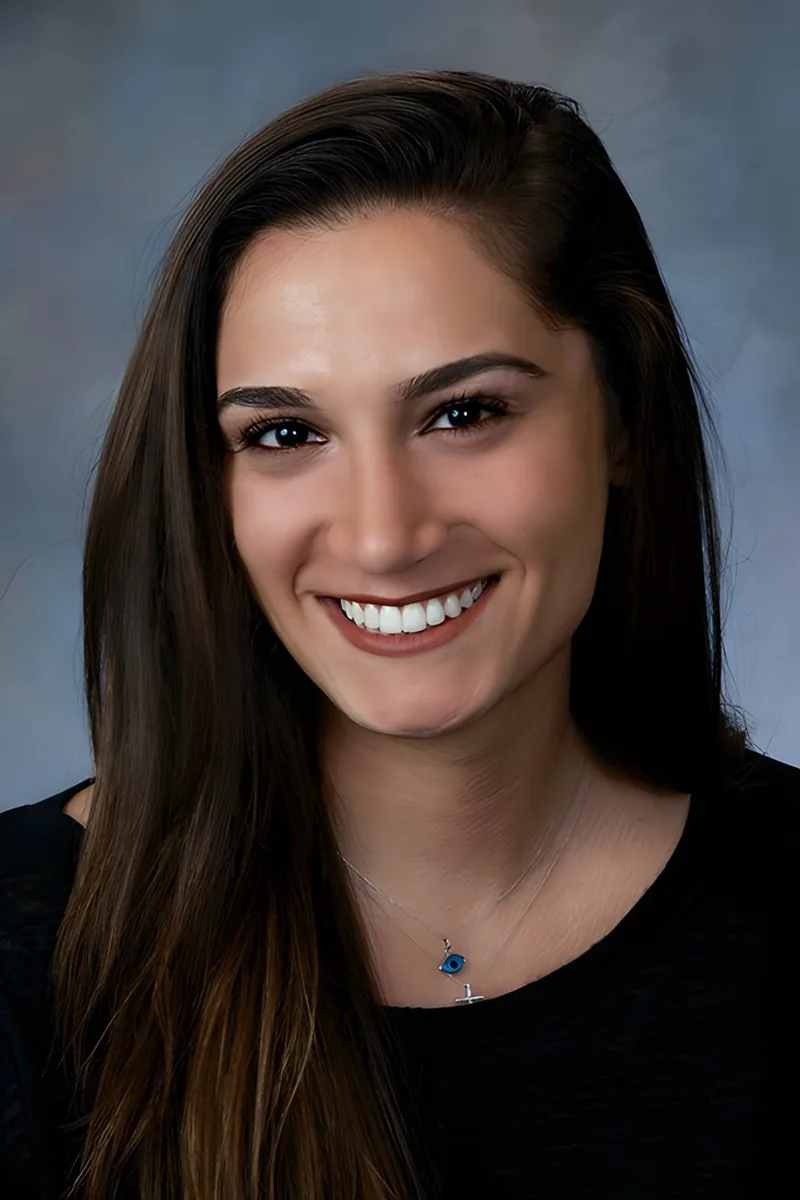
Pinelopi is a native Greek speaker, which gives her an intuitive grasp of pronunciation, idiomatic phrasing, and the rhythms of the language that textbook-only learners rarely develop. She teaches vocabulary and grammar by connecting new forms to how the language actually sounds and flows in conversation, making retention far more natural. Rated 5.0 by students.

Earning her BA in Classics with a Greek focus means Emily didn't just study the language — she spent years working through Homeric hexameter, Attic prose, and everything in between. She unpacks declensions, verb conjugations, and syntax by connecting grammar to actual passages from authors like Plato and Xenophon, so students see how the pieces function in real texts.
Biology majors absorb more Greek than they realize — Raphael's Cornell coursework in biological sciences meant constantly encountering Greek-rooted terminology across anatomy, taxonomy, and biochemistry, building an intuitive sense for how Greek morphemes combine to carry precise meaning. He applies that pattern-recognition skill to teaching vocabulary and word formation, breaking compound terms into familiar roots so students can decode unfamiliar words on sight. Rated 5.0 by students.
Few tutors can offer what Malina brings to ancient Greek: a Yale intensive classics degree built around reading Homer, Plato, and the tragedians in the original. She walks students through the trickiest parts of the language — middle voice, aspect distinctions, participle chains — by grounding each concept in real passages rather than isolated grammar drills.
Reading ancient Greek requires patience with a writing system, grammar, and syntax that feel alien at first — middle voice, aorist tense, particles that shift meaning in subtle ways. Adam's philosophy training brought him directly into Greek texts by Plato and Aristotle, giving him hands-on experience with the language as it's actually used in classical literature. He walks students through parsing strategies that make complex sentences manageable one clause at a time.
Greek's blend of unfamiliar alphabet, complex verb morphology, and flexible word order can overwhelm students fast. Antony's graduate training in Classics included extensive work with Greek texts, so he breaks down everything from middle-voice verbs to participial chains with the fluency of someone who's spent years reading Homer and Plato in the original.
A medical education builds surprising fluency with Greek — Jordan's neuroscience and medical training meant constantly dissecting Greek-rooted terminology across anatomy, pharmacology, and pathology, giving her a practical understanding of how Greek word construction carries meaning. She teaches vocabulary and morphology by connecting unfamiliar forms to the scientific and medical terms students may already recognize, turning the language's complexity into a decoding exercise rather than pure memorization.
Ancient Greek is Michael's scholarly home turf — his PhD research at Penn centers on Greek and Roman philosophy, which means he reads Plato and Aristotle in the original as part of his daily work. He breaks down Greek's intimidating complexity (middle voice, aorist aspect, participial chains) by showing students how each grammatical feature actually shapes meaning in the texts they're translating.
Stephanie's dual English and History training at Cornell — and her current graduate work at Penn — means she's spent years encountering Greek roots woven through academic texts, literary criticism, and historical primary sources. She teaches Greek vocabulary and word construction by linking unfamiliar forms to the English derivatives students already know, turning the language's complexity into something recognizable and systematic.
Sr's psychology degree cultivated the kind of careful textual analysis that transfers well to learning Greek — picking apart sentence structure, tracing word roots, and recognizing patterns across inflected forms. While Greek isn't her primary teaching area, she applies a systematic, analytical approach to vocabulary acquisition and grammar that makes unfamiliar declension patterns feel like logical puzzles rather than chaos.
Catherine's MA in Latin means she's deeply familiar with the grammatical architecture Greek and Latin share — case systems, participial constructions, and verb aspect all map across the two languages in ways that accelerate learning. She teaches Greek morphology by drawing on those structural parallels, so students who've seen ablative absolutes in Latin can immediately grasp genitive absolutes in Greek without starting from scratch. Rated 5.0 by students.
Philosophy majors who actually engage with primary sources inevitably end up tangling with Greek — and Andrew's BA in Philosophy means he's spent serious time working through Plato and Aristotle in their original language, not just in translation. He teaches Greek vocabulary and sentence structure by anchoring them to the philosophical texts where students encounter the language most, making unfamiliar constructions feel purposeful rather than arbitrary.
A PhD in Mathematics and Computer Science might seem far from Greek, but Irene's academic career included deep engagement with Greek mathematical terminology and the logical structures that underpin the language's grammar. She treats declensions and conjugations as formal systems — similar to how proofs work in mathematics — which clicks especially well for analytically minded students tackling the language for the first time.
Greek isn't Joey's primary teaching area, but his time studying at the University of Glasgow — where classical languages have a long institutional tradition — gave him exposure to Greek roots, grammar structures, and their influence on English and scientific terminology. He approaches language learning with the same systematic rigor he applies to engineering problems, breaking declensions and vocabulary into repeatable patterns.
I am confident in both my quantitative and verbal skills, I consider my primary strength to lie in standardized test-taking, the process of which I profoundly enjoy, strange as it is to say.
Ancient Greek throws students curveballs that Latin doesn't — middle voice, the aorist tense, a definite article with its own declension, and an alphabet to master before anything else. Shawn holds a BA in Ancient Greek and tackles these challenges by grounding each new concept in how the language actually functions in texts from Homer to Plato. His 5.0 rating speaks to his ability to make a notoriously difficult language feel approachable.
Few tutors can read Greek in the original, but Christian's Classical Civilizations degree required exactly that — working through Homer, Plato, and the tragedians in their own language. He breaks down the complexities of Greek morphology, from middle-voice verbs to participle chains, by showing how each grammatical feature carries meaning that translations often flatten.
Nathaniel spent a year in Israel studying spoken Ancient Greek, which gives him an unusual edge: he understands the language not just as grammar tables but as something people actually used. He walks students through verb conjugations, middle-voice constructions, and participle chains by connecting each form to how Greeks actually expressed ideas — making paradigms stick instead of blurring together.
Testimonials
Because the right Greek tutor makes all the difference.
Average Session Rating – Based on 3.4M Learner Ratings
Nearby Greek Tutors
Other Springfield Tutors
Related Languages Tutors in Springfield
Frequently Asked Questions
Greek is a challenging language that requires consistent practice with grammar, vocabulary, and translation skills—areas where personalized 1-on-1 instruction makes a real difference. A tutor can focus on your specific weak areas, whether that's mastering verb conjugations, understanding complex syntax, or building reading fluency. With Springfield's 12.6:1 student-teacher ratio, many students benefit from the focused attention a tutor provides to accelerate progress.
Most students struggle with Greek's complex grammar system—particularly the case system, verb tenses, and irregular forms—as well as the unfamiliar alphabet and pronunciation patterns. Reading comprehension also becomes difficult when students haven't built a strong foundation in vocabulary and sentence structure. A tutor can break down these challenging concepts into manageable steps and provide targeted practice to build confidence in each area.
Your first session is focused on understanding your goals, learning style, and current level of Greek proficiency. The tutor will assess which areas need the most work—whether that's foundational grammar, vocabulary building, translation skills, or test preparation—and develop a personalized plan. This diagnostic approach ensures every future session builds directly toward your specific needs.
Tutors are familiar with Greek programs across Springfield's 8 school districts and can align their instruction with your specific course requirements and textbooks. Whether you're in a Classical studies program, AP Greek, or college-prep Greek, a tutor can supplement classroom learning, clarify difficult concepts, and prepare you for exams and assignments. They can also help bridge gaps if you've missed material or need accelerated progress.
Many students notice improved confidence and understanding within 2-3 weeks of consistent tutoring, especially when focusing on specific problem areas like grammar or vocabulary. More significant progress—such as improved test scores or translation fluency—typically develops over 2-3 months of regular sessions. The timeline depends on your starting point, frequency of tutoring, and how much you practice between sessions.
For students actively taking Greek classes, meeting 1-2 times per week typically provides enough support to keep up with coursework and build skills progressively. If you're preparing for an exam or tackling a particularly challenging unit, more frequent sessions may help. Your tutor can recommend a schedule based on your goals and current performance level.
Varsity Tutors matches you with an expert tutor who has experience teaching Greek and understands the needs of Springfield students. You can specify your goals, preferred meeting times, and any particular areas you'd like to focus on. The matching process ensures you get a tutor whose expertise and teaching style align with your learning needs.
Absolutely. Translation is a core skill in Greek, and tutors can teach you strategies for approaching unfamiliar passages, understanding complex sentence structures, and building the vocabulary recognition needed for fluency. Regular practice with real texts, combined with feedback on your translations, helps you develop the confidence and accuracy needed for both classroom assignments and standardized tests.
Let’s find your perfect tutor
Answer a few quick questions. We’ll recommend the right plan and match you with a top 5% tutor.