Award-Winning 9th Grade Biology
Tutors
Who needs tutoring?
FEATURED BY


TUTORS FROM
- YaleUniversity
- PrincetonUniversity
- StanfordUniversity
- CornellUniversity
Award-Winning 9th Grade Biology Tutors

Certified Tutor
5+ years
Pallavi
The jump into 9th-grade biology can feel overwhelming when students encounter cell organelles, mitosis, and basic genetics all in the first semester. Pallavi earned three degrees at Penn — including a neurobiology-focused BA and a Master's in Biology — so she knows exactly which details matter and w...
University of Pennsylvania
Master's in Biology
University of Pennsylvania
Bachelor of Arts in Biology (Neurobiology concentration)
Certified Tutor
5+ years
Karista
Ninth grade biology is where students first encounter the logic of living systems — how cells divide, how traits get inherited, how energy flows through ecosystems. Karista brings a PhD-level understanding of these processes but explains them at a pace and depth that fits a first-year biology studen...
University of North Texas
Master of Science, Environmental Science
Oklahoma State University-Main Campus
Bachelor of Science, Biochemistry
University of Windsor
Doctor of Philosophy, Environmental Science

Certified Tutor
6+ years
Emily
For most ninth graders, biology is their first real encounter with scientific reasoning — forming hypotheses, reading data tables, and understanding why correlation isn't causation. Emily's M.S. in Education shaped how she introduces these skills alongside content like cell structure and genetics, s...
Johns Hopkins University
Master of Science, Education
Millersville University of Pennsylvania
Bachelor in Arts, Psychology
Certified Tutor
6+ years
Remy
Cell division trips up a lot of 9th graders because they try to memorize each phase of mitosis without understanding what's actually happening to the chromosomes. Remy's neuroscience background at Oberlin means she can unpack the logic behind processes like DNA replication and cellular transport so ...
Oberlin College
Bachelor in Arts, Neuroscience
Certified Tutor
6+ years
Mariam
Ninth grade is where biology goes from "fun animal facts" to actual science — learning how cells divide, how traits are inherited through Punnett squares, and how natural selection reshapes populations over time. Mariam excels at making that transition feel exciting instead of overwhelming, connecti...
Indiana University-Bloomington
Bachelor of Science, Biology, General
Certified Tutor
6+ years
Ritu
Ritu's biology background stretches from molecular and cell biology all the way to ecology and evolution — which is exactly the range a 9th-grade course demands in a single year. She breaks down topics like photosynthesis and Mendelian genetics by walking through each process step by step, making su...
UNC Chapel Hill
Bachelor in Arts, Biology, General

Certified Tutor
6+ years
Brittany
Ninth grade biology sets the groundwork for every science class that follows, and the jump from middle school can feel steep. Brittany approaches it by anchoring abstract ideas — like mitosis or ecological energy flow — in concrete, visual explanations that stick. Her breadth across biology subfield...
Duke University
Bachelor of Science, Biology, General
Certified Tutor
2+ years
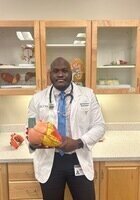
Malik
As a second-year medical student with a strong foundation in science and a passion for education, I specialize in making tough subjects easier to understand. I excel in math, biology, physics, and other challenging topics that often intimidate students and I genuinely enjoy helping others master th...
University of North Carolina at Charlotte
Bachelor's
Certified Tutor
9+ years
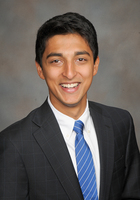
Jai
I'm a recent Stanford graduate (Electrical Engineering and Computer Science), and have been working at a major Management Consulting firm for a few years now. I personally scored a 2360 (out of 2400) on the SAT and 35 on the ACT and was successful in gaining admission to several top universities. I'...
Stanford University
Bachelors in Electrical Engineering and Computer Science

Certified Tutor
Kate
I'm available to tutor biology, chemistry, physics, math from Algebra up through AP Calculus, SAT test prep, and French. I've been tutoring students in science and math for 7 years. I also spent 8 months working and studying in France, and have tutored high school and adult students in French. When ...
Massachusetts Institute of Technology
Masters, Environmental Engineering
Massachusetts Institute of Technology
Bachelors
Top 20 Science Subjects


Meet Varsity Tutors Experts
Connect with highly-rated educators ready to help you succeed.
Jessica
College Algebra Tutor • +51 Subjects
I am a licensed physician from Florida who is currently changing careers. I graduated from the University of Pennsylvania in 2009 and have extensive tutoring and editing experience. While a student, I became a certified writing tutor through the Critical Writing Department. Since I completed my writing requirement at the University prior to matriculating, I was the first freshman tutor to be accepted into this selective program. The tutoring program involved a preliminary peer-tutor training course prior to beginning tutoring, in order to certify that I had the appropriate background to provide professional feedback to fellow students on their literary works and projects. After graduation, I worked for a full-service learning center where I created and implemented high school lesson plans for home-schooled students, provided academic support for students ranging in ages from 8 to 20 years old, and taught group and individual standardized testing preparation classes. I have also assisted students with application essays for various undergraduate and graduate programs.
Rhea
AP Statistics Tutor • +49 Subjects
I am a current student at the University of Chicago. I am working towards a Bachelor of Science in Biological Sciences, and I am on the pre-medical track. I am extremely passionate about tutoring, and I have several years of experience tutoring students in my high school's learning center in various subjects as well as tutoring private clients in Standardized Test preparation. Given that I graduated high school recently, I have taken several Standardized Tests and high school subjects myself, so I have a comprehensive understanding of not only how to tutor these subjects and exams, but also what it is like to take them. While I have a wide range of interests and am able to tutor various subjects, I am most passionate about tutoring in Standardized Test preparation (including ACT, SAT, SAT Subject Tests, and AP Exams), Biology, Chemistry, Math, and Spanish. I truly believe that students should have the opportunity to learn in the way that works best for them, and I love being able to help them succeed by creating a comfortable tutoring environment in which we can best assess their particular needs and use strategies specific to them. My passion for learning drives everything that I do, and tutoring is the platform that I use to try to spread that passion to others. In my free time, you can find me playing badminton, listening to music, or baking something (hopefully) delicious.
Jeffrey
Pre-Calculus Tutor • +29 Subjects
I am enrolled in the Mechanical Engineering PhD program at Rice University which will begin Fall 2020, and I am hoping to return to academia as a professor after earning my PhD. In the meantime, I am looking to share my passion for gaining knowledge, specifically in STEM, by educating the up and coming members of such a great field. I have experience tutoring both Calculus and Physics at Notre Dame, as well as experience as a Student Assistant for Differential Equations and Mechanics. I believe the key to learning is much deeper than learning to solve problems and that seeking knowledge is one of the best means for personal improvement.
Erika
Pre-Algebra Tutor • +36 Subjects
I am available to tutor middle and high school math, history and test prep. I have tutored math and history in the past and I previously taught a test prep course at a school in Hanoi, Vietnam. I have a lot of experience teaching all the need-to-know tricks to doing great on the SATS/ACTS! When I am not in school myself, I love rowing, equestrian and exploring my new city of Boston! I look forward to meeting and working with you soon!
Tony
Calculus Tutor • +28 Subjects
I am a recent graduate of Yale University and incoming first year medical student at Columbia University. Originally from the DC area, I have always had a passion for science and medicine and pursued a degree in Biology while at Yale. During the 2008-2009 academic year, I tutored science, math, English, history, and Mandarin Chinese part-time with a DC-based tutoring company. At Yale, I worked as a freshman counselor to provide academic and career advice to incoming freshmen. I have taken both SAT and MCAT test prep classes and am familiar with both tests as well as the preparation necessary to score well. My personal career goals include attending medical school to pursue either immunology/infectious diseases or psych/neurology, teaching biology at the university level, and working in public/global health with either the CDC or the WHO.
Annie
Pre-Algebra Tutor • +28 Subjects
I am currently a second year medical student. I was a Physiological Sciences major at UCLA (class of 2015), and pursued research during my gap year between undergrad and medical school.
Samantha
Pre-Algebra Tutor • +38 Subjects
I'm a first-year medical student and recent graduate from Duke University, where I studied Global Health Determinants, Behaviors, and Interventions. From running a piano program at a nonprofit children's theatre to private tutoring in math, science, and standardized test prep, I enjoy helping my students become confident and self-sufficient learners! Hobbies: photography, travel, reading, music, writing, running, art, books, traveling
Earnest
Pre-Algebra Tutor • +26 Subjects
I am comfortable with either setting. I'm confident that I can help you (or your student) achieve to the best of their ability, so please don't hesitate to get in touch!
Sharon
Pre-Algebra Tutor • +29 Subjects
I am a graduate of the University of Chicago, and I will be starting a graduate program at Columbia in August. I am about to complete a year of service with City Year, an education non-profit that places young adults into under-served schools. As a City Year member, I worked full-time in the classroom with middle-school students who were in approximately the 10th percentile for math (meaning they score lower than 90% of students). One-fourth of those students were able to grow around 15 percentile points by the end of the year! Hobbies: reading, cooking, gardening, music, art, nature, books, writing
MaryAnn
Calculus Tutor • +21 Subjects
I am a published author who has enjoyed “coaching” our daughter, as she navigated through high school, college and graduate school. I mentor college juniors who are seeking careers in financial services, and I serve as a peer resource to professionals who are transitioning from private industry to the nonprofit sector. Hobbies: reading, cooking, writing, books, music, art, travel
Top 20 Subjects
Frequently Asked Questions
Cell structure and function is often the biggest hurdle—understanding organelles and their roles requires visualization skills many students haven't developed yet. Photosynthesis and cellular respiration are close seconds because they involve abstract energy transfers and chemical processes that feel disconnected from real life. Students also struggle with taxonomy and classification systems (remembering kingdom, phylum, class, order, family, genus, species) and grasping how natural selection actually works beyond memorizing the phrase. A tutor can break these down into digestible pieces, use analogies, and connect them to observable examples so the concepts stick.
Many 9th graders can follow lab instructions but struggle to understand *why* they're doing each step or how to interpret results meaningfully. A tutor helps students design experiments with clear hypotheses, identify variables correctly, and draw conclusions based on actual data rather than guessing what the answer 'should be.' This builds real scientific reasoning—students learn to think like biologists, not just memorize procedures. Tutoring also helps students communicate findings clearly in lab reports, which is a critical skill for high school science.
Understanding should always come first. A student who memorizes that mitochondria is the 'powerhouse of the cell' without grasping that it breaks down glucose into usable energy will forget it and struggle on exams. The best approach is learning *why* structures exist and *how* processes work, then using strategic repetition and practice problems to reinforce that understanding. A tutor helps students build mental models—visualizing a cell membrane as a selective gatekeeper, or photosynthesis as a plant's way of capturing sunlight—so memorization becomes a natural byproduct of genuine comprehension.
Visualization is critical in biology because you can't see DNA replication or enzyme-substrate interactions happening in real time. Tutors use multiple strategies: drawing and labeling diagrams repeatedly, using physical models or analogies (like lock-and-key for enzymes), watching high-quality animations, and having students explain concepts out loud while sketching. Breaking down complex processes into step-by-step sequences—like showing photosynthesis as 'capture light, split water, make glucose'—makes abstract ideas concrete. The more students engage multiple senses and create their own visual representations, the stronger their understanding becomes.
Beyond content knowledge, the best biology tutors excel at breaking down complex systems into understandable parts and explaining *why* biology matters. They should be comfortable with lab work and the scientific method, able to create or find quality visuals and models, and skilled at asking questions that push students to think critically rather than just recite facts. They also understand common misconceptions—like thinking evolution is random or that photosynthesis and respiration are opposites—and know how to address them directly. Strong tutors adapt their explanations based on how each student learns best, whether that's through diagrams, analogies, or hands-on activities.
Effective exam prep goes beyond cramming facts. A tutor helps students practice applying concepts to new scenarios—like predicting how an organism would adapt to environmental changes, or explaining why a particular mutation might be beneficial. They work through past exams or practice problems, identifying patterns in question types and helping students recognize what each question is really asking. Tutoring also builds confidence by ensuring students understand the 'big picture' of major units (like the flow of energy through ecosystems or how DNA controls traits) so individual facts fit into a coherent framework. This approach leads to better retention and stronger performance on both multiple-choice and short-answer questions.
For struggling students, tutors focus on building foundational understanding—ensuring they grasp basic cell structure before tackling photosynthesis, or understanding what a gene is before diving into inheritance patterns. For on-level students, tutoring fills gaps and deepens thinking, moving beyond 'what happens' to 'why and how' questions. For advanced students, tutors challenge them to make connections across units, explore extensions like genetic engineering or evolution in action, and develop the analytical skills needed for honors or AP Biology. Personalized instruction means each student gets exactly the support they need to move forward, whether that's review, challenge, or something in between.
When students see how photosynthesis powers the food chain, or how natural selection explains antibiotic resistance in bacteria, abstract concepts suddenly feel relevant and memorable. A tutor connects topics to current events and student interests—exploring how genetic engineering creates disease-resistant crops, how the immune system fights COVID-19, or how ecosystems respond to climate change. These connections make learning feel purposeful rather than just academic, boost engagement, and help concepts stick because they're anchored to real situations students care about. Understanding the 'so what?' of biology transforms it from a list of facts to memorize into a lens for understanding the living world.
Connect with 9th Grade Biology Tutors
Get matched with expert tutors in your subject