Award-Winning IB Chemistry HL
Tutors
IB Chemistry HL
Tutors
Private 1-on-1 tutoring, weekly live classes for academic support, test prep & enrichment, practice tests and diagnostics, and more to elevate grades and test scores.
Based on 3.4M Learner Ratings
UniversitiesSchools & Universities
DeliveredHours Delivered
ProficiencyGrowth in Proficiency
Who needs tutoring?
No obligation. Takes ~1 minute.
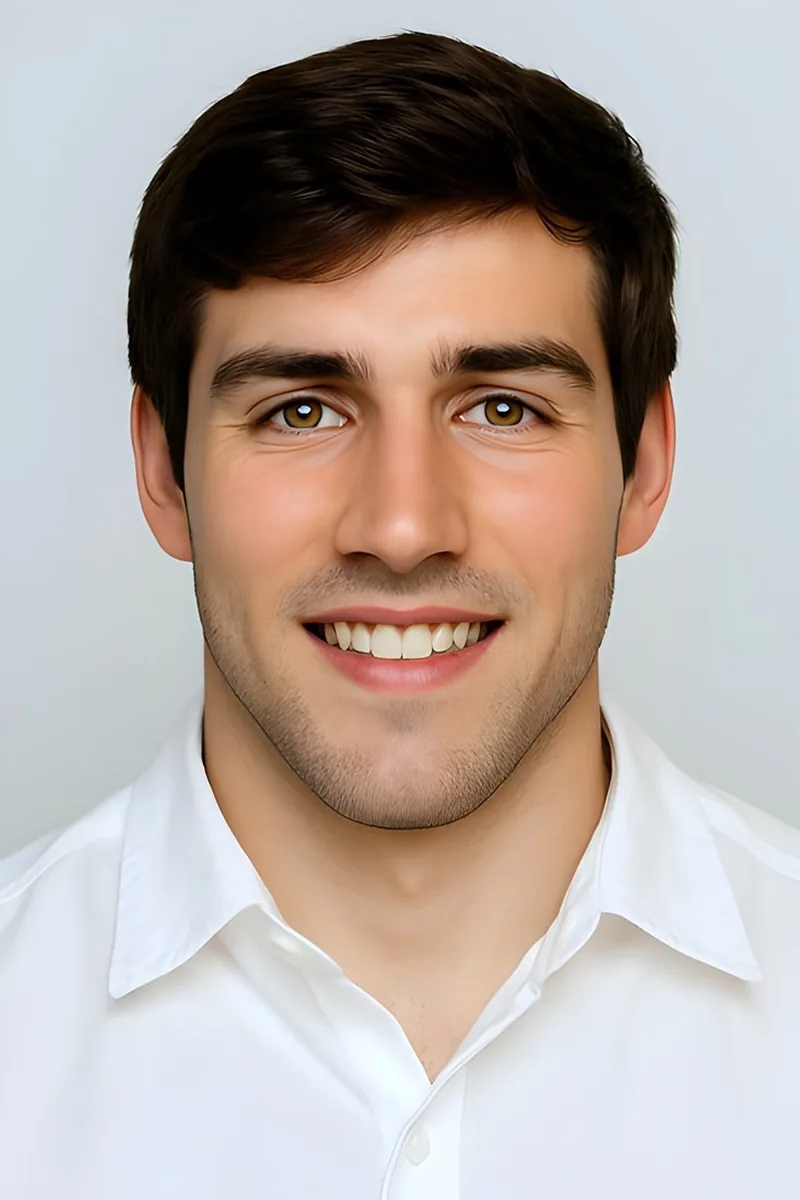
A chemistry major at Harvard heading to Columbia Medical School, James has the academic depth to handle HL's most demanding content — from advanced energetics and acid-base equilibria to the organic reaction pathways that dominate Paper 2's multi-step problems. He teaches the underlying reasoning behind mechanisms so students can work through unfamiliar synthesis questions on exam day, not just reproduce memorized reactions. Rated 4.9 by his students.
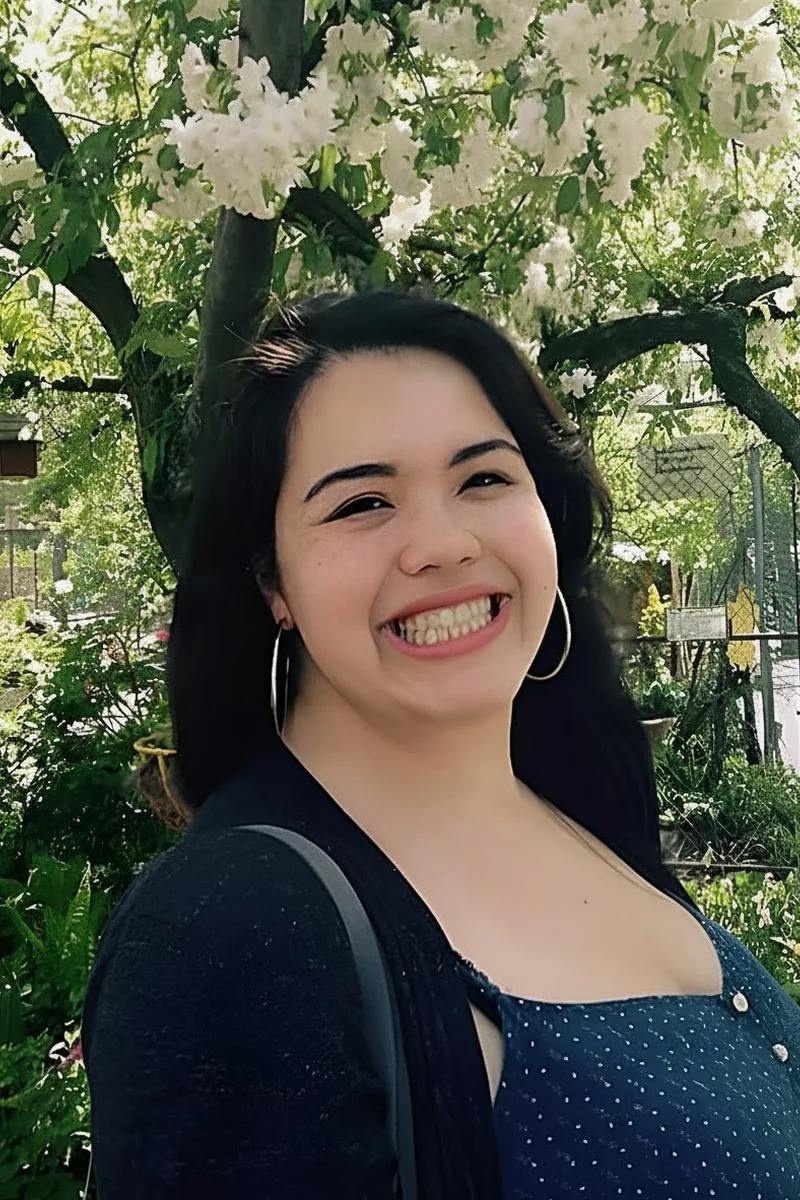
HL Chemistry's deeper dive into topics like hybridization, reaction kinetics, and option modules demands a tutor who can explain mechanisms, not just procedures. Sarah's biology degree from Brandeis and her daily experience teaching high school chemistry give her fluency across organic and biochemistry pathways that HL students encounter in the later units. She's especially effective at unpacking multi-step equilibrium and thermodynamics problems where students need to synthesize several concepts at once.
Shawn's M.S. in Chemistry gives him the depth to tackle HL's most calculation-heavy units — particularly the thermodynamic cycles and Hess's law problems where students need to track multiple enthalpy changes without losing signs or stoichiometric ratios. He teaches students to map out each step before computing, turning what feels like a wall of numbers into a logical sequence. Rated 4.9 by his students.
The jump from SL to HL Chemistry — particularly the added depth in organic chemistry, transition metals, and equilibrium calculations — catches many students off guard. Emerson has direct experience with the IB HL curriculum and approaches these tougher units by connecting molecular-level reasoning to the kinds of multi-step problems that appear on Paper 2. His pre-med science background at UChicago means he's still working with this material daily.
The jump from SL to HL Chemistry hits hardest in topics like energetics, equilibrium, and organic reaction mechanisms, where the math gets heavier and the reasoning more layered. Karista tackles these with the depth her PhD training allows — she unpacks Hess's law problems, buffer calculations, and spectroscopic analysis by tying each to the bigger picture of why atoms and molecules behave the way they do. She holds a 5.0 rating from her students.
I am applying to medical schools to attend Fall 2016 and I like to play basketball, go backpacking and volunteer with youth in my free time.
HL Chemistry's toughest sections — energetics, redox equilibria, organic mechanisms — demand both conceptual understanding and precise calculation under time pressure. Zhenrui completed Columbia's premed chemistry sequence alongside his engineering degree, giving him the kind of cross-disciplinary fluency that makes complex topics like hybridization theory or electrochemical cells more intuitive for students.
HL Chemistry's toughest sections — equilibrium constants, electrochemistry, and multi-step organic synthesis — require layering earlier concepts onto new material without losing the thread. Sidra approaches these by building explicit connections between topics, like showing how Gibbs free energy ties together the enthalpy and entropy students already know. Her persistence in re-explaining a mechanism or calculation from a different angle pays off when exam pressure hits.
Cornell's biological sciences program required Jared to work through the same advanced chemistry that HL students face — energetics, acid-base equilibria, and organic mechanisms — alongside daily lab work that made those concepts tangible. He breaks down HL's notoriously dense calculation chains by teaching students to identify what each step is actually asking before plugging in numbers. Rated 4.8 by his students.
The HL extensions — second-order kinetics, buffer calculations, transition metal chemistry — are where many IB Chemistry students start losing confidence. Michael studied these topics rigorously as a Chemistry & Chemical Biology major at Cornell, so he can walk through the trickiest HL problems with the kind of depth that turns confusion into genuine understanding. He's rated 5.0 by his students.
HL Chemistry's toughest sections — acid-base equilibria, redox electrochemistry, and spectroscopic analysis — demand that students think quantitatively and conceptually at the same time. Diptesh is actively studying these exact topics in his NYU chemistry concentration, which means he can explain a buffer calculation or a splitting pattern from recent firsthand experience. His 4.9 rating speaks to how clearly that translates for IB students.
A PhD in Chemistry means Justin has spent years living inside the very topics that make HL brutal — from advanced organic mechanisms and spectroscopy to the physical chemistry concepts underlying electrochemistry and kinetics. He's particularly strong on the quantitative side, where his physical chemistry specialization lets him unpack rate law derivations and Gibbs free energy calculations with the kind of precision Paper 2 demands. Rated 5.0 by his students.
The jump from SL to HL Chemistry is where topics like energetics, equilibrium, and organic reaction mechanisms get genuinely difficult. Micaela's pre-med coursework at Auburn took her through advanced chemistry, and she unpacks multi-step problems — acid-base titration curves, redox balancing, enthalpy cycles — by teaching the reasoning behind each step. She carries a 4.9 rating across her students.
Going through the full IB diploma program herself — including HL sciences — Maria knows exactly where the curriculum ramps up and where students start losing confidence, especially in the organic chemistry and equilibrium units that dominate Paper 2. Her biological sciences background keeps her fluent in the chemistry that overlaps with biochemistry, like reaction energetics and acid-base systems, and she prioritizes making sure students feel comfortable flagging confusion early rather than letting gaps compound. Rated 5.0 by her students.
HL Chemistry topics like orbital hybridization, buffer calculations, and multi-step organic mechanisms require a depth of understanding that the textbook alone rarely provides. Brittany earned her IB Diploma with Higher Level coursework and is now pursuing a chemistry degree at UVA, so she approaches these concepts from both the IB framework and a university-level perspective. Her method is Socratic — she asks questions that force students to reason through problems rather than pattern-match.
The jump from SL to HL Chemistry hits hardest in topics like energetics (Born-Haber cycles, entropy calculations) and organic reaction mechanisms, where surface-level understanding breaks down quickly. Palak brings a biochemistry background and medical school training that make these higher-level concepts second nature — she unpacks the reasoning behind each step so students can tackle unfamiliar exam questions with confidence.
HL Chemistry's toughest sections — organic reaction pathways, spectroscopic analysis, and advanced equilibrium — reward students who understand mechanisms rather than memorize outcomes. Kimberly studied biochemistry at UNC Chapel Hill, which means she can trace an organic synthesis or explain buffer chemistry from firsthand academic experience. She holds a 4.9 rating across her students.
A physics degree builds the kind of quantitative instinct that IB Chemistry HL leans on heavily — thermodynamics, kinetics, and electrochemistry all demand comfort with mathematical modeling that goes beyond plug-and-chug. Payal applies that physics-trained rigor to HL's calculation-heavy papers, breaking down problems like Gibbs free energy or rate expressions into the underlying logic rather than rote formulas. Rated 5.0 by her students.
The jump from SL to HL Chemistry — especially topics like energetics, acid-base equilibria, and option modules — catches many students off guard. Rishi studied these same systems at an advanced level during his chemical engineering program at NYU, where courses in thermodynamics and reaction kinetics went well beyond what IB covers. He unpacks HL-level calculations by tying each one back to the molecular behavior driving it.
HL Chemistry adds layers that SL students never see — second-order kinetics, buffer calculations, expanded organic mechanisms — and the depth jump is real. Tedros's university-level chemistry training means he can unpack topics like hybridization or entropy changes with the rigor the HL exams demand. He also knows how to structure IA experiments so the personal engagement criterion doesn't become an afterthought.
Testimonials
Because the right IB Chemistry HL tutor makes all the difference.
Average Session Rating – Based on 3.4M Learner Ratings
Top 20 Science Subjects


Top 20 Subjects
Frequently Asked Questions
Students typically find equilibrium calculations, organic chemistry mechanisms, and thermodynamics conceptually challenging because they require connecting multiple abstract concepts simultaneously. Balancing redox equations, understanding reaction kinetics (especially rate laws and activation energy), and mastering stoichiometry with limiting reagents are also common pain points. Additionally, the transition from memorizing formulas to applying them in unfamiliar contexts—a key IB expectation—trips up many students who haven't developed strong problem-solving frameworks.
Lab work is crucial—it comprises the Internal Assessment (IA), which accounts for 20% of your final grade, and requires strong experimental design, data analysis, and scientific reasoning skills. Tutors can help you design rigorous experiments, identify sources of error, understand uncertainty and significant figures, and write clear, evidence-based conclusions. They can also help you connect lab observations to theoretical concepts, ensuring you're not just collecting data but truly understanding the chemistry behind your results.
Mechanisms require visualizing how electrons move and bonds break and form—something that's abstract and hard to picture without practice. Students often memorize reaction types (SN1, SN2, E1, E2) without understanding when and why each occurs, leading to mistakes on unfamiliar problems. A tutor can help you develop a systematic approach: predicting mechanism types based on substrate, nucleophile strength, and solvent, then drawing arrow-pushing diagrams confidently. This shifts you from memorization to genuine understanding of reactivity patterns.
Equilibrium problems require fluency with ICE tables, Ka/Kb expressions, and Le Chatelier's principle—but many students struggle because they don't recognize which type of problem they're facing. Tutors break this down by teaching you to identify whether you're calculating pH of a weak acid, finding Kc from experimental data, or predicting shifts in equilibrium. With structured practice, you'll develop pattern recognition so you can quickly set up the right equation and avoid calculation errors that lose easy marks.
IB exams emphasize scientific reasoning and application over pure recall—you'll see questions asking you to predict outcomes, explain mechanisms, or analyze data from unfamiliar contexts. Paper 1 and 2 test conceptual understanding with short-answer and extended-response questions, while Paper 3 includes practical scenarios and calculations. Tutors help you practice explaining your thinking clearly, justifying predictions with chemical principles, and avoiding common reasoning errors like confusing correlation with causation in data analysis.
Thermodynamics requires understanding abstract concepts like enthalpy, entropy, and Gibbs free energy—and then connecting them to predict spontaneity and equilibrium position. Many students memorize ΔG = ΔH - TΔS without grasping what entropy really means or why temperature affects spontaneity. Tutors help by using real-world examples (why ice melts in warm water, why reactions become spontaneous at high temperatures) and building intuition through problem-solving, so you can predict outcomes rather than just plug numbers into equations.
Beyond deep content knowledge, an effective tutor understands IB's emphasis on scientific reasoning and can help you explain your thinking clearly—critical for exam success. They should be skilled at breaking down abstract concepts (like molecular orbital theory or reaction mechanisms) into visual, intuitive explanations, and experienced in helping students design rigorous experiments for the IA. They'll also know the IB syllabus inside out and can identify which topics are frequently tested and which reasoning patterns appear across papers.
Yes—tutors can guide you through the entire IA process: choosing a researchable question, designing a rigorous experiment with proper controls, collecting and analyzing data, and writing clear conclusions that connect results to theory. They can help you identify and quantify sources of error, understand uncertainty calculations, and ensure your write-up demonstrates scientific thinking rather than just describing what you did. This support is especially valuable since the IA requires both strong chemistry knowledge and strong scientific communication skills.
Let’s find your perfect tutor
Answer a few quick questions. We’ll recommend the right plan and match you with a top 5% tutor.