Award-Winning Quantum Physics
Tutors
Quantum Physics
Tutors
Private 1-on-1 tutoring, weekly live classes for academic support, test prep & enrichment, practice tests and diagnostics, and more to elevate grades and test scores.
Based on 3.4M Learner Ratings
UniversitiesSchools & Universities
DeliveredHours Delivered
ProficiencyGrowth in Proficiency
Who needs tutoring?
No obligation. Takes ~1 minute.
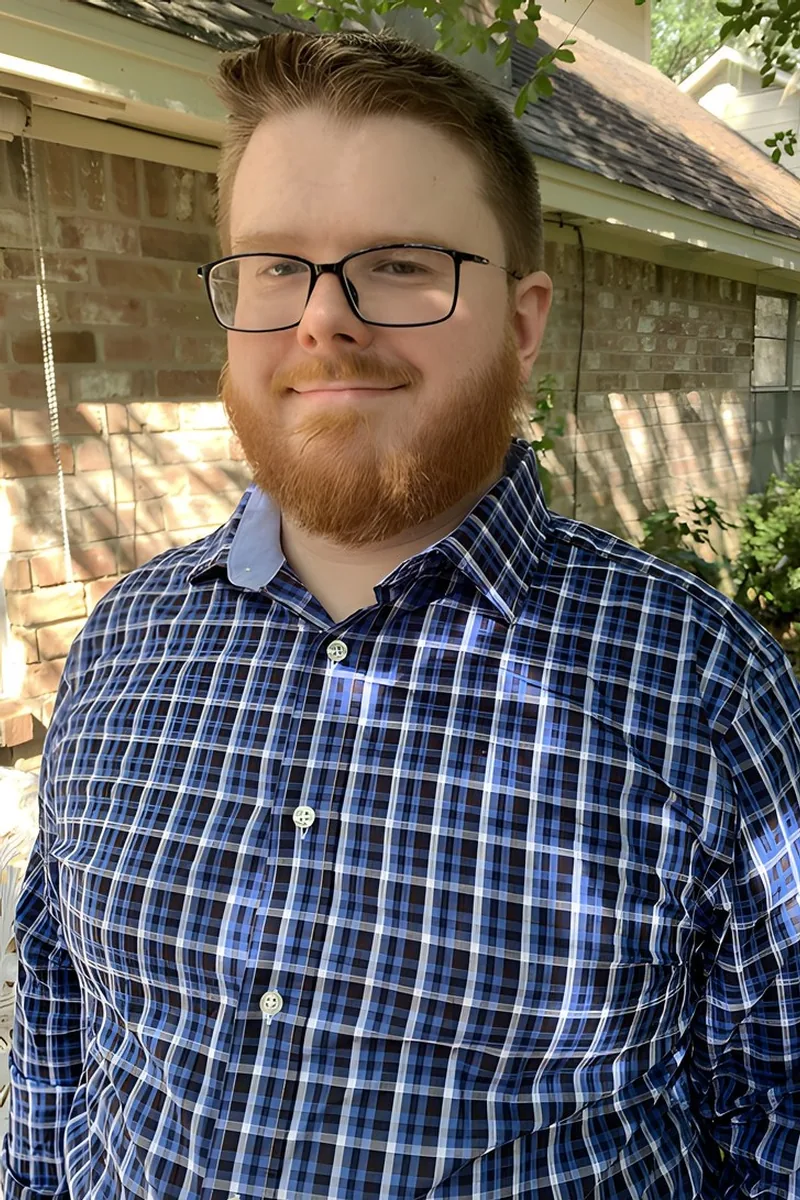
Michael's PhD in physics from Michigan included the full quantum sequence and years of teaching undergraduates how to reason through wave behavior, interference, and the transition from classical to quantum thinking — particularly in lab settings where students confront phenomena like polarization and diffraction firsthand. That hands-on teaching background means he breaks down topics like the uncertainty principle, energy eigenstates, and measurement in terms of the physical experiments that motivated them, not just the formalism. Rated 4.7 by students.
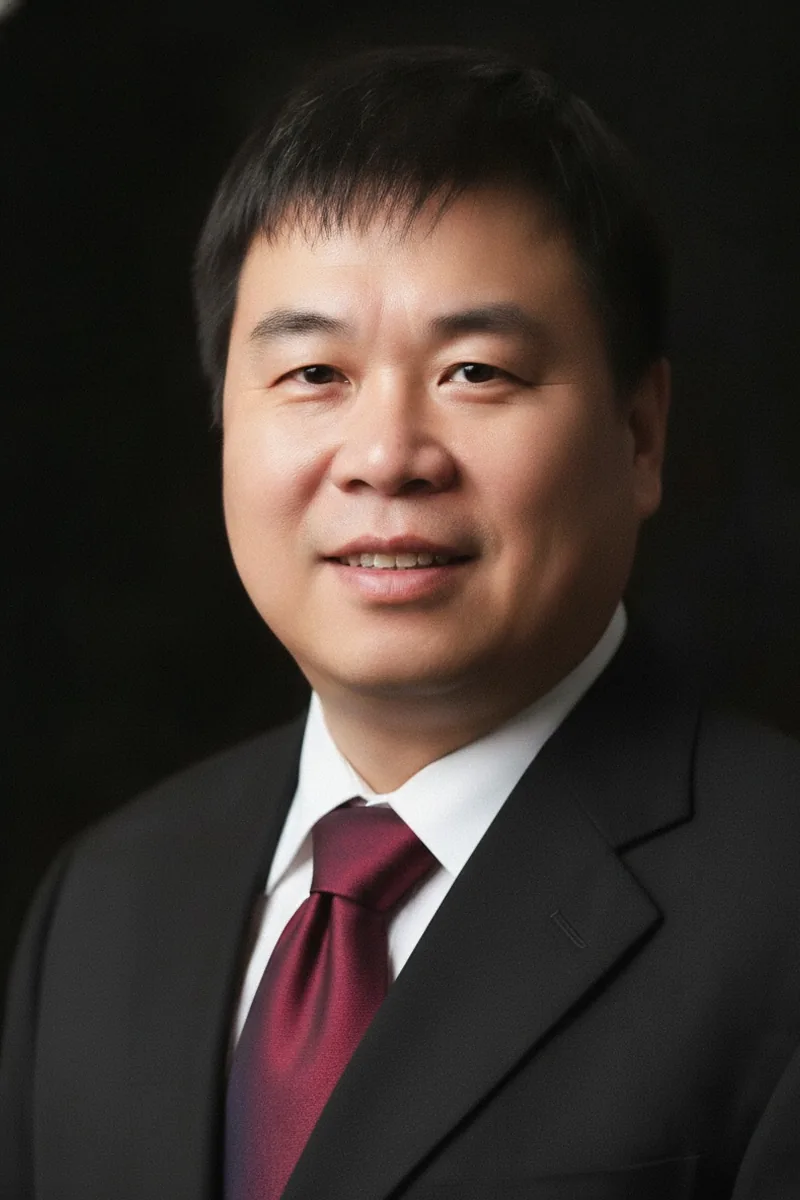
Few tutors can walk a student through the Schrödinger equation, spin operators, and perturbation theory with genuine research-level understanding. Zhengdong earned his PhD in physics and digs into the linear algebra and probability frameworks that make quantum mechanics feel less abstract — connecting Hilbert spaces and eigenvalue problems to measurable physical predictions.
Larkin's physics degree from Haverford built the foundation — wave functions, probability amplitudes, the postulates — and his mechanical engineering master's at Penn added the applied math muscle to tackle Hamiltonians and time-dependent perturbation problems without flinching. He teaches quantum physics by tying the abstract formalism back to the physical systems it was invented to describe, so concepts like tunneling and energy quantization feel motivated rather than handed down. Holds a 5.0 rating.
Pallavi's neuroscience training at Penn — where she studied how neurons signal, how ion channels gate, and how brain imaging relies on quantum-level phenomena — gives her an applied entry point into topics like wave-particle duality and energy quantization that pure physics majors sometimes skip past. She teaches the conceptual logic behind probability amplitudes and superposition by grounding them in the biological and physical systems where quantum effects actually show up.
Building lasers from scratch as a hobby — aligning optics, designing circuits, working with coherent light — gives Sam a hands-on intuition for the quantum phenomena most students only see as equations on a board. His dual physics and mathematics degrees mean he can walk through the formalism of operators, eigenstates, and probability amplitudes while keeping the physical picture grounded in how photons and particles actually behave. Rated 5.0 by students.
Most students struggle with quantum physics not because the ideas are impossibly hard, but because the math and the physical intuition feel like two separate languages — Maxwell's dual degree in mathematics and physics means he speaks both fluently. He tackles everything from the postulates and probability amplitudes to the operator formalism by showing how the linear algebra isn't just notation but the actual structure of quantum reality. Rated 5.0 by students.
Currently pursuing a graduate degree in physics with an eye toward theoretical particle physics, Jesse works daily with the quantum formalism — from state vectors and operators to the symmetry principles that govern subatomic interactions. That active research context means topics like spin, entanglement, and the path from Dirac notation to actual calculations aren't abstract memories but tools he's using right now.
A PhD in applied mathematics paired with a mechanical engineering degree gives Samuel an unusually strong grip on the linear algebra and differential equations that underpin quantum physics — from solving the Schrödinger equation to working with Hermitian operators and their eigenvalue spectra. He teaches the formalism as a coherent mathematical structure rather than a collection of strange rules, which makes concepts like superposition and measurement feel less like magic. Rated 5.0 by students.
The jump into quantum physics is disorienting — suddenly position is a probability distribution and operators replace classical variables. Eitan tackles the formalism head-on, walking through the Schrödinger equation, eigenvalue problems, and Dirac notation with enough mathematical rigor to build real competence. His physics degree and additional work in special relativity and physical chemistry give him a broad foundation for connecting quantum concepts across disciplines.
Most students stumble in quantum physics not because the math is impossible but because they can't tell which classical assumptions to let go of — and when. Burhanuddin has privately tutored quantum mechanics alongside his physics degree at Georgia Tech, where working through the formalism daily means he can pinpoint exactly where a student's classical intuition is creating confusion and rebuild the reasoning from Dirac notation and probability amplitudes up. Rated 5.0 by students.
Studying theoretical and mathematical physics means Eamonn didn't just encounter quantum concepts — he lived inside the formalism, working through Hilbert spaces, commutation relations, and the full operator treatment that most introductory courses only sketch. As a current PhD physics student, he brings that depth to topics like spin, entanglement, and time evolution, making the leap from classical to quantum reasoning feel structured rather than bewildering. Rated 4.9 by students.
Having completed two full semesters of physics at Johns Hopkins alongside his pre-med coursework, Michael encountered quantum concepts like wave-particle duality and energy quantization in the context of understanding atomic structure and spectroscopy — the applied side that makes the abstraction feel purposeful. He teaches the subject by anchoring unfamiliar ideas to the physical systems students can visualize, building from photoelectric effect basics toward the probability-driven logic that replaces classical thinking.
I am no longer needed.
Dual degrees in physics and mechanical engineering from Columbia mean Nadine didn't just pass through quantum physics — she worked through the full formalism twice, once from the theoretical side and once through its engineering applications in semiconductor behavior and nanoscale systems. That double exposure makes her especially effective at demystifying the Schrödinger equation and probability distributions, since she can explain both why the math works and where it shows up in real devices. Rated 5.0 by students.
A math degree gives Nick the linear algebra and differential equations fluency that quantum physics demands — the eigenvalue problems, operator algebra, and complex vector spaces that make or break a student's ability to follow the formalism. He also teaches the broader physics sequence, so he can trace the conceptual thread from classical mechanics through the moments where classical intuition fails and quantum rules take over. Rated 4.9 by students.
A kinesthetic learner by nature, Grey tackles quantum physics by having students actually work through problems — setting up wavefunctions, normalizing them, applying operators — rather than passively absorbing lecture notes about abstract formalism. His physics degree from the University of Utah gave him the mathematical backbone for topics like superposition, tunneling, and the probabilistic interpretation of measurement. Rated 4.7 by students.
Christopher teaches quantum physics alongside quantum mechanics, quantum theory, and physical chemistry — a cluster that means he's comfortable moving between the conceptual strangeness of superposition and the mathematical nuts and bolts of wave equations and energy quantization. His chemistry and thermodynamics background also lets him ground abstract quantum ideas in contexts like electron orbitals and spectroscopic transitions, giving students a concrete foothold when the formalism gets dense.
Nicholas's physics degree means he's worked through the full quantum sequence — wavefunctions, operators, the postulates — and his unusually broad teaching range across differential equations, multivariable calculus, and multiple quantum subjects means he can meet a struggling student at whatever mathematical gap is actually causing the confusion. When a concept like superposition or tunneling isn't clicking, he traces it back to the specific calculus or linear algebra step where things went sideways. Rated 4.9 by students.
Hello, I currently work in an experimental quantum optics lab and will be enrolled in a quantum computing Ph.D. program at Rice University Fall 2026. I have been an employed tutor at my college (William and Mary) and during my high school career at the Governor's School at Innovation Park for 4 years. I struggled in my first physics class at George Mason University through my Governor's school as a junior in high school, but spent hours restructuring how I learned and approached problems to reach success! Physics and math are my true passions and I cannot wait to use the valuable lessons and strategies I learned to help and support you in your academic journey. William and Mary GPA - 3.95 B.S. in Physics (honors) - 4.0 770 on math SAT 5 on AP Calculus BC exam Experience with Pearson Physics textbook and Griffiths
Testimonials
Because the right Quantum Physics tutor makes all the difference.
Average Session Rating – Based on 3.4M Learner Ratings
Top 20 Science Subjects


Top 20 Subjects
Frequently Asked Questions
Quantum physics deals with concepts that defy everyday intuition, which is why many students struggle to grasp them. Tutors use multiple visualization strategies—interactive diagrams, thought experiments, analogies to familiar systems, and even animations—to help concepts click. Rather than memorizing definitions, you'll learn to think in quantum terms by working through specific scenarios (like the double-slit experiment) step-by-step, building mental models that actually make sense.
Students typically struggle with three main areas: (1) the mathematical formalism—working with Schrödinger's equation, operators, and probability distributions; (2) interpreting what the math means physically; and (3) applying quantum principles to new problems. Personalized tutoring addresses all three by pacing the material to match your understanding, clarifying the connection between equations and physical reality, and building problem-solving strategies rather than just showing you how to plug numbers in.
Quantum physics relies heavily on calculus (derivatives and integrals) and linear algebra (matrices and eigenvalues), so a solid foundation in these areas definitely helps. That said, you don't need to be a math expert—many students strengthen their math skills while learning quantum physics simultaneously. Tutors can identify specific mathematical gaps and help you build confidence in the tools you need, often explaining quantum concepts in ways that reinforce your math understanding rather than creating more confusion.
Understanding quantum mechanics isn't just theoretical—it's the foundation for semiconductors, lasers, MRI machines, solar cells, and quantum computing. When you learn how energy levels determine atomic behavior, you're learning the physics behind LEDs. When you study tunneling, you're understanding how transistors work. Connecting these abstract concepts to tangible applications helps the physics feel relevant and makes the material stick better. Tutors often weave these real-world examples throughout lessons to bridge theory and practice.
Quantum problems require a different mindset: instead of solving for a definite outcome, you're finding probability distributions. Instead of tracking exact positions and velocities, you're working with wavefunctions and uncertainty. Instead of deterministic equations, you're embracing probabilistic ones. The key is learning to ask different questions and set up problems correctly before diving into math. Expert tutors teach you this problem-solving framework—how to recognize what type of quantum problem you're facing, which tools apply, and how to interpret results—so you build genuine scientific reasoning rather than just memorizing solution templates.
Quantum physics exams test both conceptual understanding and mathematical problem-solving, so effective preparation requires balancing both. Start by ensuring you truly understand the foundational ideas (quantization, superposition, measurement) rather than just memorizing equations. Practice problems should progress from guided walkthroughs to independent problem-solving under timed conditions. Tutors help by identifying your weak spots early, explaining tricky concepts multiple times if needed, and giving you targeted practice on question types likely to appear on your specific exam—whether that's a college course exam or standardized test.
The best quantum physics tutors combine deep subject knowledge with the ability to explain complex ideas clearly. Look for someone who can connect theory to applications, uses multiple explanation strategies (not just equations), and asks you questions to check your understanding rather than just telling you answers. They should help you develop intuition about quantum behavior and build problem-solving skills, not just walk through textbook examples. Varsity Tutors connects you with tutors who have proven expertise in quantum mechanics and a track record of helping students move from confusion to real understanding.
Let’s find your perfect tutor
Answer a few quick questions. We’ll recommend the right plan and match you with a top 5% tutor.