Award-Winning College Accounting
Tutors
College Accounting
Tutors
Private 1-on-1 tutoring, weekly live classes for academic support, test prep & enrichment, practice tests and diagnostics, and more to elevate grades and test scores.
Based on 3.4M Learner Ratings
UniversitiesSchools & Universities
DeliveredHours Delivered
ProficiencyGrowth in Proficiency
Who needs tutoring?
No obligation. Takes ~1 minute.

Intermediate and advanced accounting courses are where many students hit a wall — topics like depreciation methods, inventory valuation, and statement of cash flows require precision that intro classes don't demand. Tiffany earned her BBA in accounting and understands the conceptual framework behind GAAP rules, not just the formulas. She unpacks each topic until the journal entries make intuitive sense.
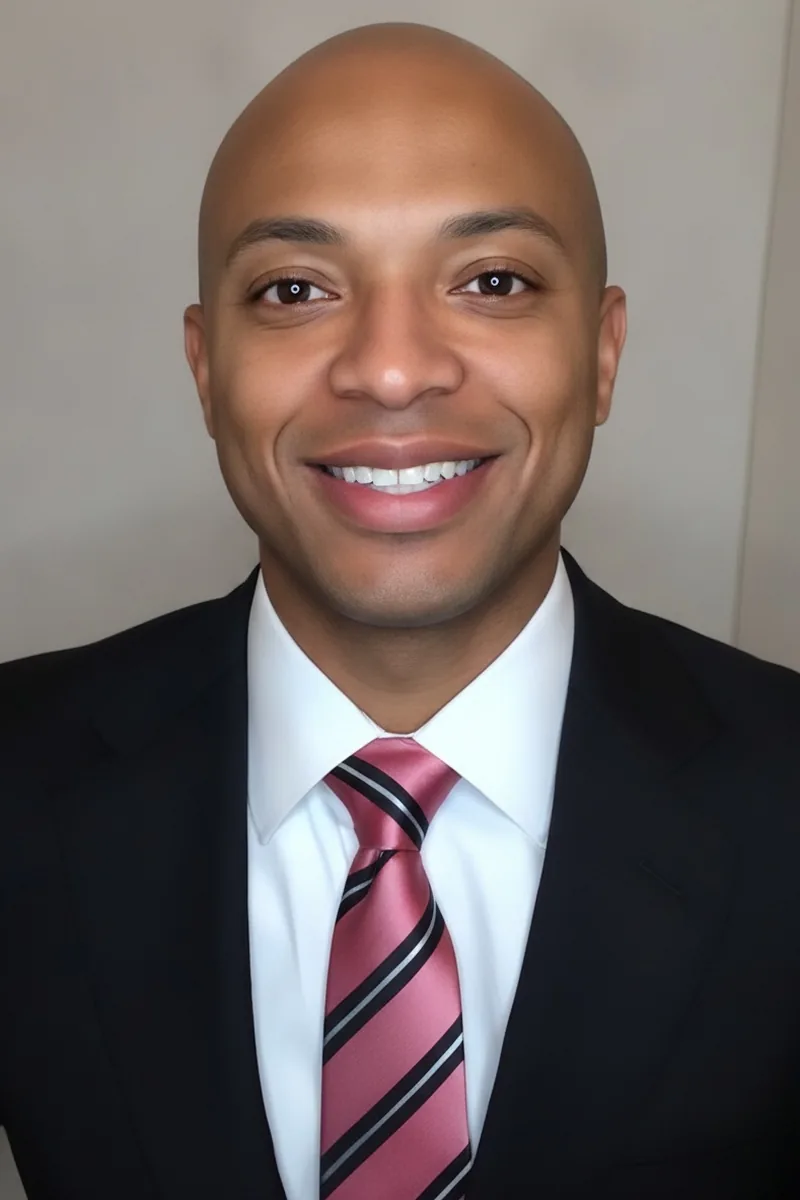
Gerard's MBA training grounds his accounting instruction in business context — when he walks through journal entries or cost classifications, he connects them to the managerial decisions those numbers actually inform. That business-school lens is especially useful for students who struggle to see accounting as more than debits and credits, since he can tie concepts like accrual methods and financial statement preparation back to how companies use them to operate and strategize.
Debits and credits click faster when someone explains the logic behind the accounting equation instead of just handing you T-account templates. Hari tackles journal entries, adjusting entries, and financial statement preparation by tying each step back to what the numbers actually represent about a company's health. His finance MBA adds depth when courses move into ratio analysis and cash flow statements.
Intermediate and cost accounting courses demand precision that intro classes don't — allocating overhead, preparing consolidated statements, or working through variance analysis. Benjamin's Notre Dame finance and economics training included rigorous accounting coursework, and he approaches each problem by first making sure the underlying concept is clear before walking through the mechanics of the calculation.
Debits, credits, and journal entries follow a logic that's easier to internalize than to memorize, and Rahi approaches accounting that way — as a system with consistent rules. His engineering mindset breaks the accounting cycle into clear steps, from adjusting entries through financial statement preparation. He teaches accounting at multiple levels and connects each concept back to why it matters on a real balance sheet.
Accounting at the college level trips students up when debits and credits stop being simple and journal entries involve adjustments, depreciation, and accruals. Peter's structured teaching approach — honed through his master's in education — turns the accounting cycle into a logical sequence rather than a set of rules to memorize.
The jump from introductory to intermediate accounting — when adjusting entries, depreciation methods, and multi-step income statements pile up — is where most students start struggling. Jack approaches these topics systematically, connecting each accounting procedure back to the economic logic he studied at Northwestern so the rules feel less like memorization and more like problem-solving.
Intermediate and advanced accounting courses are where many college students hit a wall — topics like consolidations, lease accounting, and statement of cash flows require layered thinking that intro classes don't prepare you for. Sam earned his MS in Accounting and teaches these concepts by tracing each transaction through the financial statements so students see the full impact. That systematic approach turns intimidating multi-step problems into manageable sequences.
I love helping students in topics related to math, to finance (public and private equity) and to engineering. I believe that if I can't explain concept, then I don't understand it. By that same token, if a student can't explain a concept back to me, then they don't understand it even if they say they do. I believe in getting to know all students, as their background is intricately connected with how they learn.
Debits, credits, journal entries, and the full accounting cycle can feel like learning a new language — which is something Lulu understands literally, having mastered multiple languages and two master's degrees, including one in accounting from UT Arlington. She walks students through each step of the cycle, from trial balance to adjusted financial statements, connecting the mechanics to the logic behind them.
Once college accounting moves past introductory journal entries into adjusting entries, depreciation methods, and multi-step income statements, the detail level jumps significantly. Eric digs into each transaction's logic — why deferred revenue sits on the balance sheet, how LIFO versus FIFO changes cost of goods sold — so students build the reasoning skills that carry through intermediate and managerial accounting.
Balancing debits and credits is straightforward until you hit adjusting entries, accruals, and multi-step income statements — that's where most college accounting students start to struggle. Emina breaks these concepts down by connecting each journal entry to the real financial story it tells, making the logic behind GAAP principles click rather than feel arbitrary.
An MBA from USC and Ph.D.-level engineering work might seem like an unusual path into accounting, but Professor Florence's applied mathematics background means she treats the accounting cycle as a logical system — every debit, credit, and adjusting entry follows from a consistent set of rules rather than arbitrary conventions. She unpacks topics like cost allocation and financial statement preparation by emphasizing the quantitative reasoning underneath, which tends to stick better than rote memorization of procedures.
Running the books as a CFO for both for-profit and nonprofit organizations means Bill has lived the full accounting cycle — journal entries, financial statements, cost accounting — in contexts where getting it wrong has real consequences. He teaches college accounting by grounding each topic in how it actually plays out inside a company, from accrual entries through managerial reporting. His MBA from Harvard Business School and ongoing CPA candidacy keep him sharp on both the theory and the technical details.
Debits and credits are just the entry point — the real challenge in college accounting is building fluency with journal entries, adjusting entries, and financial statement preparation under accrual-basis rules. Albert's MBA finance concentration required extensive work with income statements, balance sheets, and cash flow analysis, so he teaches accounting mechanics with a clear eye toward what these numbers actually mean to decision-makers.
Debits and credits make intuitive sense once someone shows you how they map to what's actually happening in a business. Andrew tackles college accounting by connecting journal entries, adjusting entries, and financial statement preparation back to the real transactions they represent. His MBA in finance gives him the big-picture fluency to explain why accounting rules exist, not just what they are.
Thirty years as a controller and CFO across multiple midsized industrial companies means Alan has closed the books, built budgets, and analyzed variances in settings where accuracy isn't optional. He holds both an MBA and a CMA credential, and he teaches college accounting topics like cost allocation, standard costing, and financial statement preparation by grounding them in how these concepts actually function inside a business. Rated 4.9 by students.
Accounting isn't one of Logan's core subjects, but his physics and applied mathematics training built the kind of precise, systematic thinking that transfers well to balancing ledgers and working through the accounting cycle. He approaches problems methodically — breaking multi-step processes into logical sequences — which is exactly what journal entries and financial statement preparation demand.
Debits, credits, and the accounting equation can feel like learning a new language, especially when journal entries start stacking up into adjusted trial balances and multi-step income statements. Shih's finance background at UGA gives him daily exposure to financial reporting, so he walks through each accounting cycle step with the precision the subject demands.
Idara's Stanford management science training and years in finance give her a practical grip on the accounting cycle — from journal entries and adjusting entries through to financial statement preparation. She connects debits and credits to real business decisions, which makes the logic behind accrual accounting click faster than rote memorization alone.
When college accounting moves beyond introductory journal entries into cost accounting, depreciation methods, or present-value lease calculations, the math demands jump significantly. Irene tackles those quantitative pieces head-on, explaining amortization schedules and allocation formulas with the rigor of someone who holds a PhD in mathematics. She's rated 4.9 across her students.
Debits and credits make intuitive sense once someone shows you how they map to the accounting equation — and that's exactly where Clark starts before tackling journal entries, adjusting entries, and full-cycle financial statement preparation. He earned both his bachelor's in accounting and an MBA focused on accounting and financial management, so topics like consolidation, depreciation methods, and ratio analysis are second nature to him.
Intermediate accounting is where most students realize memorizing journal entries from intro won't cut it anymore — suddenly they're dealing with bond amortization schedules, lease classifications, and revenue recognition standards. As a BBA/Accounting student at UGA, Shivam works through these topics in his own coursework and can walk through the reasoning behind each standard rather than just the end result. That makes the jump from introductory to upper-level accounting far less intimidating.
Intermediate accounting is where Bradley currently lives — he tutors it at Babson and has worked through the tougher material on bonds, leases, and deferred taxes that makes students question their major. He teaches the conceptual reasoning behind GAAP treatments so that students can handle unfamiliar transactions on exams, not just replicate memorized entries. His approach to multi-step problems emphasizes mapping out the timeline before touching a single number.
Debits and credits click faster when someone explains the logic behind the ledger instead of just the rules. Mat's finance background at NYU Stern required extensive accounting coursework — journal entries, financial statement preparation, and ratio analysis — and he walks through each concept by tying it to what the numbers actually mean for a business.
Debits and credits click faster when someone explains the logic behind the accounting equation instead of just drilling T-account entries. Eric's finance and accounting coursework at NYU gave him a working fluency with journal entries, adjusting entries, and financial statement preparation that he now uses to demystify topics like depreciation methods, accruals, and cash flow analysis for other students.
Currently in his second semester at UGA's Tull School of Accounting — with plans to pursue a Masters of Accountancy — Ian is deep in the material that introductory accounting students are just encountering. He explains journal entries, T-accounts, and the full accounting cycle by showing how each piece feeds into the financial statements rather than treating them as isolated exercises. That big-picture framing makes debits and credits stick.
I am a graduate from Cornell University where I received a bachelor's degree in Biological Engineering with a minor in Mechanical Engineering. For several years, I have always had a passion for tutoring/teaching others around me whether they were children, classmates or adults much older than I. From my studies, my favorite subjects to help with were Mathematics and Physics; they are closely integrated with each other and personally it is rewarding when my students understand concepts that they initially struggled with. As for my past tutoring experience, I volunteered teaching GED courses around the Brooklyn area. I also took up private one to one sessions with locals who requested my help in subjects. Currently I am teaching an after-school program where I show middle school students STEM related topics through hands on activities. I am also volunteering with SAT Math through Brooklyn College on Saturdays and I am a part time bartender around the Park Slope area. When I am not busy working, I enjoy cycling, playing video games, and just kicking it back with friends.
From adjusting entries to consolidated financial statements, Daniel has tutored college accounting at every level — introductory through upper-division — as an official tutor and SI leader at the University of North Florida. His own accounting and finance coursework means he doesn't just know the procedures; he understands the reasoning behind GAAP rules and can explain why a particular treatment exists.
I am qualified to tutor many subjects, my favorite subject by far is math, specifically calculus. Math is a subject almost universally hated, and I believe that is mainly due to the narrow way in which it is taught. I have ADHD, and I often don't understand things the first time they are explained to me, meaning over the years I have had to figure out different ways of looking at information. Oftentimes, all a student needs is for something to be explained in a different way, and I love watching people finally understand a concept. Everyone learns differently, but everyone can learn.
Steven earned his Master of Science in Accountancy from Notre Dame with a taxation concentration, which means he doesn't just teach debits and credits — he unpacks why GAAP standards exist and how journal entries flow through to financial statements. From intermediate accounting topics like deferred tax assets to advanced consolidation problems, he breaks down the logic behind each entry rather than treating it as rote procedure. Rated 4.8 by students.
The jump from introductory to intermediate accounting trips up a lot of college students once adjusting entries, depreciation methods, and multi-step income statements enter the picture. Maria's approach is to build each concept from the underlying accounting equation outward, so students can reconstruct answers logically instead of relying on rote memorization of rules.
Intermediate topics like consolidations, lease accounting, and deferred taxes can feel impossibly abstract until someone shows you what they look like in practice. Sharon's forensic accounting master's and her day-to-day CPA work give her a deep bench of real-world examples to pull from, so she can anchor even the most technical GAAP standards in something concrete.
Asher earned his Bachelor of Accountancy from Penn State on a CPA track, completing all 150 credits in four years — meaning he's worked through the full gauntlet of financial accounting, managerial accounting, cost accounting, and auditing. He breaks down journal entries, T-accounts, and financial statement preparation in a way that makes the debit-credit logic click rather than feel like arbitrary rules.
Intermediate accounting is where most students hit a wall — deferred taxes, bond amortization, lease classifications. Jon's finance training at UGA means he understands these topics from both the preparer's and the analyst's perspective, which gives students a clearer picture of why each standard exists and how the numbers flow through financial statements.
The jump from introductory to intermediate and advanced accounting catches many college students off guard, especially when topics like deferred taxes, lease accounting, and consolidation entries enter the picture. Akanksha's CFA Level 2 preparation required mastering financial statement analysis at exactly this depth, so she explains the logic behind complex entries instead of just showing students which numbers go where.
Intermediate accounting is usually where college accounting students hit a wall — topics like bond amortization, lease classifications, and deferred tax assets require a different level of reasoning than intro courses. Emily is finishing her Master of Professional Accountancy and actively preparing for the CPA exam, so these concepts are fresh and deeply familiar. She walks through the underlying journal entries step by step until the logic behind each standard becomes clear.
Intermediate accounting is where most students realize memorizing debits and credits isn't enough — topics like bond amortization, lease accounting, and statement of cash flows demand real conceptual understanding. Valerie pairs her MBA training with hands-on teaching experience to walk through T-accounts and multi-step problems until the underlying logic becomes second nature.
Debits, credits, and journal entries follow a strict internal logic that mirrors mathematical problem-solving — once the rules click, everything from adjusting entries to preparing a trial balance becomes systematic. Nikhil approaches accounting this way, using his quantitative instincts to demystify the accounting equation and walk students through financial statement preparation step by step.
Debits, credits, and the accounting equation can feel like learning a new language — and Jared treats it that way, building fluency step by step through journal entries, T-accounts, and financial statement preparation. His business-oriented coursework at BYU keeps him close to the material, and a 4.9 rating from students suggests the approach clicks.
Testimonials
Because the right College Accounting tutor makes all the difference.
Average Session Rating – Based on 3.4M Learner Ratings
Top 20 Business Subjects


Top 20 Subjects
Frequently Asked Questions
College Accounting students most commonly struggle with understanding the mechanics behind journal entries and the accounting equation (Assets = Liabilities + Equity), especially when transactions involve multiple accounts. Many students also find it challenging to move from memorizing debit/credit rules to truly understanding why accounts move in specific directions based on their classification. Other frequent pain points include preparing and interpreting financial statements (income statements, balance sheets, and cash flow statements), mastering accrual accounting versus cash accounting, and applying GAAP principles to real-world scenarios where transactions aren't straightforward.
The key is connecting the accounting equation to real business activity. Rather than memorizing "debit assets, credit liabilities," work through concrete examples: when a company borrows $10,000, cash (an asset) increases, so you debit it; the loan obligation (a liability) increases, so you credit it. A strong tutor helps you visualize how every transaction affects the fundamental equation and why the balance sheet must always balance. Once you understand that debits and credits are simply a system for tracking increases and decreases within the equation, the rules become logical rather than arbitrary, and you can confidently handle complex multi-step transactions.
Many students can prepare financial statements mechanically but struggle to interpret what the numbers reveal about a company's health. Common mistakes include ignoring the connections between statements (how net income flows to retained earnings, or how operating activities affect cash), misunderstanding what ratios like current ratio or debt-to-equity actually measure, and failing to consider context (is a high inventory level concerning or normal for this industry?). A tutor can teach you to read statements as a narrative of business performance: start with the income statement to understand profitability, move to the balance sheet to assess financial position, and use the cash flow statement to verify the company actually generated cash. This systematic approach prevents the fragmented understanding that leads to errors on exams and in real-world analysis.
Accrual accounting requires recognizing revenue when earned and expenses when incurred—not when cash changes hands—which contradicts how most people think about money. Students often struggle because they're used to cash accounting (from personal finance) where you only record transactions when money moves. The challenge intensifies with concepts like accounts receivable, accounts payable, prepaid expenses, and accrued liabilities, which all require recording activity before or after cash flow. A tutor helps by emphasizing the core principle: accrual accounting matches revenues to the period they're earned and expenses to the period they're incurred, giving a more accurate picture of performance. Working through realistic examples—like recognizing revenue on an invoice before payment arrives, or recording rent expense for a month you haven't yet paid—makes the logic click and prevents costly errors on case studies and exams.
GAAP (Generally Accepted Accounting Principles) can feel like a rulebook to memorize, but it's actually a framework built on core concepts: the entity assumption (the business is separate from owners), the revenue recognition principle (record revenue when earned), the matching principle (match expenses to revenues), and conservatism (when uncertain, choose the option that doesn't overstate assets or income). Rather than memorizing every rule, a tutor helps you understand these underlying principles so you can reason through unfamiliar scenarios. For example, if you encounter a transaction involving a warranty obligation, you can apply the matching principle to recognize the warranty expense in the period you sold the product, not when you later pay claims. This principle-based approach builds confidence for both exams and real accounting work, where you'll constantly face situations that don't fit neatly into textbook examples.
College Accounting is the foundation for the CPA exam, which tests increasingly complex applications of the same principles you're learning now—financial reporting, auditing, taxation, and regulation all build on solid fundamentals in journal entries, financial statements, and GAAP. Mastering College Accounting deeply (rather than just passing) gives you a significant advantage because you won't struggle with foundational concepts when tackling advanced material in intermediate accounting, auditing, or tax courses. Additionally, employers and CPA review courses expect you to think critically about accounting problems, not just apply formulas. A tutor who pushes you to explain *why* an account is debited or credited, not just *how* to do it, prepares you for the reasoning-based questions on the CPA exam and the professional judgment required in actual accounting roles.
Bank reconciliations and adjusting entries trip up many students because they require understanding timing differences and recognizing that the company's books may not match reality or GAAP requirements. Bank reconciliations involve identifying why your cash balance differs from the bank's (outstanding checks, deposits in transit, bank errors, service charges) and adjusting your records accordingly. Adjusting entries are more conceptual: they capture economic activity that hasn't been recorded yet—accrued salaries, depreciation, prepaid insurance expiration—to ensure your financial statements reflect the true period's activity under accrual accounting. A tutor helps by teaching you to systematically work through reconciliations (starting with the bank statement balance and working toward your book balance) and to think of adjusting entries as "closing the gap" between what you've recorded and what actually happened. Practice with realistic scenarios builds the muscle memory and confidence needed to handle these tasks quickly and accurately on exams and in practice.
College Accounting isn't just about following rules—it's about understanding how accounting information drives business decisions. For instance, understanding the matching principle helps you see why a company might choose straight-line versus accelerated depreciation (affecting reported profitability), or why revenue recognition policies matter for loan covenants and investor perception. Learning to prepare and analyze financial statements connects to real decisions: a manager reviewing the cash flow statement might discover the company is profitable but running out of cash, signaling a need to accelerate collections or reduce inventory. A tutor can help you bridge classroom theory and business reality by discussing how different accounting choices affect stakeholders (investors, creditors, management), and by analyzing real financial statements from companies you know. This perspective transforms College Accounting from a compliance exercise into a tool for understanding business performance and strategy.
Let’s find your perfect tutor
Answer a few quick questions. We’ll recommend the right plan and match you with a top 5% tutor.