Award-Winning Honors Algebra
Tutors
Honors Algebra
Tutors
Private 1-on-1 tutoring, weekly live classes for academic support, test prep & enrichment, practice tests and diagnostics, and more to elevate grades and test scores.
Based on 3.4M Learner Ratings
UniversitiesSchools & Universities
DeliveredHours Delivered
ProficiencyGrowth in Proficiency
Who needs tutoring?
No obligation. Takes ~1 minute.
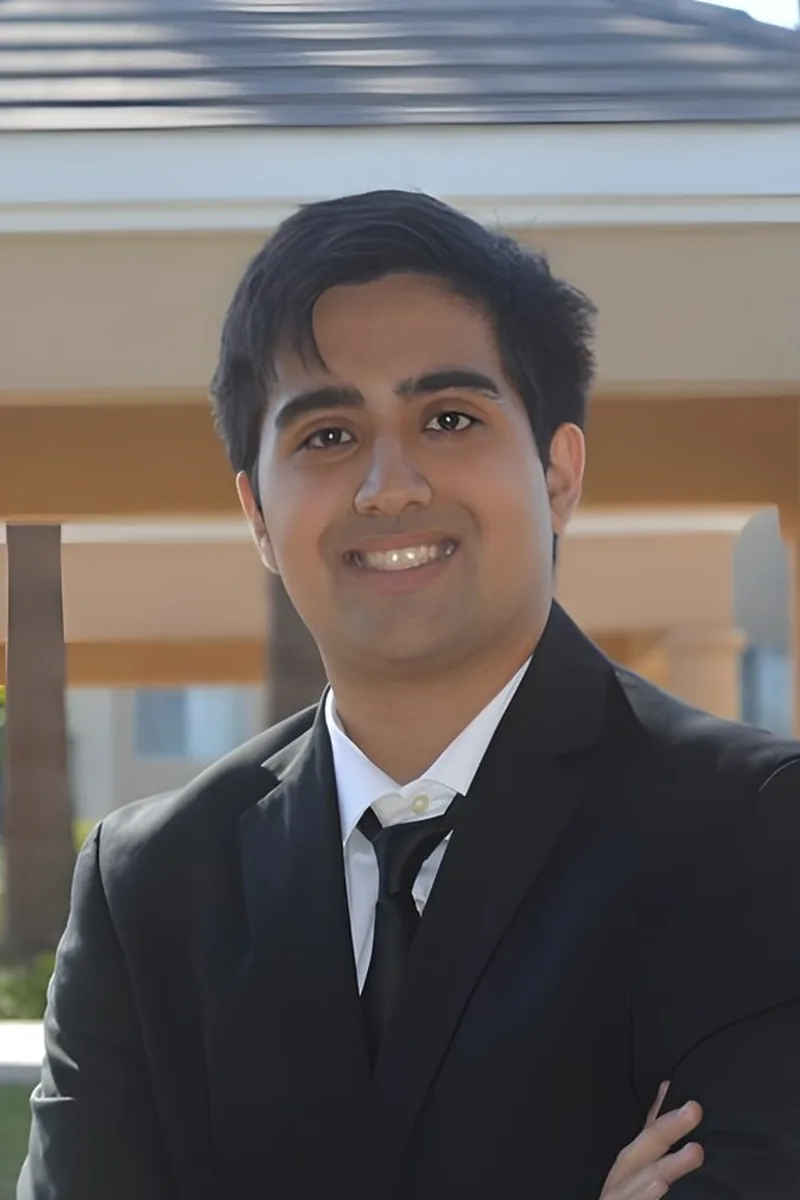
A medical student at the Medical College of Wisconsin with a UCLA biology degree earned cum laude, Abrahim brings rigorous analytical thinking to honors algebra — particularly when students need to see the logic behind manipulating expressions and solving multi-variable systems rather than just cranking through steps. His 34 ACT score speaks to the kind of precise, timed problem-solving that honors courses demand. Rated 5.0 by students.

Three degrees from MIT — in computer science, molecular biology, and political science — meant Stephanie spent four years solving algebraic problems in wildly different contexts, from algorithmic analysis to quantitative genetics. That cross-disciplinary fluency shows up when she teaches honors-level topics like function composition or polynomial manipulation, because she can pull examples from multiple fields to make abstract techniques click. Rated 5.0 by her students.
Most honors algebra students can follow a procedure but freeze when a problem requires combining techniques — say, using function composition inside a system of inequalities. Raaga digs into those crossover problems specifically, teaching students to identify which tools apply and why. Her engineering background at Carnegie Mellon built the kind of flexible algebraic fluency she now brings to polynomial, rational, and exponential function work.
Felix's math degree from UChicago means he's worked through the rigorous proofs and abstractions that sit just beyond honors algebra — so when students struggle with why a factoring technique works or how rational expressions actually behave, he can explain the deeper logic instead of just repeating the steps. His 1520 SAT and 5.0 tutoring rating back up that depth, but what matters more is his ability to make the leap from procedural to conceptual feel natural for students in an accelerated track.
MIT's chemical engineering program front-loads serious algebra — manipulating complex expressions, solving multi-variable systems in thermodynamics, linearizing nonlinear models — and Philip carried that fluency into his current role teaching high school science at the honors and AP level. He knows which algebraic habits actually hold up under pressure in later courses, so his honors algebra sessions emphasize building that kind of durable reasoning around topics like rational expressions and quadratic structures. Rated 4.9 by his students.
Finance majors at Georgia Tech's Scheller College don't just crunch numbers — they build algebraic models from scratch, which gave Rinky daily practice with the variable manipulation and equation structures that honors algebra demands. She zeroes in on the transition from straightforward solving to abstract reasoning, particularly when students hit topics like function notation or complex factoring where intuition alone stops working. Rated 5.0 by her students.
Economics and finance coursework at UVA meant Magnus spent years building and solving algebraic models — optimizing functions, manipulating multi-variable equations, and translating real-world constraints into symbolic form. That applied fluency translates directly to honors algebra, where he teaches students to think through quadratic behavior and equation structures rather than just executing memorized steps.
Griffin's chemical engineering degree from Kansas State required the kind of algebraic precision that honors courses demand — manipulating complex polynomials, solving multi-variable systems, and working fluently with function transformations under pressure. He draws on that applied math background to show students not just how to execute a technique but when and why to choose it, which is the difference between surviving honors algebra and actually thriving in it.
Accounting students live and die by algebraic accuracy — balancing equations, isolating variables in financial models, tracking how one change ripples through an entire system. Ian brings that same precision to honors algebra topics like systems of equations and polynomial manipulation, where careless steps compound fast. His 1500 SAT and years of math tutoring through his honors society mean he knows how to tighten a student's algebraic reasoning without slowing them down.
Applied math at Barrett Honors College meant Madeleine didn't just pass through algebra — she built on it constantly, using polynomial and matrix techniques as daily tools in upper-level physics and discrete math coursework. That repeated exposure gives her a sharp sense for where honors algebra students lose the thread, particularly when problems shift from straightforward computation to multi-step reasoning with functions or inequalities. Rated 5.0 by her students.
Most honors algebra students can follow a procedure — what trips them up is knowing which procedure to reach for when a problem combines inequalities, absolute values, or piecewise definitions in unfamiliar ways. Aiden's 33 ACT reflects sharp quantitative reasoning under pressure, and his political science training at Reed College — heavy on logic and structured argumentation — gives him an unusual knack for teaching students to break down complex algebraic problems into clear, sequential decisions.
Between teaching C Programming, Digital Systems Design, and Freshman Engineering at Purdue, Akio spent years watching students struggle with the same algebraic bottlenecks — particularly when variables show up inside nested functions or when a problem requires chaining multiple transformations together. His computer science background means he naturally teaches algebra as logical problem decomposition, which clicks especially well for honors students facing multi-step problems that punish sloppy reasoning. Rated 4.8 by his students.
Computer science training at UT Dallas meant Snipta spent years translating abstract algebra into working code — manipulating expressions, solving systems, and building logical structures that break if a single variable is mishandled. That precision carries over when she teaches honors algebra concepts like function behavior and polynomial reasoning, where she emphasizes understanding the architecture of a problem before reaching for a formula. Rated 5.0 by her students.
Growing up as the go-to homework coach for her siblings gave Ana an early sense for where algebraic thinking stalls — especially the kind of leaps honors courses demand around topics like quadratic transformations and multi-step inequalities. Her mechanical engineering coursework at Texas A&M keeps her fluent in the variable manipulation and equation-building that make those concepts feel purposeful rather than abstract. She creates a low-pressure dynamic where students actually voice what's confusing them, which is half the battle in an accelerated math class.
Samantha tutors an unusually wide range of algebra courses — from pre-algebra through abstract and commutative algebra — which gives her a clear picture of how honors-level concepts like polynomial manipulation and systems of equations connect to what comes next. She breaks down problems by asking students to identify the structure first, then choose the right technique, building the kind of flexible thinking honors courses test for. Rated 4.9 by her students.
Physics majors at Northeastern don't just take algebra — they stress-test it, using polynomial relationships and systems of equations to model everything from projectile motion to circuit behavior. Jack brings that applied instinct to honors algebra, where he teaches students to see the structure inside a problem before jumping to a solution method. Rated 4.6 by his students.
I am a Molecular Engineering major at the University of Chicago, I am currently taking time off to focus on other aspects of my career but I don't want to stop tutoring outside college campus!. I am a child of immigrants and have spent my life tutoring my siblings and younger students, and I loved working with them! See y'all in class!
I am a current senior biology-health student at Grove City College, hoping to become a Physician Assistant. I love helping people learn more about subjects that I find interesting and am passionate about like math, biology, and chemistry. I have taken math courses through Calculus III, chemistry courses from General Chemistry I through Organic Chemistry I, and biology courses from General Biology I through Anatomy and Physiology. I was a TA for a genetics course and am familiar with courses like cell biology, immunology, and the biology of cancer.
Two years of tutoring students across every age group — from elementary through adult learners — taught Akshadha how to read exactly where someone's algebraic reasoning breaks down and adjust on the fly. Her biology degree keeps her comfortable with the quantitative modeling and variable manipulation that honors algebra demands, especially when problems layer multiple concepts like inequalities and quadratic behavior into a single question. Rated 4.9 by her students.
I am a student at the Georgia Institute of Technology studying Chemical Engineering. For the past several years, I have worked with students extensively. Through hosting events for younger kids to learn about STEM and for older teens to practice empathetic design, I know the importance of teaching students in ways that engage them rather than frustrate them, which I apply to my teaching. I have tutored high school students in a drop-in resource center in various subjects including math of all levels, chemistry, and English, making me adequately equipped in a variety of topics. I have also tutored several students long-term. Establishing relationships with students and exploring their unique learning styles is my favorite part of tutoring. I prioritize helping students discover HOW to learn in a manner that is the most effective for them, so they can begin to use those skills on their own throughout their education. Learning is a lifelong skill that requires practice for improvement; I strive to help my students gain confidence in their ability to learn.
After earning his BS in mathematics from the University of Illinois Chicago, Anthony kept teaching math because breaking down algebraic structures for students never stopped being interesting to him. He tackles honors algebra through guided discovery — walking students through problems involving inequalities or exponential relationships so they uncover the reasoning themselves rather than copying a procedure. His three years of tutoring across the full algebra sequence mean he knows exactly which leaps in abstraction trip up accelerated students.
Medical school admissions required Thomas to master quantitative reasoning under pressure, and his 32 ACT reflects the algebraic fluency he built studying biomolecular science at the University of Michigan — where balancing chemical equations and modeling biological systems meant living inside algebraic manipulation daily. He brings that applied perspective to honors-level topics like exponential and logarithmic relationships, showing students how abstract techniques connect to real quantitative problems. Rated 5.0 by his students.
Currently in medical school, Hassan knows firsthand how algebraic reasoning scales into higher-level science — dosage calculations, kinetics models, and data analysis all trace back to the manipulation skills honors algebra builds. He teaches students to approach problems like systems of inequalities and quadratic transformations by identifying structure before jumping to procedure, which is what separates honors-level performance from just getting by. His 35 ACT and 5.0 tutoring rating speak to that precision.
Sheena's Georgia Tech engineering training meant grinding through algebra at a level where sloppy technique had real consequences — and that precision is exactly what honors students need when they hit rational expressions, function composition, or parametric systems. She teaches students to spot the underlying structure of a problem before choosing a method, which builds the kind of adaptability honors exams specifically test for. Rated 5.0 by her students.
Wahala lists algebra as one of the subjects she enjoys tutoring most, and her neuroscience coursework at Indiana University Bloomington keeps her fluent in the kind of algebraic manipulation — solving systems, working with functions, modeling relationships — that honors courses demand at speed. She breaks down multi-step problems by teaching students to recognize the underlying pattern before jumping to a procedure, which pays off on the non-routine questions honors exams are built around. Rated 5.0 by her students.
Currently studying in Binghamton University's School of Management, Esther works through algebraic modeling and quantitative analysis regularly — skills that map directly onto honors algebra topics like systems of equations and linear modeling. Her 1550 SAT speaks to the kind of precise, efficient problem-solving that honors courses reward when questions layer multiple concepts together. Rated 5.0 by her students.
An English composition major might seem like an unusual fit for honors algebra, but Isabel's strength is in breaking down complex, multi-step problems into clear logical sequences — the same structural thinking that makes her a strong writing tutor translates surprisingly well to organizing algebraic reasoning. Her 4.9 rating from students suggests that clarity of explanation matters just as much as advanced credentials when a student is stuck on something like quadratic modeling or systems of inequalities.
I am really interested in skin care and I hope to become a dermatologist.
Over two decades in the classroom — starting with special education and middle grades math — taught Dolmecia how to spot exactly where a student's algebraic thinking goes off track, especially when honors-level problems demand more than following a procedure. Her finance degree means she's comfortable with the kind of variable manipulation and equation balancing that shows up in honors algebra topics like systems of equations, and she knows how to adapt her approach using concrete strategies that make abstract steps visible.
The jump from standard to honors algebra catches many students off guard when problems shift from straightforward equations to multi-step applications involving systems, inequalities, and function composition. Brianna's classroom teaching gives her a front-row view of which concepts trip up even strong math students, and she builds each session around closing those specific gaps. Rated 4.9 by students.
Teaching math alongside a deep science background — spanning organic chemistry, molecular genetics, and physics — means Qays regularly encounters algebra as the engine behind real problems, not just textbook exercises. He brings that applied perspective to honors algebra topics like quadratic modeling and exponential behavior, showing students how each technique connects to something tangible. Rated 5.0 by his students.
As an electrical engineering student at UConn, Aaron uses algebra daily in circuit analysis and signal processing — which means he can show honors students exactly where techniques like systems of equations and complex number operations actually lead. He teaches the reasoning behind each method so students can handle the multi-step, non-routine problems honors courses love to put on exams. Rated 5.0 by his students.
I am a bioengineering student at UofL and I have a biochemistry degree from WKU.
Testimonials
Because the right Honors Algebra tutor makes all the difference.
Average Session Rating – Based on 3.4M Learner Ratings
Top 20 Math Subjects


Top 20 Subjects
Frequently Asked Questions
Students often find multi-step equations and systems of equations challenging because they require tracking multiple operations and variables simultaneously. Word problems are another major pain point—translating real-world scenarios into algebraic expressions demands both reading comprehension and mathematical reasoning. Graphing linear and quadratic functions, understanding function notation, and working with rational expressions also trip up many students because they require visualizing abstract concepts. A tutor can break down these topics into manageable steps and help students see how each concept connects to the bigger picture.
Honors Algebra moves beyond just following procedures—it emphasizes understanding *why* methods work and being able to apply concepts flexibly to unfamiliar problems. Students are expected to justify their reasoning, recognize patterns across different problem types, and connect algebraic thinking to real-world applications. The pace is faster and the problems are more complex, often requiring students to combine multiple skills in a single problem. Tutors working with Honors Algebra students focus on building conceptual depth rather than just procedural fluency, helping students develop the mathematical maturity needed for advanced courses.
Showing work reveals your mathematical thinking and allows teachers to identify where misunderstandings occur—not just whether the final answer is correct. In Honors Algebra, clear communication of reasoning is as important as the answer itself, especially on tests and in applications. A tutor can teach students how to organize their work logically, explain each step with mathematical language, and avoid common shortcuts that skip important reasoning. This skill also prepares students for higher-level math where proofs and detailed justifications are central.
Word problems require students to extract mathematical information from language, decide which operations to use, and set up equations—a multi-step process where confusion can happen at any stage. A tutor can teach a systematic approach: identifying variables, translating phrases into expressions, and checking that the equation makes sense in context. Breaking problems into smaller chunks and practicing with similar problem types helps students recognize patterns and build confidence. Over time, students develop intuition about which algebraic tools apply to different situations.
Many students memorize graphing steps without understanding how the equation connects to the shape and position of the graph. A tutor helps students see that the slope tells you steepness and direction, the y-intercept shows where the line crosses the axis, and how changing coefficients transforms the graph. Using multiple representations—tables, equations, and graphs together—makes these connections concrete. Understanding function notation f(x) as "output when input is x" rather than just a symbol also helps students work with functions more flexibly in later topics.
Math anxiety often stems from feeling lost or making careless mistakes without understanding why. One-on-one tutoring creates a safe space to ask questions, work through problems slowly, and get immediate feedback on reasoning—not just answers. A tutor can help students recognize their own problem-solving patterns, celebrate progress on previously difficult topics, and develop strategies for managing test anxiety. As students experience success with increasingly complex problems, their confidence grows naturally.
Beyond knowing Honors Algebra content, effective tutors can explain concepts multiple ways, ask questions that guide students to discover patterns themselves, and diagnose exactly where a student's understanding breaks down. They understand common misconceptions—like thinking the slope of a line is always positive, or confusing the solution to an equation with the solution to an inequality—and address them directly. Strong tutors also adapt to different learning styles and pacing, and help students develop metacognitive skills so they can catch and correct their own errors.
While the core concepts are the same across most Honors Algebra curricula, textbooks vary in notation, problem types, and the order topics are introduced. A tutor familiar with your specific textbook or curriculum can align with your teacher's expectations and help you tackle the exact problem types you'll see on tests. That said, a strong tutor can quickly adapt to any curriculum because they understand the underlying mathematics deeply. When connecting with a tutor, sharing your textbook and current unit helps ensure they're fully prepared to support your specific course.
Let’s find your perfect tutor
Answer a few quick questions. We’ll recommend the right plan and match you with a top 5% tutor.