Award-Winning Geometry Tutors
serving Austin, TX
Geometry
Tutors in Austin
Private 1-on-1 tutoring, weekly live classes for academic support, test prep & enrichment, practice tests and diagnostics, and more to elevate grades and test scores.
Based on 3.4M Learner Ratings
UniversitiesSchools & Universities
DeliveredHours Delivered
ProficiencyGrowth in Proficiency
Who needs tutoring?
No obligation. Takes ~1 minute.
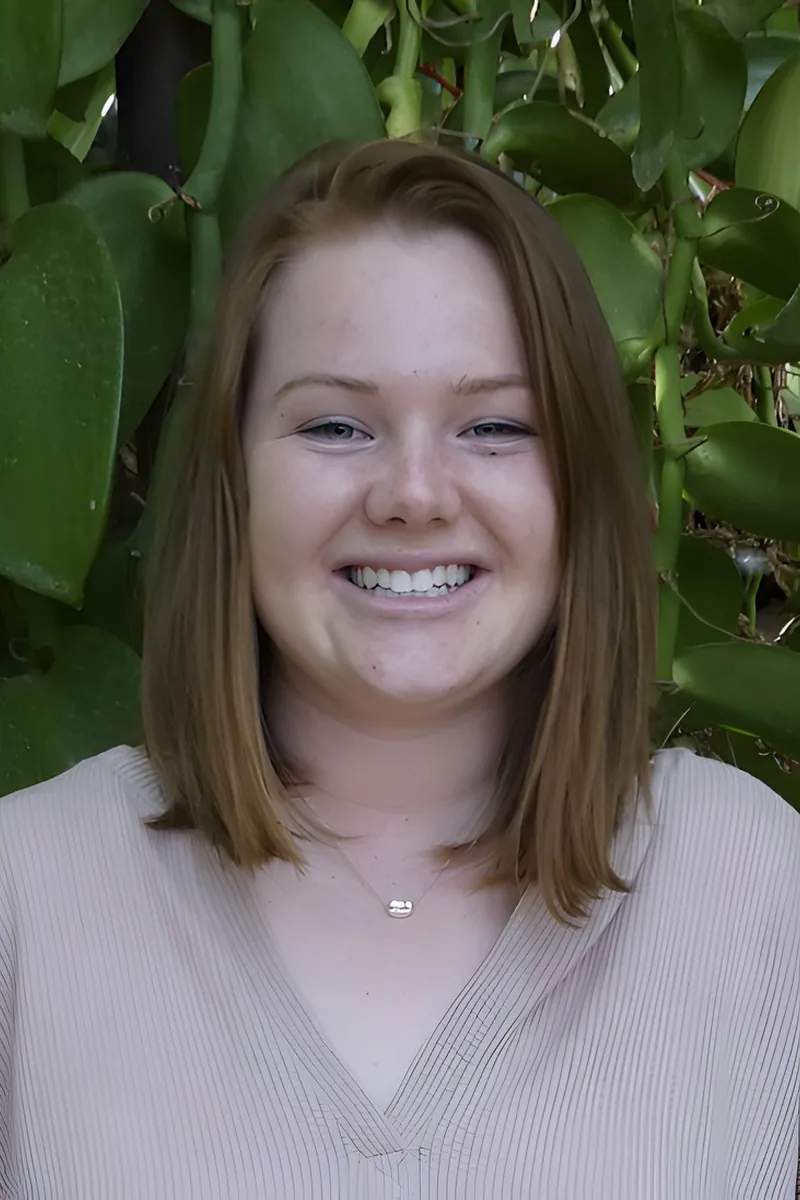
Proofs are usually where geometry students panic, but they're really just logical arguments written in a specific format. Mackenzie teaches students to read a diagram like a puzzle — identifying congruent triangles, parallel-line angle relationships, or circle theorems before ever picking up a pencil. That visual-first strategy makes even two-column proofs and coordinate geometry problems feel approachable.

Proofs are usually the make-or-break moment in geometry, and Carter treats them as logic puzzles rather than rote exercises. He walks through each proof by identifying what's given, what's needed, and which theorem bridges the gap — a structured reasoning style he honed studying philosophy and applied math at Brown. Students consistently rate him 5.0.
Proofs are usually where Geometry students hit a wall — the jump from calculating angles to constructing logical arguments feels like a completely different subject. Meagen's English background actually gives her an edge here, since she's trained in building structured, evidence-based arguments. She applies that same reasoning framework to two-column proofs, triangle congruence, and geometric logic.
Proofs are usually the first time a math student has to explain *why* something is true, not just show that it works — and that's where Geometry gets intimidating. John teaches students to build logical arguments step by step, whether they're proving triangle congruence or working through circle theorems, so the reasoning becomes a tool rather than an obstacle.
Proofs are usually the first thing that makes geometry feel different from every math class before it — suddenly students need to justify each step with a theorem, not just get the right number. Katelyn walks students through the logic of two-column and paragraph proofs while also strengthening their spatial reasoning for problems involving congruence, similarity, and circle theorems.
From angle relationships in parallel lines to triangle congruence proofs, geometry asks students to think spatially and argue logically in ways other math courses don't. Jackson's civil engineering background is built on geometric reasoning — calculating load paths, analyzing structural shapes — and he brings that intuition to every proof and construction problem.
Proofs are usually the first place Geometry students hit real resistance, because suddenly they have to justify every step instead of just computing an answer. Christina treats proof-writing as a logical skill rather than a memorization exercise, walking through how to identify given information, choose postulates, and build an argument one claim at a time.
Proofs are usually the make-or-break topic in Geometry, and Tim tackles them by teaching students to outline the logical chain before writing a single statement-reason pair. He also digs into coordinate geometry and triangle congruence with an engineer's precision, linking visual intuition to algebraic verification. His approachable style — rated 5.0 — makes it easy for students to ask questions without feeling embarrassed.
Proofs are usually where geometry stops feeling like math and starts feeling like a foreign language. Whitney teaches students to read diagrams strategically and build logical arguments step by step, connecting angle relationships, triangle congruence, and parallel line theorems into a coherent framework instead of a pile of disconnected rules.
Six Texas teaching certifications — including Math and Special Education — mean Steve has taught geometry to students with very different learning profiles, from gifted learners racing ahead to students who need concepts broken into smaller, more concrete steps. He leans on his language arts instincts to make proof-writing feel more like building a persuasive argument than filling in a rigid template, which tends to unlock the subject for students who think more verbally than visually.
Proofs and spatial reasoning make geometry feel like a completely different subject from the algebra students are used to, and that shift in thinking is where most frustration starts. Jake approaches geometric problems the way he learned to approach circuit design in his electrical engineering program — by building logical arguments one step at a time. He's especially effective at teaching students to set up two-column proofs and apply triangle congruence theorems with confidence.
Proofs are where most geometry students panic, but they're really just structured arguments — and Andrew spent three years at a liberal arts college learning exactly how to build those. He's tutored geometry since his undergraduate days and digs into angle relationships, triangle congruence, and circle theorems with an emphasis on logical reasoning rather than rote steps. His 5.0 rating speaks to how well that approach lands with students.
Proofs are where most geometry students stall — the leap from calculating angles to constructing logical arguments feels like a different subject entirely. Alexander spent six semesters as a teaching assistant at Cornell, where walking students through structured reasoning was the core of his job, and he applies that same patience to triangle congruence, similarity, and circle theorems.
Proofs are where most geometry students get stuck — moving from "I can see it's true" to writing a logical chain of reasoning feels like a completely different skill. Sandra's engineering training at UT Austin required exactly that kind of structured thinking, and she breaks down two-column and paragraph proofs into steps that actually make sense. Her 4.9 rating speaks to how well that approach clicks with students.
Training in UTeach — UT Arlington's program for turning STEM students into teachers — means Tyler learned to teach geometry through inquiry, asking students to reason through why a theorem about, say, inscribed angles or triangle midsegments must be true before ever applying it to a problem set. His physics background reinforces this: geometric relationships aren't abstract rules to him but tools he used daily in theoretical research modeling real-world structures. Rated 5.0 by students.
Proofs are usually the first thing that trips students up in geometry — suddenly math requires written logical arguments instead of just calculations. Roozbeh approaches proof-writing as a skill that can be built step by step, starting with simple angle relationships and working toward triangle congruence and similarity arguments. He also digs into coordinate geometry and area formulas, making sure students see how algebra and geometry reinforce each other.
Proofs are where most geometry students start to struggle — the leap from calculating angles to constructing logical arguments catches people off guard. Rakhi's applied math background means she treats proofs as a thinking skill, walking through each theorem step by step until the reasoning clicks. Rated 4.8 by students.
Proofs are where most geometry students get stuck — moving from 'I can see it's true' to 'I can logically show it's true' is a real shift in thinking. Ahila treats each proof like a puzzle, breaking down congruence theorems, angle relationships, and parallel line properties into clear logical steps. Math has been her favorite subject since childhood, and that enthusiasm comes through when she's walking someone through a tricky two-column proof.
Proofs are where most geometry students panic, because suddenly math requires structured written arguments instead of just calculations. Diana's political science training at UH — where constructing logical, evidence-based arguments is daily practice — translates surprisingly well to teaching students how to build a two-column proof from postulates and theorems.
Proofs are usually the first place geometry students freeze — the idea of constructing a logical argument about shapes feels completely foreign. Thomas approaches proofs as storytelling with rules, teaching students to chain together postulates and theorems the same way they'd build a persuasive essay. His background across both math and writing gives him a unique way of making that connection click.
Proofs are the part of geometry that makes most students groan, but William actually enjoys teaching them — he treats each proof like building a legal argument, which comes naturally given his law school training. Beyond proofs, he digs into triangle congruence, circle theorems, and coordinate geometry with an emphasis on sketching and visualizing before calculating. That visual-first approach tends to make even the most abstract problems feel manageable.
Proofs are usually the sticking point in Geometry — students can calculate an angle but freeze when asked to justify why it works. Chahat teaches proof-writing as a logical chain, connecting each statement to the next the way a scientist builds an argument from evidence. Her approach turns the most dreaded part of the course into something that actually makes sense.
Nolan lists geometry as one of his favorite subjects to tutor, and his psychology training gives him a genuine edge — he reads when a student's confidence is faltering on a proof or construction and shifts his explanation style on the spot. He tackles the visual-logic balance of the subject by teaching students to sketch diagrams first and label everything before reasoning through properties of quadrilaterals, circle angle relationships, or parallel line cut problems. Rated 5.0 by students.
Proofs are where most geometry students get stuck, and Lloyd tackles them by teaching logical structure first: what counts as a valid argument, how to chain statements together, and how to spot which theorem applies. He also covers the computational side — area, volume, coordinate geometry, similarity and congruence — with an emphasis on drawing accurate diagrams that make relationships visible. It's a methodical approach rooted in his analytical training at Rochester.
Proofs and spatial reasoning make Geometry a different animal from other math classes — memorizing formulas won't get a student through a two-column proof about congruent triangles. Matt approaches each theorem by first sketching out why it's true visually, then walking through the logical structure so students can construct their own arguments with confidence.
Proofs are where most geometry students stall, not because the logic is too hard but because nobody taught them how to organize a deductive argument. Aleksandar studied formal logic as part of his Philosophy-Neuroscience-Psychology degree, which gives him a natural toolkit for teaching two-column and paragraph proofs alongside the spatial reasoning that ties congruence, similarity, and circle theorems together.
I'm Jay! I'm currently going to college at the University of Texas at Austin. I am majoring in fine arts and I am also in the pre-medical program. Even though I'm not done with college, I have already published papers in the field of epigenetics since my freshmen year of college. Even though I consider myself to have an expertise in languages, I decided to teach areas in the field of natural sciences because those are the subjects that I am most passionate about.
Proofs are usually what trips students up in Geometry — going from calculating angles to constructing logical arguments feels like a completely different subject. Muhammad approaches proofs as a form of problem-solving rather than memorization, teaching students to identify given information and work toward conclusions using congruence, similarity, and parallel line theorems. His engineering training at UT Austin reinforces the spatial reasoning that makes Geometry intuitive.
Proofs are where most geometry students panic, but Sourav treats them like debugging code — each statement needs a logical justification, and skipping a step means the whole argument falls apart. He walks through triangle congruence, parallel line theorems, and circle properties with that same structured, step-by-step clarity his CS training demands.
Proofs are where most geometry students get stuck, because the logic feels completely different from computation-based math. Sneha's neuroscience background trains her in structured logical reasoning every day, and she applies that same step-by-step deductive approach when walking through triangle congruence, parallel line theorems, or circle properties.
Electrical engineering at UIUC means Ramsey works with geometric relationships constantly — vector projections, coordinate transformations, and the spatial reasoning behind circuit and signal analysis. He brings that practical fluency to teaching concepts like parallel line properties, triangle congruence, and the logic of two-column proofs, making abstract diagrams feel concrete. His 1500 SAT speaks to the kind of precision that keeps multi-step geometry problems from going sideways.
Proofs are usually where geometry students panic, because suddenly math asks them to build a logical argument instead of just computing an answer. Bonita tackles this head-on by teaching students how to identify given information, choose the right postulates, and chain reasoning together step by step. Her physics training at UT Austin keeps her explanations grounded in spatial intuition rather than rote memorization.
Proofs are usually the first place geometry students get stuck — the logic feels completely different from the computation they're used to. Derek's political science training at UC Santa Barbara was built on constructing and evaluating logical arguments, a skill he now applies to teaching triangle congruence, parallel-line reasoning, and formal two-column proofs.
Running a free AP Calculus prep class at his local library for two years — building curricula, writing mock exams, and teaching every concept from scratch — gave Siddhant a teaching instinct that carries over well to geometry, especially when it comes to breaking down multi-step problems into clear, sequential reasoning. As a math major at UT Austin, he tackles geometric proofs and circle theorems with the same structured approach he uses in his coursework, connecting each step back to definitions students can actually point to. Rated 4.7 by students.
Proofs are where most geometry students freeze, unsure how to translate a diagram into a logical argument. Katrina tackles this by teaching students to read a figure like a story — identifying given relationships, spotting congruent triangles or parallel-line angle pairs, and building each step from the last. Her mathematics background means she can explain both the intuition and the formal reasoning behind every theorem.
Proofs tend to be the part of geometry that frustrates students most, because suddenly math requires structured logical arguments instead of computation. Thompson walks through each proof type — two-column, paragraph, indirect — by connecting geometric reasoning to the kind of spatial thinking he uses in mechanical design. He holds a 4.8 rating from students.
Proofs are usually where Geometry students panic, because suddenly math requires written logical arguments instead of just calculations. Parth approaches proofs as puzzles — identifying given information, choosing the right theorems, and building a chain of reasoning one step at a time. His computer science training at UT Austin reinforces that same structured logic, which translates directly to triangle congruence, parallel line arguments, and circle theorems.
Proofs are usually where geometry students hit a wall, struggling to translate spatial intuition into logical arguments on paper. Mahan approaches each proof as a structured problem-solving exercise, teaching students to identify given information, spot congruence or similarity relationships, and build their reasoning step by step. His engineering training sharpened exactly this kind of precise spatial and logical thinking.
I am an experienced Instructor holding 2 masters degree and finalizing my PhD dissertation. I'm experienced with more than 11 years of teaching all levels from K to university students. You learn with excitement and achieving great results. I'm always committed to my students and follow up committed closely and I care a lot of them. My experience with teaching enabled me to utilise many teaching techniques and strategies that allows students to learn easily and effectively. My academic studies enables me to have great self confidence while teaching since I have many years of instructing experience to many levels. To add more, I have taught in 3 different countries with diversity and knowledge experience.
Testimonials
Because the right Geometry tutor makes all the difference.
Average Session Rating – Based on 3.4M Learner Ratings
Practice Geometry
Free practice tests, flashcards, and AI tutoring for Geometry
Nearby Geometry Tutors
Other Austin Tutors
Related Math Tutors in Austin
Frequently Asked Questions
Many students struggle with the shift from computational math to proof-based reasoning—Geometry requires understanding not just how to solve problems, but why solutions work. Other common pain points include visualizing 3D shapes, mastering angle relationships, and writing logical proofs. Word problems that require translating real-world scenarios into geometric diagrams also trip up students. Personalized tutoring helps students build confidence by breaking down these conceptual hurdles and showing how different geometric principles connect.
Proofs intimidate many students because they require both geometric knowledge and logical reasoning skills. Tutors work through the proof-writing process step-by-step, helping students understand how to identify given information, recognize which theorems apply, and construct valid logical chains. With personalized instruction, students learn to see proofs not as mysterious puzzles, but as structured arguments they can build with confidence.
Spatial reasoning is a skill that develops with practice and feedback. Tutors use diagrams, manipulatives, and step-by-step walkthroughs to help students mentally rotate shapes, understand perspective, and connect 2D diagrams to 3D objects. This hands-on approach is especially effective for students who learn better through visual and kinesthetic methods, helping them build the mental models needed for success in Geometry and beyond.
Yes. Austin's 24 school districts use various geometry textbooks and approaches, and tutors who work with Austin students are familiar with these different curricula. Whether your student is using a traditional textbook, an integrated math program, or a standards-based approach, Varsity Tutors connects you with tutors who can align their instruction with what's being taught in the classroom and help bridge any gaps.
Word problems require students to translate language into geometric diagrams and equations—a skill that takes practice. Tutors teach problem-solving strategies like drawing diagrams, identifying what's given and what you're solving for, and breaking multi-step problems into manageable pieces. With personalized guidance, students learn to approach word problems systematically rather than feeling overwhelmed, building both competence and confidence.
The first session is about understanding your student's needs. A tutor will assess which geometry concepts are solid, where gaps exist, and what's causing frustration—whether it's proof writing, visualization, or something else. They'll also learn your student's learning style and goals. From there, they'll create a personalized plan focused on building understanding and confidence in the areas that matter most.
In Geometry, showing work reveals whether a student understands the reasoning behind an answer or just got lucky. Tutors emphasize the 'why' behind each step—identifying theorems, explaining angle relationships, and justifying conclusions. This focus on reasoning not only improves test performance but also helps students develop the logical thinking skills that transfer to other subjects and real-world problem-solving.
Math anxiety often stems from feeling rushed or confused in a classroom setting. Personalized tutoring removes that pressure by allowing students to learn at their own pace, ask questions freely, and experience success on manageable problems before tackling harder ones. As students see themselves understanding concepts they once found mysterious, confidence builds naturally—and anxiety decreases. This positive momentum makes a real difference in both performance and attitude toward math.
Let’s find your perfect tutor
Answer a few quick questions. We’ll recommend the right plan and match you with a top 5% tutor.